How Does the GrandPA Lighting Console Send Stage Cues over W5500 Ethernet?
GrandPA Lighting gives stage operators two routes from a physical fader to a fixture: USB MIDI through Sunlite, or Art-Net over Ethernet to a DMX node.
0
Components
Hardware components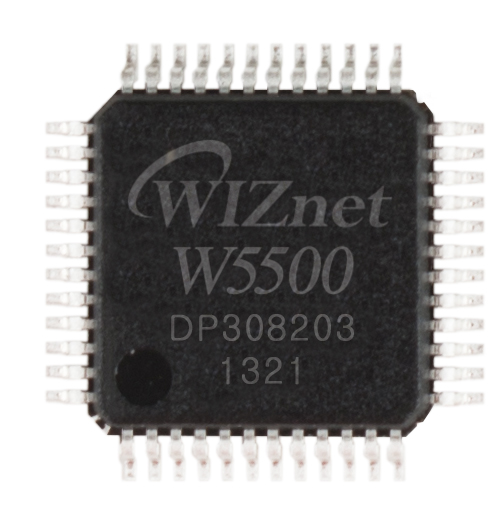
WIZnet - W5500
x 1

Wired Ethernet interface named by the designer for the STM32 console firmware development.
Project description
From the operator’s hand to a stage light
GrandPA Lighting is a modular French lighting console. An operator can use a physical fader to control a scene in Sunlite software over USB MIDI (Musical Instrument Digital Interface), or assign it to a DMX channel and send lighting levels over Ethernet using Art-Net. DMX is the channel-based lighting protocol understood by stage fixtures. On the Ethernet route, a separate node near the stage converts network packets into the DMX signal the fixtures accept. The designer identifies the WIZnet W5500 as the Ethernet interface in the console’s firmware development.
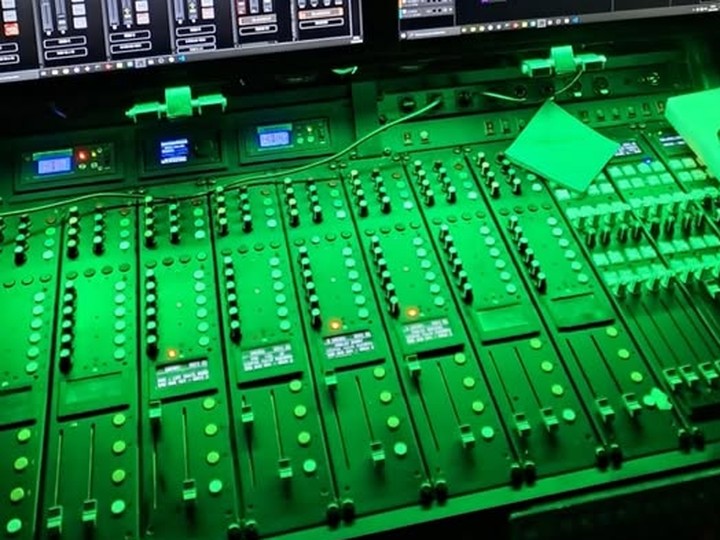
Philippe Cavalier developed GrandPA Lighting in Vienne, France. The maker traces its first prototype to 2023 and its first modular console to 2024. The starting point was practical: a lighting operator wants to find a fader or turn an encoder by feel while watching the stage. The manufacturer’s equipment page and photographs show a physical control surface with banks of illuminated buttons, rotary controls and faders.
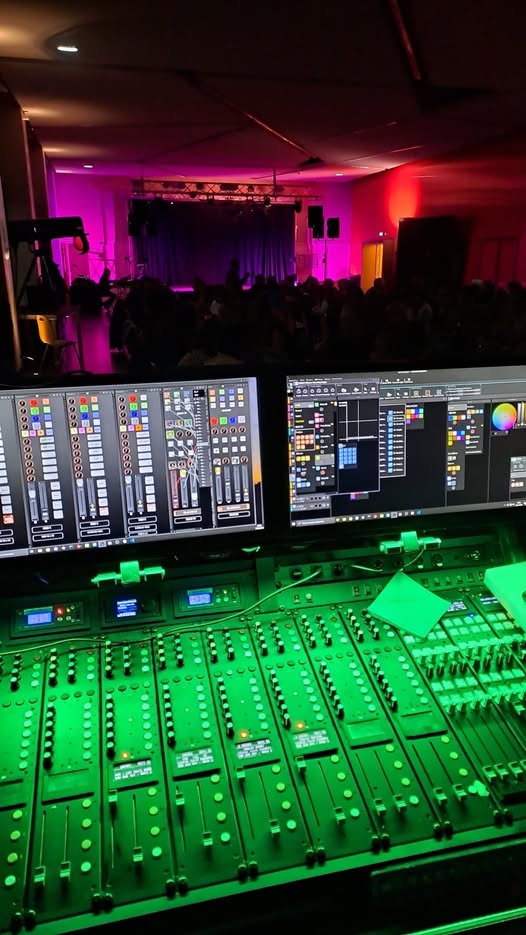
The modular desk in use at a show, with the stage beyond the two displays. Photo from the GrandPA Lighting equipment gallery.
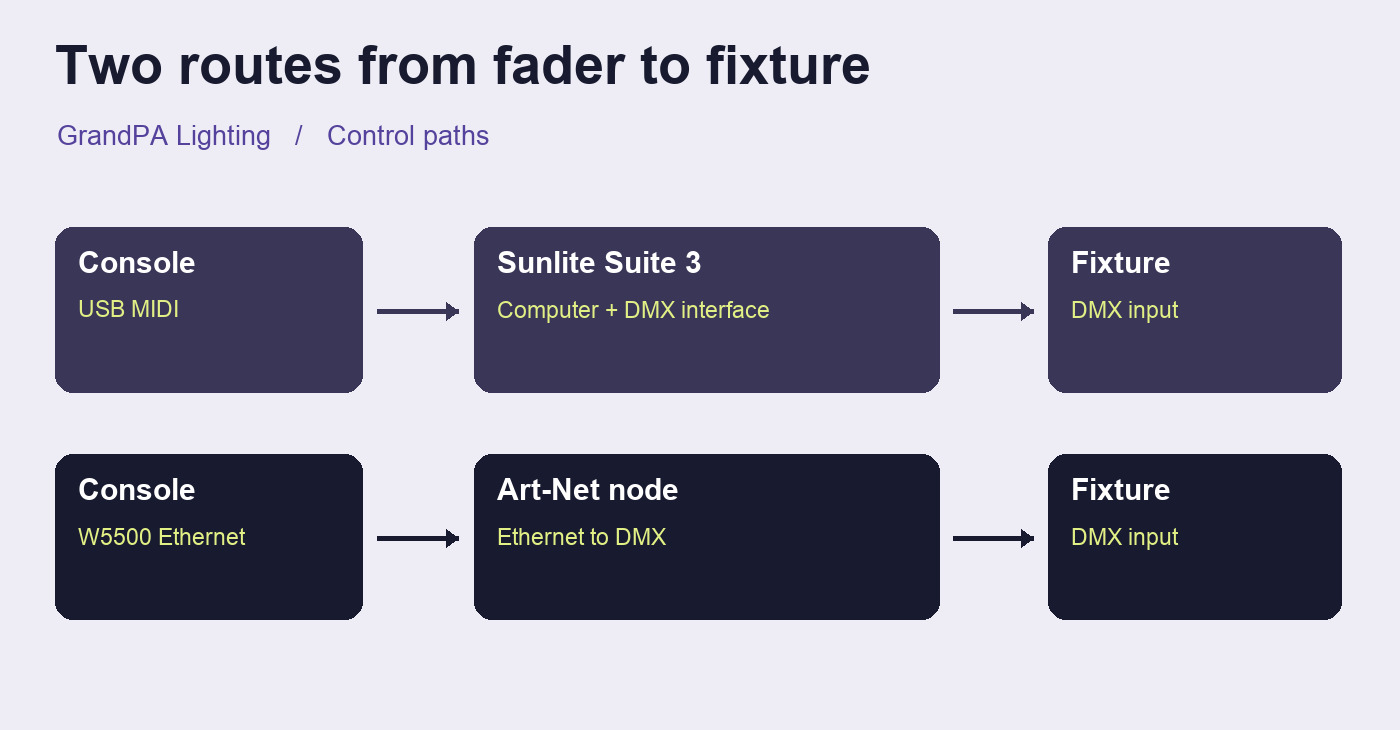
Both routes begin with the same physical controls. The device that generates the final wired DMX signal depends on the route.
What happens when you move one fader?
Imagine assigning a fader to a spotlight’s dimmer. In the USB workflow, the console sends a MIDI control message to a computer running Sunlite Suite 3. Sunlite interprets the mapping, and its DMX interface delivers the lighting output. This route makes sense when the operator is controlling software scenes, speed or other functions already set up in Sunlite.
For direct network control, the operator instead assigns the fader to a DMX channel on the console. The console sends the level in Art-Net packets over Ethernet. An external GrandPA Art-Net-to-DMX node receives the packets and drives the DMX line to the fixtures. That puts the network-to-fixture conversion at the stage end of the run. The W5500 belongs to the console’s network design; the physical DMX output described here belongs to the external node.
Where Ethernet enters the console
Cavalier explicitly identifies the W5500 in his firsthand development note about the STM32-based console firmware. The note describes Art-Net work in progress at that point. The current equipment page, updated November 5, 2026, now describes direct Art-Net transmission. Together these sources connect a named Ethernet chip with a published stage-lighting feature. The manufacturer does not publish the socket driver or a board-revision matrix, so a buyer specifying Ethernet should identify the desired revision when discussing a build.
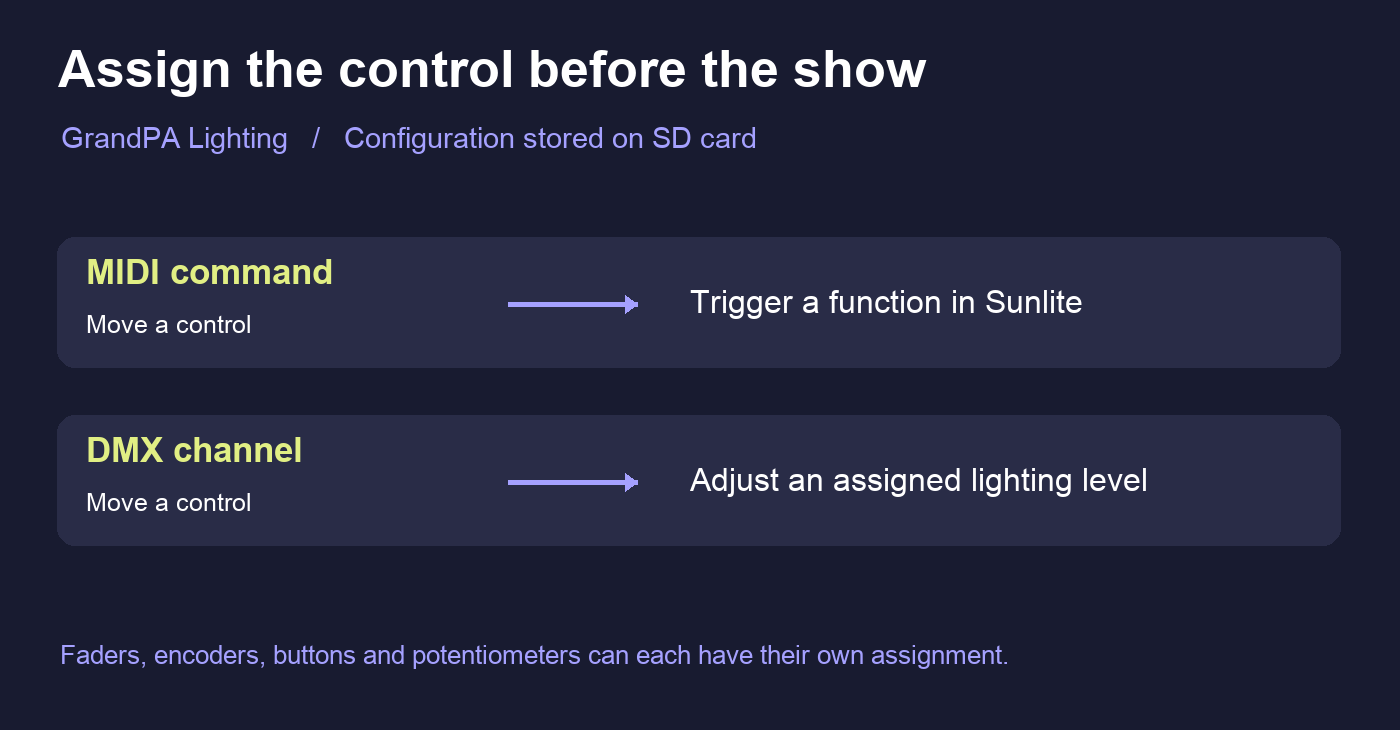
Each control has an assignment. The saved configuration lets the same surface serve different shows.
What a customer actually orders
The manufacturer lists a 19-inch, 2U MASTER section at €990 and a 19-inch extension at €890. The master example includes four faders, four potentiometers, eight push encoders and several groups of RGB buttons. A smaller joystick section is an option for moving-head fixtures. GrandPA works with customers to configure their consoles, and the published price list gives a starting point for that discussion. For a venue quote, specify the Ethernet-capable revision, how many separate DMX lines the stage needs and whether the node is included. The manufacturer’s sales terms say the quote specifies the chosen modules, shipping cost and lead time. Sunlite software and its third-party interface are sourced separately. A venue intending to use both paths can therefore identify which items to buy from each supplier.
The interesting detail for a hardware designer is that the assignments can be changed on the console and saved to an SD card. A physical control therefore keeps its meaning for a particular show. An Ethernet lighting example can demonstrate this clearly with one fader, one saved channel mapping and one light whose brightness follows the fader. That shows where the control value originates, how it reaches the network, and which device ultimately drives the fixture.
Matching a control surface to the operator
Consider two people preparing the same small venue. The programmer wants to recall a prepared look for the walk-on, then change the speed of a sequence without rebuilding the scene. The house technician wants a hands-on level for a particular fixture. The equipment page gives concrete examples of the first task: scene triggers, dimmer, speed, pan and tilt are available in the Sunlite workflow. A MIDI assignment can address a software function the operator already knows. For the second task, a direct DMX assignment lets the physical control represent a particular lighting channel.
Those choices affect the order in which to set up a desk. For a software show, start with the desired action in the Sunlite virtual console, then map a physical control to it. For a direct network show, start with the fixture personality and the DMX address for the function, then choose the physical control. An encoder is a natural choice for a value an operator will trim repeatedly. A fader gives a visible physical travel range for a level. These are examples of operator layouts; the equipment page leaves the assignments to the user.
That flexibility explains the choice of interchangeable sections. The maker lists an optional 27-button board for the space otherwise occupied by four potentiometers and four faders. A venue that triggers many prepared looks can therefore trade continuously variable controls for more dedicated buttons. A desk for busking dimmer levels has a different reason to keep the faders. A joystick section addresses a third job, moving a light in two axes. Asking which controls an operator needs while looking at the stage is a more informative starting point for the quote than counting rack units alone.
Commissioning one lighting channel
Before mapping an entire show, try one fixture with a documented dimmer channel. In a simple acceptance test, assign a single fader to that channel, configure one output on the network node and move the fader through its range. Watch which fixture responds and which function changes. That result tests the console assignment, network route and fixture patch together. If the fixture responds on the wrong function, compare the fixture’s selected operating mode and starting address with the channel the console is changing.
The Art-Net network address and the lighting address have different jobs. The protocol groups DMX channels into universes and identifies each network universe with a Port-Address. A receiving node is configured to turn the chosen universe into a physical DMX output. A fixture on that line then interprets the channels assigned to its own functions. This explains how an Ethernet connection and a lit network port can coexist with a dark fixture: valid packets for one universe may reach a node whose output is assigned to another. The Art-Net protocol introduction describes the controller and node roles.
Now try a separate acceptance test for the software route. Select one virtual control in Sunlite, assign a MIDI control on the desk to it and confirm that the on-screen control moves when the physical one does. Then check that Sunlite’s DMX interface and the fixture respond. The screen gives the technician a useful dividing point. If the on-screen control reacts, the console-to-computer mapping is working; the remaining checks concern the software patch, interface and lamp. A company taking delivery of a custom desk can ask the maker to demonstrate one control along each purchased route before building a full show file.
The console stores its configuration on an SD card. At handover, label a short list of physical controls against the show file or DMX patch, reload the saved assignment and repeat the one-fixture check. This gives the next operator a known starting point. It also catches a common mismatch between a perfectly valid saved control assignment and a stage that has since been repatched.
If you are designing a lighting controller, the W5500 UDP application note covers the Ethernet transport for a prototype. The console firmware still has to form the Art-Net message and map the fader to a channel. W5500 UDP application note
FAQ
Q. Is Art-Net carrying audio when the fader moves? It carries lighting-control data. MIDI is used here for control messages as well. Neither path in the manufacturer’s description is an audio stream.
Q. Where should the fixture cable plug in? On the direct Ethernet route, connect the fixture’s DMX line to the external Art-Net-to-DMX node. In the software route, use the DMX interface associated with Sunlite.
Q. How many universes does the console transmit directly? The three-universe figure and optional fourth on the equipment page describe the Sunlite interface. GrandPA does not give a direct Art-Net universe count for the console there.
Q. What does the MASTER price include? The listed €990 configuration is the 19-inch, 2U master control section. The manufacturer prices extensions separately. Its homepage offers an aluminum chassis by quotation, so a buyer should specify the enclosure and stage node required.
Q. Can a venue extend the surface later? GrandPA describes a rear communication bus for adding sections around the MASTER. Its equipment list includes both larger extensions and a half-width joystick section. Ask for the module and chassis combination that leaves room for the intended addition.
For a closer look at the receiving end of an Ethernet lighting setup, see the W5500 Art-Net node on WIZnet Maker.
Documents
-
GrandPA equipment and console photographs
Official control assignments, USB MIDI path, Art-Net path and separate external node.
-
Console firmware development note
Designer Philippe Cavalier names W5500 Ethernet in the firmware development.
-
GrandPA configuration and price list
Published prices for the MASTER, extensions and options.
-
GrandPA maker and product history
Founder, prototype history and origin of the modular console.
-
Art-Net protocol introduction
Protocol publisher explains controller, node and universe addressing.
-
GrandPA modular chassis and contact
French manufacturer contact and enclosure customization.
-
LEDEXIA order and configuration terms
Commercial identity, configuration process, quoted delivery time and separate third-party Sunlite products.


