LoRa Datalogger with W5500 Host
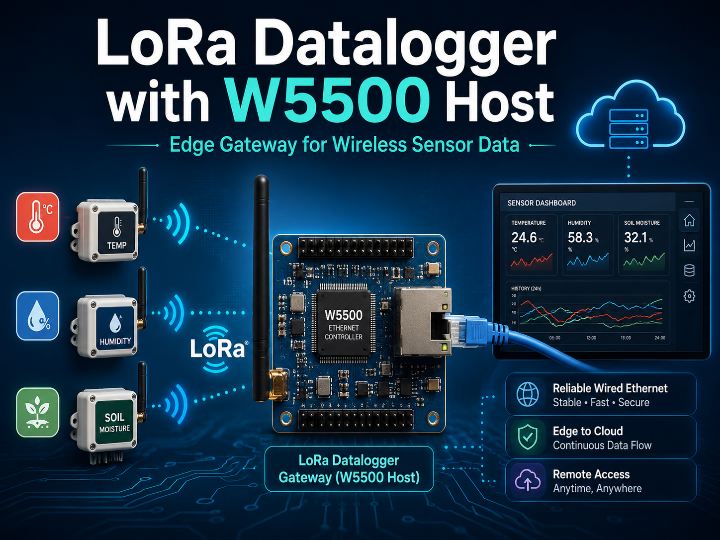
LoRa Datalogger with W5500 Host: 무선 센서 데이터를 유선 Ethernet으로 수집하는 Edge Gateway
0
Components
Hardware components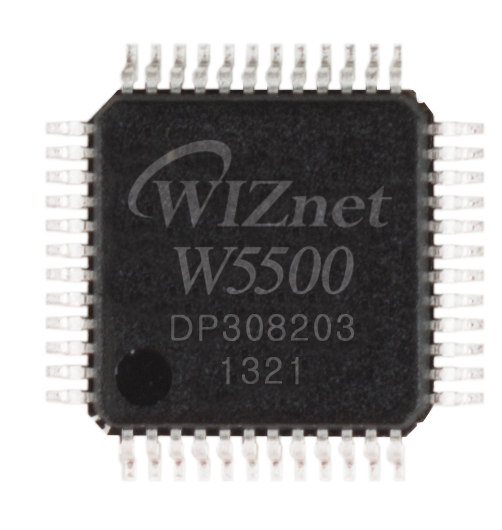
WIZnet - W5500
x 1

Project description
LoRa Datalogger with W5500 Host
무선 센서 데이터를 안정적인 유선 Ethernet으로 연결하는 Edge Gateway
1. 프로젝트 개요
LoRa Datalogger with W5500 Host는 LoRa 센서 노드에서 보낸 온도, 습도, 배터리 전압, 동작 시간 데이터를 게이트웨이 보드가 수신한 뒤, WIZnet W5500 Ethernet Controller를 통해 유선 TCP 서버로 제공하는 프로젝트입니다.
쉽게 말하면, 이 프로젝트는 LoRa 무선 센서 데이터를 Ethernet으로 읽을 수 있게 해주는 소형 데이터로거 게이트웨이입니다.
센서 노드는 LoRa로 데이터를 보냅니다. 호스트 보드는 이 LoRa 패킷을 수신하고, 패킷 크기와 CRC를 확인한 뒤, 최신 센서 값을 JSON 형태로 저장합니다. 이후 외부 PC나 로컬 서버가 W5500의 TCP Port 5000에 접속하면, 호스트 보드는 가장 최근에 수신한 센서 데이터를 JSON으로 응답합니다.
LoRa Sensor Node
  └─ temperature, humidity, battery, uptime
        ↓ 433 MHz LoRa

LoRa Datalogger Host
  └─ receives packet
  └─ checks packet size, header, CRC
  └─ converts data to latest_json
        ↓ W5500 Ethernet

PC / Local Server / Dashboard
  └─ connects to TCP port 5000
  └─ reads latest sensor JSON
이 구조는 스마트팜, 창고 환경 모니터링, 에너지 설비, 원격 센서망처럼 센서는 넓게 흩어져 있지만 중앙 서버와는 안정적인 유선 네트워크로 연결하고 싶은 환경에 적합합니다.
일반적인 LoRa 예제가 “무선으로 데이터가 들어온다”에서 끝난다면, 이 프로젝트는 그 데이터를 W5500 기반 유선 Ethernet 백홀로 연결해 실제 모니터링 시스템에서 읽을 수 있게 만든다는 점이 핵심입니다.
Original Project URL:
https://github.com/WilsonShen0420/Datalogger_LoRa/tree/main
W5500 Driver URL:
https://github.com/WilsonShen0420/Datalogger_LoRa/blob/main/firmware/datalogger_lora_w5500_host/w5500_driver.cpp
한 줄 요약
이 프로젝트는 LoRa로 수신한 센서 패킷을 WIZnet W5500 기반 TCP 서버를 통해 외부 PC, 로컬 서버, Jetson, 또는 대시보드에서 바로 읽을 수 있게 만든 경량 Edge Gateway 예제입니다.
단순히 “LoRa와 Ethernet을 함께 사용했다”는 수준이 아니라, 실제 코드 안에 LoRa 수신 설정, 패킷 구조, CRC 검증, JSON 변환, W5500 bit-banging SPI 드라이버, TCP Socket 응답 흐름이 모두 들어 있습니다.
Original Project:
https://github.com/WilsonShen0420/Datalogger_LoRa/tree/main/firmware/datalogger_lora_w5500_host
Main Files:
| File | Role |
|---|---|
datalogger_lora_w5500_host.ino | LoRa 수신, 패킷 검증, JSON 생성, W5500 TCP 서버 처리 |
w5500_driver.h | W5500 핀맵, ioLibrary 연결, callback 선언 |
w5500_driver.cpp | bit-banging SPI 기반 W5500 드라이버 구현 |
2. WIZnet 제품이 어떻게 사용되고 가치가 있는가
LoRa는 센서 노드와 게이트웨이 사이의 장거리·저전력 무선 통신에는 적합합니다. 하지만 LoRa로 받은 데이터를 실제로 활용하려면 서버, 데이터베이스, 대시보드, 산업용 PC 같은 상위 시스템으로 전달해야 합니다.
이때 Wi-Fi를 사용할 수도 있지만, 농업 시설, 공장, 창고, 에너지 모니터링 현장에서는 Wi-Fi가 항상 좋은 선택은 아닙니다. 무선 간섭, 긴 운용 시간, 보안 정책, 설치 위치 문제 때문에 유선 Ethernet이 더 안정적인 경우가 많습니다.
이 프로젝트에서 W5500은 바로 이 역할을 맡습니다.
LoRa = field sensor network
W5500 = wired Ethernet backhaul
TCP Server = simple local data access interface
W5500은 TCP/IP를 하드웨어로 처리하는 Ethernet Controller이기 때문에, MCU는 LoRa 패킷 수신, CRC 검증, JSON 생성 같은 애플리케이션 로직에 집중할 수 있습니다. 즉, W5500은 단순 Ethernet 부품이 아니라 LoRa 데이터로거를 실제 네트워크 장치로 만들어주는 핵심 인터페이스입니다.
이 프로젝트에서 WIZnet W5500은 LoRa 데이터로거의 Ethernet Host Interface 역할을 합니다. W5500은 SPI 기반으로 MCU와 연결되며, TCP/IP 처리를 하드웨어에서 담당할 수 있는 Ethernet 컨트롤러입니다.
특히 이 프로젝트의 w5500_driver.cpp는 W5500을 위한 별도 드라이버 구조를 포함합니다. bit-banging SPI 방식으로 W5500과 통신하고, WIZnet ioLibrary와 연결하기 위한 callback 구조를 등록하며, wizchip_init()을 통해 W5500 초기화를 수행합니다.
W5500의 가치는 세 가지입니다.
첫째, LoRa 무선 센서망의 데이터를 Wi-Fi가 아닌 유선 Ethernet으로 전송할 수 있습니다. 농업, 공장, 창고, 에너지 모니터링 환경에서는 Wi-Fi 품질이 일정하지 않거나 보안 정책상 무선 사용이 제한될 수 있습니다. 이때 W5500은 안정적인 네트워크 업링크를 제공합니다.
둘째, MCU의 네트워크 처리 부담을 줄일 수 있습니다. LoRa 데이터 수신, 저장, 패킷 처리, 센서 데이터 정리와 같은 작업을 수행하는 MCU가 소프트웨어 TCP/IP 스택까지 모두 처리하면 시스템 복잡도가 증가합니다. W5500은 하드웨어 TCP/IP 구조를 통해 MCU가 애플리케이션 로직에 더 집중할 수 있도록 돕습니다.
셋째, LoRa Gateway를 제품화 가능한 구조로 확장할 수 있습니다. 단순 무선 수신기에서 끝나는 것이 아니라, Ethernet 기반 데이터 수집 장치, 원격 모니터링 장비, 산업용 센서 게이트웨이로 발전시킬 수 있습니다.
3. 하드웨어 구성
이 프로젝트는 다음과 같은 구조로 이해할 수 있습니다.
- LoRa Sensor Node: 센서 데이터를 수집하고 LoRa로 전송
- LoRa Receiver 또는 Host MCU: LoRa 데이터를 수신하고 데이터로거 역할 수행
- WIZnet W5500: SPI 기반 Ethernet 컨트롤러
- Ethernet Network: 서버, 로컬 PC, 데이터베이스, MQTT Broker, 대시보드와 연결
- Storage 또는 Cloud: 수집된 데이터를 저장하거나 시각화
W5500 드라이버는 SPI 통신을 통해 W5500과 데이터를 주고받으며, WIZnet ioLibrary 구조와 연결될 수 있습니다. 특히 이 프로젝트는 전용 하드웨어 SPI가 아닌 bit-banging SPI 방식의 W5500 드라이버 구현을 포함하고 있어, 제한된 핀 구성이나 특수 보드 환경에서도 W5500을 적용할 수 있는 가능성을 보여줍니다.
4. 프로젝트 특징
이 프로젝트의 가장 큰 특징은 LoRa와 Ethernet의 역할 분리가 명확하다는 점입니다.
LoRa는 센서 단말과 게이트웨이 사이의 장거리·저전력 무선 구간을 담당하고, W5500은 게이트웨이와 상위 시스템 사이의 안정적인 유선 네트워크를 담당합니다.
또한 이 프로젝트는 단순 통신 데모가 아니라 데이터로거 구조와 결합될 수 있습니다. 수집된 데이터를 로컬에서 저장하거나, Ethernet을 통해 서버로 전송하거나, MQTT/HTTP 기반의 모니터링 시스템으로 확장할 수 있습니다.
W5500 드라이버 구현이 별도 파일로 분리되어 있다는 점도 장점입니다. 이는 다른 LoRa 프로젝트나 센서 게이트웨이 프로젝트에 W5500 Ethernet 기능을 재사용하기 쉽게 만듭니다.
5. maker.wiznet.io에 있는 유사 콘텐츠 및 비교 분석
maker.wiznet.io에는 이미 LoRa와 W5500을 함께 다룬 콘텐츠가 있습니다.
| Similar Content | URL | Difference |
| ESP32 · LoRa 환경에서도 선택받는 WIZnet W5500 — HSPI 기반 활용 사례 | https://maker.wiznet.io/bruno/projects/esp32--lora---wiznet-w5500--hspi----/ | ESP32 + LoRa + W5500 조합 가능성을 보여주는 글에 가깝습니다. 본 프로젝트는 LoRa Datalogger Host Firmware 안에 W5500 TCP 서버와 드라이버 계층이 포함되어 있습니다. |
| LoRa home gateway and sensor system | https://maker.wiznet.io/gunn/projects/lora-home-gateway-and-sensor-system/ | 홈 게이트웨이 응용에 초점이 있습니다. 본 프로젝트는 패킷 구조, CRC 검증, JSON 응답, TCP 서버 처리 흐름이 더 코드 중심으로 드러납니다. |
| wk7-mqtt-influx | https://maker.wiznet.io/mason/projects/wk7-mqtt-influx/ | MQTT/Influx 데이터 파이프라인 확장에 가깝습니다. 본 프로젝트는 플랫폼 연동보다 W5500 Host Firmware 레이어 자체가 핵심입니다. |
| LoRa gateway based on W5500 with RT-Thread | https://maker.wiznet.io/chen/projects/lora-gateway-based-on-w5500-with-rt-thread/ | RT-Thread 기반 게이트웨이입니다. 본 프로젝트는 RTOS 의존보다 bit-banging SPI와 socket 응답 흐름이 특징입니다. |
이 글의 차별점은 “LoRa + W5500 조합” 자체가 아닙니다. 차별점은 SensorPacket → CRC 검증 → latest_json 생성 → W5500 TCP Socket 응답으로 이어지는 경량 데이터로거 흐름입니다.
6. 차별화 포인트
기존 maker 콘텐츠들은 LoRa와 W5500의 조합을 이미 다루고 있습니다. 따라서 이 글은 “LoRa + W5500을 또 소개하는 글”이 아니라 아래와 같은 차별화 포인트가 있습니다.
이 프로젝트의 차별화 포인트는 다음과 같이 잡아야 합니다.
- LoRa 센서망과 Ethernet 백홀을 분리한 Edge Gateway 구조
datalogger_lora_w5500_host라는 실제 Host Firmware 구조- bit-banging SPI 기반 W5500 Driver 구현
- WIZnet ioLibrary callback 구조와의 연결
- 다른 LoRa 데이터로거 프로젝트에 재사용 가능한 Ethernet 계층
- Wi-Fi가 어려운 농업·산업·에너지 모니터링 현장에 적합한 유선 업링크
7. 이들의 확장 가치
이 프로젝트는 다음과 같은 방향으로 확장할 수 있습니다.
| Expansion | How it can be extended |
| Smart Farm Gateway | 토양 습도, 온도, 수위, 조도 센서를 LoRa로 수집하고 W5500으로 로컬 서버에 전달 |
| Warehouse Monitoring | 창고 내 여러 센서 노드의 온도/습도/배터리 상태를 중앙 게이트웨이에서 수집 |
| Energy Monitoring | 태양광, 배터리, 전력량계 데이터를 LoRa로 받고 Ethernet으로 데이터베이스에 저장 |
| Local Dashboard | TCP JSON 응답을 Python, Node.js, Grafana collector 등으로 수집 |
| PoE Gateway | W5500 기반 PoE 보드와 결합해 전원·네트워크 배선을 단순화 |
향후에는 Port 5000의 단순 TCP 응답을 HTTP API로 바꾸거나, 여러 sensor node의 최신 값을 배열 형태로 저장하거나, MQTT Publisher를 추가할 수도 있습니다.
첫째, 스마트팜 센서 게이트웨이입니다. 토양 습도, 온도, 습도, 수위, 조도 데이터를 LoRa로 수집하고, W5500 Ethernet을 통해 로컬 서버나 클라우드로 전송할 수 있습니다.
둘째, 산업용 설비 모니터링입니다. 넓은 공장이나 창고에서 여러 LoRa 센서 노드가 데이터를 보내고, 중앙 게이트웨이는 W5500 Ethernet으로 MES, SCADA, 로컬 DB와 연결될 수 있습니다.
셋째, 에너지 모니터링입니다. 태양광, 배터리, 전력량계, 환경 센서 데이터를 LoRa로 수집한 뒤, Ethernet 기반의 안정적인 백홀로 전달할 수 있습니다.
넷째, 제품화 가능한 Edge Gateway입니다. W5500을 사용하면 Wi-Fi 설정, 신호 간섭, 무선 보안 이슈를 줄이고, 설치 후 장시간 안정적으로 동작하는 유선 기반 게이트웨이 제품으로 확장할 수 있습니다.
8. AI FAQ / AEO
Q1. 이 프로젝트에서 W5500은 어떤 역할을 하나요?
W5500은 LoRa 데이터로거 또는 게이트웨이의 유선 Ethernet 인터페이스 역할을 합니다. LoRa로 수신한 센서 데이터를 서버, 데이터베이스, MQTT Broker, 대시보드로 전달하는 네트워크 업링크입니다.
Q2. 왜 LoRa 프로젝트에 Ethernet이 필요한가요?
LoRa는 센서 노드와 게이트웨이 사이의 장거리 무선 통신에는 적합하지만, 수집된 데이터를 안정적으로 저장하거나 분석 시스템으로 보내기 위해서는 상위 네트워크 연결이 필요합니다. Ethernet은 Wi-Fi보다 안정적이고 보안 정책을 적용하기 쉬워 산업·농업 환경에 적합합니다.
Q3. W5500을 사용하면 어떤 장점이 있나요?
W5500은 하드웨어 TCP/IP Ethernet 컨트롤러이므로 MCU의 네트워크 처리 부담을 줄일 수 있습니다. 또한 SPI 기반으로 다양한 MCU에 연결할 수 있어 기존 LoRa 데이터로거 구조에 Ethernet 기능을 추가하기 쉽습니다.
Q4. 이 프로젝트는 기존 LoRa + W5500 콘텐츠와 무엇이 다른가요?
기존 콘텐츠는 LoRa와 W5500의 조합 가능성이나 MQTT/Influx 같은 응용 구조를 보여주는 경우가 많습니다. 이 프로젝트는 W5500 Host Firmware와 드라이버 구현을 포함하고 있어, LoRa 데이터로거에 Ethernet 계층을 통합하는 펌웨어 참고 사례로 가치가 있습니다.
Q5. 어떤 분야에 활용할 수 있나요?
스마트팜, 공장 센서 모니터링, 에너지 데이터 수집, 창고 환경 모니터링, 원격 설비 감시, 로컬 데이터로거, MQTT 기반 IoT Gateway에 활용할 수 있습니다.
9. 추천 태그
W5500, LoRa, Datalogger, Ethernet Gateway, Sensor Network, IoT Gateway, MQTT, Edge Gateway, Smart Farm, Industrial IoT, WIZnet ioLibrary
마무리
이 프로젝트는 “LoRa 데이터를 Ethernet으로 보낸다”는 일반적인 설명만으로는 가치가 충분히 드러나지 않습니다. 실제 가치는 원본 코드 안에 있습니다.
LoRa 핀맵, 433 MHz 무선 설정, CRC16 기반 패킷 검증, RSSI/SNR 포함 JSON 생성, W5500 bit-banging SPI 드라이버, WIZnet ioLibrary callback 등록, TCP Port 5000 서버까지 하나의 펌웨어에 구성되어 있습니다.
W5500은 여기서 단순 Ethernet 부품이 아니라, LoRa 무선 센서망을 안정적인 유선 네트워크로 연결하는 백홀 인터페이스입니다. Wi-Fi가 불안정하거나 장기 운용 안정성이 중요한 현장형 센서 게이트웨이에 좋은 참고 사례입니다.
Building a Reliable Ethernet Backhaul for Wireless Sensor Data
1. Project Overview
Datalogger_LoRa is a LoRa-based data logging project that integrates the WIZnet W5500 Ethernet controller into a wireless sensor data collection system.
LoRa is suitable for long-range and low-power sensor communication. However, the collected data still needs a reliable uplink to a server, local database, MQTT broker, cloud platform, or monitoring dashboard.
The key concept of this project is the separation between the LoRa wireless section and the Ethernet wired section. Sensor data is collected through LoRa, while the gateway or host node can forward the data to the upper network through W5500 Ethernet.
Therefore, this project is not just a simple LoRa communication example. It can be positioned as an edge gateway reference that connects field sensor networks to a reliable wired Ethernet infrastructure.
Original Project URL:
https://github.com/WilsonShen0420/Datalogger_LoRa/tree/main
W5500 Driver URL:
https://github.com/WilsonShen0420/Datalogger_LoRa/blob/main/firmware/datalogger_lora_w5500_host/w5500_driver.cpp
2. How WIZnet Product Is Used and Why It Matters
In this project, WIZnet W5500 works as the Ethernet host interface for the LoRa datalogger. W5500 is connected to the MCU through SPI and provides hardware TCP/IP-based Ethernet connectivity.
The w5500_driver.cpp file includes a dedicated W5500 driver structure. It communicates with W5500 through bit-banging SPI, registers WIZnet ioLibrary-style callback functions, and initializes the chip through wizchip_init().
The value of W5500 can be summarized in three points.
First, it enables LoRa sensor data to be transmitted through wired Ethernet instead of Wi-Fi. In farms, factories, warehouses, and energy monitoring sites, Wi-Fi can be unstable or restricted by security policies. W5500 provides a reliable wired network uplink.
Second, it reduces the networking burden on the MCU. The MCU can focus on LoRa packet handling, sensor data processing, and local logic, while W5500 manages the Ethernet communication layer.
Third, it helps transform a simple LoRa receiver into a product-oriented gateway. With W5500, the system can evolve into an Ethernet-connected datalogger, industrial sensor gateway, remote monitoring device, or MQTT-based IoT gateway.
3. Hardware Configuration
The system can be described with the following blocks.
- LoRa Sensor Node: collects sensor data and transmits it over LoRa
- LoRa Receiver or Host MCU: receives LoRa data and works as the datalogger
- WIZnet W5500: SPI-based Ethernet controller
- Ethernet Network: connects to a server, local PC, database, MQTT broker, or dashboard
- Storage or Cloud: stores and visualizes collected data
The W5500 driver communicates with W5500 through SPI and can be connected to the WIZnet ioLibrary structure. A notable point is that this project includes a bit-banging SPI-based W5500 driver, which shows that W5500 can be used even in constrained or non-standard hardware environments.
4. Project Features
The biggest feature of this project is the clear separation between LoRa and Ethernet.
LoRa handles long-range, low-power wireless communication between sensor nodes and the gateway. W5500 handles the stable wired Ethernet connection between the gateway and the upper system.
This project can also be extended into a real datalogger architecture. Collected data can be stored locally, transmitted to a server, or published to an MQTT/HTTP-based monitoring system.
Another important feature is that the W5500 driver is separated into its own file. This makes the Ethernet layer easier to reuse in other LoRa gateway or sensor data collection projects.
5. Similar Content on maker.wiznet.io and Comparison
Similar Content 1
Title: ESP32 · LoRa 환경에서도 선택받는 WIZnet W5500 — HSPI 기반 활용 사례
URL: https://maker.wiznet.io/bruno/projects/esp32--lora---wiznet-w5500--hspi----/
This content shows that W5500 can be used with ESP32 and LoRa through the HSPI interface. It is similar to this project because both demonstrate the value of W5500 in a LoRa-based environment.
However, this project goes beyond showing that W5500 can work with LoRa. It includes a datalogger_lora_w5500_host firmware structure and a dedicated W5500 driver file. In other words, the similar content focuses on applicability, while this project provides a firmware-level integration reference for a LoRa datalogger host.
Similar Content 2
Title: LoRa home gateway and sensor system
URL: https://maker.wiznet.io/gunn/projects/lora-home-gateway-and-sensor-system/
This content introduces a LoRa-based home IoT environmental monitoring system. It is similar because it collects LoRa sensor data and connects the gateway to a network using W5500.
The difference is that this project is more focused on datalogger and gateway firmware architecture. The W5500 driver and host firmware structure are organized separately, making this project more useful as a reusable technical reference for other LoRa data collection systems.
Similar Content 3
Title: wk7-mqtt-influx
URL: https://maker.wiznet.io/mason/projects/wk7-mqtt-influx/
This content expands LoRa telemetry data through W5500 Ethernet into an MQTT/Influx architecture. It is highly similar in that both separate the LoRa section from the upper network section.
However, this project is less tied to a specific data platform such as MQTT or Influx. Instead, it focuses on W5500 host firmware and driver implementation. Therefore, it can be positioned as a firmware foundation for integrating Ethernet into LoRa gateways.
Similar Content 4
Title: LoRa gateway based on W5500 with RT-Thread
URL: https://maker.wiznet.io/chen/projects/lora-gateway-based-on-w5500-with-rt-thread/
This content combines a LoRa gateway and W5500 in an RT-Thread environment. It is valuable as an RTOS-based network device example.
This project is different because it is not strongly tied to a specific RTOS environment. It can be introduced as a lightweight firmware reference centered on W5500 driver integration and LoRa datalogger host structure.
6. Differentiation Points
maker.wiznet.io already has several LoRa + W5500 projects. Therefore, this article should not be positioned as “another LoRa + W5500 example.”
The differentiation points should be:
- Edge gateway structure separating LoRa sensor network and Ethernet backhaul
- Actual
datalogger_lora_w5500_hostfirmware structure - Bit-banging SPI-based W5500 driver implementation
- Connection to WIZnet ioLibrary callback structure
- Reusable Ethernet layer for other LoRa datalogger projects
- Suitable wired uplink for agriculture, industrial, and energy monitoring sites where Wi-Fi is not ideal
7. Expansion Value
This project can be expanded in several directions.
First, it can become a smart agriculture sensor gateway. Soil moisture, temperature, humidity, water level, and light data can be collected through LoRa and forwarded through W5500 Ethernet.
Second, it can be used for industrial facility monitoring. Multiple LoRa sensor nodes can send data to a central gateway, and W5500 can connect the gateway to MES, SCADA, or a local database.
Third, it can be used for energy monitoring. Solar, battery, power meter, and environmental data can be collected wirelessly and transmitted through a stable Ethernet backhaul.
Fourth, it can become a product-oriented edge gateway. By using W5500, the system can reduce Wi-Fi configuration issues, wireless interference, and long-term reliability concerns.
8. AI FAQ / AEO
Q1. What is the role of W5500 in this project?
W5500 works as the wired Ethernet interface of the LoRa datalogger or gateway. It forwards LoRa sensor data to a server, database, MQTT broker, or dashboard.
Q2. Why does a LoRa project need Ethernet?
LoRa is suitable for long-range wireless communication between sensor nodes and a gateway. However, the collected data still needs to be stored, analyzed, or monitored. Ethernet provides a stable and secure uplink for that purpose.
Q3. What are the benefits of using W5500?
W5500 provides hardware TCP/IP Ethernet connectivity and reduces the network processing burden on the MCU. It is also easy to connect through SPI, making it suitable for embedded gateway designs.
Q4. How is this different from other LoRa + W5500 projects?
Many existing projects show LoRa and W5500 working together or extend LoRa data to MQTT/Influx. This project includes W5500 host firmware and driver implementation, making it useful as a firmware reference for integrating Ethernet into a LoRa datalogger.
Q5. Where can this project be used?
It can be used in smart farming, factory monitoring, energy data collection, warehouse monitoring, remote equipment monitoring, local datalogging, and MQTT-based IoT gateways.
Recommended Tags: W5500, LoRa, Datalogger, Ethernet Gateway, Sensor Network, IoT Gateway, MQTT, Edge Gateway, Smart Farm, Industrial IoT, WIZnet ioLibrary

