How Does Apollo CAST-1 Use a W5500 Ethernet HAT for Wired Sendspin Multi-Room Audio?
Apollo Automation's $34.99 CAST-1 turns powered speakers into Music Assistant players; an optional W5500 HAT moves the stream to Ethernet with Wi-Fi fallback.
0
Components
Hardware components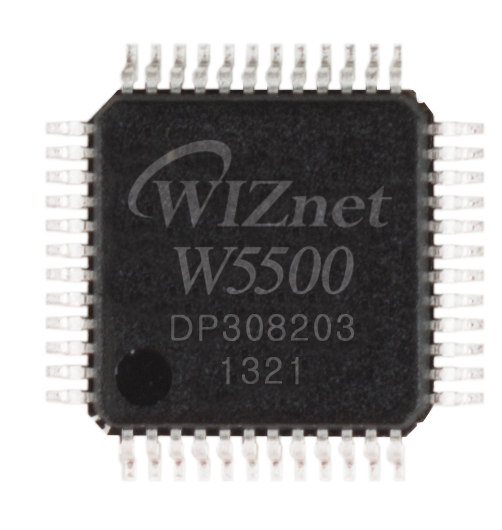
WIZnet - W5500
x 1

On the optional CAST-1 Ethernet HAT; SPI at 40 MHz to the ESP32-S3
Project description
📌 Overview
Apollo Automation, a smart home startup in Versailles, Kentucky that builds locally controlled ESPHome devices, launched the CAST-1 Audio Casting player in late August 2026. CAST-1 is a 45 x 45 mm network audio player that turns an ordinary powered speaker, amplifier, or AV receiver into a Music Assistant and Home Assistant player through a 3.5 mm line output. It sells for $34.99 and runs open-source ESPHome firmware on an ESP32-S3 with a TI PCM5122 DAC.
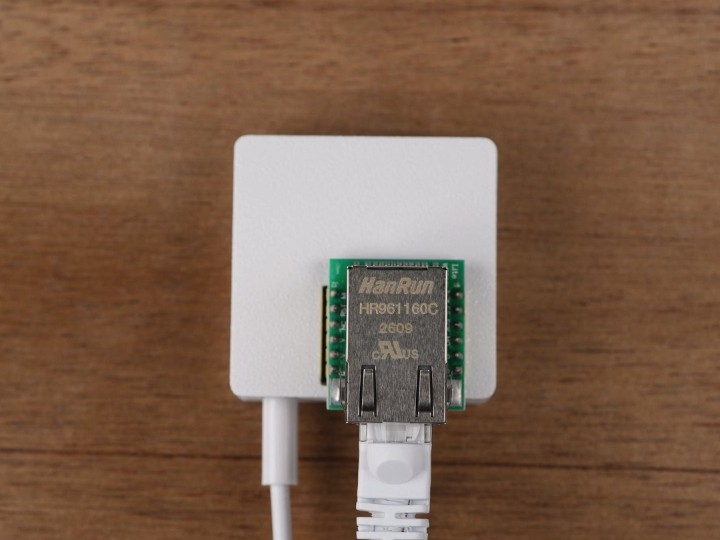
The WIZnet part is the optional Ethernet HAT, a small header board that presses onto the top of the case. Apollo's product page lists it as a W5500 board, and the firmware drives it as type: W5500 over SPI at 40 MHz. With the HAT plugged in, the audio stream, Home Assistant API traffic, and firmware updates move onto the wire, while the ESP32-S3's 2.4 GHz radio is left for the WizMote remote and the Bluetooth proxy.
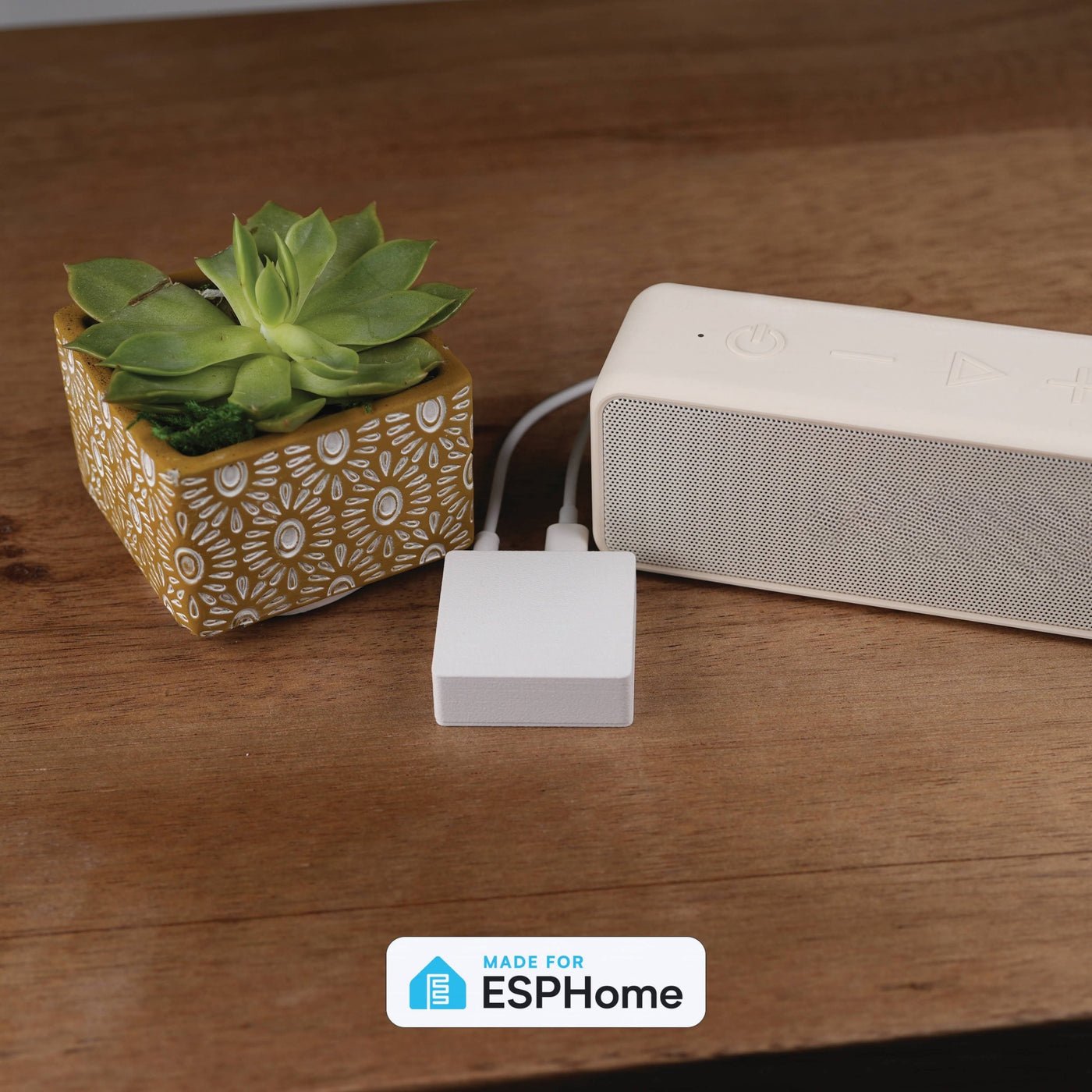 CAST-1 connected to an existing powered speaker. Image: Apollo Automation.
Key takeaway: CAST-1 is a shipping $34.99 product where a WIZnet W5500 is the wired upgrade path for synchronized multi-room audio, and the firmware history shows exactly how Apollo made Ethernet and Wi-Fi coexist in one image.
Key Terms: Sendspin, Music Assistant, and ESPHome
Music Assistant is an open-source music server that runs alongside Home Assistant and plays local files, streaming services, and radio to many kinds of speakers. Sendspin is the open streaming and synchronization protocol from the Open Home Foundation that Music Assistant uses to keep several players playing in time across rooms; Apollo describes it as a technical preview that works today and is still evolving. ESPHome is the YAML-based firmware framework that lets an ESP32 device appear in Home Assistant as native entities.
On CAST-1 these pieces show up as two media players: a Sendspin player for music and multi-room groups, and an ESPHome player for text-to-speech announcements, which duck the music and then restore it.
How the Audio Path Works
The data flow is short. Music Assistant streams to the CAST-1 over the network. The ESP32-S3 runs the Sendspin client, a resampler, and a mixer at 48 kHz, 16-bit stereo, then sends I2S audio to the PCM5122 DAC, which drives a 2.1 VRMS line output into the speaker. The firmware keeps the Sendspin task stack in internal RAM because, in Apollo's own comment, a PSRAM stack skews time sync.
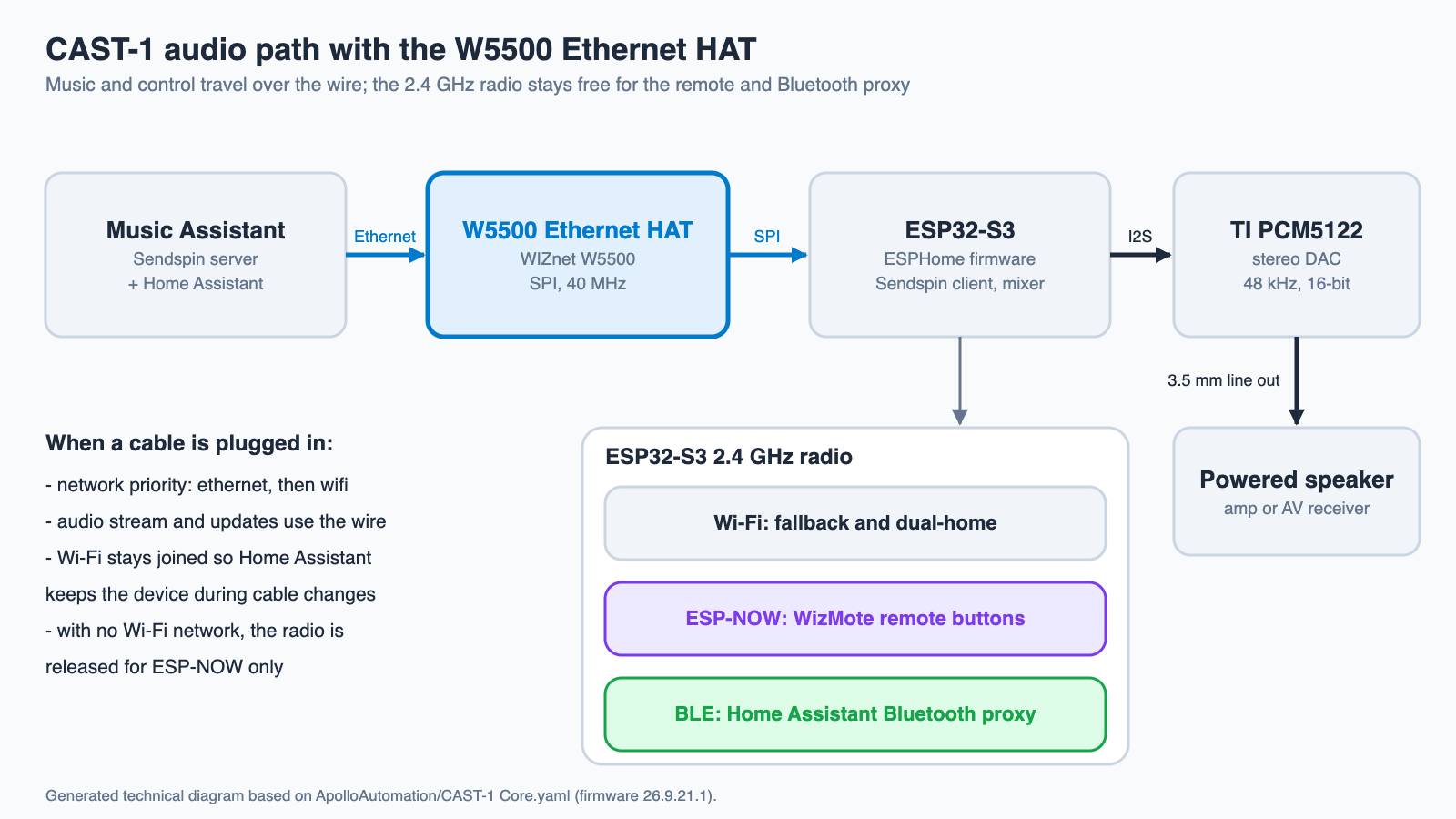 Generated technical diagram: Music Assistant to W5500 HAT to ESP32-S3 to PCM5122 to the speaker, with the radio roles below.
Why a Wired Path Matters for Synchronized Audio
Apollo's launch article recommends the wired module for long runs to outbuildings, thick masonry walls, crowded 2.4 GHz apartment networks, and basement racks, and notes that synchronized multi-room audio benefits from a steadier network path. The firmware history shows the Wi-Fi side of that story. In June 2026 Apollo disabled Wi-Fi post-connect roaming because roam scans briefly dropped the Music Assistant stream mid-playback, even on a strong signal. Ethernet through the W5500 removes that roaming behavior from the audio path entirely.
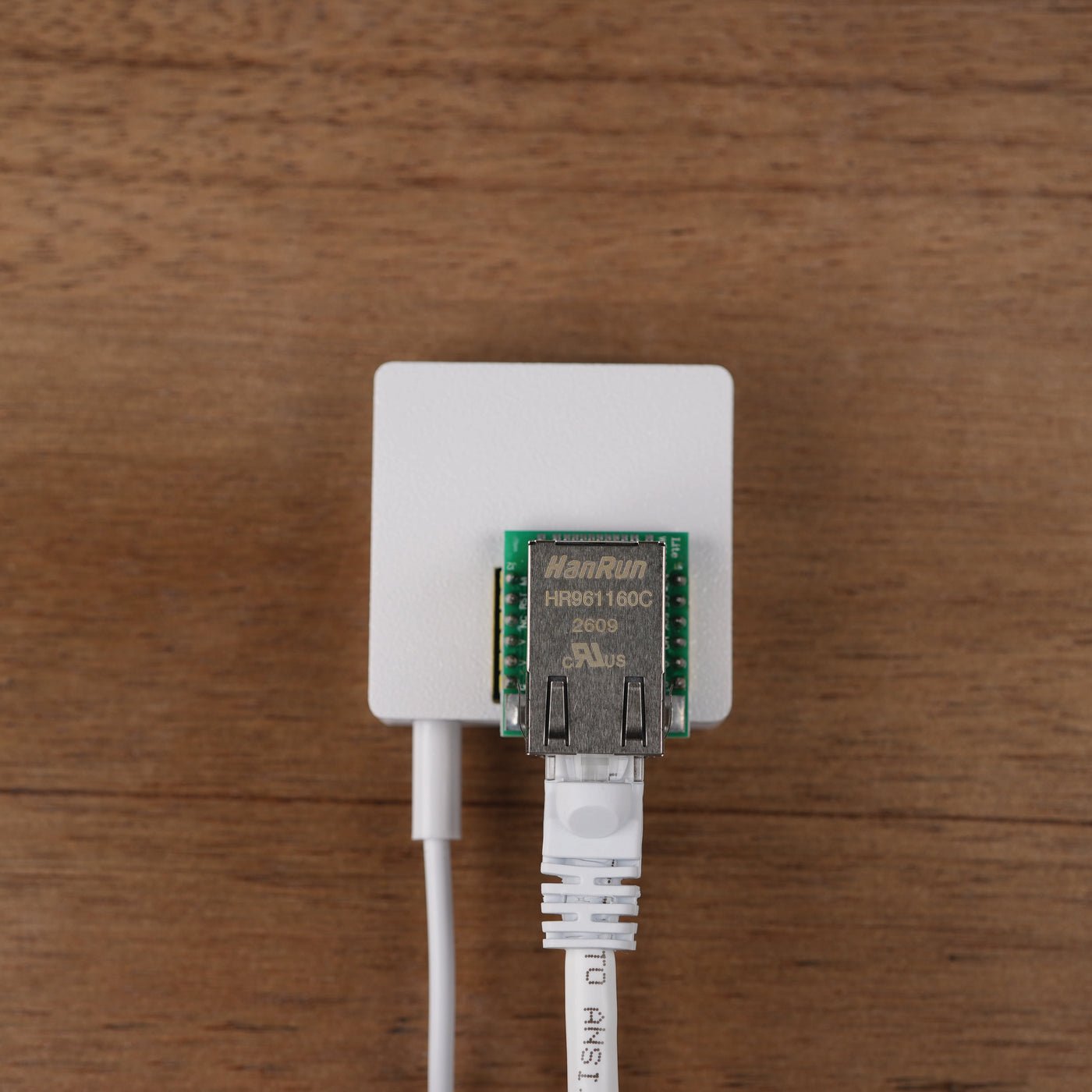 The Ethernet HAT seated on top of CAST-1 with a cable connected. Image: Apollo Automation.
⚙️ Role of the WIZnet W5500
The ESP32-S3 has no built-in Ethernet MAC, so a wired connection has to come from an SPI Ethernet controller. On CAST-1 that controller is the WIZnet W5500 on the HAT, configured in Core.yaml with clock, MOSI, MISO, chip-select, interrupt, and reset pins on GPIO7, 12, 11, 6, 13, and 21.
The W5500 is not an audio processor; it is the network interface that carries the Sendspin stream, the Home Assistant API, and over-the-air updates when a cable is present. The firmware sets network: priority: [ethernet, wifi], so ESPHome routes traffic over the W5500 whenever the link is up.
Because the HAT is optional, the same firmware has to behave well with and without it. Apollo's August 2026 commits describe three situations:
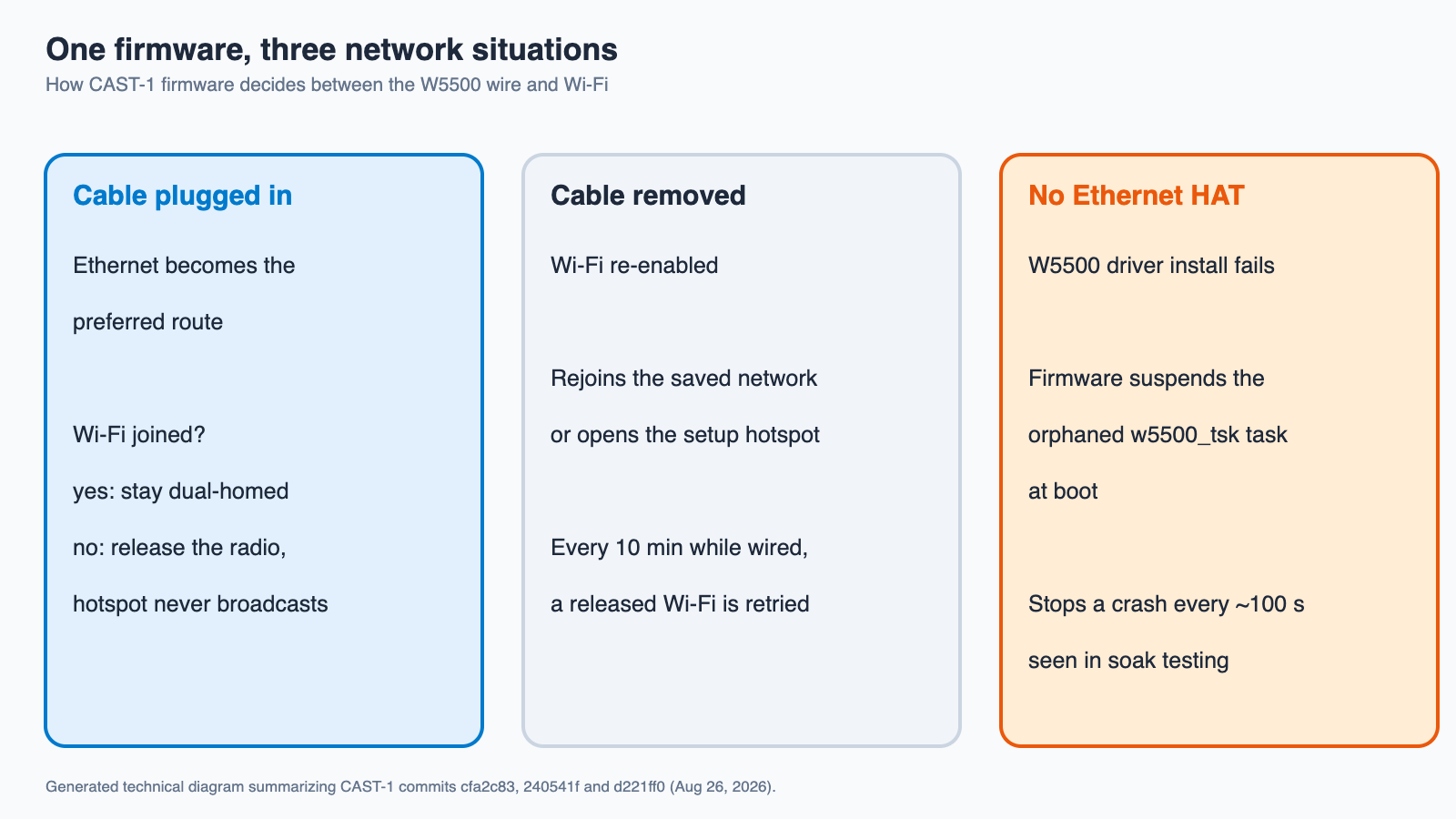 Generated technical diagram: cable plugged in, cable removed, and no HAT present.
- Cable plugged in. If Wi-Fi is already joined, CAST-1 stays dual-homed: audio uses Ethernet while Home Assistant keeps its connection to the Wi-Fi address. Apollo added this after field testing showed that switching addresses on every cable change could strand the device as unavailable on networks where Home Assistant cannot see the wired segment by mDNS. If Wi-Fi has no network, the radio is released and the setup hotspot never broadcasts while wired.
- Cable removed. Wi-Fi comes back, rejoining the saved network or opening the setup hotspot. While wired, a released Wi-Fi is retried every 10 minutes.
- No HAT present. The W5500 driver install fails, but its helper task survives and polls a floating SPI bus. Apollo observed a crash about every 100 seconds in soak testing and fixed it by suspending the orphaned
w5500_tsktask at boot.
WIZnet role in one line: the W5500 HAT is CAST-1's wired network path, and Apollo built one firmware that prefers it, keeps Home Assistant connected through cable changes, and stays stable when the HAT is absent.
The Apollo Product Family
CAST-1 reuses a pattern Apollo already ships. The R PRO-1 PoE multisensor uses an ESP32-S3 with an onboard W5500, and a community issue on that repository asked Apollo to merge its separate Wi-Fi and Ethernet firmware into one YAML. CAST-1's unified firmware commit cites that request directly. A September 18, 2026 update then freed 32 KB of internal RAM by shrinking the ESP32-S3 data cache, because the internal heap ran short when streaming over Ethernet.
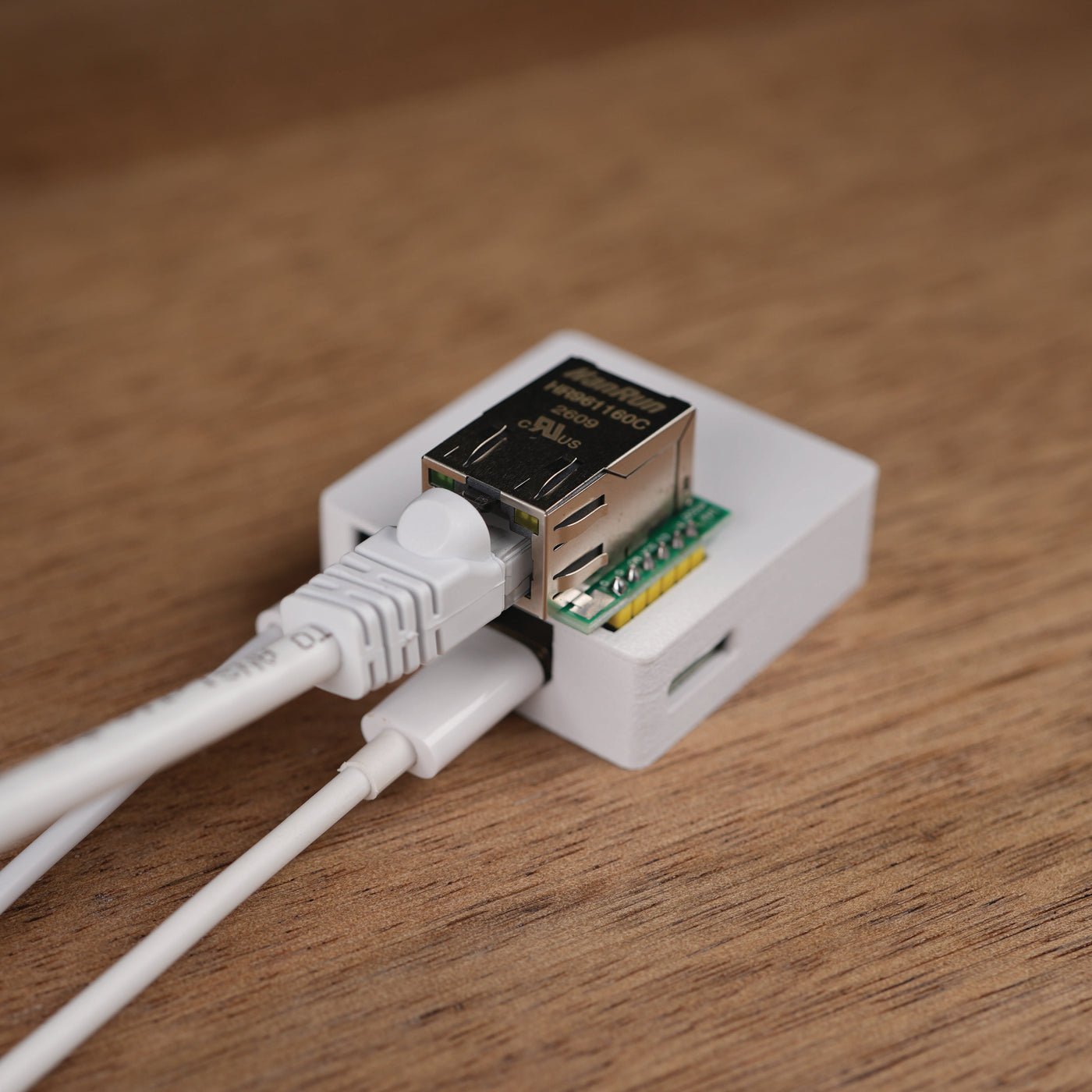 Side view of the CAST-1 Ethernet HAT on its header pins. Image: Apollo Automation.
Vendor, Availability, and Price
- Vendor: Apollo Automation, Versailles, Kentucky, United States. Founded in September 2023 and a commercial partner of the Open Home Foundation.
- Price: $34.99 USD for CAST-1 on apolloautomation.com, observed October 9, 2026. The Ethernet HAT is sold separately; its price was not listed on the pages checked.
- Where to buy: apolloautomation.com and resellers such as ameriDroid, which lists it at $34.95.
- Firmware: open source on GitHub, with stable and beta channels and OTA updates from the device.
Real-World Use So Far
An October 7, 2026 Home Assistant forum thread from an owner running four CAST-1 units, two of them on the Ethernet add-on, reports that the Sendspin players do not reconnect after Music Assistant restarts until each unit is rebooted. The owner sees the same behavior on Wi-Fi and Ethernet units, so it points to discovery or reconnection logic rather than the wired link; another user suggested mDNS as the cause. The thread is still open, and it is a single owner's report.
Where It Fits: Value and Limits
CAST-1 is a low-cost way to add synchronized, locally controlled audio to speakers people already own, and the W5500 HAT gives installers a wired option for racks, basements, and outbuildings without changing firmware. Sendspin itself is still a technical preview, and the HAT's price and PoE support are not published, so plan on USB-C power for the player.
Related WIZnet Maker Projects
If you want to see the same vendor's W5500 design in a sensor, the R PRO-1 PoE dual mmWave multisensor shows Apollo's onboard W5500 with PoE, and its firmware issue is where the single Wi-Fi plus Ethernet image for CAST-1 started.
For another Sendspin endpoint, louder-esphome-sendspin runs the same protocol on a Louder ESP32 amplifier board with W5500, which is useful if you want built-in amplification instead of a line output.
For the Snapcast side of wired multi-room audio, Esparagus Snapclient with W5500 explains how a different synchronization protocol uses the same ESP32 plus W5500 combination.
❓ FAQ
Q. What does CAST-1 use the W5500 for? The W5500 on the optional Ethernet HAT is CAST-1's wired network interface. It carries the Sendspin audio stream, the Home Assistant API, and firmware updates whenever a cable is connected.
Q. Do I need different firmware to use Ethernet? No. Since August 2026 one firmware covers Wi-Fi and Ethernet, prefers Ethernet when a cable is present, and falls back to Wi-Fi when it is removed.
Q. Does Home Assistant lose the device when I plug or unplug the cable? Not when Wi-Fi is also joined. The firmware stays connected on both interfaces so Home Assistant keeps the same Wi-Fi address while audio moves to the wire.
Q. Is the Ethernet HAT powered over PoE? Apollo's pages do not mention PoE for CAST-1; the player is powered by a 5 V USB-C supply.
Q. Can CAST-1 drive passive speakers directly? No. It has a line-level output and no amplifier, so it needs powered speakers, an amplifier, an AV receiver, or an active soundbar.
Documents
-
CAST-1 firmware repository
Original source: ESPHome firmware (Core.yaml with W5500 Ethernet config)
-
CAST-1 product page
Official store page, $34.99, lists the optional W5500 Ethernet HAT
-
Meet CAST-1 Audio Casting
Vendor launch article with specs and wired-network guidance
-
CAST-1 Ethernet module guide
Official install steps for the Ethernet add-on
-
CAST-1 FAQ
Official FAQ: Wi-Fi vs Ethernet, outputs, power
-
R_PRO-1 issue #69: one YAML for Wi-Fi and Ethernet
Community request cited by the CAST-1 unified firmware commit
-
HA forum: CAST-1 Sendspin players do not reconnect
Owner report with two Ethernet units, Oct 2026
-
WIZnet W5500
WIZnet chip page


