Wine fermentation. Every tank in its range.
Wine fermentation. Every tank in its range.
0
Components
Hardware components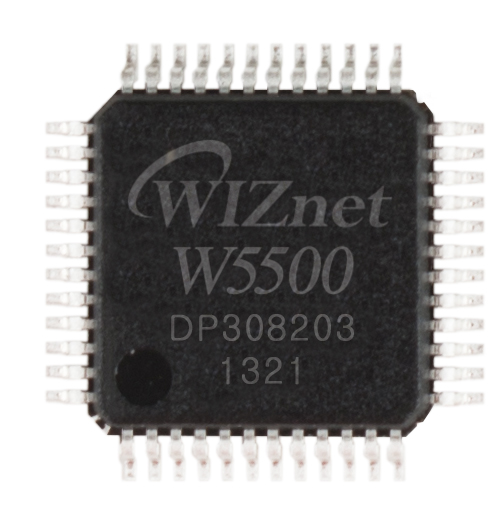
WIZnet - W5500
x 1


Arduino - Arduino Mega 2560
x 1
Project description
1. 프로젝트 개요 및 동작 방식
안도라의 자동화 전문기업 SIRA가 개발한 SI-WINE은 와인 발효 탱크의 온도를 자동으로 관리하는 산업용 제어 시스템입니다.
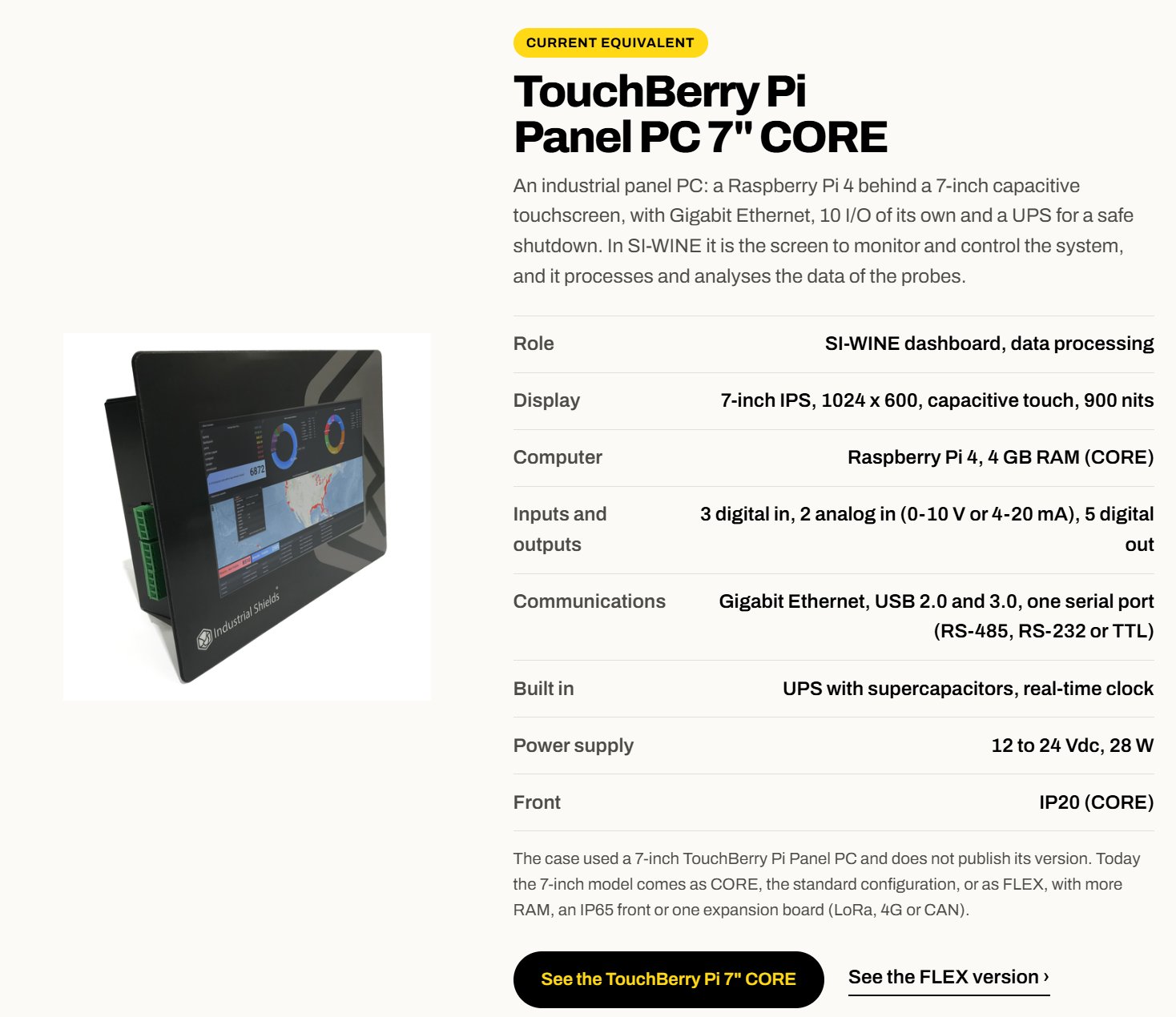
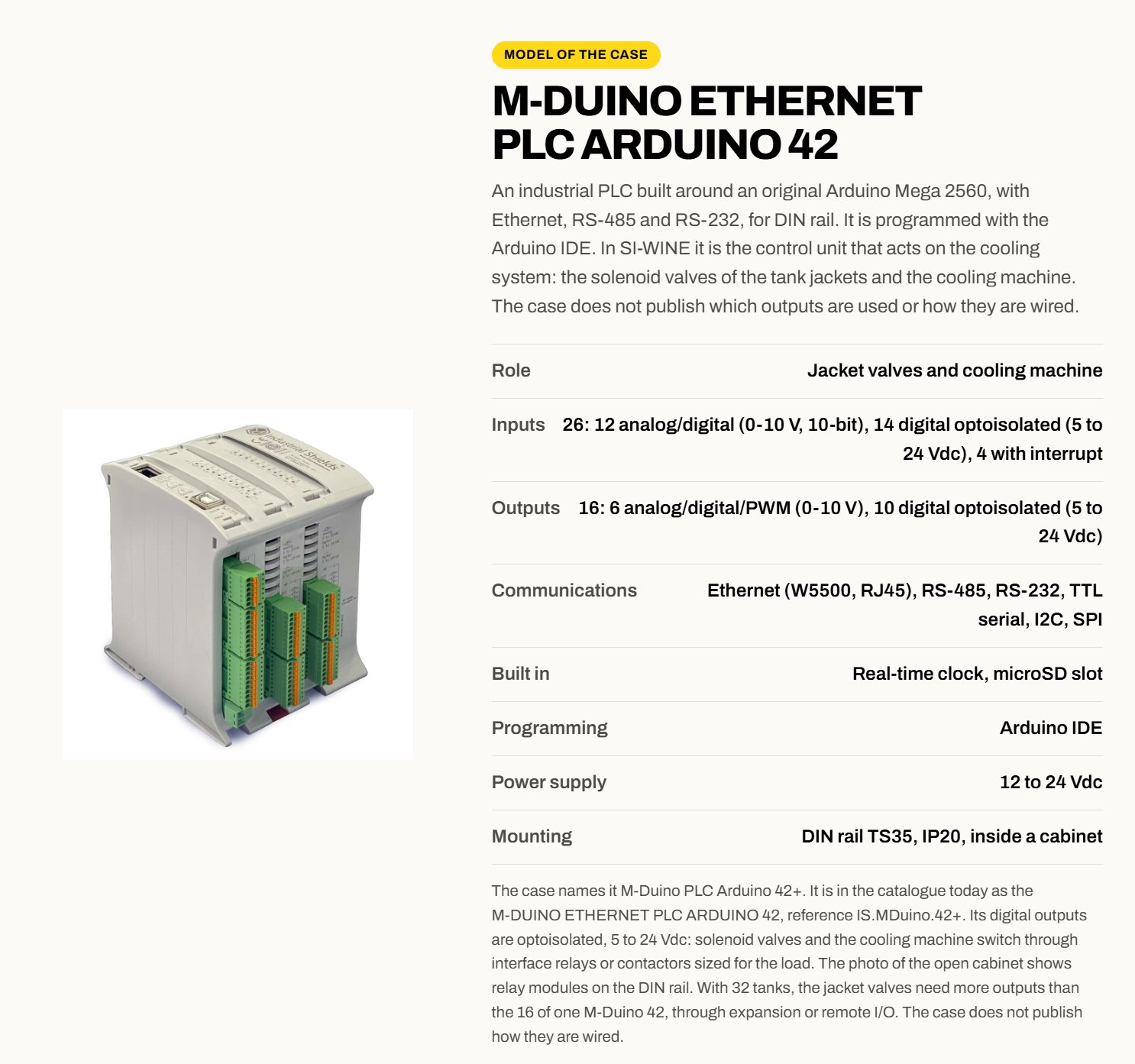
와인 발효 과정에서는 열이 발생하기 때문에 탱크별 온도를 적정 범위로 유지해야 합니다. 이를 위해 SI-WINE은 Raspberry Pi 기반의 TouchBerry Pi 패널 PC와 ATmega2560 기반의 M-Duino 42+ PLC를 함께 사용합니다. TouchBerry Pi는 온도 데이터 처리, 모니터링 및 알림 기능을 담당하고, M-Duino는 냉각 밸브와 냉동기를 제어합니다. M-Duino에 내장된 WIZnet W5500은 유선 이더넷 통신을 지원합니다. 무선 프로브의 실제 수신 경로와 두 제어 장치 사이의 통신 방식은 공개되지 않았습니다.
M-Duino에는 WIZnet W5500 이더넷 컨트롤러가 내장되어 있어 산업용 유선 네트워크 연결을 지원합니다.
이미지 출처 : https://www.industrialshields.com/success-story-wine-fermentation-control-sira
① 와인 발효 탱크 (Fermentation Tanks)
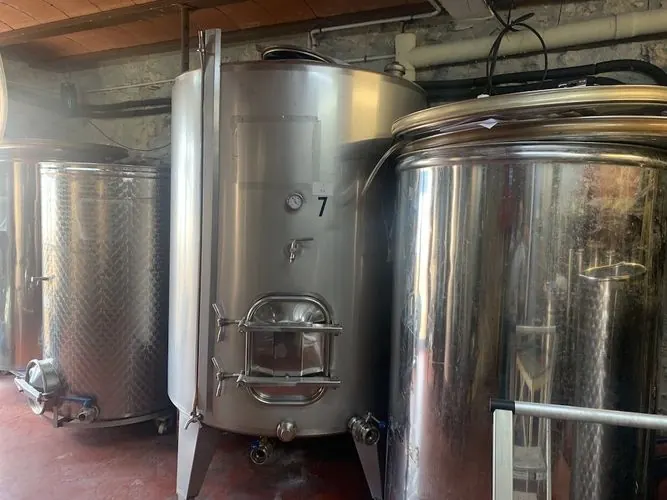
이미지 출처 : https://www.industrialshields.com/success-story-wine-fermentation-control-sira
와인은 스테인리스 발효 탱크에서 발효되며, 각 탱크 내부에 설치된 온도 프로브가 와인과 직접 접촉하여 온도를 측정합니다.
프로브는 식품용 스테인리스 소재와 실리콘 보호 케이블을 사용하며, Wi-Fi 또는 LoRa 통신으로 2분마다 온도 데이터를 전송합니다. 각 탱크에는 서로 다른 종류의 와인이 저장될 수 있으므로 독립적인 온도 관리가 필요합니다.
② 제어 캐비닛 내부 (Control Cabinet)
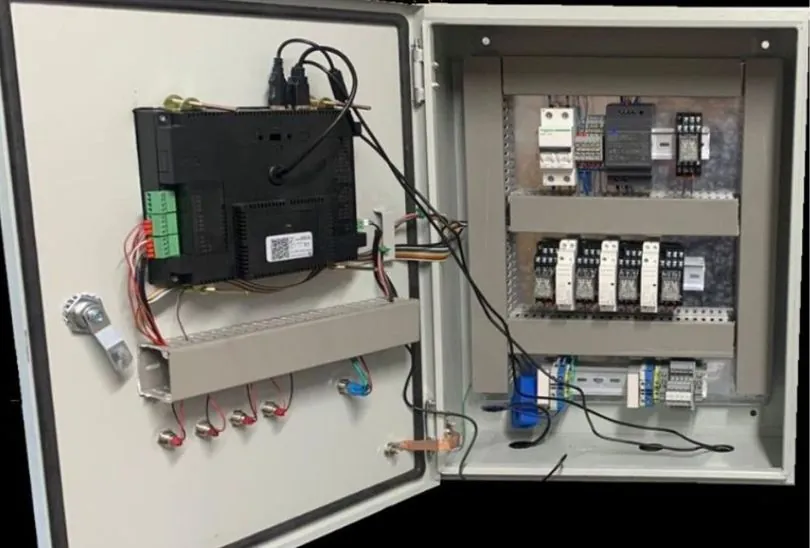
이미지 출처 : https://www.industrialshields.com/success-story-wine-fermentation-control-sira
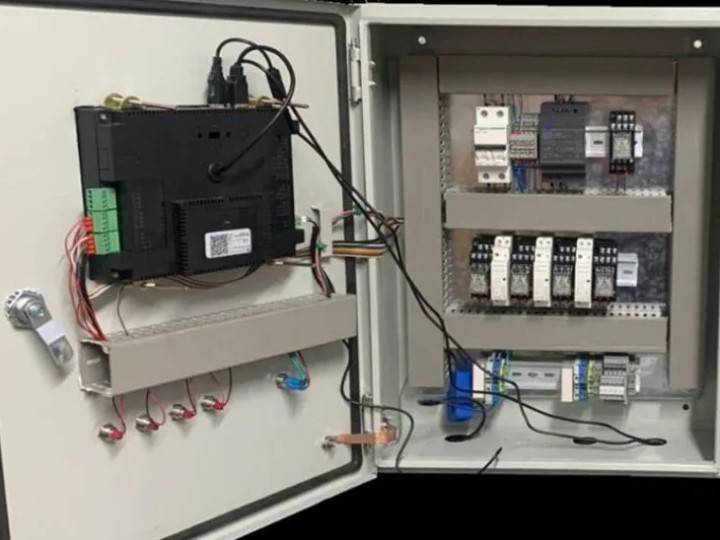
제어 캐비닛에는 PLC를 비롯해 전원 공급장치, 보호 장치, 릴레이 모듈 등이 DIN 레일에 설치되어 있으며, 도어 안쪽에는 TouchBerry Pi 패널 PC가 장착되어 있습니다.
M-Duino PLC는 냉각 밸브와 냉동기 제어를 담당하고, TouchBerry Pi는 온도 데이터 처리와 모니터링 기능을 수행합니다. 다만 공개된 사진만으로는 각 부품의 정확한 배선과 연결 방식까지 확인하기 어렵습니다.
③ 온도 프로브 모니터링 화면 (Probe Monitoring)
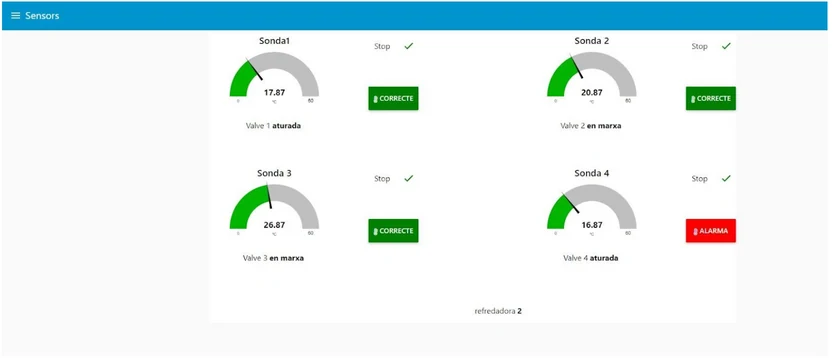
이미지 출처 : https://www.industrialshields.com/success-story-wine-fermentation-control-sira
프로브 화면에서는 4개 발효 탱크의 온도를 게이지 형태로 확인할 수 있습니다.
각 프로브의 측정 온도와 냉각 밸브의 개폐 상태, 정상(OK) 또는 알람 상태가 함께 표시됩니다. 이를 통해 관리자는 개별 탱크의 온도와 냉각 장치의 동작 여부를 한 화면에서 확인할 수 있습니다.
④ 탱크별 온도 설정 화면 (Temperature Settings)
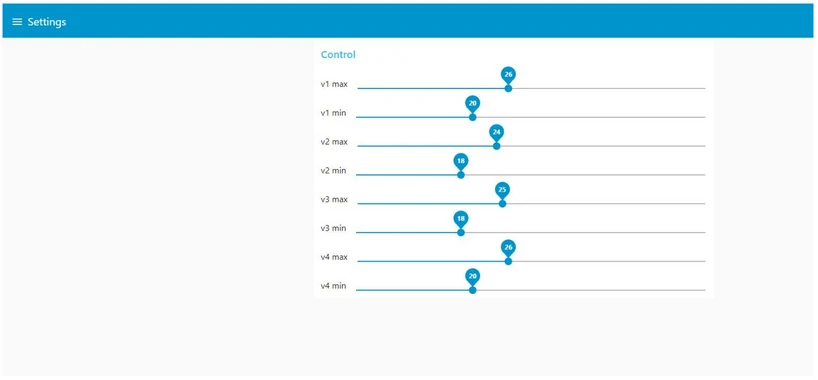
이미지 출처 : https://www.industrialshields.com/success-story-wine-fermentation-control-sira
설정 화면에서는 각 탱크의 최고·최저 온도를 개별적으로 지정할 수 있습니다.
측정 온도가 설정된 상한값을 초과하면 해당 탱크의 냉각 밸브를 열고, 하한값에 도달하면 닫는 방식으로 동작합니다.
이를 통해 서로 다른 발효 조건을 가진 와인을 동시에 관리할 수 있으며, 냉각 밸브가 지나치게 자주 동작하는 것도 줄일 수 있습니다.
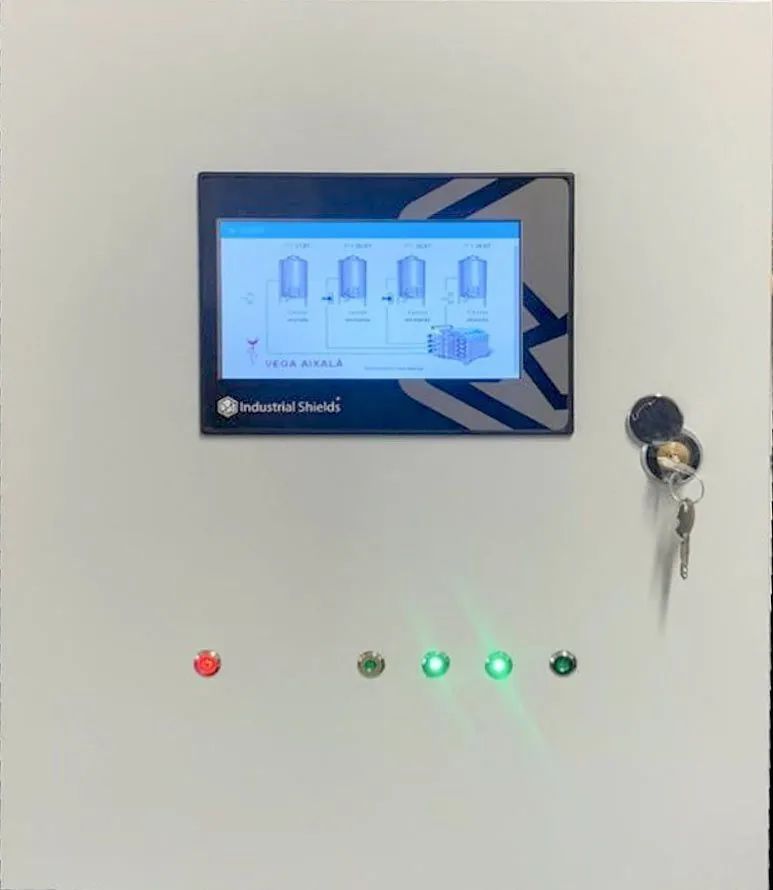
⑤ SI-WINE 제어 캐비닛 LCD 패널 (Control Panel)
이미지 출처 : https://www.industrialshields.com/success-story-wine-fermentation-control-sira
제어 캐비닛 전면에는 7인치 TouchBerry Pi 터치 패널이 설치되어 있습니다.
패널에는 발효 탱크와 냉동기의 상태가 표시되며, 작업자는 현장에서 온도를 확인하고 시스템을 관리할 수 있습니다.
캐비닛 전면에는 키 잠금장치와 상태 표시등도 배치되어 있어 설비의 운영 상태를 확인할 수 있습니다.
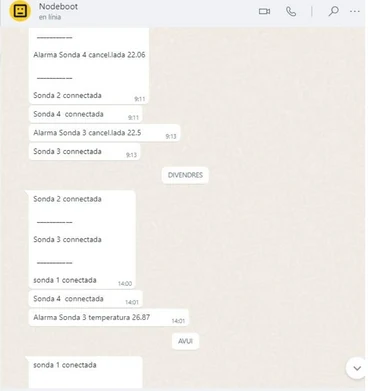
⑥ 채팅 알림 화면 (Chat Notifications)
이미지 출처 : https://www.industrialshields.com/success-story-wine-fermentation-control-sira
SI-WINE은 온도 이상이나 장비 오류가 발생하면 이메일, Telegram 또는 WhatsApp으로 알림을 전송합니다.
원본 채팅 화면에서는 프로브 연결 상태, 3번 프로브의 온도 알람, 4번 프로브의 알람 해제 메시지를 확인할 수 있습니다.
센서 배터리 부족이나 냉각 설비 이상도 알림 대상으로 관리하므로, 작업자가 현장에 상주하지 않아도 문제 발생 여부를 파악할 수 있습니다.
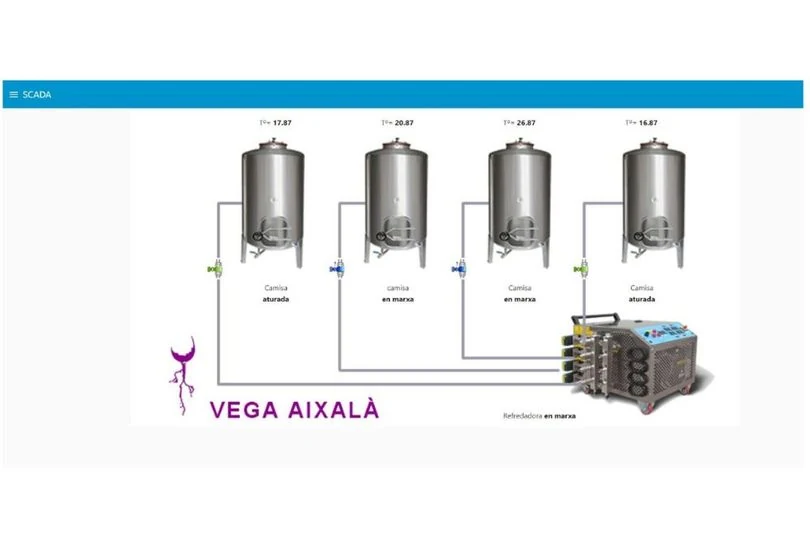
⑦ 전체 공정 모니터링 화면 (Process Monitoring)
이미지 출처 : https://www.industrialshields.com/success-story-wine-fermentation-control-sira
공정 화면에서는 4개 발효 탱크의 현재 온도, 냉각 재킷 밸브 상태, 냉동기 동작 여부를 통합적으로 확인할 수 있습니다.
냉동기는 냉각 밸브의 개방 상태를 고려하여 운전되므로, 모든 냉각 회로가 닫힌 상태에서 불필요하게 가동되는 것을 방지합니다.
또한 SI-WINE은 5분 간격으로 온도 이력을 기록하고 CSV 파일로 내보낼 수 있으며, 제어 유닛당 최대 32개 탱크까지 확장할 수 있습니다.
원본에 제시된 화면은 4개 탱크를 이용한 예시입니다. 실제 고객사의 설치 탱크 수와 운영 성과는 공개되지 않았습니다.
| 신호 | 연결 구간 | 통신 및 제어 방식 | 목적 및 기능 |
|---|---|---|---|
| 탱크 온도 | 탱크 내부 프로브 → 제어 장치 | 무선 통신 (Wi-Fi 또는 LoRa) | 24시간 동안 2분 간격으로 온도를 측정하고 전송합니다. |
| 프로브 배터리 | 프로브 → 제어 장치 | 무선 통신 | 배터리 교체 또는 충전이 필요할 때 알림을 제공합니다. 1회 충전으로 약 2주간 사용할 수 있습니다. |
| 냉각 재킷 밸브 | M-Duino PLC → 각 탱크의 솔레노이드 밸브 | 디지털 출력 (예시) | 탱크 온도가 설정 상한값을 초과하면 냉각 밸브를 작동시킵니다. 실제 배선 방식은 공개되지 않았습니다. |
| 냉동기 | M-Duino PLC → 냉동기 | 디지털 출력 (예시) | 냉각 밸브의 개방 상태에 따라 냉동기를 가동하거나 정지합니다. 모든 밸브가 닫힌 상태에서는 가동하지 않습니다. |
| 온도 설정값 | 대시보드 → 각 프로브 | 설정값 (Set Point) | 탱크별 최고·최저 온도를 개별적으로 설정합니다. |
| 에너지 사용량 | 냉각 시스템 → 제어 장치 | 미공개 | 발효 공정별 에너지 소비 비용을 관리합니다. 구체적인 데이터 수집 방식은 공개되지 않았습니다. |
| 이상 알림 | 제어 장치 → 운영 담당자 | 이메일, Telegram, WhatsApp | 밸브 오류, 냉동기 고장, 프로브 이상, 온도 상한·하한 초과 시 알림을 전송합니다. |
| 데이터 기록 | 제어 장치 → CSV 파일 | 파일 저장 | 모든 탱크의 온도를 5분 간격으로 기록하며, Excel에서 확인할 수 있습니다. |
| 외부 시스템 연동 | 제어 장치 ↔ 외부 SCADA 시스템 | Modbus | 에너지 효율 관리, 재실 여부 확인 및 조명 제어 등 다른 자동화 시스템과 연동할 수 있습니다. |
2. WIZnet W5500의 역할과 기술적 의미
왜 W5500을 사용했을까요?
M-Duino 42+는 Arduino Mega 2560 기반의 산업용 PLC입니다. ATmega2560은 SRAM이 8KB인 MCU이므로 네트워크 통신에 사용할 수 있는 메모리와 연산 자원이 제한적입니다.
W5500은 하드웨어 TCP/IP 스택을 내장하고 있어 이러한 MCU에 유선 네트워크 기능을 추가하는 데 적합합니다.
하드웨어 TCP/IP 처리: MCU의 네트워크 처리 부담을 줄여줍니다.
32KB 내부 버퍼: 네트워크 데이터 송수신을 위한 공간을 제공합니다.
8개 하드웨어 소켓: 여러 TCP/UDP 연결을 지원합니다.
SPI 인터페이스: MCU와 비교적 간단하게 연결할 수 있습니다.
Industrial Shields의 공식 설명서에서도 M-Duino의 이더넷 포트가 W5500을 기반으로 한다는 사실을 확인할 수 있습니다.
왜 이더넷이 필요할까요?
SI-WINE에서 탱크 내부의 온도 센서는 Wi-Fi 또는 LoRa를 사용합니다. 이는 배선이 어려운 위치에서도 온도를 측정하기 위한 구성입니다.
반면 고정 설치된 PLC와 중앙 관리 시스템 사이에서는 유선 이더넷이 무선 간섭을 줄이고 네트워크를 관리하는 데 유리할 수 있습니다.
특히 냉동기, 펌프, 전자밸브가 동작하는 산업 현장에서는 통신 안정성이 중요합니다. 따라서 센서 측정에는 무선 통신을, 고정된 제어 장치의 네트워크 연결에는 유선 이더넷을 사용하는 구성을 고려할 수 있습니다.
다만 원본 사례에는 PLC와 TouchBerry Pi 사이의 실제 통신 방식이 공개되지 않았습니다. 따라서 W5500이 해당 시스템에서 특정 데이터를 전송하는 데 사용되었다고 단정하기는 어렵습니다.
제품 및 시장 관점
이 사례에서 주목할 부분은 산업용 PLC 제조사가 W5500을 상용 제품에 채택했다는 점입니다.
와이너리 자동화는 최종 적용 분야이며, WIZnet의 직접적인 잠재 고객은 산업용 제어기를 개발하고 생산하는 기업이라고 볼 수 있습니다.
| 타깃 고객 | 사업 기회 |
|---|---|
| 산업용 PLC 제조사 | W5500 기반 이더넷 인터페이스의 OEM 설계 채택 |
| 자동화 시스템 통합업체 | PLC와 SCADA를 연계한 온도 제어 솔루션 개발 |
| 식음료 설비 제조사 | 발효·냉각 설비에 유선 네트워크 기능 추가 |
와이너리뿐 아니라 맥주 발효, 식품 저장, 냉장 설비 등 온도 관리가 필요한 산업 분야로도 응용 가능성을 검토할 수 있습니다.
다만 이러한 확장 가능성이 실제 판매 실적이나 고객 수요로 확인된 것은 아닙니다.
3. 구현 및 기술 참고사항
M-Duino와 W5500 연결
Industrial Shields의 M-Duino 42+ 사용자 설명서 10.6절에는 다음과 같이 명시되어 있습니다.
M-Duino Ethernet port controller is based on w5500 IC
W5500은 Arduino Mega 2560과 SPI 인터페이스로 연결됩니다.
| SPI 신호 | Arduino Mega 핀 |
|---|---|
| MISO | D50 |
| MOSI | D51 |
| SCK | D52 |
| Chip Select | D10 |
W5500과 RJ45 포트가 PLC에 내장되어 있으므로 별도의 이더넷 모듈을 추가할 필요가 없습니다.
M-Duino는 Arduino IDE와 Ethernet2 계열 라이브러리를 지원합니다. 또한 SI-WINE 제어 유닛은 Modbus 호환성을 제공하므로 외부 SCADA 시스템과 연계할 수 있습니다.
기술적 제약: SI-WINE의 실제 펌웨어와 PLC–패널 PC 연결 방식은 공개되지 않았습니다. Modbus TCP 기반 W5500 통신은 가능한 확장 방식이지만, 실제 프로젝트에서 사용되었는지는 확인되지 않았습니다.
4. 실제 적용 시 고려사항
통신 안정성: 냉동기와 모터에서 발생하는 전기적 간섭을 고려하여 이더넷 케이블, 접지 및 제어반 배치를 설계해야 합니다.
통신 장애 대응: 무선 센서나 네트워크가 끊기더라도 PLC가 안전한 제어 상태를 유지하도록 인터록을 구성하는 것이 중요합니다.
네트워크 설정: 고정 IP 또는 DHCP 예약을 적용하고, 외부 SCADA 연결 시 접근 권한을 관리해야 합니다.
I/O 확장: M-Duino 42+는 16개 출력을 제공하므로 다수의 탱크를 독립적으로 제어하려면 추가 I/O 모듈이 필요할 수 있습니다.
냉각 설비 보호: 밸브 상태와 냉동기 기동 조건을 연동하고, 실제 부하에 적합한 릴레이 및 접촉기를 사용해야 합니다.
5. FAQ
Q1. 산업용 PLC에 W5500을 사용하는 이유는 무엇인가요?
W5500은 하드웨어 TCP/IP 스택과 내부 송수신 버퍼를 제공하여 MCU의 네트워크 처리 부담을 줄여줍니다. 따라서 SRAM이 제한적인 ATmega2560 기반 제어기에 유선 통신 기능을 구현하기에 적합합니다.
Q2. W5500은 M-Duino에 어떻게 연결되나요?
SPI 인터페이스로 연결되며, MISO(D50), MOSI(D51), SCK(D52), CS(D10)를 사용합니다. M-Duino에는 W5500과 RJ45 포트가 내장되어 있습니다.
Q3. W5500이 와인 발효 온도를 직접 제어하나요?
아닙니다. 냉각 밸브와 냉동기 제어는 PLC가 담당하며, W5500은 PLC의 유선 네트워크 인터페이스 역할을 합니다. SI-WINE에서 실제로 어떤 데이터가 W5500을 통해 전송되는지는 공개되지 않았습니다.
Q4. Arduino 개발자도 비슷한 시스템을 구현할 수 있나요?
Arduino와 SPI, TCP/IP 통신에 대한 기본 지식이 있다면 네트워크 기능을 구현할 수 있습니다. 다만 실제 냉각 설비를 제어하려면 산업용 I/O, 전기 배선 및 안전 인터록 설계 경험이 필요합니다.
Q5. W5500과 Wi-Fi 중 어떤 방식이 적합한가요?
배선이 어려운 온도 센서에는 Wi-Fi가 유리할 수 있지만, 고정된 PLC와 중앙 제어 장치 사이에는 유선 이더넷이 적합할 수 있습니다. 따라서 현장 조건에 따라 두 기술을 함께 사용하는 방식을 고려할 수 있습니다.
1. Project Overview and How It Works
SI-WINE, developed by SIRA, an automation company based in Andorra, is an industrial control system designed to automatically manage the temperature of wine fermentation tanks.
During wine fermentation, heat is generated, making it essential to maintain each tank within an appropriate temperature range. To achieve this, SI-WINE combines a Raspberry Pi-based TouchBerry Pi panel PC with an ATmega2560-based M-Duino 42+ PLC. The TouchBerry Pi handles temperature data processing, monitoring, and notifications, while the M-Duino controls cooling valves and the cooling machine. The WIZnet W5500 integrated into the M-Duino provides wired Ethernet connectivity. However, the actual wireless probe reception path and the communication method between the two control devices have not been disclosed.
The M-Duino features an integrated WIZnet W5500 Ethernet controller, enabling wired network connectivity in industrial environments.
Image Source: Industrial Shields — Wine Fermentation Control with SI-WINE by SIRA
① Wine Fermentation Tanks
Image Source: Industrial Shields
Wine is fermented in stainless steel tanks, where temperature probes installed inside each tank measure the temperature through direct contact with the wine.
The probes are made of food-grade stainless steel and use silicone-protected cables. They transmit temperature readings every two minutes via Wi-Fi or LoRa. Since each tank may contain a different type of wine, independent temperature management is required.
② Control Cabinet
Image Source: Industrial Shields
The control cabinet houses the PLC, power supply, protection devices, and relay modules mounted on DIN rails. A TouchBerry Pi panel PC is installed on the inside of the cabinet door.
The M-Duino PLC controls the cooling valves and cooling machine, while the TouchBerry Pi handles temperature data processing and monitoring. However, the published photographs do not provide enough detail to verify the exact wiring and connections between the components.
③ Probe Monitoring
Image Source: Industrial Shields
The probe monitoring screen displays the temperatures of four fermentation tanks using gauge indicators.
Each gauge shows the measured temperature, the corresponding cooling valve's open or closed status, and an OK or alarm indicator. This allows operators to monitor individual tank temperatures and cooling system operation from a single screen.
④ Temperature Settings
Image Source: Industrial Shields
The settings screen allows operators to configure individual maximum and minimum temperature limits for each tank.
When the measured temperature exceeds the configured upper limit, the cooling valve for that tank opens. Once the temperature reaches the lower limit, the valve closes.
This approach enables simultaneous management of wines with different fermentation requirements while reducing excessive cycling of the cooling valves.
⑤ SI-WINE Control Cabinet LCD Panel
Image Source: Industrial Shields
A 7-inch TouchBerry Pi touchscreen panel is installed on the front of the control cabinet.
The panel displays the status of the fermentation tanks and cooling machine, allowing operators to monitor temperatures and manage the system directly on-site.
The cabinet also includes a key lock and status indicator lights, providing additional means of checking equipment operation.
⑥ Chat Notifications
Image Source: Industrial Shields
SI-WINE sends notifications via email, Telegram, or WhatsApp when abnormal temperatures or equipment faults are detected.
The original chat screenshot shows probe connection status, a temperature alarm for Probe 3, and an alarm cancellation message for Probe 4.
Low sensor battery levels and cooling equipment faults are also monitored, allowing operators to identify problems without remaining physically present at the facility.
⑦ Process Monitoring
Image Source: Industrial Shields
The process monitoring screen provides an integrated view of the current temperatures of four fermentation tanks, the status of their cooling jacket valves, and the operation of the cooling machine.
The cooling machine operates according to the status of the cooling valves, preventing unnecessary operation when all cooling circuits are closed.
SI-WINE also records temperature history every five minutes, supports exporting data to CSV files, and can be expanded to manage up to 32 tanks per control unit.
The screens shown in the original project demonstrate a four-tank configuration. The actual number of tanks installed at the customer's facility and the operational results have not been disclosed.
Signals and Data Flow
| Signal | Connection | Communication or Control Method | Purpose and Function |
|---|---|---|---|
| Tank Temperature | Probe inside tank → Control unit | Wireless (Wi-Fi or LoRa) | Measures and transmits temperature readings every two minutes, 24 hours a day. |
| Probe Battery | Probe → Control unit | Wireless | Sends notifications when the battery needs replacement or charging. A single charge lasts approximately two weeks. |
| Cooling Jacket Valve | M-Duino PLC → Solenoid valve of each tank | Digital output (example) | Activates the cooling valve when the tank temperature exceeds the configured upper limit. The actual wiring configuration has not been disclosed. |
| Cooling Machine | M-Duino PLC → Cooling machine | Digital output (example) | Starts or stops the cooling machine according to the open or closed status of the cooling valves. The machine remains off when all valves are closed. |
| Temperature Setpoints | Dashboard → Each probe | Setpoint | Allows individual maximum and minimum temperature settings for each tank. |
| Energy Consumption | Cooling system → Control unit | Not disclosed | Manages energy consumption costs for each fermentation process. The specific data collection method has not been disclosed. |
| Alerts | Control unit → Operators | Email, Telegram, WhatsApp | Sends notifications for valve errors, cooling machine faults, probe failures, and temperatures exceeding upper or lower limits. |
| Data Logging | Control unit → CSV file | File storage | Records temperatures from all tanks every five minutes. The data can be viewed in Excel. |
| External System Integration | Control unit ↔ External SCADA system | Modbus | Enables integration with other automation systems for energy efficiency management, occupancy monitoring, and lighting control. |
2. Role and Technical Significance of the WIZnet W5500
Why Use the W5500?
The M-Duino 42+ is an industrial PLC based on the Arduino Mega 2560. Its ATmega2560 microcontroller has only 8 KB of SRAM, which limits the memory and processing resources available for network communication.
The W5500 integrates a hardware TCP/IP stack, making it suitable for adding wired Ethernet connectivity to resource-constrained microcontrollers.
Hardware TCP/IP Processing: Reduces the MCU's network protocol processing overhead.
32 KB Internal Buffer: Provides dedicated memory for transmitting and receiving network data.
8 Hardware Sockets: Supports multiple TCP/UDP connections.
SPI Interface: Enables relatively simple integration with the MCU.
Industrial Shields' official documentation also confirms that the M-Duino's Ethernet port is based on the W5500.
Why Is Ethernet Needed?
In SI-WINE, temperature probes inside the tanks communicate using Wi-Fi or LoRa. This configuration enables temperature monitoring in locations where installing cables may be difficult.
For communication between fixed PLCs and central management systems, however, wired Ethernet can offer advantages in reducing wireless interference and simplifying network management.
Communication reliability is particularly important in industrial environments where cooling machines, pumps, and solenoid valves operate.
Therefore, a system architecture that uses wireless communication for sensor measurements and wired Ethernet for connections between fixed control devices can be considered.
However, the original case study does not disclose the actual communication method between the PLC and the TouchBerry Pi. It is therefore not possible to confirm whether the W5500 is used to transmit specific data within the SI-WINE system.
Product and Market Perspective
A key point of this case study is that an industrial PLC manufacturer has integrated the W5500 into a commercial product.
Winery automation represents the end application, while WIZnet's potential direct customers are companies that develop and manufacture industrial control equipment.
| Target Customers | Business Opportunities |
|---|---|
| Industrial PLC Manufacturers | OEM design adoption of W5500-based Ethernet interfaces |
| Automation System Integrators | Development of temperature control solutions integrating PLCs and SCADA systems |
| Food and Beverage Equipment Manufacturers | Addition of wired network connectivity to fermentation and cooling equipment |
Beyond wineries, similar applications could be explored in beer fermentation, food storage, refrigeration equipment, and other industrial processes requiring temperature management.
However, these potential applications have not been confirmed as actual customer demand or sales results.
3. Implementation and Technical Notes
Connecting the M-Duino and W5500
Section 10.6 of the Industrial Shields M-Duino 42+ User Guide states:
M-Duino Ethernet port controller is based on w5500 IC
The W5500 communicates with the Arduino Mega 2560 through the SPI interface.
| SPI Signal | Arduino Mega Pin |
|---|---|
| MISO | D50 |
| MOSI | D51 |
| SCK | D52 |
| Chip Select | D10 |
Since the W5500 and RJ45 port are integrated into the PLC, no additional Ethernet module is required.
The M-Duino supports the Arduino IDE and Ethernet2-family libraries. The SI-WINE control unit also provides Modbus compatibility, allowing integration with external SCADA systems.
Technical Limitation: The actual SI-WINE firmware and the communication method between the PLC and the panel PC have not been published. Modbus TCP communication through the W5500 is a possible integration approach, but its implementation in the original project has not been verified.
4. Practical Considerations
Communication Reliability: Ethernet cabling, grounding, and control cabinet layout should be designed with electrical interference from cooling machines and motors in mind.
Communication Failure Handling: Safety interlocks should be implemented so that the PLC can maintain a safe control state even if wireless sensor communication or network connectivity is lost.
Network Configuration: Static IP addresses or DHCP reservations should be used, and access permissions should be managed when connecting external SCADA systems.
I/O Expansion: The M-Duino 42+ provides 16 outputs. Additional I/O modules may be required to control a large number of tanks independently.
Cooling Equipment Protection: Cooling valve status and cooling machine startup conditions should be coordinated, and relays and contactors should be selected according to the actual electrical load.
5. FAQ
Q1. Why is the W5500 used in industrial PLCs?
The W5500 provides a hardware TCP/IP stack and internal transmit/receive buffers, reducing the MCU's network processing overhead. This makes it suitable for implementing wired Ethernet connectivity in ATmega2560-based controllers with limited SRAM.
Q2. How is the W5500 connected to the M-Duino?
The W5500 communicates through the SPI interface using MISO (D50), MOSI (D51), SCK (D52), and CS (D10). The M-Duino includes an integrated W5500 controller and an RJ45 Ethernet port.
Q3. Does the W5500 directly control the wine fermentation temperature?
No. The PLC controls the cooling valves and cooling machine, while the W5500 serves as the PLC's wired Ethernet interface. The specific data transmitted through the W5500 in SI-WINE has not been disclosed.
Q4. Can Arduino developers build a similar system?
Developers with basic knowledge of Arduino, SPI, and TCP/IP communication can implement the fundamental network functionality. However, controlling actual cooling equipment requires additional experience with industrial I/O, electrical wiring, and safety interlock design.
Q5. Which is more suitable for this application, the W5500 or Wi-Fi?
Wi-Fi may be more suitable for temperature sensors installed in locations where wiring is difficult. On the other hand, wired Ethernet may be preferable for communication between fixed PLCs and central control systems. A combination of both technologies can therefore be considered depending on site conditions.

