How to Implement OpenPLC on STM32 with W5500 Ethernet and Modbus TCP
OpenPLC natively supports W5100 and W5500 Ethernet controllers, enabling Modbus TCP on STM32 using the Arduino Ethernet API.
0

Components
Hardware components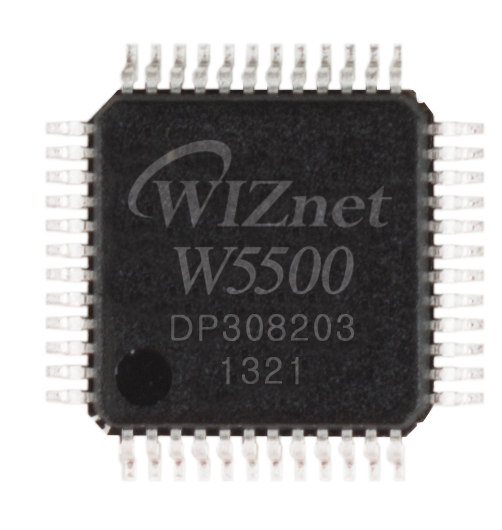
WIZnet - W5500
x 1

Espressif - ENC28J60
x 1
Project description
Step 1: Understanding the Hardware
This discussion explores implementing OpenPLC Runtime on an STM32 microcontroller with Ethernet connectivity for Modbus TCP communication.
The developer considered using either:
- WIZnet W5500
- WIZnet W5100
- ENC28J60
However, the OpenPLC project maintainer confirmed that the current runtime already supports W5100 and W5500, while ENC28J60 would require a custom Ethernet driver.
Typical hardware includes:
- STM32 microcontroller
- W5500 Ethernet controller
- SPI interface
- OpenPLC Runtime
- Modbus TCP communication
The W5500 provides:
- Hardwired TCP/IP stack
- Integrated Ethernet MAC + PHY
- 8 independent hardware sockets
- 32 KB internal TX/RX buffer
- SPI interface up to 80 MHz
Using the W5500 allows developers to add industrial Ethernet networking without implementing a software TCP/IP stack.
Step 2: Native W5500 Support in OpenPLC
One of the most valuable insights from this discussion is that OpenPLC Runtime already includes support for WIZnet Ethernet hardware.
According to the OpenPLC maintainer:
- Modbus TCP can be enabled directly from the upload dialog.
- The runtime supports W5100 and W5500.
- Ethernet communication uses the Arduino Ethernet libraries.
- Hardware wiring follows the same approach as a standard Arduino Ethernet Shield.
This means developers can focus on PLC logic rather than low-level Ethernet driver development.
Step 3: System Architecture
The communication architecture is straightforward:
OpenPLC Runtime
        │
   Arduino Ethernet API
        │
        ▼
      W5500
        │ SPI
        ▼
      STM32 MCU
        │
    PLC Logic
        │
        ▼
  Modbus TCP Clients
The W5500 handles:
- TCP/IP processing
- Socket management
- ARP
- ICMP
- UDP
- TCP communication
Meanwhile, the STM32 executes ladder logic and application-specific PLC tasks.
This separation simplifies firmware development and helps maintain deterministic PLC execution.
Step 4: Firmware Integration
OpenPLC leverages the Arduino Ethernet API, so developers do not need to create a custom Ethernet stack for the W5500.
Conceptual initialization:
// Conceptual example based on WIZnet ioLibrary
// Not project-specific source code

uint8_t tx_size[] = {2,2,2,2,2,2,2,2};
uint8_t rx_size[] = {2,2,2,2,2,2,2,2};

void ethernet_init(void)
{
    wizchip_init(tx_size, rx_size);

    wiz_NetInfo netinfo = {
        .ip = {192,168,1,100},
        .sn = {255,255,255,0},
        .gw = {192,168,1,1}
    };

    wizchip_setnetinfo(&netinfo);
}
Conceptual integration example based on WIZnet ioLibrary (not project-specific).
The OpenPLC maintainer also notes that developers can reference the Arduino examples included with the OpenPLC editor when adapting the runtime for supported hardware.
Step 5: Industrial Applications
Combining STM32, W5500, and OpenPLC creates a compact and cost-effective industrial controller suitable for:
- PLC-based machine control
- Factory automation
- Modbus TCP remote I/O
- Industrial gateways
- Building automation
- Process control
- Educational PLC platforms
Because the W5500 offloads Ethernet communication in hardware, the STM32 can dedicate more processing time to real-time PLC execution.
FAQ
Q1: Why use W5500 with OpenPLC?
A: W5500 is officially supported by the OpenPLC runtime and provides a hardwired TCP/IP stack. This reduces software complexity and allows developers to implement Modbus TCP without writing a custom Ethernet driver.
Q2: Does OpenPLC support ENC28J60?
A: Not natively. According to the OpenPLC maintainer, developers would need to implement their own driver for ENC28J60, whereas W5100 and W5500 are already supported by the runtime.
Q3: How is the W5500 connected to STM32?
A: The W5500 connects via SPI and is accessed using the Arduino Ethernet API. OpenPLC uses this API, so wiring follows the same approach as an Arduino Ethernet Shield.
Q4: What advantages does W5500 provide for PLC applications?
A: The W5500 offloads TCP/IP processing, manages eight hardware sockets, and integrates the Ethernet MAC and PHY. This reduces MCU workload and improves communication reliability in industrial Ethernet applications.
Q5: What applications are suitable for this architecture?
A: Typical applications include industrial control systems, Modbus TCP gateways, educational PLC projects, machine automation, distributed I/O controllers, and Ethernet-enabled process monitoring.

