The W7-x is a massive, beautiful fusion reactor that loves to throw plasma-based temper tantrums when it doesn't want to be heated.
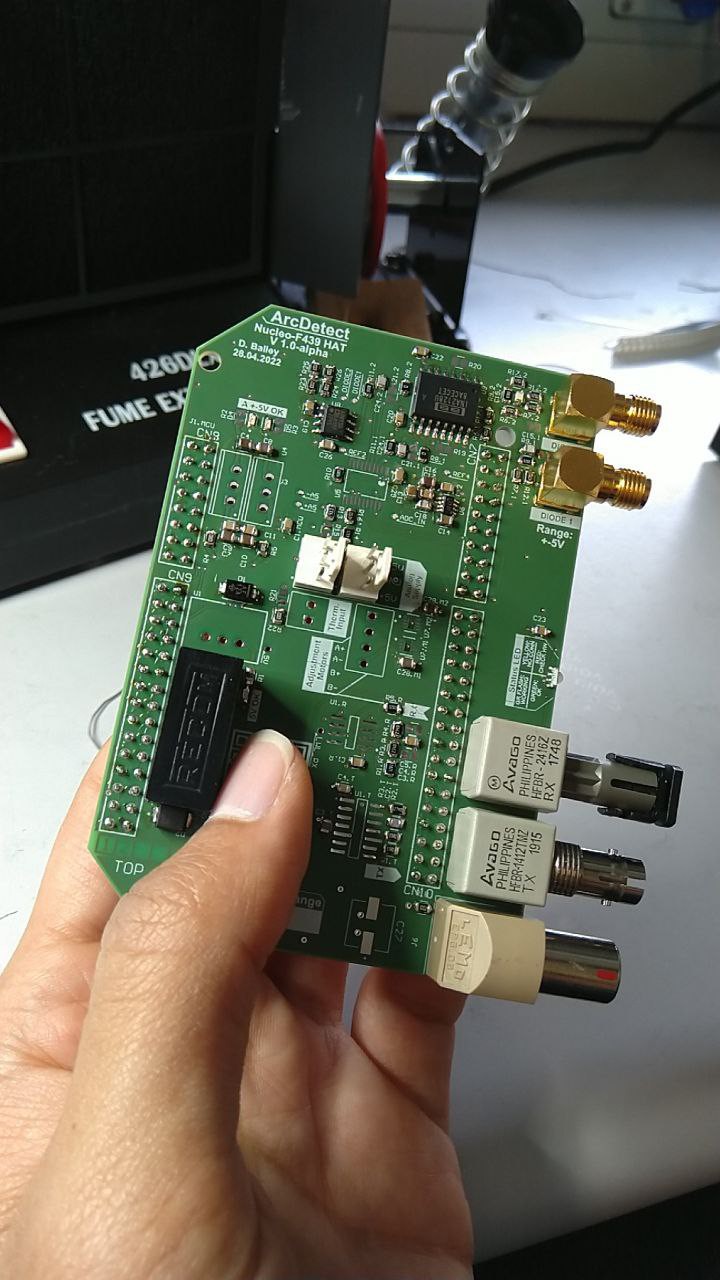
We're trying to help solve this problem by constructing a reliable, reusable, easy-to-use, open-sourced, STM32-based measurement board to detect problems, record events to a database and help monitor things.
Currently, the specs are:
14-bit SAR ADC for 1MSPS, low noise measurements.
2-Channel Instrumentation Amplifier with protections and resistor-settable gain
PGA116 analogue MUX with variable gain and built-in calibration channels
DC and AC coupling on the inputs, as well as a "backup" measurement path to the STM32's ADCs for use of the STM's ADC Watchdog functions
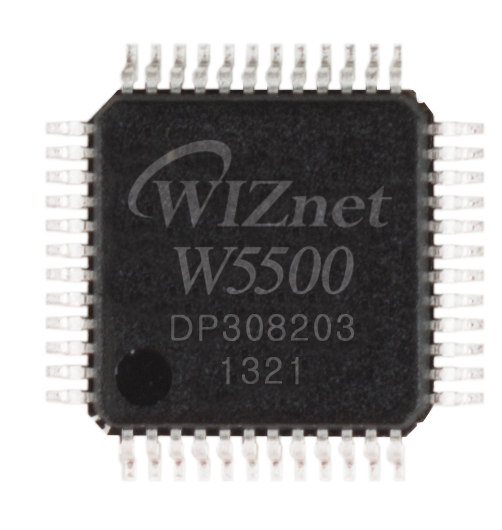
W5500 ethernet phy for high-speed, low complexity IPv4 TCP/IP and OTA updates.
Fiberoptic connection for highest-speed, lowest-latency signalling for critical events
RGB LED Let's gooooo!!
Introduction
For those that are familiar with Fusion, the Wendelstein will ring a bell. It is a lovely design called a Stellarator Fusion Reactor, in which the plasma is confined into a Moebius-strip-esque path. This path, curving in on itself, has the potential for a few advantages over the classical "doughnut"?tokamak shape - but I just think it's really pretty!
Just like any other fusion reactor, the plasma needs to get hot. Blazingly hot - a few zeroes behind anything a human would conceivably come in contact with. Getting it THAT hot isn't easy - there are no materials that can get this hot themselves, so... We use beams!?Ion beams, laser beams, or, in the case of the W7-x, we use microwave beams!
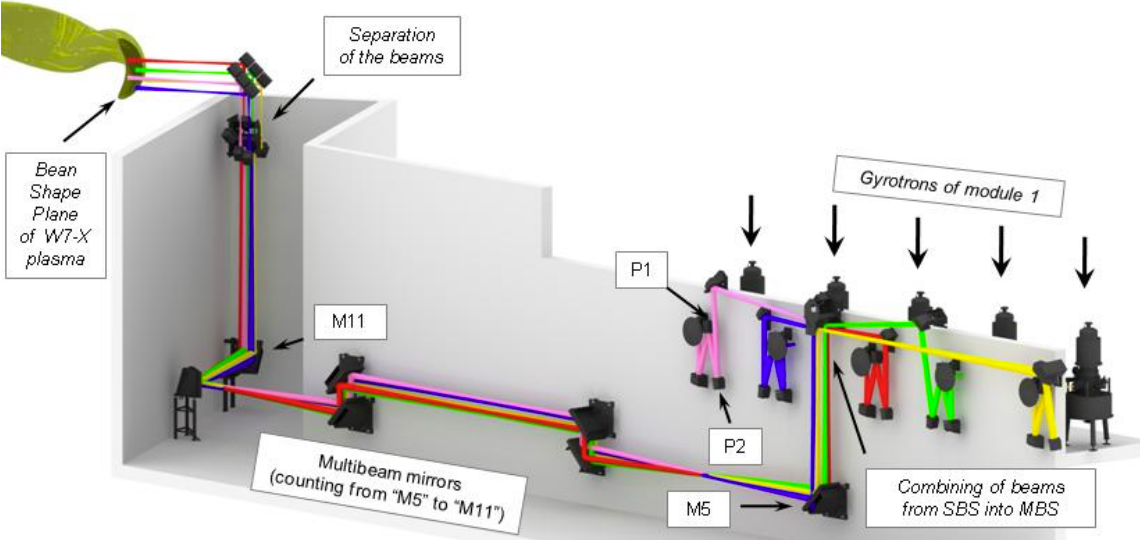
In some ways, it's a bit like taking a kitchen microwave and plugging it into a 40kV outlet, but it's a bit more extreme still. There are massive tubes generating a whopping MW of power each, ten of which are arranged in neat rows, with absolutely massive, water-cooled copper mirrors to redirect the beams around!
W7-x ECRH Heating system, taken from: DOI: 10.1051/epjconf/201715702008
Here's where it gets really fun - air doesn't like this. At all.
It's a bit like getting statically charged and getting a zap when you touch a metal door, but... Well, it's a bit bigger.
A problem.
When an arc like this forms, it's bad for a?lot?of reasons. Firstly, it'll suck up all the heating power, so it can put a stop to an ongoing experiment. Secondly, it quickly ionizes the air - not only will your current experiment stop, but you have to wait an hour or two while the air cycles. Ionized air can form arcs much more easily! And thirdly, the arc travels back towards the?hideously?expensive microwave beam sources and can damage them.
Problem no. 3 is already solved - they are using photodiodes to detect a flash like this, since it IS quite bright. Sadly, this is not fast enough - when an arc is detected, it's already produced enough ionized air that an experiment must be stopped.
What are we doing about this?
This is the problem that was given to us as a four-month internship task.
Yeah, you heard that right - one of the central problems for long-running reliable experiments was given to an unpaid intern not even out of University. They lucked out on this one though :P
Our solution is simple - measure the microwave power at the end of the beam, process it, compare it, throw it at a server if it looks interesting.
To do this, we are currently actively designing an STM32-NUCLEO Hat, that provides all the necessary peripherals for power supply, analogue signal conditioning, measurement, and network connections.
The stats were listed right at the top!
That's not all, however. In addition to the hardware, we have also built a set of libraries for various peripherals of the STM32, that neatly wrap around the ...?Rather clunky "HAL" libraries, and provide much nicer interfaces. Most of the code is also FreeRTOS threadsafe, and we are working on asking around about what license we could use to open-source it!
Look at it :>
Then, there is the server backend.
If we were to go into further details here we would start rambling about?just how bad the database of the W7-x is...
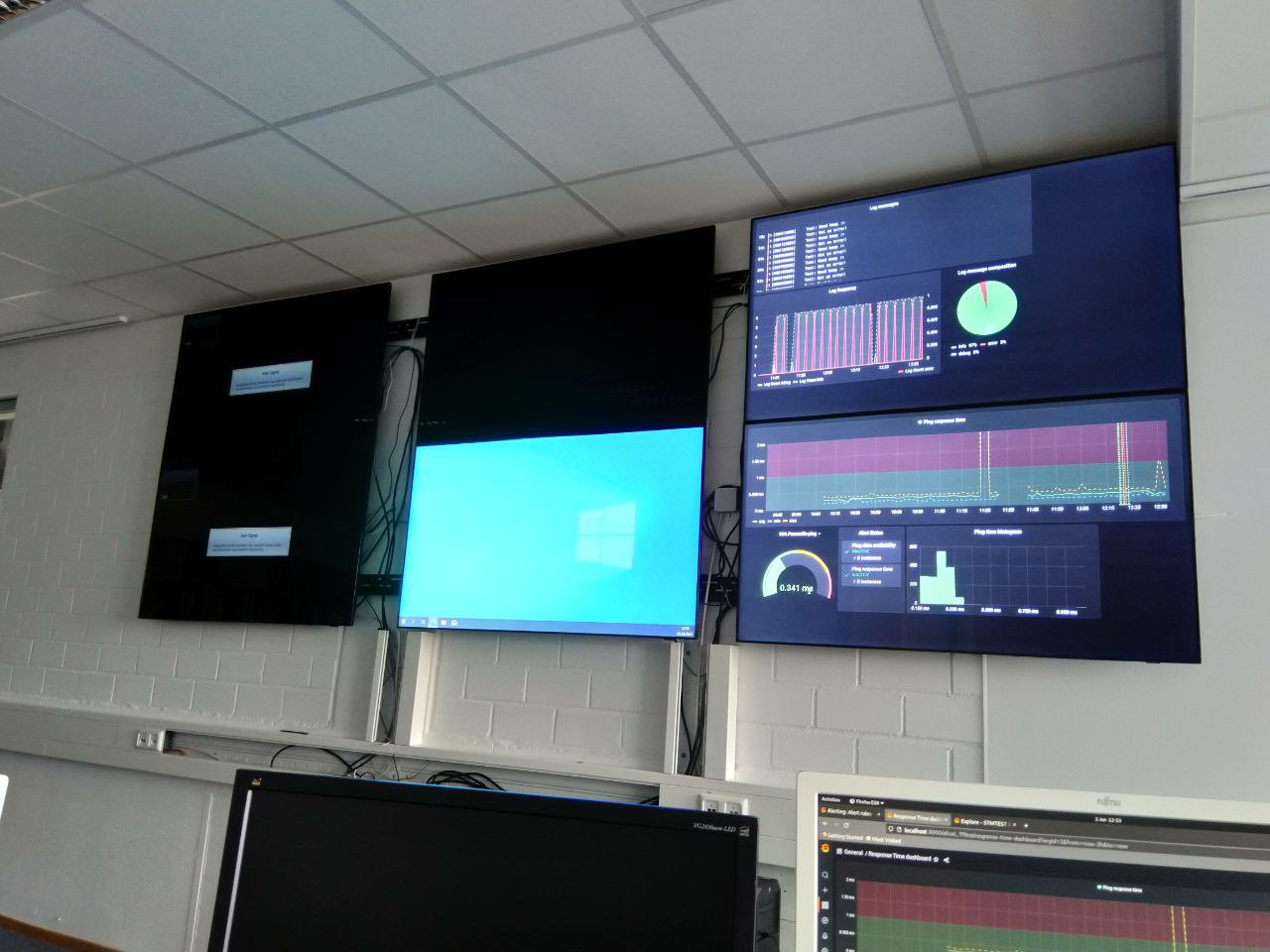
TL;DR, it's best to bring your own.?Luckily, thanks to the age of Docker and Open Source, setting one up was as simple as throwing a Linux system onto an external hard drive to plug into an unused computer, and running up a timescaledb and grafana-oss Docker container.
The results are already stunning, and it's exciting to see how?incredibly?powerful these tools can be, even on older machines!
Plus, it gives us something to put onto the big, six-tv flatscreen control panel. It HAS to be done~
So!
These are the things you can expect us to talk about on this project page. A whole mix of hardware, embedded programming, software, and rambles all around, if you dare.
The end goal of this is to create a nicely documented, reusable measurement tool that won't just serve the W7-x. With the configurable input options, fast samplerate, the STM32's processing power and its connectivity, it can easily serve as a general-purpose monitoring and data acquisition tool for anything in the 10kHz to 1MHz range!
We sent a verification link to your address. Open it to activate your account, then log in.
Accounts from this email provider are reviewed by an administrator after verification. Approval usually takes one business day.
Already have an account?
Reset your password
Enter your email address. If it belongs to an account, we'll send a link to set a new password. Members who joined before the site update use this to set their password.
Check your email
If an account uses that address, we sent a link to set a new password. The link works once and expires in 30 minutes.

 Just like any other fusion reactor, the plasma needs to get hot. Blazingly hot - a few zeroes behind anything a human would conceivably come in contact with. Getting it THAT hot isn't easy - there are no materials that can get this hot themselves, so... We use beams!?Ion beams, laser beams, or, in the case of the W7-x, we use microwave beams!
In some ways, it's a bit like taking a kitchen microwave and plugging it into a 40kV outlet, but it's a bit more extreme still. There are massive tubes generating a whopping MW of power each, ten of which are arranged in neat rows, with absolutely massive, water-cooled copper mirrors to redirect the beams around!
Just like any other fusion reactor, the plasma needs to get hot. Blazingly hot - a few zeroes behind anything a human would conceivably come in contact with. Getting it THAT hot isn't easy - there are no materials that can get this hot themselves, so... We use beams!?Ion beams, laser beams, or, in the case of the W7-x, we use microwave beams!
In some ways, it's a bit like taking a kitchen microwave and plugging it into a 40kV outlet, but it's a bit more extreme still. There are massive tubes generating a whopping MW of power each, ten of which are arranged in neat rows, with absolutely massive, water-cooled copper mirrors to redirect the beams around!