ESPHome-W5500-Ethernet-on-ESP32-boards
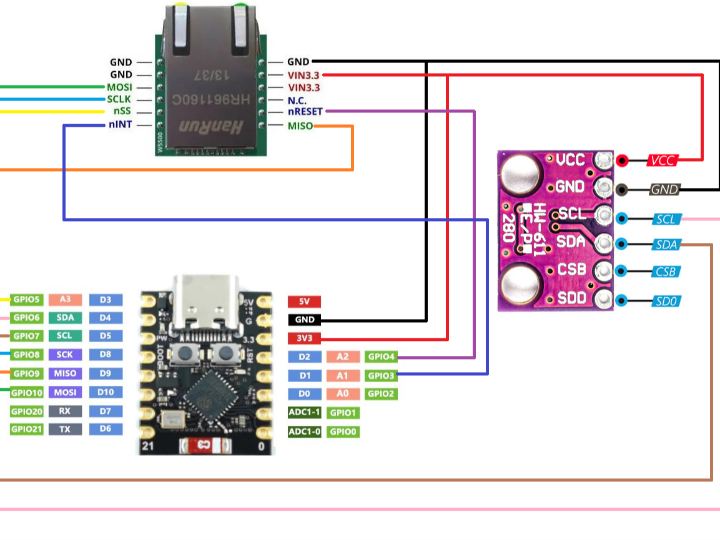
Playing around with the ESPHOME and W5500 ethernet module on different ESP32 boards. Goal is to be able to use SPI for ethernet and I²C for other sensors or ext
0
Components
Hardware components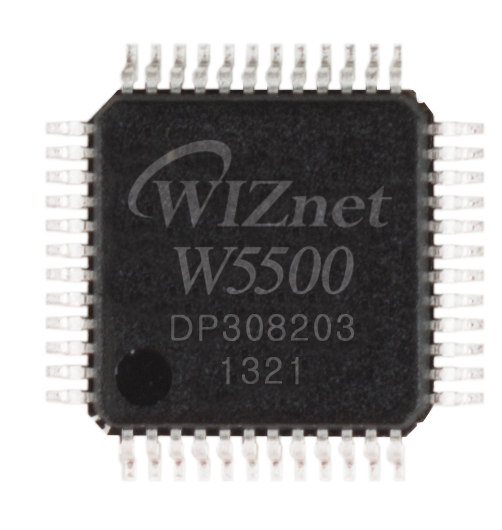
WIZnet - W5500
x 1

Espressif - ESP32
x 1
Project description

And even with this small sized board, there is some room for extra connections!
Possible improvements to investigate:
- CLK wire for the W5500 SPI bus is set to GPIO08
- GPIO08 is also the linked to the status led of the ESP32 C3 super mini development board
- possible or better to use GPIO02 instead?
- update 18.01.2024: switching CLK to GPIO02 did not seem to work...
At first, I only got it to work with the arduino framework:
esphome:
  name: esp32c3-super-mini
  friendly_name: esp32c3-super-mini

esp32:
  board: esp32-c3-devkitm-1
  framework:
    type: arduino

# Enable logging
logger:
  level: DEBUG

# Enable Home Assistant API
api:

ota:

ethernet:
  type: W5500
  mosi_pin: GPIO10
  miso_pin: GPIO09
  clk_pin: GPIO08
  cs_pin: GPIO5
  reset_pin: GPIO04
  interrupt_pin: GPIO03
  clock_speed: 25MHz

i2c:
  scl: GPIO07
  sda: GPIO06
  scan: True
  id: bus_a

sensor:
  - platform: bmp280
    temperature:
      name: "Temperature"
      unit_of_measurement: °C
      accuracy_decimals: 1
    pressure:
      name: "Pressure"
      unit_of_measurement: hPa
      accuracy_decimals: 0
    i2c_id: bus_a
    address: 0x76
After some iterations, it also works with the esp-idf framework; some tweaking of the platformio options was necessary:
esphome:
  name: esp32c3-super-mini-idf
  friendly_name: esp32c3-super-mini-idf
  platformio_options:
    board_build.flash_mode: dio
    board_build.mcu: esp32c3
    board_build.f_cpu: 160000000L

esp32:
  board: esp32-c3-devkitm-1
  framework:
    type: esp-idf
So far, connection seems to be lightning fast and super stable.
In my experience, the easiest way of flashing the new ESP32C3 boards is by using the Adafruit ESPTool.

