ABOV(A34G43AYL2N) + W6300 EVB
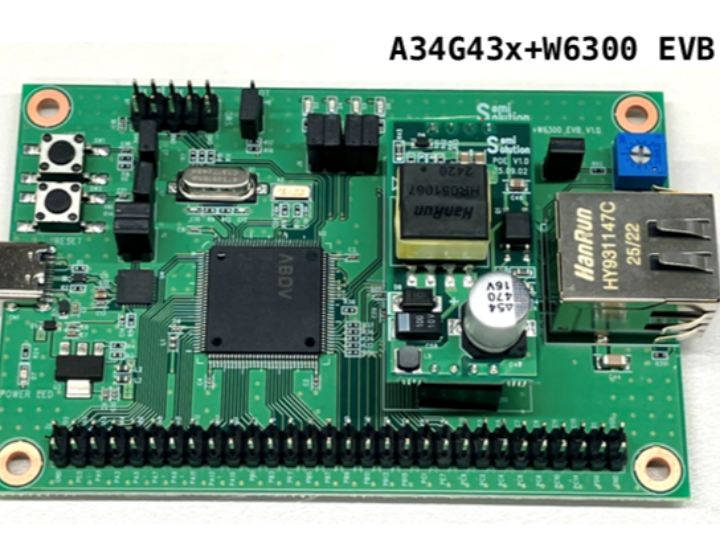
Cortex-M4F EVB pairs WIZnet W6300 hard-wired TCP/IP with IEEE 802.3af PoE (8 W) for compact industrial-IoT and motor-control prototyping.
0
Project description
Technical Review: A34G43AYL2N + W6300 EVB for Real-Time Control via Hardware TCP/IP Offloading
This review analyzes the A34G43AYL2N + W6300 EVB, a solution targeting embedded systems that require concurrent real-time control and high-bandwidth network communication.
Its core architecture features the A34G43AYL2N (Cortex-M4F @ 200MHz) dedicated to deterministic tasks (e.g., FOC), while the W6300 chip offloads all Ethernet processing via a hardware TCP/IP stack. This design eliminates MCU resource contention and ISR latency from network traffic, guaranteeing real-time control loop integrity.
1. Core Component Specifications
1.1 MCU: A34G43AYL2N
Core: 200MHz ARM Cortex-M4F (w/ FPU)
Memory: 2048 KB Dual-Bank Flash, 256 KB SRAM
Key Peripherals: 3-Phase PWM, 3x 12-bit ADC (1.5 Msps)
Operating Temp: -40°C to +105°C (Industrial Grade)
1.2 Ethernet Controller: W6300
Protocol Stack: Hardware TCP/IP (IPv4/IPv6 Dual Stack)
Buffer: 64KB TX/RX
Features: Wake-on-LAN (WoL)
Interface: QSPI (for MCU communication)
2. EVB Hardware Details
| Feature | Specification |
|---|---|
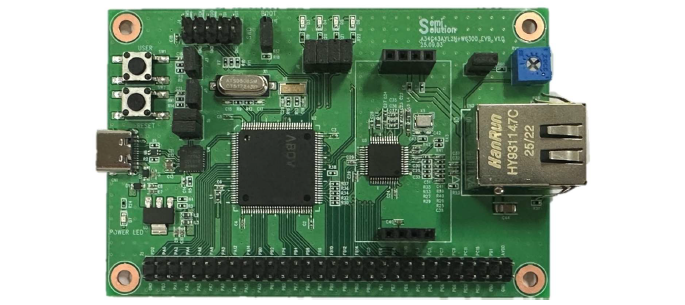
| On-board | USB Type-C (Serial Bridge), LDO, RJ45 (Integrated Magnetics) |
| Expansion | 2x30 (60-pin) Header (Provides 57 User GPIO) |
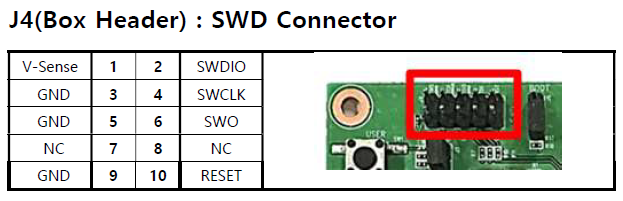
| Debug | J4 (10-pin) ARM SWD Connector |
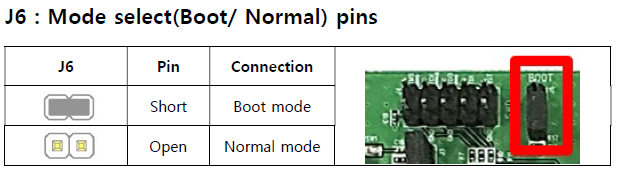
| Boot Select | J6 Jumper (Normal / Boot mode) |
| Board Op. Temp | -20°C to +85°C (incl. self-heating) |
| Dimensions | 93.000 mm × 61.000 mm (4-Layer PCB) |
3. Optional PoE Module (SS-POE)
The EVB supports an optional SS-POE module via headers J9 and J10.
| Feature | Specification |
|---|---|
| Standard | IEEE 802.3af Compliant |
| Input | 37V ~ 57V DC |
| Output | 5V / 1.6A (8W Max) |
| Efficiency | 80% (Typ.) ~ 85% (Max.) |
| Mode | Mode A (Endspan) & Mode B (Midspan) |
| Protection | 1500 Vrms Isolation, OCP, OTP, SCP |
| Size | 20.000 mm × 38.000 mm |
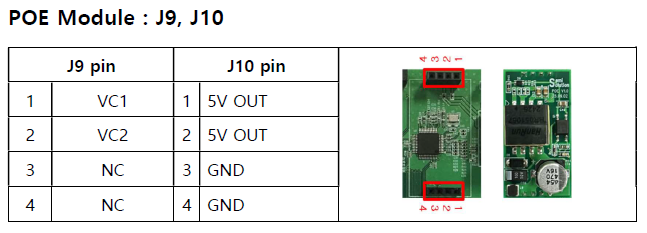
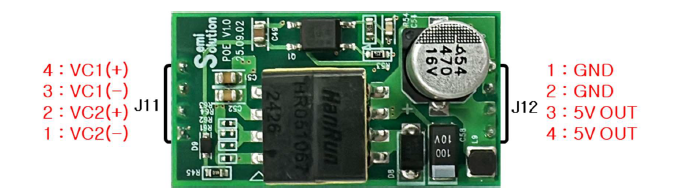
4. Design Considerations
4.1 GPIO Resource Constraint
To enable Ethernet, the A34G43AYL2N's PB8 ~ PB15 pins (8 total) are dedicated to the QSPI interface with the W6300. These pins, though physically exposed on the header, are unavailable for user I/O when Ethernet is active.
4.2 Deterministic Behavior
By offloading protocol processing (TCP, UDP, IPv6) to the W6300, the MCU can execute its main control loop at a fixed cycle, free from network-induced jitter. This is a critical architecture for high-reliability industrial controllers.
5. Reference Demo Firmware Features (Web / iperf3)
The EVB supports reference firmware to immediately verify the hardware's capabilities, operating in two key modes.
Mode Switching: Pressing and holding the EVB's USER button (SW1) for 3 seconds or more switches between Web Server Mode and iperf3 Server Mode.
Initial Setup: Initial configuration, such as setting the EVB's IP address (e.g., 192.168.100.3), is performed via a UART terminal (115200-8-N-1) using console commands after connecting the EVB to a laptop with a USB Type-C cable .
5.1 Web Server Mode
This is the default mode. Accessing the EVB's IP address (e.g., http://192.168.100.3) provides a GUI-based webpage.
Device Info: Displays device information such as model name, firmware version, and MAC address .
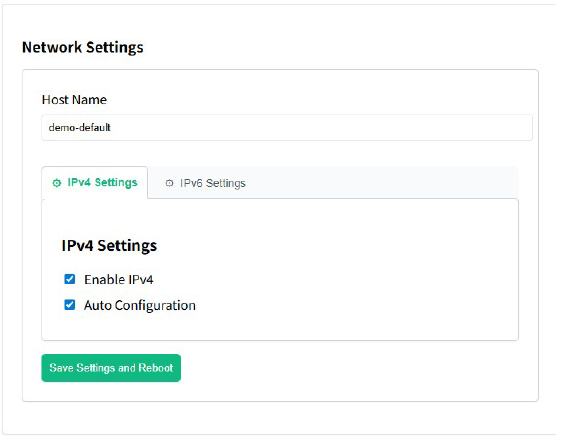
Network Settings: Allows network parameters, including IPv4/IPv6 activation and auto/static configuration, to be modified and saved from the web interface .
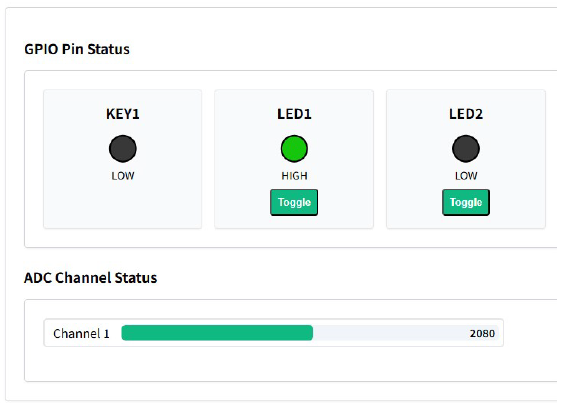
I/O Control Panel: Enables web-based interaction with the EVB's hardware:
Monitors the real-time status (LOW/HIGH) of the USER button (KEY1)
Allows direct control (On/Off) of the onboard LEDs via 'Toggle' buttons.
Displays the real-time digital value from the ADC channel, which can be changed by adjusting the onboard variable resistor (RV1) .
Performance & Comms: Provides a web-based speed test (Upload/Download) and a UART terminal communication interface (Web-to-Serial)
5.2 iperf3 Server Mode
This mode is dedicated to benchmarking pure network throughput.
In this mode, the EVB acts as an iperf3 server, indicated by 4 blinking LEDs.
The user can run the iperf3 -c [EVB IP] command from a PC to measure raw network performance, free from the MCU resource overhead required by the web server function.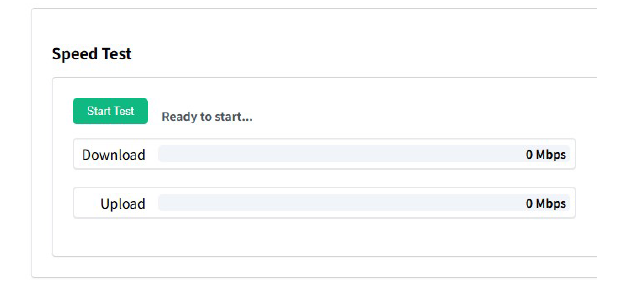
6. Conclusion
The A34G43AYL2N + W6300 EVB effectively decouples control and communication performance. It is an optimized platform for applications where precise real-time control must not be compromised by network connectivity, such as industrial gateways, PoE-based remote actuators, and networked robotics. Developers can build highly reliable systems, provided they account for the GPIO limitations.
| Feature | A34G43AYL2N (ABOV) | W55RP20 | RP2350 (Raspberry Pi) |
| Core | Single ARM Cortex-M4F | Dual ARM Cortex-M0+ | Dual ARM Cortex-M33 |
| Clock Speed | 200 MHz | 133 MHz | 150 MHz |
| FPU (Floating Point) | Yes | No | Yes (Core built-in) |
| Flash | 2048 KB (2MB) On-Chip | Off-Chip (QSPI) | Off-Chip (QSPI) |
| SRAM | 256 KB | 264 KB | 520 KB |
| Key Peripherals | 3-Phase PWM (Motor Control) 12-bit ADC @ 1.5Msps (x3) CAN FD (x2) | 10/100 Ethernet MACPHY PIO (Programmable I/O) (x2) | PIO (x2) CAN FD (x1) RNG, TrustZone |
| I/O Voltage | 2.7V ~ 5.5V (5V Tolerant) | 3.3V (Not 5V Tolerant) | 3.3V |
| Operating Temp. | -40°C ~ +105°C (Industrial) | -20°C ~ +85°C (Standard) | -40°C ~ +85°C |
| Target Application | High-performance Motor/Inverter Industrial Gateway Factory Automation (FA) | General Maker/Hobbyist Projects Flexible I/O Protocol Implementation Low-cost Systems | Next-gen General Projects Secure (TrustZone) IoT Light AI/ML, PIO utilization |
| Ecosystem | Professional B2B, FAE Support (Document-based development) | Massive Community (Worldwide) MicroPython, C/C++ SDK (Beginner to Expert) | Inherits RP2040 Ecosystem MicroPython, C/C++ SDK (Security/Expert) |

