Why Async UDP over W6100 Matters: Architecture, IPv6, and Reliability
This article explains how the AsyncUDP_ESP32_W6100 project enables event-driven UDP communication using ESP32 and the WIZnet W6100 Ethernet controller.
0
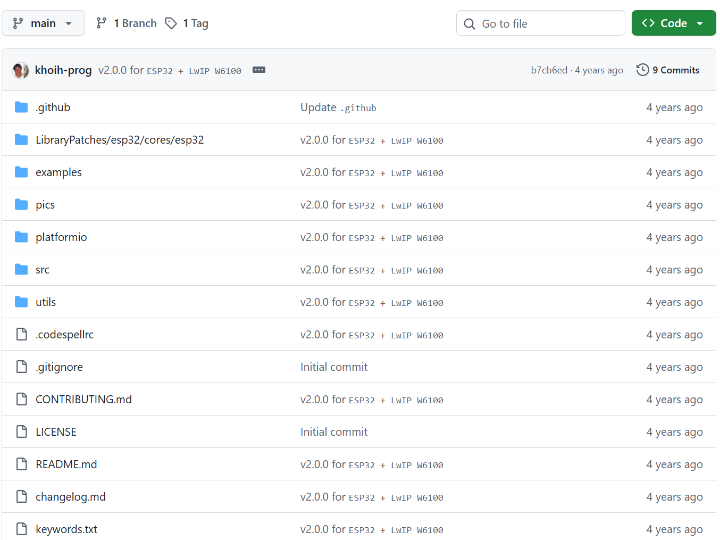
Project description
Why Async UDP over W6100 Matters: Architecture, IPv6, and Reliability
ESP32 + W6100 Integration, UDP vs TCP Contrast, and Industrial IoT Insights
(W6100 기반 Async UDP가 중요한 이유: 아키텍처, IPv6, 신뢰성 관점)
Summary (40–60 words)
This article explains how the AsyncUDP_ESP32_W6100 project enables event-driven UDP communication using ESP32 and the WIZnet W6100 Ethernet controller. It covers the architecture of asynchronous UDP, the IPv4/IPv6 advantage, a contrast with TCP, and why this pattern suits industrial IoT and reliable embedded networking.
1. Introduction: Why Asynchronous UDP over Ethernet?
UDP (User Datagram Protocol) and TCP (Transmission Control Protocol) are the two main transport layer protocols. While TCP focuses on connection-oriented reliability, UDP emphasizes low-latency, lightweight, and stateless communication.
Event-driven (asynchronous) UDP takes this further by:
Eliminating blocking calls
Allowing callback-based packet processing
Supporting highly responsive firmware
For embedded systems and real-time IoT applications, especially in mission-critical or industrial contexts, this matters because:
UDP avoids the connection overhead of TCP
Async callbacks fit well with event loops and RTOS-based task scheduling
UDP broadcast/multicast enables scalable device discovery and group messaging
2. WIZnet W6100: Hardware TCP/IP with Dual IPv4/IPv6
Unlike software TCP/IP stacks, the W6100 implements TCP, UDP, ARP, and IP protocols in hardware. This provides:
True dual-stack support (IPv4 + IPv6)
Hardware protocol processing (offloading)
Deterministic timing behavior
Reduced MCU load
For UDP, this means:
The W6100 handles packet framing, checksums, and addressing
ESP32 firmware interacts only with socket registers and buffers
IPv6 support allows future-proof deployment without heavy software stacks
This is important for IoT products expected to operate over diverse networks and for long lifetimes.
3. Async UDP Architecture (ESP32 + W6100)
Conceptual Flow
ESP32 App Logic
       ↓
Async UDP Abstraction
       ↓
W6100 Driver Layer
       ↓
SPI Interface (ESP32 ↔ W6100)
       ↓
W6100 Hardware (UDP/IP)
       ↓
Ethernet PHY + RJ45
       ↓
LAN / Internet
Key Layers
1. App Logic (ESP32)
Contains event registration and callbacks for UDP receive/transmit.
2. Async UDP Abstraction
Provides non-blocking interfaces. Instead of looping or waiting, the app registers event handlers:
onPacketReceived(callback)
sendAsync(data, destination)
3. W6100 Driver Layer
Handles:
SPI transactions
Register access
Buffer management
Socket state transitions
4. Hardware Offload (W6100)
Processes:
IPv4/IPv6 headers
UDP checksums
Packet transmission/reception
Execution is deterministic and avoids firmware-level protocol handling.
4. Why Asynchronous UDP Is Useful
No Blocking = Better Responsiveness
In traditional UDP code:
while (1) {
  recvfrom(socket, buffer, size);
  process(buffer);
}
recvfrom() blocks until a packet arrives.
In async UDP:
udp.onReceive(callback);
Data triggers only when available — leading to:
Lower CPU idle time
Better real-time performance
Easier integration with other system tasks
Event-Driven Fit for RTOS
ESP32 often runs FreeRTOS or similar. Event callbacks mesh well with task notifications and queues, reducing complexity.
Simpler Multicast / Broadcast
Many UDP-based IoT discovery protocols rely on broadcast/multicast. Async UDP simplifies handling multiple sources.
5. IPv6 Advantage with W6100
IPv6 adoption is increasing due to address space exhaustion and future-proofing needs.
Why W6100’s IPv6 support is important:
Firmware doesn’t need a software IPv6 stack
Native IPv6 UDP packets are handled in hardware
ESP32 only manages application-level semantics
Example use case:
An industrial sensor subnet can use IPv6 multicast for neighbor discovery without additional stack layers.
6. UDP vs TCP: Lightweight Contrast
TCP Characteristics
Connection-oriented
Acknowledgement and retransmission
Congestion control
Higher latency
Pros:
Reliable data transfer
Ordered delivery
Cons:
Overhead
Latency
Blocking behavior
UDP Characteristics
Connectionless
No ACKs or retransmissions
No ordering guarantees
Very low overhead
Pros:
Minimal latency
Best for broadcast/multicast
Fits event-driven architecture
Cons:
Requires application-level error handling (if needed)
No inherent reliability
Why UDP Makes Sense in IoT
In many IoT scenarios:
Telemetry is periodic
Missing a packet occasionally is acceptable
Devices may broadcast status to many collectors
When TCP Is Still Needed
Large file transfers
Guaranteed order
Session-based services
But for event signals, discovery, telemetry, and real-time alerts, async UDP is superior.
7. Practical Reliability: Deterministic Behavior
Using hardware offloading and async logic provides:
Predictable timing — no OS scheduler jitter affecting reception
Reduced firmware complexity — no need to implement timers or polling
Lower CPU load — W6100 handles network stack
In industrial environments (factories, instrumentation), predictable network behavior is a must.
8. Common Pitfalls & Debugging Tips
8.1 CS Timing and SPI Access
As with any SPI peripheral:
Ensure CS is asserted only during complete frame transactions
Avoid splitting multi-byte register writes across CS toggles
Use mutex or critical sections if running in RTOS
8.2 Buffer Boundary Errors
W6100 uses TX/RX buffers with pointer registers. Bugs often arise from:
Not reading RX size before reading data
Improper pointer updates leading to misaligned reads
Use correct API calls that handle:
Sn_RX_RSR for available data size
sn_RX_RD for pointer updates
8.3 Event Callbacks on Multiple Sockets
When handling multiple UDP sockets:
Ensure each socket has a unique callback
Avoid race conditions in shared context
9. Industrial IoT Use Cases Enabled by Async UDP + W6100
Device discovery (e.g., broadcast “alive” packets)
Real-time telemetry (sensor status with minimal latency)
Time-critical control signals (commands that don’t need reliability)
Multicast group messaging (many devices at once)
Diagnostics & heartbeat (frequent small packets)
10. Key Takeaway
Async UDP over WIZnet W6100 combines hardware-level TCP/IP offload, event-driven responsiveness, and future-proof IPv6 support, making it ideal for engineer-grade embedded and industrial IoT networking.
FAQ (Engineer-Focused)
Q1. Why choose async UDP over traditional UDP?
Async avoids blocking, enabling higher responsiveness and better integration with other system tasks.
Q2. Does W6100 require a software TCP/IP stack for UDP?
No. W6100 implements UDP directly in hardware, so only socket control and buffer access are needed.
Q3. Is IPv6 fully hardware-accelerated on W6100?
Yes. Both IPv4 and IPv6 UDP are supported natively.
Q4. How does UDP compare to TCP in IoT contexts?
UDP is lightweight and low-latency; TCP is reliable but heavier. For telemetry and discovery, UDP often wins.
Q5. What is the biggest reliability risk with async UDP?
Incorrect SPI transactions and pointer mismanagement — solved by deterministic driver design.
Source
GitHub Repository: AsyncUDP_ESP32_W6100
WIZnet W6100 Datasheet (UDP, SPI registers, buffer architecture)
Tags
W6100, WIZnet, Async UDP, ESP32 Ethernet, IPv6 UDP, TCP vs UDP, Industrial IoT, Hardware TCP/IP
🇰🇷 한국어 번역 (1:1 Full Translation)
W5500 기반 Async UDP는 왜 중요한가: 아키텍처, IPv6, 신뢰성 관점
ESP32 + W6100 통합, UDP vs TCP 비교, 산업 IoT 인사이트
요약
이 문서는 ESP32와 WIZnet W6100 이더넷 컨트롤러를 사용한 Async UDP 통신을 분석한다. UDP 비동기 아키텍처, IPv6 장점, TCP 대비 특성, 신뢰성 관점 등을 다루며, 엔지니어 및 산업 IoT 시스템에 적합한 네트워킹 패턴을 제시한다.
1. 도입: 왜 비동기 UDP인가?
UDP는 낮은 지연 시간과 경량 특성을 갖는다.
비동기 방식은 응답성과 실시간성을 더욱 강화한다.
2. W6100의 IPv4/IPv6 듀얼 스택
W6100은 TCP/UDP/IP를 하드웨어로 처리하며,
IPv6를 네이티브로 지원한다.
3. 아키텍처 개요
ESP32 앱 로직
 ↓
비동기 UDP 계층
 ↓
W6100 드라이버
 ↓
MAC/PHY
4. 비동기 UDP의 장점
블로킹 없음
응답성 향상
멀티태스크 친화
5. IPv6 장점
IPv6는 주소 공간과 멀티캐스트에서 장점이 있다.
6. UDP vs TCP 비교
UDP는 경량, 저지연, 브로드캐스트 지원 등
산업용 IoT 시나리오에 적합하다.
7. 실전 신뢰성
하드웨어 오프로딩으로:
예측 가능한 네트워크
낮은 MCU 부하
8. 주요 디버깅 팁
CS 타이밍은 단일 SPI 트랜잭션으로 처리
RX/RX 포인터 일관성 확보
포인터 업데이트 후 데이터 읽기
9. 산업용 활용 사례
장치 디스커버리
상태 로그
실시간 제어
10. 핵심 메시지
W5500 기반 Async UDP는 TCP/IP 오프로딩과 이벤트 기반 구조로 엔지니어링 요구를 충족한다.
FAQ
Async UDP vs traditional UDP? → 응답성, 비차단
IPv6 지원 방식? → 하드웨어 네이티브
UDP vs TCP 차이? → 경량 vs 신뢰성
태그
W5500, WIZnet, 비동기 UDP, ESP32 이더넷, IPv6 UDP, 산업용 IoT

