Walter Unified Communications Library
Walter-UC: Unified IoT Connectivity with W5500 Ethernet, Wi-Fi, and Cellular
0
Project description
Walter-UC: Unified IoT Connectivity with W5500 Ethernet, Wi-Fi, and Cellular
Build more reliable IoT devices with automatic network interface selection and unified TLS certificate management.
Overview
Reliable connectivity is essential for IoT devices deployed in remote locations, industrial environments, and unattended monitoring systems. Relying on a single network connection can be challenging, especially when Wi-Fi becomes unavailable or cellular coverage is unstable.
Walter-UC, developed by QuickSpot, is an open-source unified communications library designed for the Walter IoT module. It brings multiple network interfaces together under a common software architecture, supporting cellular, Wi-Fi, and external Ethernet connectivity using the WIZnet W5500.
The project demonstrates how an SPI Ethernet controller can extend a multi-radio IoT platform with wired connectivity while keeping application-level networking consistent.
About the Walter IoT Platform
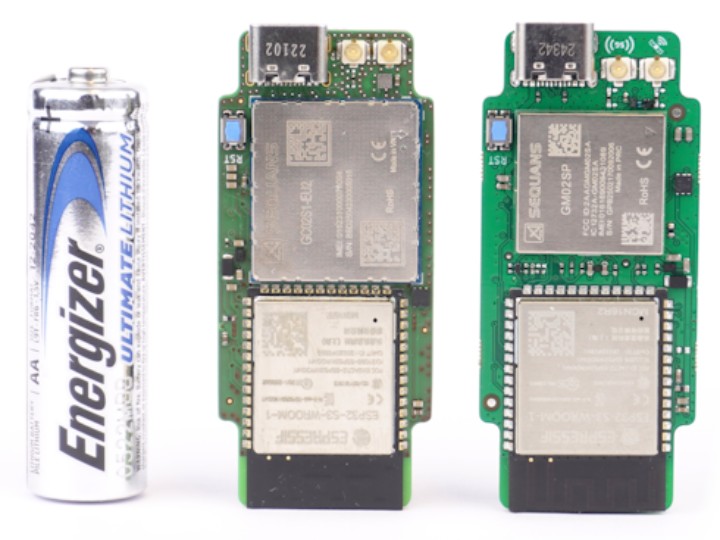
Walter is a compact IoT module built around the ESP32-S3 microcontroller and a Sequans GM02SP cellular modem.
The platform supports:
LTE Cat-M1 and NB-IoT cellular connectivity
Wi-Fi and Bluetooth Low Energy
GNSS positioning
External SPI Ethernet through the W5500
Walter-UC provides a common interface for managing these different networking technologies.
Key Features
1. Multiple Network Interfaces
Walter-UC supports several network drivers, including cellular communication through ESP-IDF's esp-modem, native ESP32 Wi-Fi, and Ethernet through an external W5500 module.
Rather than requiring separate application logic for each connection type, the library manages the available interfaces through a unified networking layer.
2. Automatic Network Selection
The library monitors network availability and selects an active interface based on configured priorities.
For example, developers can prioritize wired Ethernet when an Ethernet cable is connected while retaining Wi-Fi or cellular connectivity as alternative network paths.
This approach can improve network availability in installations where a single connection is insufficient.
3. W5500 Ethernet Integration
The WIZnet W5500 provides an external wired Ethernet interface through SPI.
Walter-UC includes a W5500 driver based on ESP-IDF's Ethernet framework.
Developers can configure the SPI clock, GPIO pins, interrupt connection, and reset signal. The Ethernet interface supports DHCP by default, with static IP configuration also available.
The W5500 can be enabled through the ESP-IDF configuration system, where it is the default external SPI Ethernet module.
4. Application-Level Network Independence
Applications can continue using standard ESP-IDF networking APIs, including TCP sockets, MQTT, and HTTP, regardless of which interface is currently active.
This separation simplifies applications that need to operate over multiple network connections.
5. TLS Certificate Management
Walter-UC also provides unified handling of TLS certificates across its network drivers.
This is particularly useful for IoT applications that communicate with cloud services over different network interfaces.
TLS encryption and certificate validation are handled by the host software stack rather than by a dedicated TLS engine inside the W5500.
How It Works
The communication architecture consists of three main layers:
Application Layer
MQTT, HTTP, sockets, and other IoT applications
↓
Walter-UC
Network monitoring, interface selection, recovery, and certificate management
↓
Network Drivers
W5500 Ethernet over SPI
ESP32-S3 Wi-Fi
Sequans cellular modem over PPP
The library selects an available communication interface according to the configured priorities.
An important consideration is that switching interfaces may change the device's IP address. Applications must detect the change and re-establish existing MQTT, TCP, or other network sessions when necessary.
Why the W5500 Matters
The W5500 allows the Walter platform to add wired Ethernet connectivity without requiring a built-in Ethernet port.
Wired connectivity can be valuable in industrial facilities, fixed sensor installations, and network environments where wireless communication may be unreliable or undesirable.
In Walter-UC, the W5500 operates through ESP-IDF's Ethernet networking architecture. This enables the host to use standard networking APIs while taking advantage of a physical Ethernet connection.
The project highlights the flexibility of the W5500 as an external SPI Ethernet solution for multi-interface IoT systems.
Potential Applications
Industrial IoT monitoring systems
Remote environmental data loggers
Smart energy monitoring devices
Connected equipment requiring network redundancy
Cloud-connected sensor gateways
Multi-network telemetry devices
Getting Started
Developers can explore the project through its public GitHub repository.
The repository includes the core library, network drivers, configuration options, and example applications for MQTT and UDP communication.
The W5500 driver can be configured through ESP-IDF's menuconfig interface and initialized with the appropriate SPI and GPIO settings for the target hardware.
Project: Walter Unified Communications Library
Developer: QuickSpot
GitHub: https://github.com/QuickSpot/walter-uc
Conclusion
Walter-UC demonstrates a practical approach to building IoT applications that are not tied to a single communication technology.
By combining cellular, Wi-Fi, and W5500-based Ethernet connectivity, the project provides a flexible foundation for connected devices that require reliable network availability.
For developers working with the WIZnet W5500, Walter-UC is an interesting example of how external SPI Ethernet can be integrated into a multi-radio IoT architecture while maintaining consistent application interfaces and TLS certificate management.

