Remote Access Technologies for monitoring environmental variables based on Arduino
Remote Access Technologies for monitoring environmental variables based on Arduino
0
Components
Hardware components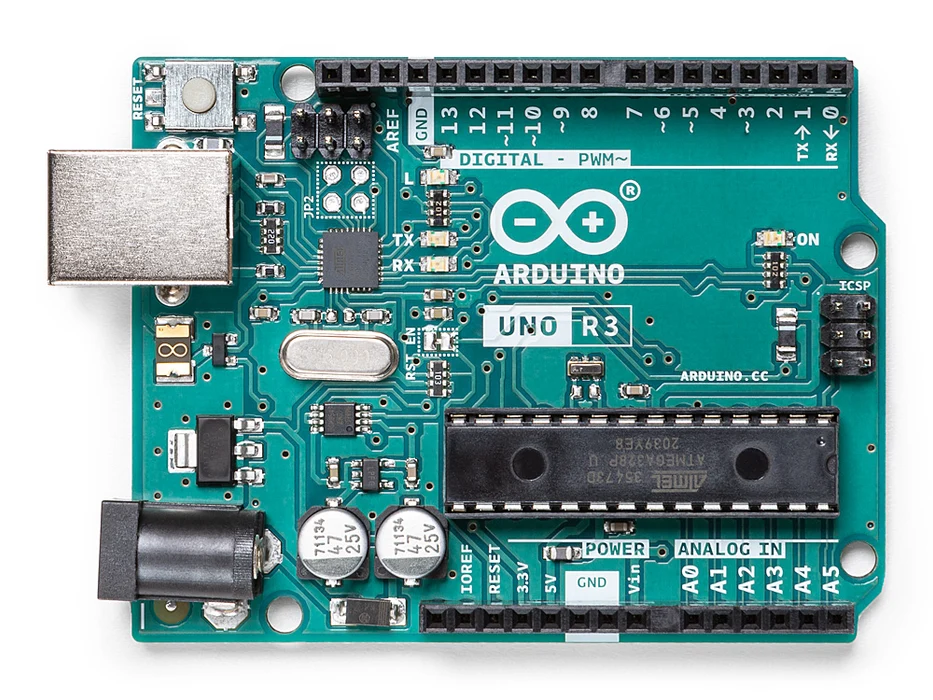
Arduino - Arduino UNO
x 1

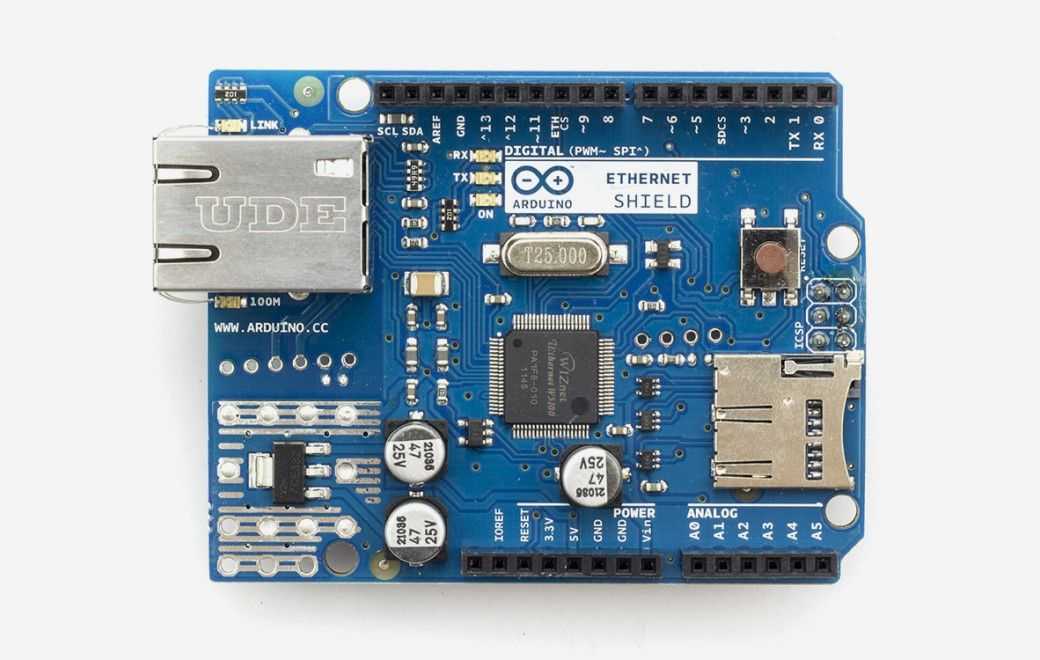
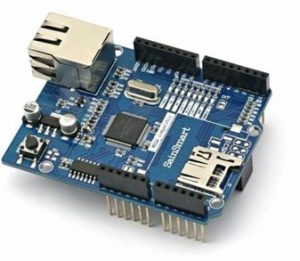
Arduino - Arduino Ethernet Shield
x 1
Project description
Introduction
Remote Access Technologies for monitoring environmental variables based on Arduino. An embedded system is a computer system that is built to control a range of functions. The theory explains the use of Arduino microcontrollers and sensors in embedded systems. Remote access technology is the ability to control aspects of a process from any location via a website or?GSM network. An embedded system is a computer system that is designed to perform a variety of tasks. Arduino is an open source-based prototyping platform used to sense and control physical devices. Advancing technology causes a decrease in the cost of manufacturing and allow the s implementation of various hardware and software components. Arduino is an open-source platform for creating computers that can sense and control more of the real world than a traditional desktop computer. Remote access technology is the ability to control, manage, report, and troubleshoot any or all aspects of your manufacturing process from any location.EMBEDDED SYSTEMS
Embedded system architecture is a generalization of the system. Hardware and software components in an?embedded system?are presented as part of the composition of interacting elements. Architecture does not show detailed implementation information such as software source code or hardware circuit design. Instead, it is the first tool used to analyze the system. The development process of the embedded system’s hardware and software layer is made possible with development tools. Computer-Aided Design (CAD) is used to simulate circuits at the electrical level. Testing can be used to determine if the system is operating according to its design. An embedded system is a combination of hardware and software. Hardware Design Languages (HDLs) are used to describe hardware components. High-Level Languages (C, C++, Java, ADA, etc.) or Assembly are often used for embedded software. Other specialized languages are better for specific application domains.REMOTE ACCESS TECHNOLOGY
The design of remote monitoring system involves the selection of proper sensors to acquire physical parameters. The system may assumes the use of a GSM / GPRS module for exchanging information between sensors and devices. The system is set up in such a way that when the temperature deviates from its regular range, an SMS message is sent. The framework can be designed to be easily adapted. Expanded to any kind of sensor, allowing collecting. Temperature, humidity, light, and other parameters from analog and digital sensors. The implementation is based on the GSM network, using SMS, allowing access to remote systems in almost real-time.ARDUINO
Arduino is a development board with a microcontroller and supporting circuitry built-in. It has an open-source computing development platform that is built on a programming environment. Arduino boards were created in 2005 by Massimo Benzi for the need to learn of computer and electronic students.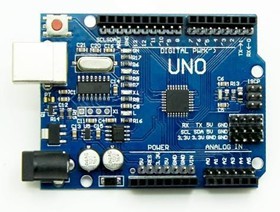
SENSORS
Sensors are devices that can measure a physical quantity and convert it into a signal which can be read by an electronic instrument. Nowadays, sensors are having numerous applications in our lives. They are used in simple or complicated applications in every embedded system today. An ideal sensor is typically a linear or logarithmic function of the measurement. Its output is an analog signal related to the value of the measured quantity. A sensor must be sensitive only to the physical quantity for which it was created and must not be influenced by any other kind of physical quantity. The resolution of a sensor is the smallest deviation in the measured physical quantity that it can detect. It oblates to the accuracy of the sensor. If a sensor needs to be used by a digital system, then its output must be converted into digital, using an Analogue Digital Converter. Sensors are used for monitoring environmental or physical quantities. Some of these measurements are difficult to perform since they must be placed under extreme conditions. This leads us to create sensor networks that can monitor an environment from a safe distance and transmit data far away from their location.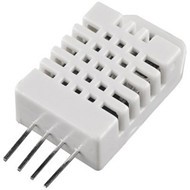
ENVIRONMENTAL VARIABLES MONITORING SYSTEMS
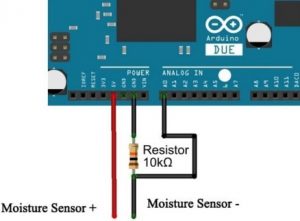
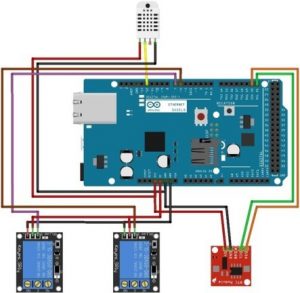
A) First example: Variables of plant growth Monitoring environmental variables give a better understanding of how efficiently plants are growing. We can boost production and save a lot of energy by adjusting the greenhouse climate in the right way. Modern greenhouses are larger and more adjustable. Lights, ventilation, heating, and other support systems can all be regulated more precisely. The system should be simple to operate, and the user should be able to monitor environmental changes inside the greenhouse remotely. Only three variables can be chosen to be tracked to narrow down the cost of the system. Embedded system design is divided into three layers: Hardware, Software and Application layer. Arduino Due microcontroller is the heart of the greenhouse monitoring system. Network shield W5100 was added on top of the mainboard to add network connectivity. A real-time clock module is introduced to the system to keep up with time and date, even on power loss.