HFR-2AM/HFR-4AM
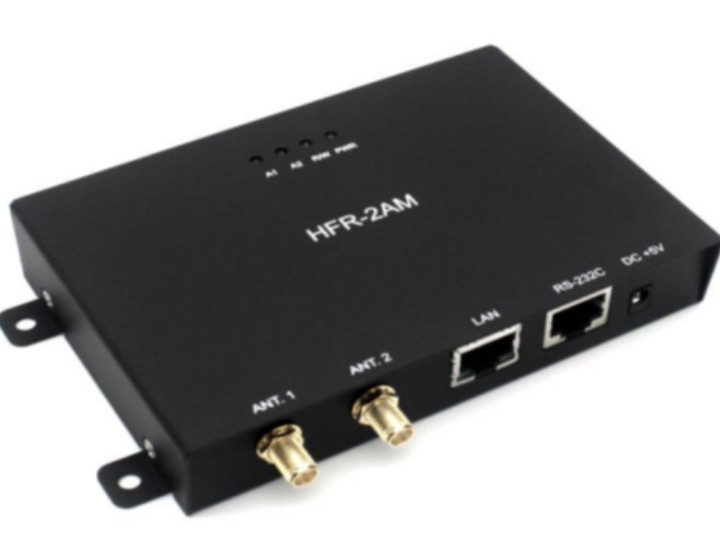
The RFENGINE HFR-4AM and HFR-2AM are industrial HF RFID readers that handle both 13.56MHz RFID reader control and Ethernet communication using a single W7100A c
0
Components
Hardware components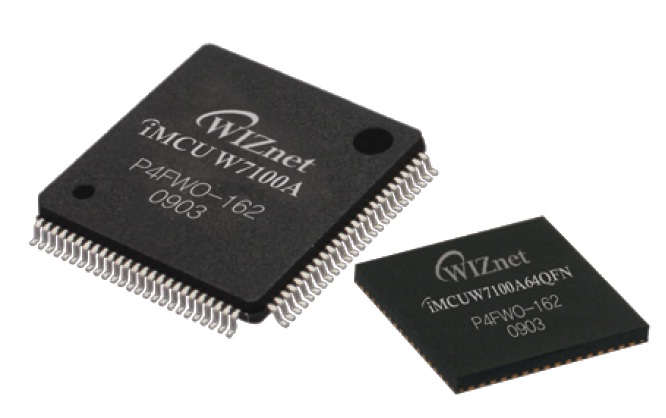
WIZnet - W7100A
x 1

Project description
Overview
RFENGINE is an RFID company based in Cheongju, Korea, that develops and sells its own RFID readers, antennas, tags and RF modules. The HFR-4AM and HFR-2AM belong to RFENGINE's 13.56MHz HF RFID reader line. Both read and write ISO 15693 tags and connect to host systems over TCP/IP and RS-232C.
RFENGINE positions these readers mainly for semiconductor factory automation. The reader identifies carriers and wafers as they enter and leave semiconductor equipment, then passes the results over the LAN to the equipment server and the MES. Other listed uses include asset management, supply chain management, access and security control, and inventory.
The HFR-2AM user manual filed with the FCC and the test reports for both models list WIZnet's W7100A in the CPU row.
Key features of the HFR-4AM / HFR-2AM:
- ISO/IEC 15693 Read & Write: supports NXP I-code and TI Tag-it tags
- Multi Antenna: 4 SMA antenna ports on the HFR-4AM, 2 on the HFR-2AM
- TCP/IP & RS-232C: connects to host systems over LAN or serial
- Firmware Upgrade: firmware updates over both RS-232C and TCP/IP
- Factory I/O (HFR-4AM): 4 trigger inputs and 1 relay output
Technical Architecture
The HFR-4AM combines RF antenna ports, LAN, RS-232C and factory I/O in one enclosure, with the W7100A listed as its CPU.
| Component | HFR-4AM | HFR-2AM |
|---|---|---|
| CPU | WIZnet W7100A | WIZnet W7100A |
| RF | 13.56MHz, ISO 15693 | 13.56MHz, ISO 15693 |
| Antenna Port | 4 × SMA Female (External Ant.) | 2 × SMA Female (External Ant.) |
| Communication | TCP/IP (RJ-45), RS-232C | TCP/IP (RJ-45), RS-232C |
| Terminal Block | 4 Trigger IN, 1 F.G, 1 Relay OUT | - |
| Display | 6 LED (ANT1~4, R&W, Power) | 4 LED (ANT1~2, R&W, Power) |
| Weight | 395g | 295g |
Integration with factory equipment
The application example on RFENGINE's product page is a semiconductor die attach machine. One antenna sits at each of the machine's Load, Wafer Load and Track Out positions, and the HFR-4AM reads the tags at all three points. The reader connects over LAN to an EC Server, which forwards the data to the MES.
  Die Attach machine
  [Load]   [Wafer Load]   [Track Out]
     │           │             │        13.56MHz antennas (SMA)
     └───────────┼─────────────┘
                 ▼
        HFR-4AM (CPU: W7100A)
                 │ LAN (TCP/IP)
                 ▼
            EC Server ──► MES
The HFR-4AM trigger inputs accept 12~24VDC signals, and RFENGINE gives a PLC synchronization signal as the example. The relay output is switched by an MCU signal, with a contact rating of max. 2A @ 24VDC. This allows a flow in which the PLC sends a trigger when equipment reaches a position, the reader reads the tag, and the relay reports the result.
Network setup
The LAN Setting program in the HFR-2AM manual searches the network for readers and sets Reader IP/Port, Host IP/Port, Gateway, Subnet Mask and DHCP. The reader works in one of two ways:
- Server mode: the reader waits for a connection from the PC.
- Client mode: the reader connects to the configured HOST IP.
With DHCP enabled, the reader obtains its IP address from the DHCP server. Firmware updates are available from the same program.
WIZnet Role in This Project
The product documentation identifies the W7100A as the CPU of the HFR-4AM and HFR-2AM. WIZnet describes the W7100A as an iMCU that integrates an 8051-compatible MCU, a hardwired TCP/IP core, and an Ethernet MAC and PHY in one chip.
The reader functions documented in the manual are:
- Reader control: read mode (Continue / Trigger), antenna selection and read period
- LAN connection: TCP server / client communication and DHCP through the RJ-45 port
- Remote maintenance: firmware updates over TCP/IP and RS-232C
- Factory I/O (HFR-4AM): trigger inputs and a relay output switched by an MCU signal
The W7100A's hardwired TCP/IP core and Ethernet MAC/PHY are the chip-level functions behind a network-connected reader of this kind. The RF front-end part that handles the 13.56MHz signal is not named in public materials, so the W7100A should be read as the documented CPU, not as the tag signal processor. The firmware and full circuit are not public, so how the reader uses the W7100A's hardware sockets and how each I/O function is allocated cannot be confirmed.
WIZnet lists the W7100A as discontinued. This refers to the chip itself, not to the HFR-2AM / HFR-4AM products.
Developer Takeaways
The HFR-4AM offers these reference points for developers designing W7100A-based industrial devices:
- iMCU-based network device: an industrial reader whose documented CPU is an iMCU with a built-in hardwired TCP/IP core and Ethernet MAC/PHY.
- Server / client mode selection: choosing by configuration whether the reader waits for connections or connects to a server is a common need in MES and equipment-server integration.
- PLC integration pattern: the trigger input → tag read → relay output flow can be reused when adding RFID to process equipment.
- Dual firmware update paths: RS-232C for on-site updates and TCP/IP for remote updates.
Related Maker Content and Application Value
1. [S.C. Electronics] SC-W7100A
A board built on the same W7100A (8051 + Ethernet core). SC-W7100A is a general-purpose development board, while the HFR-4AM applies the same chip to a finished industrial RFID reader.
https://maker.wiznet.io/WIZnet/projects/[s-c-electronics]-sc-w7100a/
2. HKRAR-EM02-ETH
A stationary receiver for wireless tags and beacons connected to an intranet over Ethernet. HKRAR-EM02 uses a W5500 Ethernet chip, while the HFR-4AM documentation lists the W7100A iMCU as its CPU.
https://maker.wiznet.io/eric_g/resellers/hkrar-em02-eth/
3. [JSUN] UHF RFID Reader (B5204L)
An RFID reader with Ethernet, RS232 and GPIO interfaces. The B5204L is a UHF reader, while the HFR-4AM works in the short-range 13.56MHz HF band with antennas split across equipment positions.
https://maker.wiznet.io/bruno/resellers/jsun-uhf-rfid-reader-b5204l/
Comparing these cases shows two ways WIZnet chips connect RFID readers to Ethernet. One pairs an MCU with an Ethernet chip such as the W5500. The other, as in the HFR-4AM, uses an iMCU with Ethernet built in as the CPU.
FAQ
Q1. Does the W7100A process the RFID tag signal directly?
Public materials present the W7100A as the reader's CPU. The part that handles the 13.56MHz RF signal is not disclosed, so the W7100A is best understood as the chip responsible for reader control and Ethernet communication.
Q2. What is the difference between the HFR-4AM and HFR-2AM?
The HFR-4AM is the higher model with 4 antenna ports, 4 trigger inputs and 1 relay output. The HFR-2AM is the compact model with 2 antenna ports. Both use the same W7100A CPU, the ISO 15693 tag standard, and TCP/IP and RS-232C communication.
Q3. How is the reader connected to an MES or equipment server?
Select server mode or client mode in the LAN Setting program. In server mode the PC connects to the reader; in client mode the reader connects to the configured HOST IP.
Q4. How can I buy one?
As of 2026-10-19, both models are listed under RFID Reader in RFENGINE's product catalog. Prices are not published, and current stock and ordering need to be confirmed with RFENGINE.
Verified Scope and Sources
| Source | Link | Checked Date |
|---|---|---|
| RFENGINE HFR-4AM product page | rfengine.com HFR-4AM | 2026-10-19 |
| RFENGINE HFR-2AM product page | rfengine.com HFR-2AM | 2026-10-19 |
| HFR-2AM User's Manual (FCC ID 2BDL2HFR2AM) | fccid.io 2BDL2HFR2AM | 2026-10-19 |
| HFR-4AM Test Report (FCC ID 2BDL2HFR4AM) | fccid.io 2BDL2HFR4AM | 2026-10-19 |
| WIZnet W7100A Documentation | docs.wiznet.io W7100A | 2026-10-19 |
W7100A use is confirmed in the specification tables of the FCC-filed manual and test reports. RFENGINE's product page and the FCC manual list different input power and operating temperature values for the HFR-2AM, so the specification table in this article includes only the items on which both sources agree. RFENGINE's current production and stock status is not stated in public materials.
The HFR-4AM is a case of a WIZnet iMCU listed as the CPU of a finished industrial product. The reader delivers RFID data from semiconductor equipment to the equipment server and the MES. This design is also a useful reference for small industrial devices that need Ethernet, not only RFID readers.
RFENGINE HFR-4AM: 반도체 공장 자동화를 위한 W7100A 기반 13.56MHz RFID Reader
RFENGINE HFR-4AM과 HFR-2AM은 제품 문서에 WIZnet W7100A iMCU가 CPU로 명시된 산업용 13.56MHz HF RFID Reader입니다.
Overview
RFENGINE은 충북 청주에 있는 RFID 전문 기업으로, RFID Reader, Antenna, Tag, RF Module을 직접 개발하고 판매합니다. HFR-4AM과 HFR-2AM은 RFENGINE의 13.56MHz HF RFID Reader 제품군입니다. 두 제품은 ISO 15693 태그를 읽고 쓰며, TCP/IP와 RS-232C로 상위 시스템에 연결됩니다.
RFENGINE은 이 리더의 주요 적용 분야로 반도체 공장 자동화(Semiconductor Factory Automation)를 내세웁니다. 반도체 장비에 들어가고 나가는 캐리어와 웨이퍼를 RFID로 식별하고, 그 결과를 LAN으로 장비 서버와 MES에 전달하는 용도입니다. 이 밖에도 자산 관리, 공급망 관리, 출입·보안 통제, 재고 관리에 쓸 수 있습니다.
FCC에 제출된 HFR-2AM 사용자 매뉴얼과 두 제품의 시험 성적서에는 CPU 항목에 WIZnet W7100A가 적혀 있습니다.
HFR-4AM / HFR-2AM의 주요 특징은 다음과 같습니다.
- ISO/IEC 15693 Read & Write: NXP I-code, TI Tag-it 태그 지원
- Multi Antenna: HFR-4AM은 SMA 안테나 포트 4개, HFR-2AM은 2개
- TCP/IP & RS-232C: LAN과 시리얼 두 가지 방식으로 상위 시스템 연결
- Firmware Upgrade: RS-232C와 TCP/IP 양쪽으로 펌웨어 업데이트 지원
- Factory I/O (HFR-4AM): Trigger 입력 4개, Relay 출력 1개
Technical Architecture
HFR-4AM은 RF 안테나 포트, LAN, RS-232C, 공장 I/O를 하나의 케이스에 담은 구조이며, CPU로 W7100A가 명시되어 있습니다.
| Component | HFR-4AM | HFR-2AM |
|---|---|---|
| CPU | WIZnet W7100A | WIZnet W7100A |
| RF | 13.56MHz, ISO 15693 | 13.56MHz, ISO 15693 |
| Antenna Port | 4 × SMA Female (External Ant.) | 2 × SMA Female (External Ant.) |
| Communication | TCP/IP (RJ-45), RS-232C | TCP/IP (RJ-45), RS-232C |
| Terminal Block | 4 Trigger IN, 1 F.G, 1 Relay OUT | - |
| Display | 6 LED (ANT1~4, R&W, Power) | 4 LED (ANT1~2, R&W, Power) |
| Weight | 395g | 295g |
공장 장비와의 연동
RFENGINE이 제품 페이지에 소개한 적용 예시는 반도체 Die Attach 장비입니다. 장비의 Load, Wafer Load, Track Out 위치에 안테나를 하나씩 두고, HFR-4AM이 세 지점의 태그를 읽습니다. 리더는 LAN으로 EC Server에 연결되고, EC Server가 MES로 데이터를 넘깁니다.
  Die Attach 장비
  [Load]   [Wafer Load]   [Track Out]
     │           │             │        13.56MHz 안테나 (SMA)
     └───────────┼─────────────┘
                 ▼
        HFR-4AM (CPU: W7100A)
                 │ LAN (TCP/IP)
                 ▼
            EC Server ──► MES
HFR-4AM의 Trigger 입력은 12~24VDC 신호를 받으며, RFENGINE은 PLC 동기 신호를 예로 듭니다. Relay 출력은 MCU 신호로 접점을 켜고 끄며, 접점 정격은 최대 2A @ 24VDC입니다. 장비가 위치에 도착하면 PLC가 Trigger를 주고, 리더가 태그를 읽은 뒤 Relay로 결과를 알려 주는 흐름을 만들 수 있습니다.
네트워크 설정
HFR-2AM 매뉴얼의 LAN Setting 프로그램은 네트워크에 연결된 리더를 검색한 뒤 Reader IP/Port, Host IP/Port, Gateway, Subnet Mask, DHCP를 설정합니다. 리더는 두 가지 방식으로 동작합니다.
- Server 모드: 리더가 PC의 접속을 기다립니다.
- Client 모드: 리더가 지정된 HOST IP로 직접 접속합니다.
DHCP를 켜면 리더가 DHCP 서버에서 IP를 자동으로 받습니다. 같은 프로그램에서 펌웨어 업데이트도 할 수 있습니다.
WIZnet Role in This Project
제품 매뉴얼은 HFR-4AM과 HFR-2AM의 CPU를 W7100A로 명시합니다. WIZnet은 W7100A를 8051 호환 MCU, 하드웨어 TCP/IP 스택(Hardwired TCP/IP Core), Ethernet MAC과 PHY를 한 칩에 통합한 iMCU로 설명합니다.
매뉴얼에 나오는 리더 기능은 다음과 같습니다.
- 리더 제어: 읽기 모드(Continue / Trigger), 안테나 선택, 읽기 주기
- LAN 연결: RJ-45 포트를 통한 TCP Server / Client 통신과 DHCP
- 원격 유지보수: TCP/IP와 RS-232C를 통한 펌웨어 업데이트
- 공장 I/O (HFR-4AM): Trigger 입력과 MCU 신호로 제어되는 Relay 출력
W7100A의 Hardwired TCP/IP Core와 Ethernet MAC/PHY는 이런 네트워크 연결형 리더에 필요한 칩 차원의 기능입니다. 13.56MHz RF 신호를 처리하는 RF 프런트엔드 부품은 공개 자료에 나와 있지 않으므로, W7100A는 태그 신호 처리 칩이 아니라 문서에 명시된 CPU로 보는 것이 정확합니다. 펌웨어와 전체 회로가 공개되지 않아, W7100A의 하드웨어 소켓 사용 방식과 각 I/O 기능의 배치는 확인할 수 없습니다.
WIZnet은 W7100A를 단종 칩으로 표시합니다. 이는 칩 자체의 상태이며, HFR-2AM / HFR-4AM 제품의 단종을 뜻하지 않습니다.
Developer Takeaways
HFR-4AM은 W7100A 기반 산업용 단말을 설계하려는 개발자에게 다음과 같은 참고 포인트를 제공합니다.
- iMCU 기반 네트워크 단말: Hardwired TCP/IP Core와 Ethernet MAC/PHY를 내장한 iMCU가 CPU로 명시된 산업용 리더 사례입니다.
- Server / Client Mode 선택: 리더가 접속을 기다릴지, 서버로 직접 접속할지를 설정으로 고르는 방식은 MES·장비 서버 연동에서 자주 필요한 구조입니다.
- PLC 연동 패턴: Trigger 입력 → 태그 읽기 → Relay 출력으로 이어지는 흐름은 공정 장비에 RFID를 붙일 때 그대로 참고할 수 있습니다.
- 이중 펌웨어 업데이트 경로: 현장에서는 RS-232C로, 원격에서는 TCP/IP로 업데이트할 수 있도록 두 경로를 모두 제공합니다.
Related Maker Content and Application Value
1. [S.C. Electronics] SC-W7100A
같은 W7100A(8051 + Ethernet Core)를 사용한 보드 사례입니다. SC-W7100A가 범용 개발 보드라면, HFR-4AM은 같은 칩을 산업용 RFID 리더 완제품에 적용했다는 차이가 있습니다.
https://maker.wiznet.io/WIZnet/projects/[s-c-electronics]-sc-w7100a/
2. HKRAR-EM02-ETH
무선 태그와 비콘을 수신하는 고정형 리더를 Ethernet으로 사내망에 연결하는 사례입니다. HKRAR-EM02는 W5500 Ethernet 칩을 사용하고, HFR-4AM은 문서상 W7100A iMCU를 CPU로 사용한다는 차이가 있습니다.
https://maker.wiznet.io/eric_g/resellers/hkrar-em02-eth/
3. [JSUN] UHF RFID Reader (B5204L)
Ethernet, RS232, GPIO 인터페이스를 갖춘 RFID 리더 사례입니다. B5204L은 UHF 대역 리더이고, HFR-4AM은 근거리 13.56MHz HF 대역에서 공정 장비 위치별로 안테나를 나눠 쓰는 용도라는 차이가 있습니다.
https://maker.wiznet.io/bruno/resellers/jsun-uhf-rfid-reader-b5204l/
이 사례들을 비교하면 WIZnet 칩이 RFID 리더의 Ethernet 연결에 쓰이는 두 가지 방식이 보입니다. 하나는 MCU에 W5500 같은 Ethernet 칩을 붙이는 방식이고, 다른 하나는 HFR-4AM처럼 Ethernet을 내장한 iMCU를 CPU로 쓰는 방식입니다.
FAQ
Q1. W7100A가 RFID 태그 신호를 직접 처리하나요?
공개 자료에서는 W7100A를 리더의 CPU로 소개합니다. 13.56MHz RF 신호 처리를 맡는 부품은 공개되어 있지 않으므로, W7100A는 리더 제어와 Ethernet 통신을 담당하는 칩으로 이해하는 것이 정확합니다.
Q2. HFR-4AM과 HFR-2AM은 무엇이 다른가요?
HFR-4AM은 안테나 포트 4개와 Trigger 입력 4개, Relay 출력 1개를 갖춘 상위 모델입니다. HFR-2AM은 안테나 포트 2개의 소형 모델입니다. 두 제품 모두 같은 W7100A CPU, ISO 15693 태그 규격, TCP/IP·RS-232C 통신을 사용합니다.
Q3. 리더를 MES나 장비 서버에 어떻게 연결하나요?
LAN Setting 프로그램에서 Server 모드 또는 Client 모드를 선택합니다. Server 모드에서는 PC가 리더에 접속하고, Client 모드에서는 리더가 지정된 HOST IP로 접속합니다.
Q4. 구매는 어떻게 하나요?
2026-10-19 기준으로 두 제품은 RFENGINE 제품 카탈로그의 RFID Reader 항목에 등록되어 있습니다. 가격은 공개되어 있지 않으며, 현재 재고와 주문 가능 여부는 RFENGINE에 확인해야 합니다.
Verified Scope and Sources
| Source | Link | Checked Date |
|---|---|---|
| RFENGINE HFR-4AM 제품 페이지 | rfengine.com HFR-4AM | 2026-10-19 |
| RFENGINE HFR-2AM 제품 페이지 | rfengine.com HFR-2AM | 2026-10-19 |
| HFR-2AM User's Manual (FCC ID 2BDL2HFR2AM) | fccid.io 2BDL2HFR2AM | 2026-10-19 |
| HFR-4AM Test Report (FCC ID 2BDL2HFR4AM) | fccid.io 2BDL2HFR4AM | 2026-10-19 |
| WIZnet W7100A Documentation | docs.wiznet.io W7100A | 2026-10-19 |
W7100A 사용은 FCC 제출 매뉴얼과 시험 성적서의 사양표에서 확인됩니다. RFENGINE 제품 페이지와 FCC 매뉴얼은 HFR-2AM의 입력 전원과 동작 온도 값이 서로 달라, 이 글의 사양표에는 두 자료가 일치하는 항목만 실었습니다. RFENGINE의 현재 생산·재고 상태는 공개 자료에 나와 있지 않습니다.
HFR-4AM은 WIZnet iMCU가 산업용 완제품의 CPU로 명시된 사례입니다. 리더는 반도체 장비의 RFID 데이터를 장비 서버와 MES로 전달합니다. 이 구조는 RFID 리더뿐 아니라 Ethernet이 필요한 소형 산업용 단말을 설계할 때도 참고할 수 있습니다.

