SilentHID
SilentHID
0

Components
Hardware components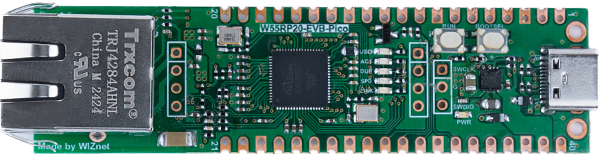
WIZnet - W55RP20-EVB-Pico
x 1

Project description
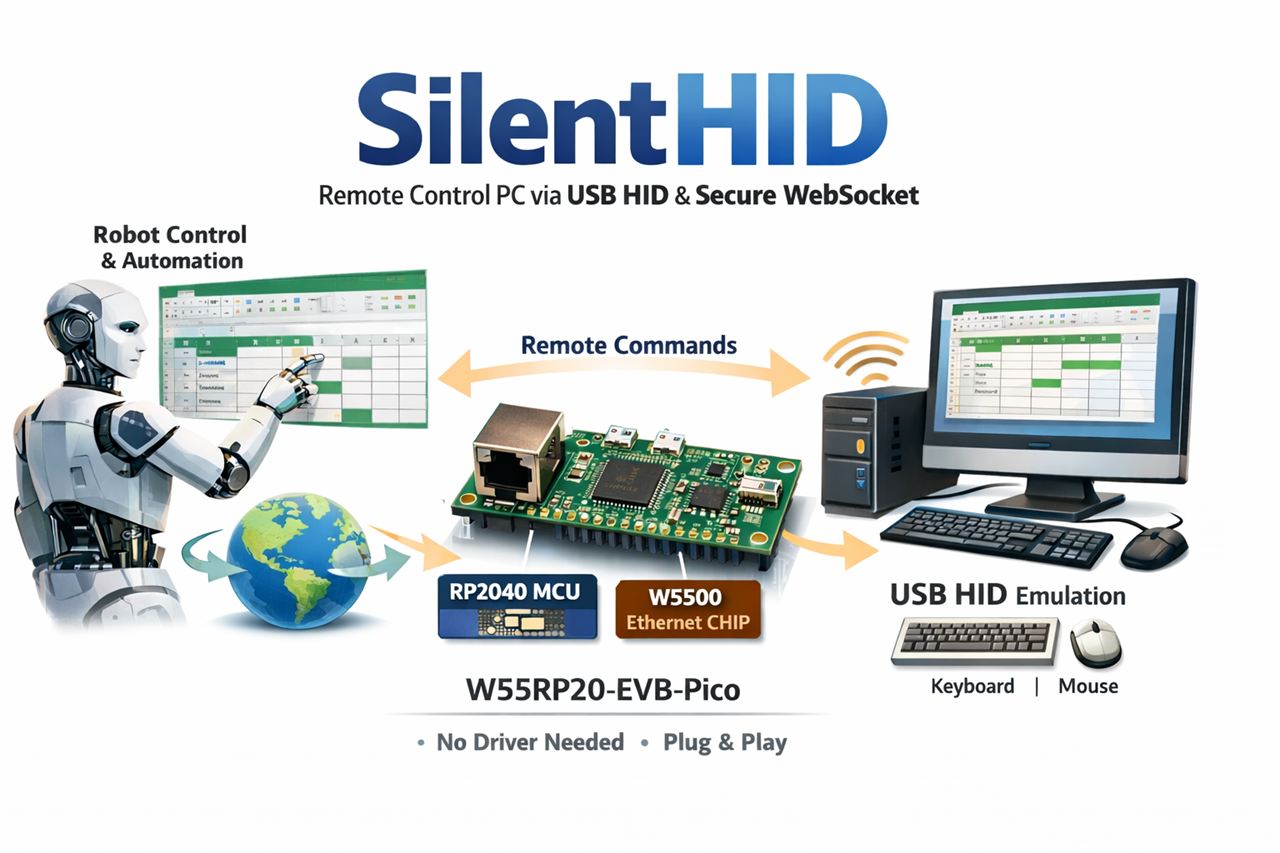
📌 Overview
SilentHID is an embedded solution that enables remote control of a PC’s keyboard and mouse over a network. It is implemented using the WIZnet W55RP20-EVB-Pico board and, according to the GitHub README, is designed to control PCs without physical interaction in use cases such as robotics and test automation systems.
The device is recognized by the PC as a USB HID device, so no additional drivers are required. It receives commands via secure WebSocket connections and emulates keyboard and mouse inputs accordingly.
📌 Developer

Philippe J. Bourcier is a French technology entrepreneur and maker who works primarily in the fields of robotics, AI, embedded systems, and networking. According to his X (formerly Twitter) profile, he identifies as a business angel, startup CTO, and maker, and he is also known as one of the founders of FRnOG (French Network Operators Group), an open technology community in France.
📌 Features
1. Secure WebSocket–Based Remote Command Reception
- Receives HID commands over the network using TLS 1.2 encryption (via BearSSL)
- Transmits keyboard and mouse control commands securely over the network
BearSSL?
BearSSL is a lightweight TLS/SSL library designed specifically for highly resource-constrained environments.
Its primary use is to implement secure TLS communication at minimal cost in embedded systems and MCU-based IoT devices.
BearSSL mbedTLS Design Minimal code and memory footprint, with a concise and secure implementation General-purpose design with flexible features and APIs Primary Target Resource-constrained embedded systems and IoT devices Broad applicability, from embedded systems to servers Code Size Very small Relatively large Memory Usage Low Somewhat high Supported Protocols TLS 1.0 to 1.3 (optional) TLS 1.0 to 1.3 (wide support) This project uses arduino-pico as its main core, which officially adopts BearSSL as its TLS backend. BearSSL was chosen because it is effectively the only practical option for implementing stable TLS (WSS) in the Arduino environment with minimal resources and minimal configuration.
2. Standard USB HID Emulation
- Recognized by the PC as a standard USB keyboard and mouse
- No driver installation required (OS-independent)
3. Built-in Web Server for Testing
- Provides a device-side test UI
- Supports both local and remote testing
4. Use of Official WIZnet Development Environment
- References the W55RP20 Arduino Tutorial on the WIZnet Maker site
- Implemented based on vendor-provided official resources
📌 System Architecture
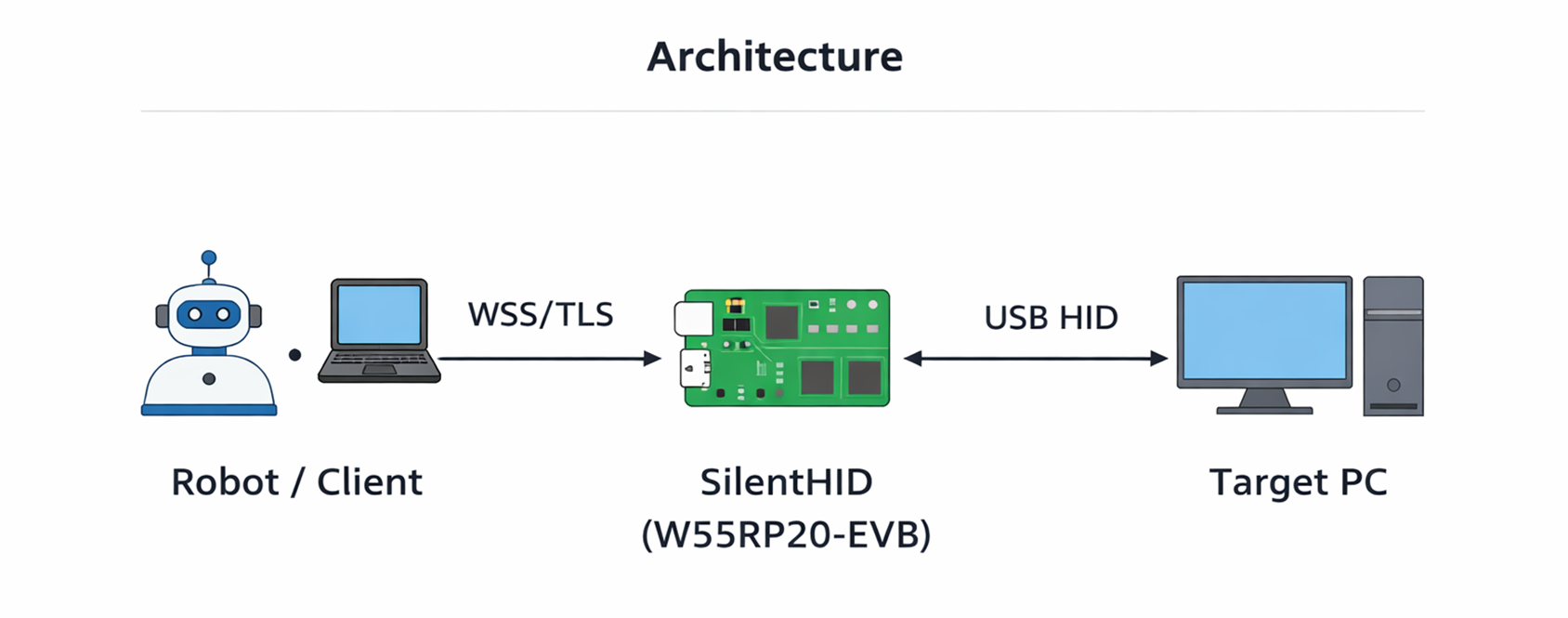
Data Flow:
- A remote client sends HID commands via a Secure WebSocket (WSS)
- The W55RP20 device receives the commands over Ethernet and performs TLS decryption
- The firmware converts the commands into USB HID protocol messages
- The PC recognizes the device as a USB HID device and processes the input accordingly
Key Components:
- MCU: RP2040 (Dual Cortex-M0+)
- Networking: W5500 hardware TCP/IP stack
- Protocols: HTTPS / TLS 1.2, WebSocket
- Interface: USB HID (Keyboard / Mouse)
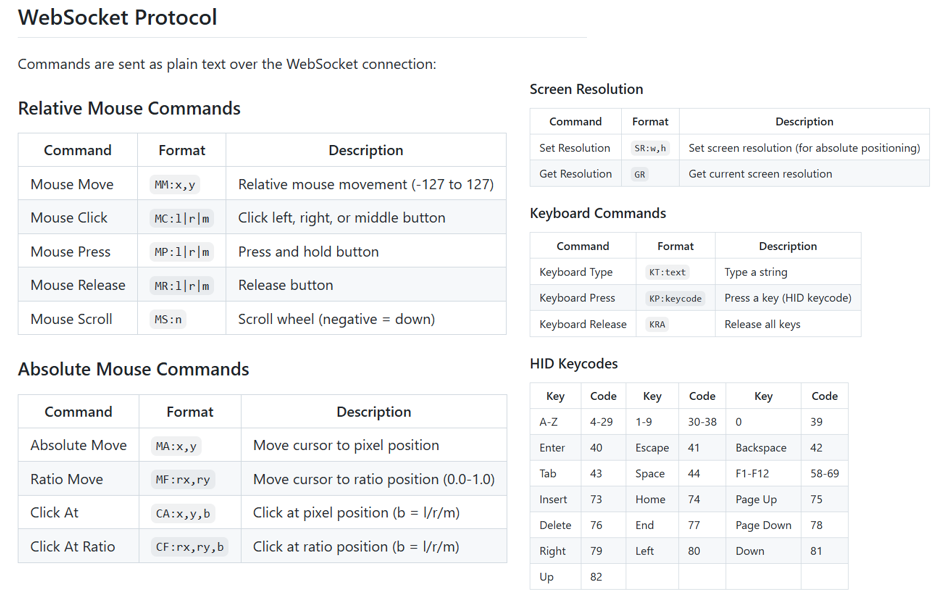
Websocket Protocol
📌 Role and Application of the WIZnet's Chip
Chip Used: W55RP20
It is an integrated chip that combines an RP2040 MCU with the W5500 hardware TCP/IP stack.
Role in the Project
- Handles TCP/IP communication using the hardware network stack
- Manages HTTPS / TLS sessions
- Receives remote control commands
- Provides a USB HID interface (keyboard/mouse emulation)
Chip Features
- Hardware TCP/IP offloading (TOE architecture)
- Integrated RP2040 + Ethernet, simplifying the BOM
- Arduino development environment support
- Low-power design based on Cortex-M0+ cores
📌 Market & Application Value
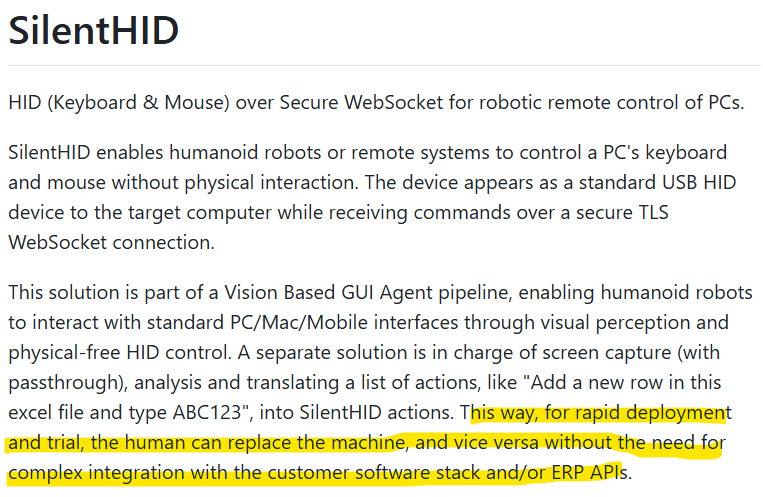
- PC control for robotic systems
- Test automation
- Remote management systems
📌 External Indicators
X (https://x.com/irukanji_invest/status/2004480964433768788)
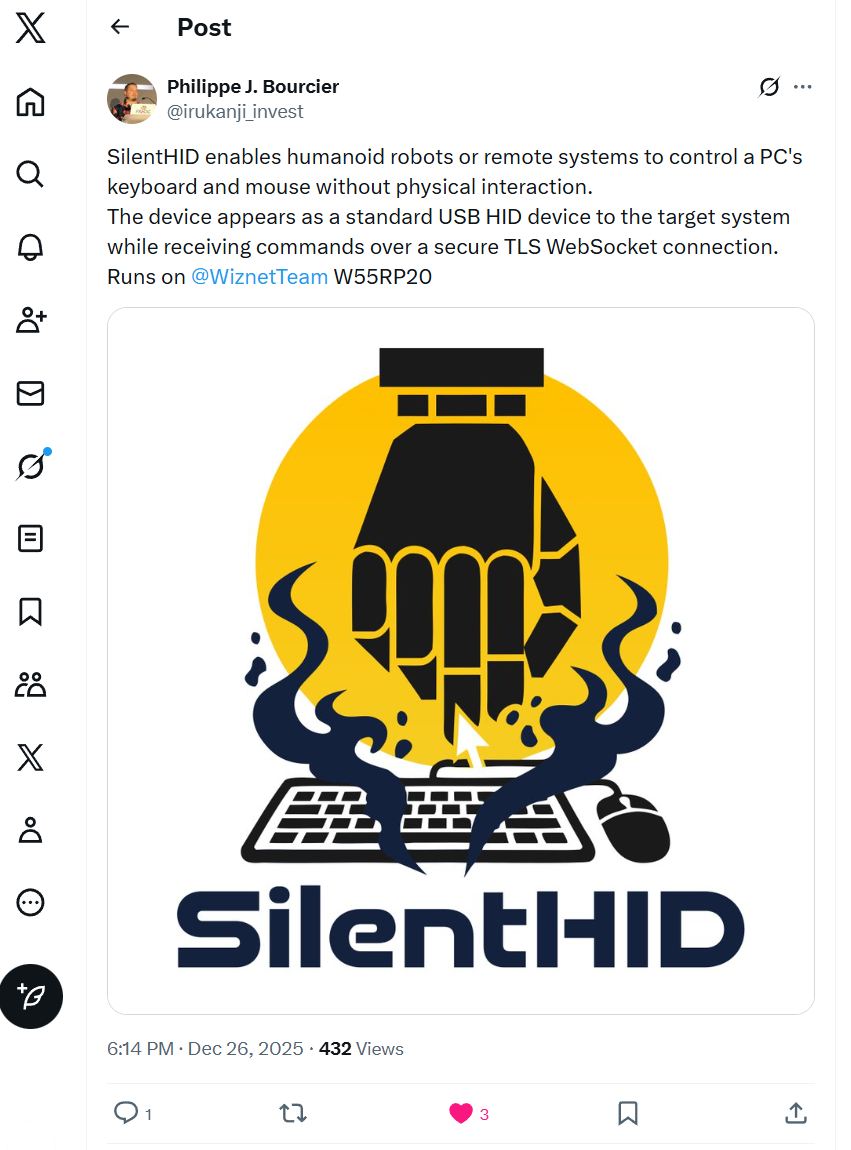
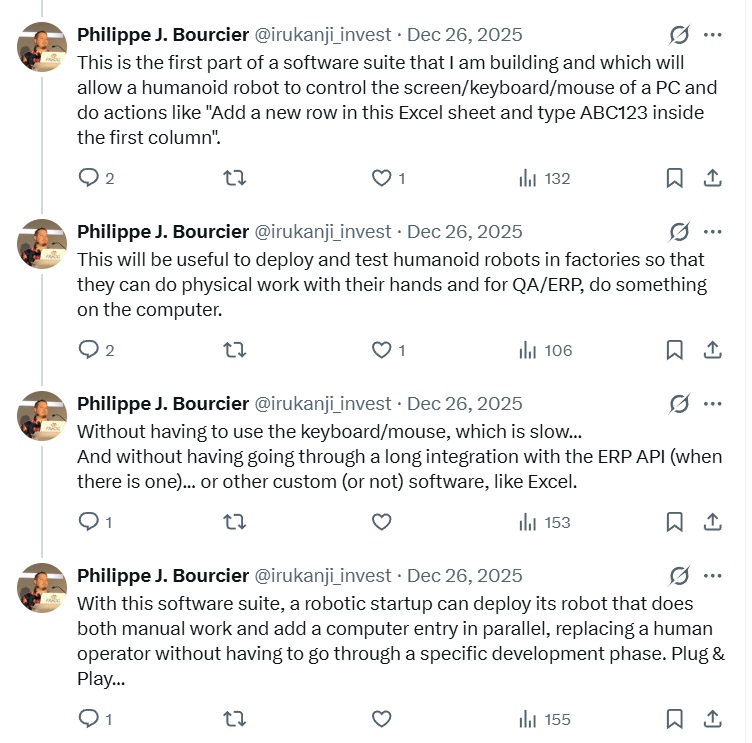
The developer of the SilentHID project explained on X (formerly Twitter) that this project represents the first step of a software suite designed to allow humanoid robots or remote systems to control a PC without physical keyboard or mouse interaction. The device is recognized by the PC as a standard USB HID, while the actual control commands are delivered over a TLS-secured WebSocket, a structure the developer explicitly emphasized.
In the post, the developer used an example of entering data into an Excel spreadsheet to illustrate how robots can directly replace routine office and administrative tasks traditionally performed by humans. A key advantage highlighted is that this approach enables automation of existing PC-based workflows without requiring complex API integrations with ERP or QA systems.
Through this concept, SilentHID is presented as a practical, plug-and-play tool that allows robotics startups to deploy humanoid robots in factory environments with minimal additional development, enabling them to perform both physical tasks and PC input operations simultaneously.
📌 QnA
Q1. Why is using the W55RP20 (W5500) a good choice for SilentHID?
The W55RP20 integrates the W5500 hardware TCP/IP engine, which significantly reduces the network processing load on the MCU. This is well suited for handling frequent, short HID commands reliably. Compared to software stacks like LwIP, it offers more predictable latency, resulting in higher reliability in industrial environments.
Q2. How does SilentHID connect to an industrial network?
It connects directly to a wired network via the Ethernet port on the W55RP20-EVB-Pico. IP address, port, and authentication settings can be configured in config.h, with support for either static IP or DHCP. Control commands are then received over HTTPS and Secure WebSocket connections.
Q3. What is the core role of the W5500 in this project?
The W5500 handles TCP/IP processing in hardware, ensuring stable WebSocket communication. This allows the RP2040 to focus on USB HID processing, enabling a reliable command–response (OK/ERR) structure without interruptions.
Q4. Can beginners implement this project using the W55RP20-EVB-Pico?
Yes, it is feasible for users with Arduino IDE experience. The most challenging part is generating TLS certificates and handling self-signed certificates. USB HID and Ethernet configuration themselves are relatively straightforward by following the README instructions.
Q5. How does W5500-based hardware TCP/IP differ from software stacks like LwIP?
LwIP is flexible but consumes significant MCU RAM and CPU resources. In contrast, the W5500 processes TCP/IP in hardware, reducing code complexity and providing predictable communication timing. This difference is especially important in OT environments such as factory automation or remote HMI control.
📌 WIZnet Strategic Value
WIZnet ecosystem perspective
- Development based on the W55RP20 Arduino Tutorial (direct README link)
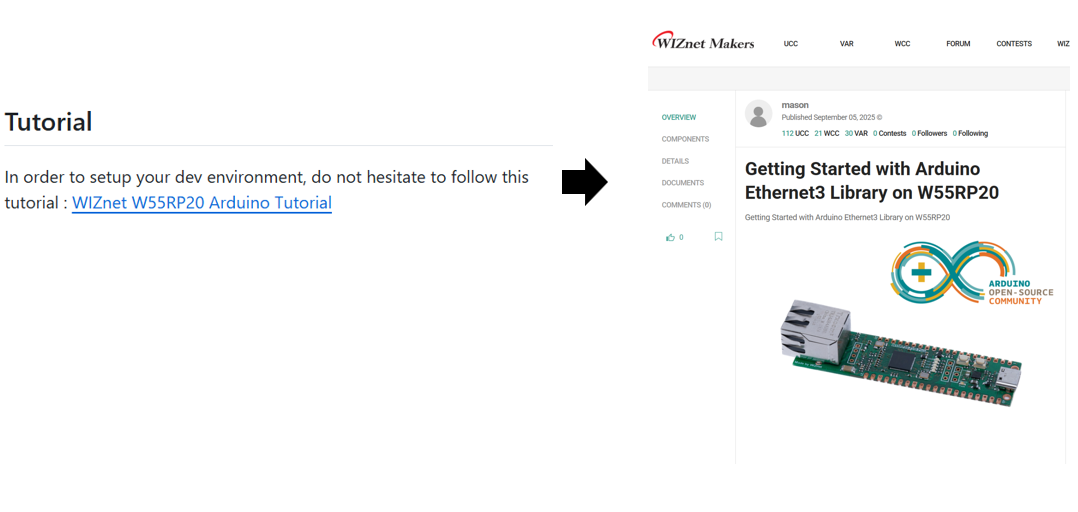
→ Naturally connected to the official development guide
→ Provides reproducibility for makers and beginner developers
- WIZnet official development resource utilization case
- A real implementation example of W55RP20 + Ethernet + secure communication (using BearSSL)
- A case extended beyond a simple tutorial to an application-level UCC
- Expandability to SPE in W55RP20-based Ethernet input control
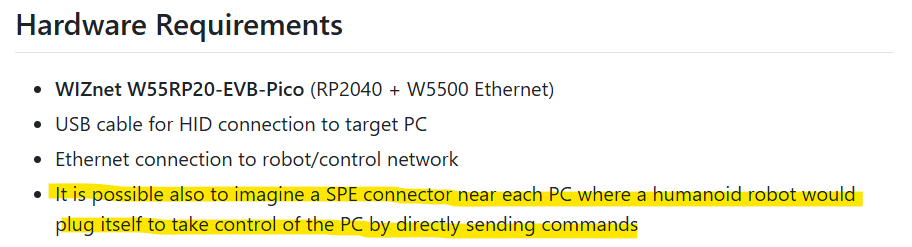
- If WIZnet provides an SPE Ethernet controller or related solution, projects like SilentHID could evolve into direct-connected input control devices between robots and PCs. This could lead to a structure where robots can be controlled near each PC without separate switches or complex network infrastructure, moving toward reducing both wiring costs and installation complexity in factory, logistics, and field automation environments.
Maker ecosystem perspective
This project is a case that integrates TLS (WSS), Ethernet, and USB HID into a single device based on the W55RP20 platform.
In other words, W55RP20 proves that it is not just a simple MCU + Ethernet chip, but a platform capable of implementing an “actuation-capable network device.”
📌 Summary
SilentHID is an embedded project based on the WIZnet W55RP20-EVB-Pico that converts remote commands delivered over the network into USB keyboard and mouse inputs. On the PC side, it is recognized as a standard USB HID device without requiring any additional drivers, allowing it to be used without modifying the existing environment.
By receiving remote control commands via TLS-secured WebSocket (WSS) communication and converting them into actual input events, it provides a network-to-USB input bridge that enables robots or automation systems to operate a PC on behalf of a human.
📌 Overview
SilentHID는 네트워크를 통해 PC의 키보드와 마우스를 원격으로 제어하는 임베디드 솔루션입니다. WIZnet W55RP20-EVB-Pico 보드를 사용하여 구현되었으며, GitHub README에 따르면 로봇, 테스트 자동화 시스템 등에서 물리적 접촉 없이 PC를 제어하는 것을 목표로 합니다.
USB HID 장치로 PC에 인식되어 별도의 드라이버 설치가 불필요하며, Secure WebSocket 기반으로 명령을 전달받아 키보드/마우스 입력을 에뮬레이션합니다.
📌 Developer
Philippe J. Bourcier는 프랑스의 기술 창업가이자 메이커로, 로봇·AI·임베디드·네트워크 분야를 중심으로 활동하고 있다. X(구 Twitter) 프로필 기준으로 Business Angel, 스타트업 CTO, Maker로 소개되어 있으며, 프랑스의 오픈 기술 커뮤니티 FRnOG(French Network Operators Group) 설립자 중 한 명으로 알려져 있다.
📌 Features
1. Secure WebSocket 기반 원격 명령 수신
- TLS 1.2 암호화를 통한 HID 명령 수신 (BearSSL 사용)
- 네트워크를 통한 키보드/마우스 제어 명령 전송
BearSSL?
BearSSL은 리소스가 매우 제한된 환경을 목표로 설계된 경량 TLS/SSL 라이브러리입니다.
주 용도는 임베디드 시스템, MCU 기반 IoT 디바이스에서 안전한 TLS 통신을 최소 비용으로 구현하는 것입니다.
BearSSL mbedTLS 설계 최소 코드/메모리, 간결하고 안전한 구현 범용, 유연한 기능과 API 제공 주 사용 대상 리소스 제한 임베디드 시스템, IoT 임베디드부터 서버까지 폭넓은 적용 코드 크기 매우 작음 상대적으로 큼 메모리 사용량 낮음 다소 높음 지원 프로토콜 TLS 1.0~1.3 (선택적) TLS 1.0~1.3 (광범위) 이 프로젝트는 메인 코어로 사용하는 arduino-pico가 TLS 백엔드로 BearSSL을 공식 채택하고 있으며, Arduino 환경에서 최소 리소스·최소 설정으로 안정적인 TLS(WSS)를 구현할 수 있는 유일한 현실적 선택이기 때문에 BearSSL을 사용했다.
2. 표준 USB HID 에뮬레이션
- PC에서 일반 USB 키보드/마우스로 인식
- 드라이버 설치 불필요 (OS 독립적)
3. 내장 웹서버를 통한 테스트 인터페이스
- 디바이스 자체 테스트 UI 제공
- 로컬/원격 테스트 가능
4. WIZnet 공식 개발 환경 활용
- WIZnet Maker 사이트의 W55RP20 Arduino Tutorial 참조
- 벤더 공식 리소스 기반 구현
📌 System Architecture
데이터 흐름:
- 원격 클라이언트가 Secure WebSocket을 통해 HID 명령 전송
- W55RP20 디바이스가 이더넷으로 명령 수신 및 TLS 복호화
- 펌웨어가 명령을 USB HID 프로토콜로 변환
- PC가 USB HID 장치로 인식하여 입력 처리
주요 구성:
- MCU: RP2040 (Dual Cortex-M0+)
- 네트워크: W5500 하드웨어 TCP/IP 스택
- 프로토콜: HTTPS/TLS 1.2, WebSocket
- 인터페이스: USB HID (Keyboard/Mouse)
웹소켓 프로토콜
📌 Role and Application of the WIZnet's Chip
사용 칩: W55RP20
RP2040 MCU와 W5500 하드웨어 TCP/IP 스택이 통합된 칩이다.
프로젝트에서의 역할
- TCP/IP 통신 처리 (하드웨어 스택 사용)
- HTTPS/TLS 세션 관리
- 원격 명령 수신
- USB HID 인터페이스 제공
칩 특징
- 하드웨어 TCP/IP 오프로드 (TOE 방식)
- RP2040 + Ethernet 통합으로 BOM 단순화
- Arduino 개발 환경 지원
- Cortex-M0+ 기반 저전력 설계
📌 Market & Application Value
- 로봇 제어 시스템의 PC 조작
- 테스트 자동화
- 원격 관리 시스템
📌 External Indicators
X (https://x.com/irukanji_invest/status/2004480964433768788)


SilentHID 프로젝트 개발자는 X(구 Twitter)를 통해 본 프로젝트를 휴머노이드 로봇이나 원격 시스템이 물리적인 키보드·마우스 조작 없이 PC를 제어하기 위한 소프트웨어 스위트의 첫 단계라고 설명했다. 디바이스는 PC에 표준 USB HID로 인식되며, 실제 제어 명령은 TLS가 적용된 WebSocket을 통해 전달되는 구조임을 강조했다.
게시글에서는 엑셀 시트에 데이터를 입력하는 예시를 들어, 사람이 수행하던 사무·관리 작업을 로봇이 그대로 대체할 수 있음을 설명했다. 특히 ERP나 QA 시스템과의 복잡한 API 연동 없이, 기존 PC 기반 업무를 그대로 자동화할 수 있다는 점을 핵심 장점으로 언급했다.
이를 통해 SilentHID는 로봇 스타트업이 추가 개발 없이(Plug & Play) 휴머노이드 로봇을 공장 환경에 배치하고, 물리 작업과 PC 입력 작업을 동시에 수행하도록 만드는 실용적 도구로 소개되고 있다.
📌 QnA
Q1. 왜 SilentHID에 W55RP20(W5500)을 사용하는 것이 좋은가요?
W55RP20은 하드웨어 TCP/IP를 제공하는 W5500을 내장해 MCU의 네트워크 부하를 크게 줄인다. 이는 HID 입력처럼 빈번하고 짧은 명령을 안정적으로 처리하는 데 유리하며, 소프트웨어 스택(LwIP) 대비 지연 변동이 적어 산업 환경에서 신뢰성이 높다.
Q2. SilentHID는 산업용 네트워크에 어떻게 연결되나요?
W55RP20-EVB-Pico의 Ethernet 포트를 통해 유선 네트워크에 직접 연결한다. config.h에서 IP, 포트, 인증 정보를 설정할 수 있으며, Static IP 또는 DHCP를 선택할 수 있다. 이후 HTTPS 및 Secure WebSocket으로 제어 명령을 수신한다.
Q3. 이 프로젝트에서 W5500의 핵심 역할은 무엇인가요?
W5500은 TCP/IP 처리를 하드웨어에서 수행해 WebSocket 통신을 안정적으로 유지한다. 덕분에 RP2040은 USB HID 처리에 집중할 수 있으며, 명령-응답(OK/ERR) 구조가 끊김 없이 동작한다.
Q4. 초보자도 W55RP20-EVB-Pico로 이 프로젝트를 구현할 수 있나요?
Arduino IDE 경험이 있다면 충분히 가능하다. 가장 어려운 부분은 TLS 인증서 생성과 self-signed 인증서 처리다. USB HID와 Ethernet 설정 자체는 README 지침을 따르면 비교적 straightforward하다.
Q5. W5500 기반 하드웨어 TCP/IP는 LwIP 같은 소프트웨어 스택과 어떻게 다른가요?
LwIP는 유연하지만 MCU RAM과 CPU를 많이 사용한다. 반면 W5500은 TCP/IP를 하드웨어로 처리해 코드 복잡도를 줄이고, 통신 타이밍을 예측 가능하게 만든다. 이는 공장 자동화나 원격 HMI 제어 같은 OT 환경에서 중요한 차이다.
📌 WIZnet Strategic Value
WIZnet 생태계 관점
- W55RP20 Arduino Tutorial 기반 개발 (README 직접 링크)
→ 공식 개발 가이드와 자연스럽게 연결됨
→ Maker 및 입문 개발자에게 재현 가능성 제공
- WIZnet 공식 개발 리소스 활용 사례
- W55RP20 + Ethernet + 보안 통신(BearSSL사용)의 실제 구현 예
- 단순 튜토리얼을 넘어 응용 레벨 UCC로 확장된 사례
- W55RP20 기반 이더넷 입력 제어에서 SPE로 확장 가능성
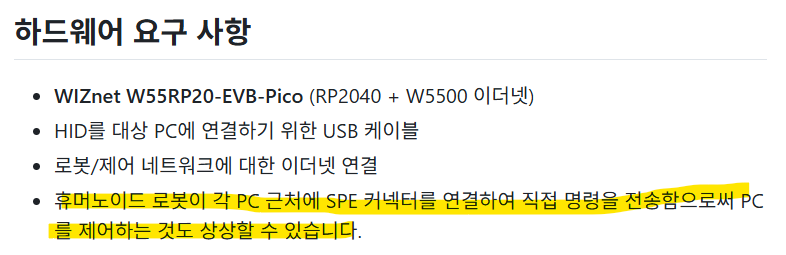
- 만약 WIZnet에서 SPE 이더넷 컨트롤러 또는 관련 솔루션이 제공된다면, SilentHID와 같은 프로젝트는 로봇–PC 간 직접 연결형 입력 제어 장치로 진화할 수 있다. 이는 로봇이 각 PC 근처에서 별도의 스위치나 복잡한 네트워크 인프라 없이도 제어를 수행하는 구조로 이어질 수 있으며, 공장·물류·현장 자동화 환경에서 배선 비용과 설치 복잡도를 동시에 낮추는 방향이다.
Maker 생태계 관점
본 프로젝트는 W55RP20 단일 플랫폼을 기반으로 TLS(WSS) · Ethernet · USB HID를 하나의 디바이스에 통합한 사례입니다.
즉, W55RP20은 단순 MCU + Ethernet 칩이 아니라 “행동형 네트워크 디바이스 (Actuation-capable Network Device)”를 구현할 수 있는 플랫폼임을 증명합니다.
📌 Summary
SilentHID는 WIZnet W55RP20-EVB-Pico를 기반으로, 네트워크를 통해 전달된 원격 명령을 USB 키보드·마우스 입력으로 변환하는 임베디드 프로젝트다. PC에서는 별도의 드라이버 없이 표준 USB HID 장치로 인식되어 기존 환경을 변경하지 않고 사용할 수 있습니다.
TLS가 적용된 WebSocket(WSS) 통신으로 원격 제어 명령을 수신하고 이를 실제 입력 이벤트로 변환함으로써, 로봇이나 자동화 시스템이 사람을 대신해 PC를 조작할 수 있는 네트워크–USB 입력 브리지를 제공합니다.

