


OpenAlerting LoRa Gateway with ESR-US1 W5500
Atmega2560 + RFM95 LoRa + ESR-US1 W5500 Ethernet으로 만든 LoRa Gateway 프로젝트
WIZnet - W5500
x 1

OpenAlerting LoRa Gateway
Title: Can an AVR + W5500 LoRa Gateway Build a Reliable Field Alerting Network?
Keyword: LoRa Gateway / W5500 Ethernet
H/N: H
TOE: O
Protocol: LoRa, Ethernet
WIZnet Product: ESR-US1 W5500 Ethernet Module
Original Source: https://github.com/OpenAlerting/lora-gateway
AVR + W5500 LoRa Gateway로 현장 경보 네트워크를 안정적으로 만들 수 있을까?
Project Overview
OpenAlerting LoRa Gateway는 AVR ATmega2560, RFM95 LoRa 모듈, ESR-US1 W5500 Ethernet 모듈을 기반으로 만든 LoRa-to-Ethernet Gateway 프로젝트입니다.
이 프로젝트의 핵심은 단순히 LoRa 데이터를 수신하는 것이 아닙니다. 현장에 흩어진 저전력 LoRa 노드의 데이터를 게이트웨이에서 수집한 뒤, W5500 기반 유선 Ethernet을 통해 안정적으로 네트워크에 전달하는 구조를 보여줍니다. LoRa 현장 노드에서 데이터를 받고, ATmega2560이 이를 처리한 뒤, W5500을 통해 Local Server나 Monitoring System으로 전달하는 구조입니다. 프로젝트에는 code와 PCB 자료도 포함되어 있어 단순 아이디어가 아니라 실제 하드웨어 구현까지 고려된 사례입니다.
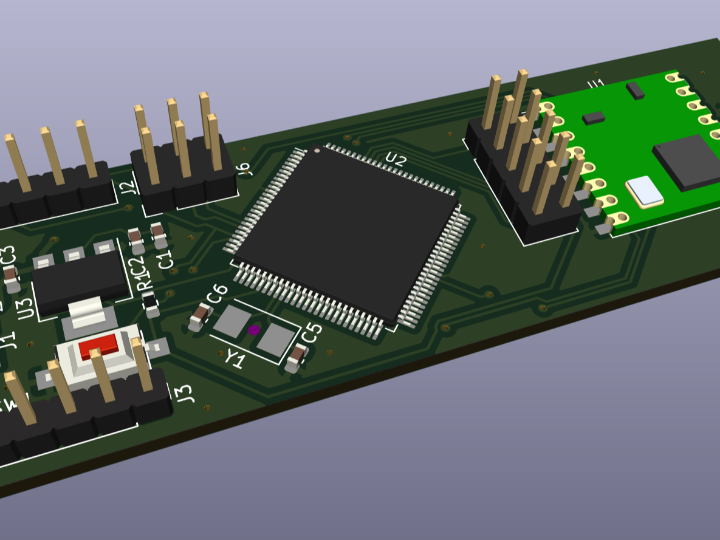
GitHub 저장소에는 code와 pcb 폴더가 포함되어 있으며, README에는 3D view, PCB view, schematic view가 함께 정리되어 있습니다. 따라서 단순한 아이디어나 예제 코드가 아니라, 실제 하드웨어 구현까지 고려된 LoRa Gateway 프로젝트로 볼 수 있습니다.
Why This Project Matters
LoRa는 넓은 지역에 분산된 센서 노드에서 작은 데이터를 장거리로 전송할 때 유용합니다. 하지만 센서 데이터를 모으는 게이트웨이 쪽은 항상 안정적으로 네트워크에 연결되어 있어야 합니다.
이 지점에서 W5500의 역할이 중요해집니다.
Wi-Fi 기반 게이트웨이는 설치 환경에 따라 신호 품질이 흔들릴 수 있습니다. 반면 공공 경보, 농업 모니터링, 환경 관측, 원격 센서망처럼 고정된 장소에 설치되는 게이트웨이는 Ethernet을 사용하는 편이 더 안정적일 수 있습니다.
OpenAlerting LoRa Gateway는 LoRa의 장거리 무선성과 W5500의 안정적인 유선 네트워크를 결합한 사례입니다. 특히 ATmega2560처럼 리소스가 제한적인 MCU를 사용하면서도 Ethernet Gateway 구조를 만들 수 있다는 점에서 W5500의 역할이 잘 드러납니다.
System Architecture
이 프로젝트의 기본 구조는 다음과 같습니다.
LoRa Field Sensor Nodes
        ↓
RFM95 LoRa Module
        ↓
AVR ATmega2560
        ↓
ESR-US1 W5500 Ethernet Module
        ↓
Local Server / Monitoring System / Alerting Platform
주요 구성 요소는 다음과 같습니다.
| Component | Role |
|---|---|
| AVR ATmega2560 | 게이트웨이의 메인 컨트롤러 역할 |
| RFM95 LoRa Module | 현장 노드에서 전송되는 LoRa 데이터 수신 |
| ESR-US1 W5500 Ethernet Module | 수집된 데이터를 유선 Ethernet 네트워크로 전달 |
| Custom PCB | 실제 게이트웨이 보드 구현을 위한 하드웨어 구조 |
Role of W5500
W5500은 이 프로젝트에서 단순한 통신 옵션이 아니라, 게이트웨이의 네트워크 백홀 역할을 합니다.
ATmega2560처럼 리소스가 제한적인 MCU에서는 네트워크 처리를 MCU가 모두 담당하면 소프트웨어 부담이 커질 수 있습니다. W5500은 Hardwired TCP/IP 기반 Ethernet Controller이기 때문에, MCU가 LoRa 데이터 처리와 게이트웨이 로직에 더 집중할 수 있게 해줍니다.
이 프로젝트에서 W5500은 다음 가치를 제공합니다.
- 고정형 게이트웨이에 적합한 안정적인 유선 연결
- AVR MCU의 네트워크 처리 부담 감소
- LoRa 현장망과 서버/모니터링 시스템 사이의 연결성 확보
- 장시간 운용되는 경보·모니터링 시스템에 적합한 구조
- Wi-Fi 품질이 불안정한 현장에서 사용할 수 있는 유선 백홀 제공
What Makes It Different from a Typical LoRa Project?
일반적인 LoRa 예제는 노드 간 무선 통신 자체에 초점을 둡니다. 하지만 실제 현장 시스템에서는 LoRa 데이터를 받은 뒤, 그 데이터를 어디로 어떻게 전달할지가 더 중요합니다.
이 프로젝트는 바로 그 지점을 다룹니다.
LoRa는 현장 센서망을 담당하고, W5500 Ethernet은 게이트웨이와 상위 네트워크 사이의 안정적인 연결을 담당합니다. 따라서 이 프로젝트는 단순 LoRa 통신 예제가 아니라, 현장 데이터 수집과 네트워크 전달까지 고려한 gateway architecture 사례로 볼 수 있습니다.
Marketing Perspective: Why the Connection After LoRa Matters
이 프로젝트에서 제가 가장 주목한 부분은 LoRa 자체보다, LoRa 이후의 연결성입니다.
LoRa는 현장에 흩어진 센서 데이터를 장거리로 수집하는 데 강점이 있습니다. 하지만 실제 서비스 관점에서 보면, 센서 데이터가 게이트웨이에 도착한 뒤부터가 더 중요합니다. 받은 데이터를 어디로 보내고, 얼마나 안정적으로 전달할 수 있는지가 결국 시스템의 완성도를 결정하기 때문입니다.
이 프로젝트는 그 지점에서 W5500의 역할이 분명하게 드러납니다. LoRa가 현장의 데이터를 가져온다면, W5500은 그 데이터를 Local Server나 Monitoring System으로 안정적으로 연결합니다. 즉, W5500은 단순히 Ethernet 기능을 추가하는 부품이 아니라, LoRa 센서망을 실제 네트워크 서비스로 이어주는 유선 백본 역할을 합니다.
특히 공공 경보, 농업 센서망, 환경 모니터링, 침수 감지처럼 장시간 운영되는 고정형 시스템에서는 연결 안정성이 매우 중요합니다. 이런 환경에서는 Wi-Fi보다 Ethernet이 더 신뢰성 있는 선택이 될 수 있고, 이 프로젝트는 그 메시지를 잘 보여줍니다.
개발 관점에서도 의미가 있습니다. 이 프로젝트는 ATmega2560 기반인데, ATmega2560은 고성능 MCU라고 보기는 어렵습니다. 이런 MCU가 LoRa 처리와 네트워크 스택을 모두 감당해야 한다면 부담이 커질 수 있습니다. 하지만 W5500은 Hardwired TCP/IP 기반 Ethernet Controller이기 때문에, 네트워크 처리는 W5500이 맡고 MCU는 LoRa 데이터 처리와 게이트웨이 로직에 집중할 수 있습니다.
결국 이 프로젝트는 리소스가 제한적인 AVR MCU에서도 W5500을 활용하면 안정적인 Ethernet Gateway 구조를 만들 수 있다는 점을 보여줍니다.
WIZnet 관점에서는 이 메시지가 중요합니다. 최신 고성능 MCU나 복잡한 Linux 보드가 아니더라도, ATmega2560 같은 단순한 MCU 기반 시스템에서 W5500이 현장형 IoT Gateway의 안정적인 네트워크 백본 역할을 할 수 있다는 점을 보여주기 때문입니다.
Similar Contents on Maker and Key Differences
Maker에는 이미 LoRa와 W5500 Ethernet을 결합한 유사 콘텐츠가 있습니다. OpenAlerting LoRa Gateway도 큰 구조에서는 LoRa 무선망과 W5500 유선 Ethernet 백홀을 연결한다는 공통점을 가집니다. 다만 이 프로젝트는 ATmega2560, RFM95, ESR-US1 W5500, code/pcb 자료를 갖춘 단순·저비용 field alerting gateway라는 점에서 차별화됩니다.
| Similar Maker Content | Link | Common Points | Key Differences |
|---|---|---|---|
| LoRa Datalogger with W5500 Host | https://maker.wiznet.io/sophia/projects/lora-datalogger-with-w5500-host/ | LoRa 센서 데이터를 W5500 Ethernet으로 유선 네트워크에 연결합니다. | 기존 콘텐츠는 LoRa 데이터를 JSON으로 제공하는 TCP 데이터로거 성격이 강합니다. OpenAlerting은 ATmega2560 + RFM95 + ESR-US1 W5500 + PCB 기반의 전용 LoRa Gateway로, field alerting/public alerting 관점이 더 강합니다. |
| LoRa Home Gateway and Sensor System | https://maker.wiznet.io/gunn/projects/lora-home-gateway-and-sensor-system/ | LoRa 무선 센서망과 WIZnet Ethernet Gateway를 결합합니다. | 기존 콘텐츠는 홈/실외 센서 게이트웨이와 AdafruitIO, Gmail, Google Drive 연동이 중심입니다. OpenAlerting은 더 단순한 AVR 기반 LoRa-to-Ethernet Gateway 구조와 PCB 구현이 핵심입니다. |
| LoRa Gateway Based on W5500 with RT-Thread | https://maker.wiznet.io/chen/projects/lora-gateway-based-on-w5500-with-rt-thread/ | LoRa Gateway에서 W5500을 Ethernet 인터페이스로 사용합니다. | 기존 콘텐츠는 STM32/ART-PI, RT-Thread, MQTT, netdev 등 소프트웨어 프레임워크 중심입니다. OpenAlerting은 AVR ATmega2560 기반의 저비용·단순 하드웨어 구현형 프로젝트입니다. |
| Meshtastic Ethernet Gateway with W5500 on Raspberry Pi Pico 2 | https://maker.wiznet.io/viktor/projects/pico2-w5500-e22/ | LoRa 계열 무선망과 W5500 Ethernet 백홀을 결합합니다. | 기존 콘텐츠는 RP2350/Pico 2 + Ebyte E22 기반 Meshtastic-style Gateway입니다. OpenAlerting은 ATmega2560 + RFM95 기반의 범용 LoRa Gateway로, 공공 경보나 현장 센서망 백홀에 더 적합하게 해석할 수 있습니다. |
| PlatformIO: Ethernet + LoRa - TTGO T-Beam WIZnet W5500 Lite | https://maker.wiznet.io/viktor/projects/platformio-ethernet-lora-ttgo-t-beam-wiznet-w5500-lite/ | LoRa와 W5500 Ethernet을 함께 사용합니다. | 기존 콘텐츠는 TTGO T-Beam, W5500 Lite, MQTT 테스트 패킷 중심입니다. OpenAlerting은 code와 PCB 자료가 포함된 전용 게이트웨이 하드웨어 구현 사례입니다. |
Possible Use Cases
이 구조는 다음과 같은 분야에 적용될 수 있습니다.
- 하천 수위 또는 침수 경보 시스템
- 농업 환경 센서망
- 원격 온습도·대기 환경 모니터링
- 소규모 공공 경보 네트워크
- 공장·창고 내 저전력 센서 게이트웨이
- Wi-Fi 품질이 불안정한 현장의 유선 백홀 게이트웨이
Value for WIZnet
이 프로젝트는 WIZnet Ethernet이 고성능 MCU에서만 필요한 것이 아니라, ATmega2560 같은 비교적 단순한 MCU 기반 시스템에서도 의미 있게 사용될 수 있음을 보여줍니다.
W5500은 LoRa Gateway의 유선 네트워크 연결을 담당하면서, MCU의 부담을 줄이고 시스템의 안정성을 높이는 역할을 합니다. 이는 WIZnet의 Hardwired TCP/IP가 현장형 IoT Gateway에서 여전히 강력한 선택지가 될 수 있음을 보여주는 사례입니다.
Takeaway
OpenAlerting LoRa Gateway는 ATmega2560, RFM95 LoRa, ESR-US1 W5500 Ethernet을 결합한 실용적인 LoRa-to-Ethernet Gateway입니다.
이 프로젝트의 장점은 LoRa 통신 자체보다, 현장 센서 데이터를 안정적인 유선 네트워크로 연결하는 구조에 있습니다. 공공 경보, 원격 모니터링, 농업 센서망처럼 장시간 안정성이 중요한 분야에서 W5500의 가치가 잘 드러나는 사례입니다.
FAQ
Q1. 이 프로젝트에서 W5500은 왜 필요한가요?
A. LoRa는 현장 센서 데이터를 장거리로 보내는 역할을 하고, W5500은 게이트웨이가 받은 데이터를 유선 Ethernet으로 안정적으로 전달하는 역할을 합니다.
Q2. Wi-Fi 대신 Ethernet을 쓰는 이유는 무엇인가요?
A. 게이트웨이는 보통 고정된 장소에서 계속 동작해야 합니다. 이런 환경에서는 Wi-Fi보다 Ethernet이 연결 안정성과 유지보수 측면에서 유리할 수 있습니다.
Q3. ATmega2560 같은 AVR MCU로도 Ethernet Gateway를 만들 수 있나요?
A. 가능합니다. W5500이 Ethernet과 TCP/IP 처리를 담당하기 때문에, ATmega2560은 LoRa 데이터 처리와 게이트웨이 로직에 집중할 수 있습니다.
Q4. 이 프로젝트는 어떤 분야에 활용될 수 있나요?
A. LoRa 기반 공공 경보, 농업 센서망, 환경 모니터링, 침수 감지, 창고·공장 센서 게이트웨이 등 고정형 현장 모니터링에 활용될 수 있습니다.
Q5. 이 프로젝트가 WIZnet에 주는 메시지는 무엇인가요?
A. W5500은 단순한 Ethernet 모듈이 아니라, 저전력 무선 센서망과 안정적인 유선 네트워크를 연결하는 gateway backbone으로 활용될 수 있다는 점을 보여줍니다.
Can an AVR + W5500 LoRa Gateway Build a Reliable Field Alerting Network?
Project Overview
OpenAlerting LoRa Gateway is a LoRa-to-Ethernet gateway built with an AVR ATmega2560, an RFM95 LoRa module, and an ESR-US1 W5500 Ethernet module.
The value of this project is not just LoRa communication itself. It shows a practical gateway structure where low-power LoRa field nodes send data to a central gateway, and the gateway forwards that data through a stable wired Ethernet connection.
The GitHub repository includes both code and pcb folders. The README also includes 3D, PCB, and schematic views. This makes the project more than a basic example. It shows that the creator considered both the communication logic and the hardware implementation.
Why This Project Matters
LoRa is useful when small packets of data need to be sent from distributed field nodes over a long distance. However, the gateway side still needs a dependable network connection.
This is where W5500 becomes important.
For fixed installations such as public alerting nodes, agricultural monitoring stations, or remote sensor gateways, Wi-Fi may not always be the most reliable backhaul. A wired Ethernet connection can be easier to maintain and more stable for always-on gateway applications.
This project combines the long-range wireless capability of LoRa with the stability of W5500-based Ethernet. It also shows how an Ethernet gateway can be built even with a resource-limited MCU such as ATmega2560.
System Architecture
The basic structure of this project is as follows.
LoRa Field Sensor Nodes
        ↓
RFM95 LoRa Module
        ↓
AVR ATmega2560
        ↓
ESR-US1 W5500 Ethernet Module
        ↓
Local Server / Monitoring System / Alerting Platform
The main components are:
| Component | Role |
|---|---|
| AVR ATmega2560 | Main controller of the gateway |
| RFM95 LoRa Module | Receives LoRa data from field nodes |
| ESR-US1 W5500 Ethernet Module | Provides wired Ethernet connectivity for forwarding data to the network |
| Custom PCB | Hardware structure for an actual gateway board implementation |
Role of W5500
In this project, W5500 is not just an optional network interface. It works as the wired network backhaul of the gateway.
This is especially meaningful for an AVR-based design. ATmega2560 is not a high-performance MCU, so handling the full network stack in software can increase system complexity. W5500 provides a hardwired TCP/IP Ethernet interface, allowing the MCU to focus on LoRa data handling and gateway logic.
W5500 provides:
- Stable wired connectivity for a fixed gateway
- Reduced networking burden on the AVR MCU
- A bridge between LoRa field nodes and the monitoring system
- A practical structure for long-running alerting and monitoring applications
- A wired backhaul option for locations where Wi-Fi may not be reliable
What Makes It Different from a Typical LoRa Example?
Many LoRa examples focus only on wireless communication between nodes. In real field systems, however, the more important question is what happens after the gateway receives LoRa data.
This project addresses that point.
LoRa handles the low-power field network, while W5500 Ethernet connects the gateway to the upper-level monitoring system. This makes the project a gateway architecture example rather than just another LoRa demo.
Similar Contents on Maker and Key Differences
There are already several Maker contents that combine LoRa and W5500 Ethernet. OpenAlerting LoRa Gateway shares the same high-level pattern of connecting a LoRa field network to a wired W5500 Ethernet backhaul. However, this project is differentiated by its simple and low-cost field alerting gateway architecture based on ATmega2560, RFM95, ESR-US1 W5500, and included code/PCB materials.
| Similar Maker Content | Link | Common Points | Key Differences |
|---|---|---|---|
| LoRa Datalogger with W5500 Host | https://maker.wiznet.io/sophia/projects/lora-datalogger-with-w5500-host/ | Both projects connect LoRa field data to a wired Ethernet network using W5500. | The LoRa Datalogger focuses on receiving LoRa sensor data and serving the latest values as JSON through a W5500 TCP server. OpenAlerting is closer to a dedicated gateway hardware design using ATmega2560, RFM95 LoRa, ESR-US1 W5500, and PCB files. |
| LoRa Home Gateway and Sensor System | https://maker.wiznet.io/gunn/projects/lora-home-gateway-and-sensor-system/ | Both use a LoRa transceiver and WIZnet Ethernet to build a gateway between wireless sensor nodes and a networked system. | The Maker project focuses on a home/outdoor sensor gateway with Arduino Mega, W5500 Ethernet Shield, RFM95W, LCD, AdafruitIO, Gmail, Google Drive, and Temboo integration. OpenAlerting is simpler and more hardware-focused. |
| LoRa Gateway Based on W5500 with RT-Thread | https://maker.wiznet.io/chen/projects/lora-gateway-based-on-w5500-with-rt-thread/ | Both are LoRa gateway projects that use W5500 as the Ethernet interface. | The RT-Thread project focuses on STM32/ART-PI, RT-Thread netdev, MQTT, I2C sensors, and software framework integration. OpenAlerting is based on AVR ATmega2560 and is more minimal, low-cost, and PCB-oriented. |
| Meshtastic Ethernet Gateway with W5500 on Raspberry Pi Pico 2 | https://maker.wiznet.io/viktor/projects/pico2-w5500-e22/ | Both combine LoRa-side communication with a W5500 Ethernet backhaul for fixed gateway use. | The Meshtastic project is based on Raspberry Pi Pico 2/RP2350 and an Ebyte E22 LoRa module. OpenAlerting uses ATmega2560 and RFM95 LoRa, making it more suitable as a general-purpose public alerting or field sensor gateway. |
| PlatformIO: Ethernet + LoRa - TTGO T-Beam WIZnet W5500 Lite | https://maker.wiznet.io/viktor/projects/platformio-ethernet-lora-ttgo-t-beam-wiznet-w5500-lite/ | Both combine LoRa and WIZnet W5500 Ethernet in one gateway-like setup. | The TTGO T-Beam project uses a TTGO T-Beam LoRa board, W5500 Lite, Arduino Uno, and MQTT test packets. OpenAlerting is a custom AVR gateway with dedicated code and PCB materials. |
Possible Use Cases
This architecture can be applied to:
- Flood or water-level alerting systems
- Agricultural sensor networks
- Remote temperature and humidity monitoring
- Small public alerting networks
- Factory or warehouse sensor gateways
- Wired backhaul gateways in locations with unstable Wi-Fi
Value for WIZnet
This project shows that WIZnet Ethernet is valuable not only for powerful MCUs, but also for resource-limited embedded systems such as ATmega2560-based designs.
W5500 provides the wired network connection of the LoRa gateway, reduces the networking workload on the MCU, and improves the reliability of the overall system. It is a strong example of how hardwired TCP/IP can support practical field IoT gateways.
Takeaway
OpenAlerting LoRa Gateway is a practical LoRa-to-Ethernet gateway built with ATmega2560, RFM95 LoRa, and ESR-US1 W5500 Ethernet.
Its strength is not just wireless communication, but the way it connects field sensor data to a stable wired network. For public alerting, remote monitoring, and agricultural sensor networks, this project clearly shows the value of W5500 as a reliable gateway backbone.
FAQ
Q1. Why is W5500 used in this project?
A. LoRa handles long-range field communication, while W5500 provides stable wired Ethernet connectivity from the gateway to the monitoring network.
Q2. Why use Ethernet instead of Wi-Fi for the gateway?
A. Gateways are usually installed in fixed locations and are expected to run continuously. In that type of environment, Ethernet can be more stable and easier to maintain than Wi-Fi.
Q3. Can an AVR MCU like ATmega2560 handle an Ethernet gateway?
A. Yes. Since W5500 handles Ethernet and TCP/IP processing, ATmega2560 can focus on LoRa data handling and gateway logic.
Q4. What applications can use this architecture?
A. It can be used for public alerting, agricultural monitoring, environmental sensing, flood detection, and fixed field sensor gateways.
Q5. What does this project show about WIZnet?
A. It shows that W5500 can work as a reliable gateway backbone between low-power wireless sensor networks and wired monitoring infrastructure.