Internet of Things-Based Solar Tracker System
Abstract Internet of Things (IoT) technologies, along with economies of scale and advances in hardware, software, and network technologies
3
Components
Hardware components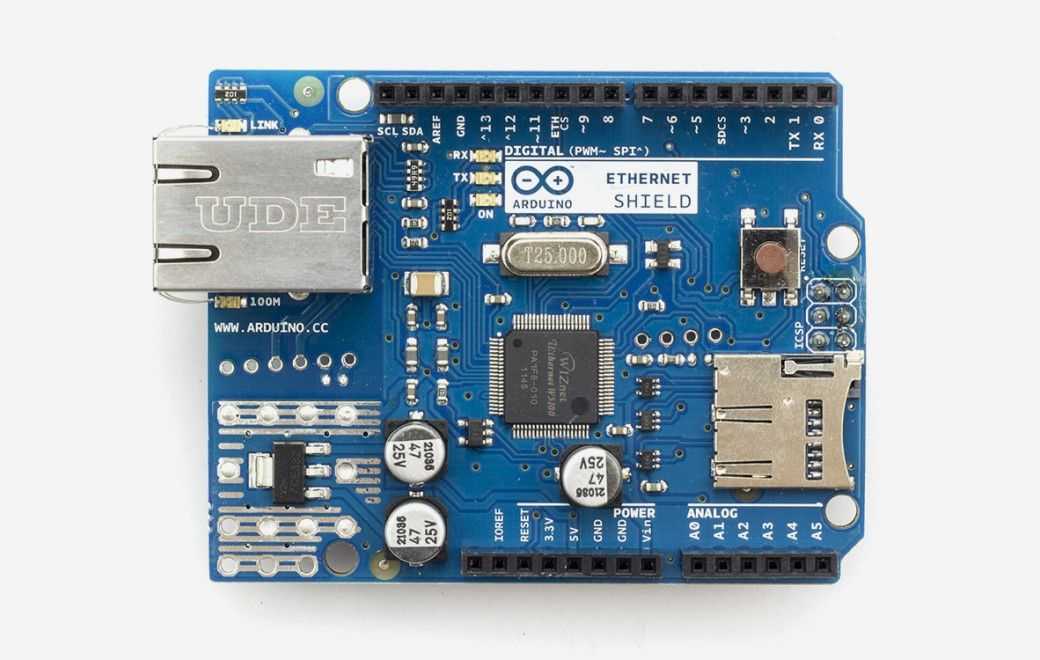
Arduino - Arduino Ethernet Shield
x 1

Project description
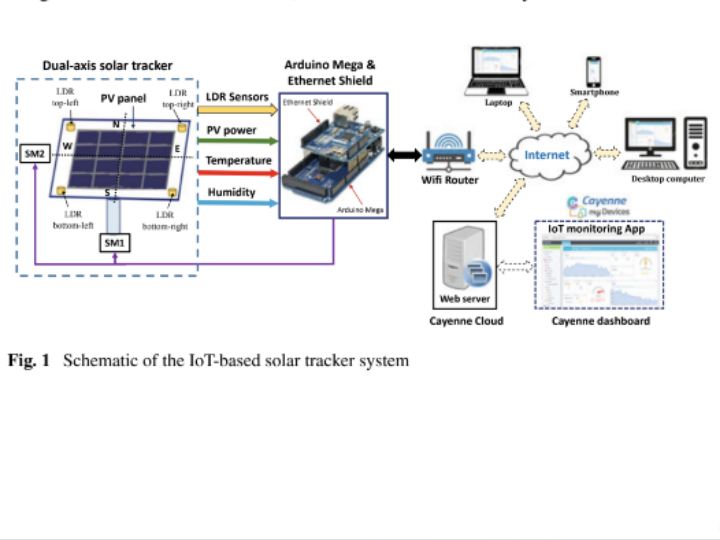
System Description The proposed IoT-based solar tracker system is depicted in Fig. 1. It is a dual-axis solar tracker that can rotate automatically to track the sun position using LDR sensors, or manually by the user through the dashboard of an IoT application. The system starts with detects the sun position (intensity of light) by LDR sensors and sends the data to the controller (Arduino Mega board). This latter then processes these data to command servomotors (SM1 and SM2) that hold the PV panel to rotate toward the sun. The values of the generated PV voltage and current, temperature, and…
Keep reading with a free account
Guests can read 15 projects per visit. Log in or create a free account to read the full description, open the documents and join the comments.