Digital-Twin + Genetic Optimization for City-Scale Solid-Waste Resource Scheduling
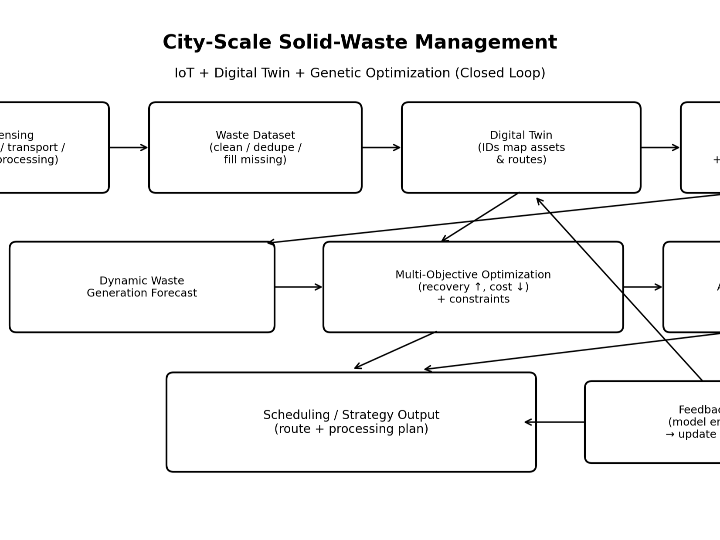
IoT data feeds a waste-system digital twin; GA optimizes routing and processing to maximize recovery while minimizing cost, with feedback updates.
0
Project description
Overview This method targets a common failure of “smart” waste systems: they monitor a lot but optimize poorly when conditions change. It builds a closed loop where real-world sensing populates a dataset, a digital twin forecasts equipment capability and waste generation, and a genetic algorithm searches for strategies that balance recycling efficiency and total cost under constraints. Main Content 1) Data acquisition and dataset formation IoT sensors are deployed across collection, transport, sorting, and processing links to collect basic parameters and form a solid-waste dataset (with…
Keep reading with a free account
Guests can read 15 projects per visit. Log in or create a free account to read the full description, open the documents and join the comments.