


Ground Grid Monitoring System Based on Internet of Things Technology
The grounding grid plays a crucial role in ensuring safety in many fields such as power systems and communication systems.
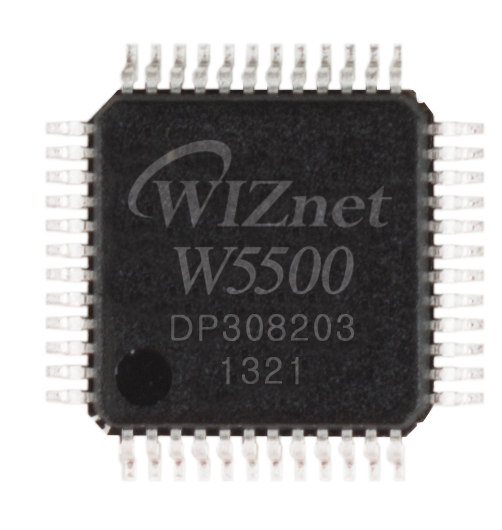
WIZnet - W5500
x 1

stm - Sensor Node Software
x 1
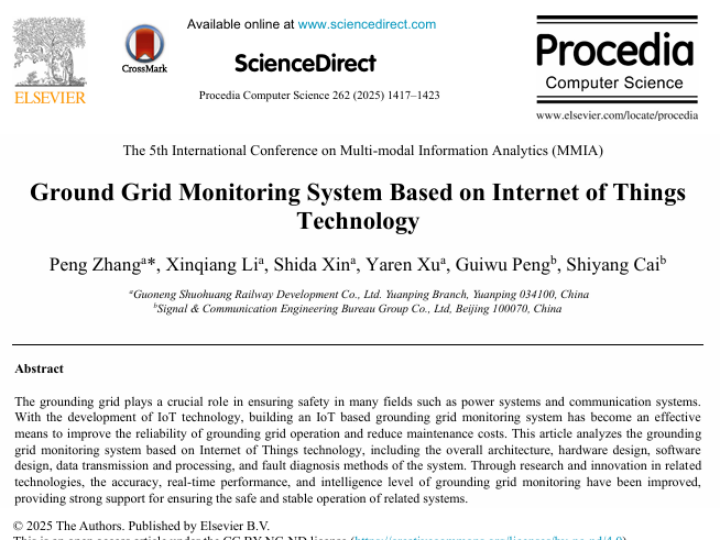
Title: Ground Grid Monitoring System Based on Internet of Things Technology
(Ground Power Grid Monitoring System Based on Internet of Things Technology)
Publisher: Procedia Computer Science 262 (2025) 1417-1423
Topic: A System for Real-Time Monitoring of the Ground Grid of a Power System Using IoT Technology
🎯 Key Contents
1. Research Background and Necessity
The ground grid is a vital facility for the safety of electrical equipment.
Existing methods: Long inspection cycles, low efficiency, and inability to monitor in real time.
IoT technology enables real-time monitoring and preventive maintenance.
2. System Architecture (3-Layer)
① Perception Layer: Data collection using various sensors.
Ground resistance sensor (clamp-type)
Soil environment sensor (temperature, humidity, salinity)
Voltage sensor
② Network Layer: Data transmission
ZigBee: Short-range, low-power communication between sensor nodes
WiFi: High-speed data transmission near the monitoring center
4G/5G: Wide-area remote monitoring
③ Application Layer: Data processing and Analysis
Server: Receives, stores, and processes data
Client: Provides a user interface
3. Hardware Design
Microcontroller: STM32F103
Built-in ADC, timer, and communication interface
Sensor data collection and processing
Communication module configuration:
Sensor node ↔ Aggregation node: ZigBee (CC2530)
Aggregation node ↔ Server: Ethernet (W5500) or GPRS/4G/5G
🔌 The Role and Importance of the W5500
W5500 Usage Cases
Statement in Section 3.1.3 of the paper:
"Ethernet communication is used when the communication between the aggregation node and the server is close and the network environment is good. Using an Ethernet controller chip such as the W5500 allows the aggregation node to be easily connected to a LAN."
The Role of the W5500
Stable Wired Connection: Environments requiring a stable network, such as within a substation
High-Speed Data Transmission: Real-Time Data Aggregation from Multiple Sensor Nodes
Easy Implementation: Hardware TCP/IP Stack Reduces Microcontroller Load
🔄 Integrated Wired and Wireless Utilization (WiFi-Ethernet) Strategy
Hybrid Communication Architecture
Three-Stage Communication Structure Proposed in the Paper
[Sensor Node] --ZigBee--> [Aggregation Node] --WiFi/Ethernet--> [Local Server] --4G/5G--> [Remote Monitoring Center]
Substation ground grid monitoring system:
Short-range: Sensor node → ZigBee → Aggregation node
Medium-range: Aggregation node → Ethernet/WiFi → Substation internal server
Long-range: Substation server → GPRS/4G → Central monitoring center
📊 Practical application effects
Fault prevention examples
Detection of an increase in ground resistance from 0.5Ω to 0.65Ω (exceeding the threshold of 0.54Ω)
Automatic alarm → Rapid on-site action
Cause: Ground electrode oxidation due to soil drying
🎓 Conclusions and implications
Technical achievements
Real-time Monitoring: Traditional 6-month cycle → 24-hour continuous monitoring
Predictive maintenance: Seasonal normal range prediction (0.3-0.6Ω in spring)
Intelligent fault diagnosis: Machine learning-based fault type classification
Market opportunities from the perspective of the WIZnet W5500
Industrial IoT Market: Power/communication infrastructure monitoring
Industrial environments where stability is critical
Hybrid networking: Convenience of WiFi + Stability of Ethernet
Selecting the optimal communication method for each situation
Edge Computing: Local data processing with the W5500 at the aggregation node
Reducing cloud load
This paper provides a good example of how the W5500 can be utilized as a reliable data transmission solution in IoT monitoring systems. Specifically, it provides the flexibility to select the optimal communication method for each situation in an integrated wired/wireless environment.
================
📋 논문 개요
제목: Ground Grid Monitoring System Based on Internet of Things Technology
(사물인터넷 기술 기반 지상 전력망 모니터링 시스템)
출판: Procedia Computer Science 262 (2025) 1417-1423
주제: 전력 시스템의 접지 그리드를 IoT 기술로 실시간 모니터링하는 시스템
🎯 핵심 내용
1. 연구 배경 및 필요성
- 접지 그리드는 전기 장비의 안전을 위한 필수 시설
- 기존 방식: 장기간 검사 주기, 낮은 효율성, 실시간 모니터링 불가
- IoT 기술로 실시간 모니터링 및 예방 정비 가능
2. 시스템 아키텍처 (3계층)
① 인식 계층: 각종 센서로 데이터 수집
- 접지 저항 센서 (클램프형)
- 토양 환경 센서 (온습도, 염분 농도)
- 전압 센서
② 네트워크 계층: 데이터 전송
- ZigBee: 센서 노드 간 근거리 저전력 통신
- WiFi: 모니터링 센터 근처의 고속 데이터 전송
- 4G/5G: 광역 원격 모니터링
③ 응용 계층: 데이터 처리 및 분석
- 서버: 데이터 수신, 저장, 처리
- 클라이언트: 사용자 인터페이스 제공
3. 하드웨어 설계
마이크로컨트롤러: STM32F103
- ADC, 타이머, 통신 인터페이스 내장
- 센서 데이터 수집 및 처리
통신 모듈 구성:
- 센서 노드 ↔ 집계 노드: ZigBee (CC2530)
- 집계 노드 ↔ 서버: Ethernet (W5500) 또는 GPRS/4G/5G
🔌 W5500의 역할 및 중요성
W5500 활용 사례
논문 3.1.3절에서 명시:
"집계 노드와 서버 간 통신에서 거리가 가깝고 네트워크 환경이 좋을 때 Ethernet 통신을 사용한다. W5500과 같은 Ethernet 컨트롤러 칩을 사용하면 집계 노드를 LAN에 쉽게 연결할 수 있다."
W5500의 역할
- 안정적인 유선 연결: 변전소 내부처럼 안정적인 네트워크가 필요한 환경
- 고속 데이터 전송: 다중 센서 노드의 실시간 데이터 집계
- 간편한 구현: 하드웨어 TCP/IP 스택으로 마이크로컨트롤러 부담 감소
🔄 유무선 통합 이용 (WiFi-Ethernet) 전략
하이브리드 통신 아키텍처
논문에서 제시하는 3단계 통신 구조
[센서 노드] --ZigBee--> [집계 노드] --WiFi/Ethernet--> [로컬 서버] --4G/5G--> [원격 모니터링 센터]통신 방식 선택 기준
| 통신 방식 | 사용 환경 | 장점 | 논문 사례 |
|---|---|---|---|
| WiFi | 모니터링 센터 근처 | 고대역폭, 상대적으로 넓은 커버리지 | 변전소 내 일부 노드 |
| Ethernet (W5500) | 안정적인 LAN 환경 | 고속, 안정성, 저지연 | 변전소 내부 집계 노드 |
| 4G/5G | 광역 원격 모니터링 | 넓은 커버리지, 저지연 | 지역 간 데이터 전송 |
실제 적용 사례 (논문 4.1절)
변전소 접지 그리드 모니터링 시스템:
- 근거리: 센서 노드 → ZigBee → 집계 노드
- 중거리: 집계 노드 → Ethernet/WiFi → 변전소 내부 서버
- 원거리: 변전소 서버 → GPRS/4G → 중앙 모니터링 센터
📊 실제 적용 효과
고장 예방 사례
- 접지 저항 0.5Ω → 0.65Ω 상승 감지 (임계값 0.54Ω 초과)
- 자동 경보 → 신속 현장 조치
- 원인: 토양 건조로 인한 접지 전극 산화
운영 효율성 개선 (50개 변전소 기준)
| 항목 | 기존 수동 방식 | IoT 시스템 |
|---|---|---|
| 인력 투입 | 5명 | 2명 |
| 소요 시간 | 3일 | 0.5일 |
🎓 결론 및 시사점
기술적 성과
- 실시간 모니터링: 전통적인 6개월 주기 → 24시간 연속 감시
- 예측 정비: 계절별 정상 범위 예측 (봄철 0.3-0.6Ω)
- 지능형 고장 진단: 머신러닝 기반 고장 유형 분류
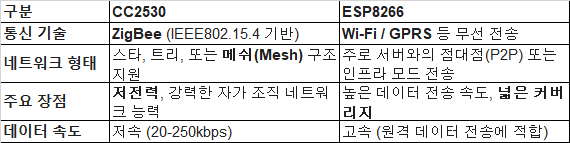
Zigbee (CC2530): 현장의 센서들로부터 데이터를 모으는 저전력 근거리 무선망 구축에 사용됩니다.
W5500 (Ethernet): 어그리게이션 노드와 서버 간의 거리가 가깝고 유선망이 가용한 경우, 안정적인 데이터 전송을 담당합니다.
ESP8266 등 (GPRS/4G/5G): 유선망 구축이 어려운 원격지나 광범위한 지역의 데이터를 서버로 보낼 때 사용됩니다.
WIZnet W5500 관점의 시장 기회
- 산업용 IoT 시장:
- 전력/통신 인프라 모니터링
- 안정성이 중요한 산업 환경
- 하이브리드 네트워킹:
- WiFi의 편의성 + Ethernet의 안정성
- 상황별 최적 통신 방식 선택
- Edge Computing:
- 집계 노드에서 W5500로 로컬 데이터 처리
- 클라우드 부하 감소
이 논문은 W5500이 IoT 모니터링 시스템에서 신뢰성 있는 데이터 전송 솔루션으로 활용될 수 있음을 보여주는 좋은 사례입니다. 특히 유무선 통합 환경에서 상황에 따라 최적의 통신 방식을 선택할 수 있는 유연성을 제공합니다.


