A Supervisory and Control System for Indoor Lettuce Farming
A Supervisory and Control System for Indoor Lettuce Farming
0
Components
Hardware componentsTexas Instruments - Temperature Sensor
x 1

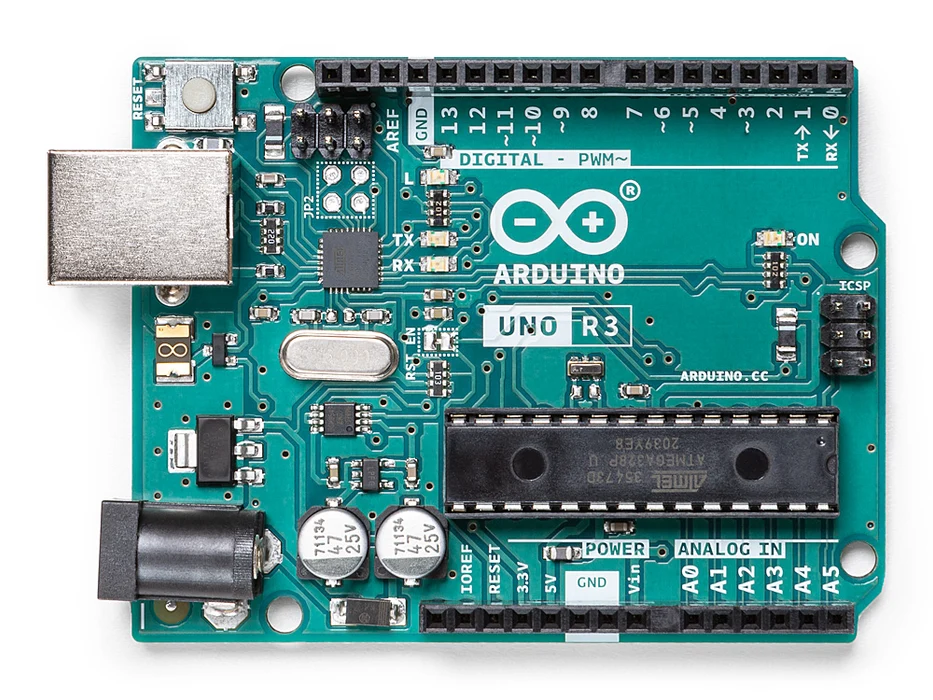
Arduino - Arduino UNO
x 1
Ethernet shield
x 1
moisure sensor
x 1
HMI
x 1
Project description
1.INTRODUCTION :
The agriculture-based economy has undergone a significant transformation in the Malaysian economy where the agricultural sector has moved towards the status of an industrialized country rapidly. However, there are several challenges that threaten the ability to achieve this industrial status, namely the level of available technological advancements as well as the production efficiency. Malaysia has a tropical climate and monsoon seasons. With unpredictable weather conditions, it can affect the agricultural sector. Modern farming aims to improve crop production, quality, and efficiency. Based on the Ministry of Agriculture Malaysia (MoA) mission, the intention is to transform this agriculture sector into the modern sector and become more competitive as the world-leading food and agriculture sector.
The Human Machine Interface(HMI)is the platform for humans to communicating with machines. HMI commonly used in the process industry because it can allow users to interact with machines, devices or systems [14]. HMI can provide a centralized monitoring and control system for different input and output parameters of the process [15].HMI can provide a color graphical display to make it more attractive and user friendly. GUI and HMI are almost similar but not synonymous because GUI is frequently leverage for visualization capabilities within HMI. Besides that, HMI can be connected to any microcontroller such as Arduino, Raspberry Pi, Programmable Logic Control (PLC), and input or output sensor so the data can be display to the user for monitoring or controlling. HMI screens may be used for a single purpose, such as monitoring and tracking, or for more complex operations, such as switching off machines or increasing the output speed, depending on how they are implemented. HMI can provide interface to user that makes people who do not have engineering background to easily understand the machine applications and conditions.
A supervision and control system that governs the growth of vegetables to lead to an optimum growth conditions are crucial to enhance the productivity of farming. Thus, the objectives of this study are to develop a HMI for monitoring and controlling system for a developed indoor lettuce farming prototype, and to evaluate the performance of the developed control and monitoring systemin supervising and controlling the variables that govern the growth of vegetables that lead to optimum growth conditions.
2.Materialsand Methods
2.1System Design and Architecture
This section explains the whole process used to develop the supervisory and control for the developed indoor farming prototype. The prototype usedDHT11for temperature and humidity sensing, FC-28 for soil moisture sensing, Arduino Uno Ethernet Shield as microcontroller, LED spectral light for sunlight replacement, water pump for water control, a DC fan for the temperature control, and DS3231 clock module for performing actuator at a specific time as that illustrated in Figure 1. Arduino Uno was the primary component that communicated with the FC-28 and DHT11 sensors and displayed the reading on HMI so that the user can monitor the environmental conditions of the prototype. The FC-28 sensor used capacitance to measure the water content of soil by measuring the dielectric permittivity of the soil. In dry condition, the sensor gave an analog value from 0 to 300;in humid soil analog value was from 300 to 700;and if the sensor was in water, the analog value ranged700 to 950. The water pump was triggered when the soil moisture was below 30%DHT11 used a capacitive humidity sensor and a thermistor to measure the humidity and temperature of surrounding air. The measurement range for DHT11sensor is 20 to 90% for relative humidity and the accuracy ± 5% RH, 0 to 50 ºC for temperature and the accuracy is ± 2 ºC. The threshold value for temperature is set to 30 ºC. If the DHT11 sensor detects temperature equal or more than 30 ºC, the fan would be automatically turn on to reduce the temperature inside the prototype by air exchange.
Figure 2 depicts the proposed layout of the prototype. The main task of this system was to help farmers to monitor their farm more effectively by controlling the farming conditions according to desired parameters. The recorded data that showed on HMI can be used as references to improve the quality and quantity of future production. Ethernet shield and RJ45 cable were used to communicate Arduino Uno with HMI on the laptop. Arduino Uno Ethernet shield was used to capture the data from the sensor to trigger the actuator and display to HMI. Spectrum light was set to turn on for 14 hours using the DS3231 clock module. All the sensors, spectrum light, DS3231, and water pump were powered by 5V that supplied from the Arduino Uno, while the fan used an external 12V power supply. All the data were display on HMI so the user can monitor the parameter without manually check it on a prototype.
2.2Human Machine Interface
The proposed HMI allows users to key-in their desired values of each parameter. HTML language was used to develop the webpage-based GUI. To open the developed GUI webpage(Figure 3), users can use an internet browser(e.g. Internet Explorer)and then type the IP address that set from the initializing the connection. The Arduino Uno communicated with the webserver so that the data from sensors and actuators were transmitted to the web server and lastly illustrated on the GUI. The last column is the action that automatically taken by the prototype to minimize the difference between the actual and the desired values of the parameters.
2.3 Overall Process
Figure 4explains the overall process of the proposed system. The proposed system was started by initializing all the inputs and outputs (i.e.DHT11 and FC-28 are the input; and water pump, spectrum light and fan are the output). After that, it initialized the real-time clock module and the connection between Arduino Uno Ethernet shields and a laptop computer to display the data from Arduino to the HMI. DHT11 sensor was used to measure temperature and humidity inside the mini vegetable factory prototype, and the fan would be turned on if the measured temperature exceeded30 ºC. FC-28 sensor was placed inside the soil to measure the level moisture of soil, and water pump would be turned on if the measured moisture was below than 30%. The duration of spectrum light was 14 hours and it would be automatically turned on or off because the real-time clock module was used to trigger relay at a specific time. All the data from inputs and outputs would be displayed on the HMI so the user can monitor the parameter in real time.
2.4Performance Evaluation
The proposed system was compared with a conventional farming method. For the conventional farming method, a plant pot was placed outdoor. The conditions e.g. light source would depend on natural sunlight and environment. There was not irrigation system in the conventional farming method, but we manually water it each day. In this study, the test plant was lettuce. The seed was sown in a pot (10 x 7x 6.5cm, 25 seed per pot) containing a mix of soil (coco peat and organic). The soil used was70% of coco peat soil and 30% of organic soil and then mix both soils. After filling the soil inside the plant pot, mist the top of the soil until the soil moist and place the lettuce seed inside the soil in the depth of 0.5cm to 1cm.For the light source, this system replaces sunlight with a LED array light. This LED array light contained four blue(i.e. from 420 to 500nm)and 10 red(i.e. 620nm to 750nm)LEDs. The light would be turned on for 14 hours (i.e. from 7.00 am to 9.00 pm) daily by using the DS3231 real-time clock module. For irrigation of this system, we used a drip irrigation system. The outlet of the water pump diameter pipe was 8mm and the drip was 5mm. To evaluate the performance of the system, the data from DHT11 and FC-28 sensors were recorded. The data from DHT11 sensors was to evaluate the temperature control performance, while the data from FC-28 sensors was to observe how long it took soil to dry. The temperature and soil performance were observed for 3 days. For temperature control, the data was compared with the temperature by using traditional method. For conventional farming method, no data recorded for soil performance. The soil condition has been checked manually by using bare hand and water if the soil dry and it normally took1 to 2 days for soil to be dried. With the system, the soil performance was recorded to evaluate how long it took the soil to dry and start watering again.
3.Resultsand Discussion
3.1Temperature Control
Figure 5 illustrates that the range of temperature during the day and night were between 28to 34 ºC and30 to 33 ºC, respectively, for the conventional farming method in the outdoor for three days. This indicates that the natural temperature range was between 28 to 34 ºC. The threshold was the maximum temperature (i.e. 30 ºC) that needed by vegetable. If the temperature exceeded the threshold value, the temperature was not suitable for vegetable to grow optimally. Thus, a desired temperature should be below the threshold indicator. For day 1, the seed received 10 hours of optimum temperature that needed by seed to germinate. For day 2and 3, the seed received 9 and 6 hours of optimum temperature, respectively. Table 1shows a comparison between the proposed system and without the proposed system for three different days. The average temperature of the farming method without the proposed system was deviated more from the desired temperature (i.e. 30ºC), compared to than that used the proposed system. Without the proposed system, the average temperature was 1.33 ºC to 2.5 ºC higher than the desired temperature that the seeds needed to germinate. With the proposed system, on the other hand, the average temperature was only higher 0.04 to 0.50 ºC than the desired temperature. Next, the total hourly cumulative error per day was significantly reduced when the proposed system was applied, i.e. from 14-20ºCto 10-12ºC. The total hourly cumulative error per day was computed by summing up the error in each hour per day. The error existed when the temperature was more than the desired temperature i.e. 30 ºC.
Figure6shows the temperature that measured inside the prototype with the proposed system for three days. By inspection, the proposed system minimized the difference between the measured and the desired temperature compared to that without the proposed system (i.e. Figure 5).To grow a lettuce, the minimum temperature is 10.8 ºC and the maximum can be reached at 29.7ºC. For this system, the desired value set to 30 ºC because the sensor resolution is equal to 1. The fan was turned on when the measured temperature was more than the desired (a.k.a. threshold)value. Figure 6 also illustrates that the prototype can sustain 12 to 15 hours a day below the threshold value. The proposed system was able to maintain an optimum temperature for13, 12, and 15 hours in day 1, 2, and 3, respectively. However, the measured temperature exceeded the desired value from 11 am to 10 pm. This could be due to the surrounding temperature that was high during day time and the heat exchange mechanism by means of a fan was unable to reduce the temperature below the ambient temperature. Nevertheless, a better performance was obtained compared to that without the proposed system. Alternative that may improve the performance is using Proportional controller that was reported out perform to Logic controller and can maintain the desired temperature.
3.2Soil Moisture Control
Figure 7shows the measured soil moisture by FC-28 sensor for the prototypewith the proposed system for three days.Soil took more than 32 hours to reduce its moisture to the 30%.On the firstday, soil moisture wasstart from 0%. When the sensor detected thesoil moisture wasbelow the threshold, a water pump was activated towatering the soil until the measuredsoilmoisture was more than 30%. From the experiment, the soil moisture would be around 68% when the water pump was activated and deactivated once. For the first day, the water pump was activated to supply water into soil because the reading was below the threshold and deactivatedwhen the reading at 68.33%. For the first day, it took32 hoursbefore then next cycle of watering. The water pump was activatedat 3 pm on day 2 and lastly, the water pump was activatedat 1 am on day 3. With this system, we can accuratelymonitor the soil moisture condition with optimal moisture level. The threshold value can beset accordingly toavoid water overflow inside soil compared with the conventional farming method. This isbecause the system can display specific amount of water inside the soil and only start watering ifthesoil moisture was below the desired level.
3.3Lighting ControlFor the performance of LED spectrum lightcontrol, the duration of the light inturn onconditionwas14 hours,from 7 am to 9 pmeach day. The duration can be adjustedaccording tothe type of vegetable. This spectrum light containedtwo different wavelengths forred and blue, respectively. The color of spectrum light is important because it can affect plant growth.The blue light (i.e.460nm)isimportant to develop the formation of chlorophyll, stomata opening and photomorphogenesis. The red light (i.e.640nm)is vitalto create photosynthetic in vegetables. The favorable light is a combination of red and blue light that has ranged between 460nm to 640nm. The performance of the spectrumlightwasaccurate because the spectrum lightwasworking based on the desiredtime. There is no delay when the light changing the state because the DS3231 real-time clock modulewas used in this system.3.4Seed GerminateThe preparation of seedsand soils wasthe same with the conventional farming method. The plant pot placed inside the prototypewith the proposed system to controlenvironment parameters oftemperature, soil moisture,and lighting. The temperature range inside the vegetable factory wasbetween 29ºCto 34ºC. For soil moisture, if the early reading of the sensor more than 60%, it wouldtake 32 hours for the next watering cycle.In general, the proposed system was unable to germinate lettuce seeds successfully. This could be due to the mean temperature was from 30.04 ºC to 30.5 ºC while lettuce needs temperature from10.8 to29.7 ºC. This system was unable to maintain the optimum temperature for hours. The temperature treatment of more than 30 ºC mightcause the effect of inhibitory on germination. The inhibitory effect causes the seed to produce ethylene during the germination period [21]. Nevertheless, the proposed system(Figure 8)can provide better environment conditionscompare totheconventional farming method.
4.Conclusion
The proposed supervisory and control system for this prototypewassuccessfully developedto control and monitor the temperature, soil moisture, and lighting duration for indoor farming. Results show thatthe proposed system providedbetter environmental conditions compared to conventional farming method. AHuman Machine Interface (HMI) was developed to monitor and control the system in developing the prototype. The HMIcan communicate with the Arduino ethernet shield and it successfully displayedall the parameters that regulate the growth of vegetables automatically according to the desired values.The proposed system was able to collectthe measuredtemperature and soil moisture values for the purpose of evaluating the performance of this prototypeand comparing it with the conventional farming method. The proposed system provides a longer optimum temperature duration that needed by vegetablesand has lower averaged total hourly cumulative errors per daycompared to the conventional farming method, i.e.11 and 16 ºC, respectively. Besides that, the proposed system can display the soil moisture reading and watering automatically if thesoil moisture was lower than the desired value. By using this system, environmental conditions can be automatically controlled and easier to be monitored by farmers.Sincethis proposed system can minimize the impact from unpredictableweather, the proposed system is promising to bring positive impact to the agricultural sector by providing better conditions for growing vegetables
