PBX Fraud-Blocking Communication Device
To help avoid fraudulent calls, the device uses Private Branch Exchange (PBX) system. With PBX you can transfer calls, use voicemail and int
8
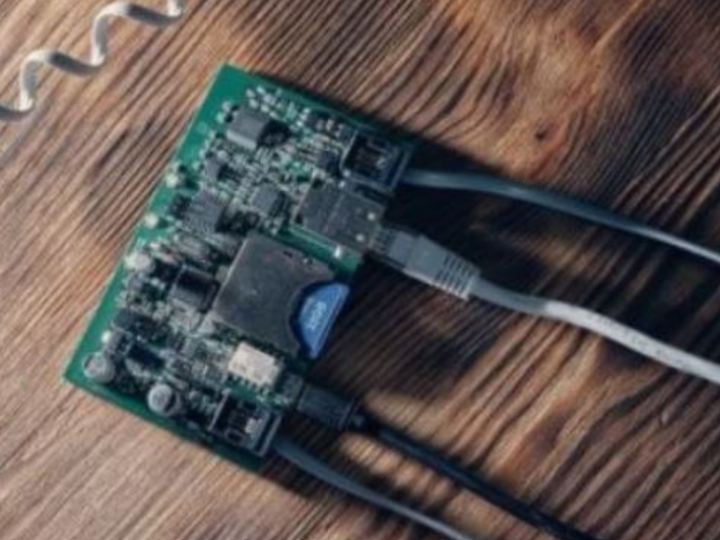
Project description
The device is small in size and powered by a conventional 5V micro USB adapter used to charge mobile phones. It provides access to Ethernet LAN through an embedded port, has 2M bytes Flash storage, and an external SD card connector. A high-performance STM32F415 microcontroller on the PCB is installed to provide the ability for data encryption/decryption on a hardware level. The device works as a mini-PBX but with one subscriber line. It connects between PBX and a user phone and fully emulates a PBX port. 
- Processor: MCU(STM32F415)
- Wired Communication: Ethernet(Wiznet W5500 chip)
- Power: 5V micro USB adapter
- Memory: FLASH(SPI NOR), SD Card
- STM32F415 with Cortex-M4 core was used as MCU in this project.
- A high-efficiency 2-stage step-up converter from 5V to 150V is built for a ring signal.
- FreeRTOS was used for firmware development.
- The device has several connectors and LEDs.
- Altium Designer IDE was used for Schematics and PCB design.
- Microsoft Visual Studio with Visual GDB plugin was used for firmware implementation.
l The firmware was implemented using C/C++.
- SPI NOR flash and SD Card is used to store audio data.
- ADC and DAC were used to capture and generate voice signals to the telephone line.
- For Ethernet communication, Wiznet W5500 chip was used.
- To decode caller ID, a special FSK demodulator IC was used.
– Circuit schematic file: on
– Function test report: on
– PCBA user manual: on
– Firmware program source code: on
– PCB layout gerber file: on
– Specification verify test report: on
– Firmware program binary code: on
– Firmware tool: on
