


How Does MultiSensor-V2 Use W5500 PoE for HA Voice?
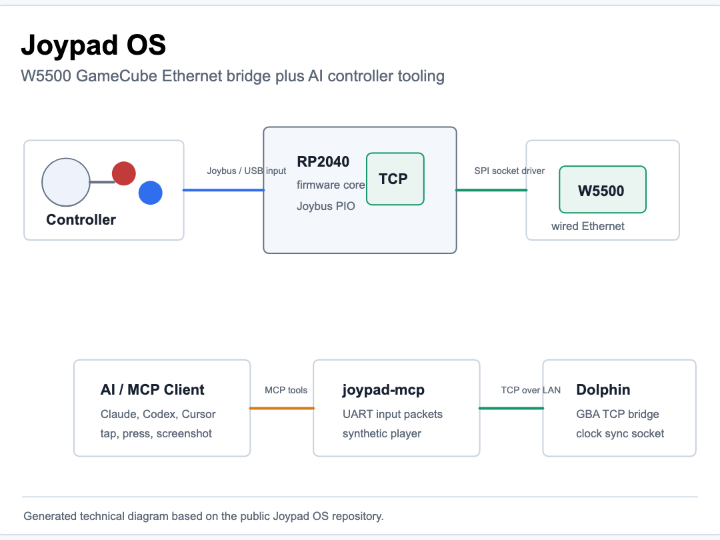
MultiSensor-V2 evolves Carletz MultiSensor, a W5500 Ethernet and PoE-powered room node, with revised sensing, local wake-word AI, audio, IR, and HA Assist.
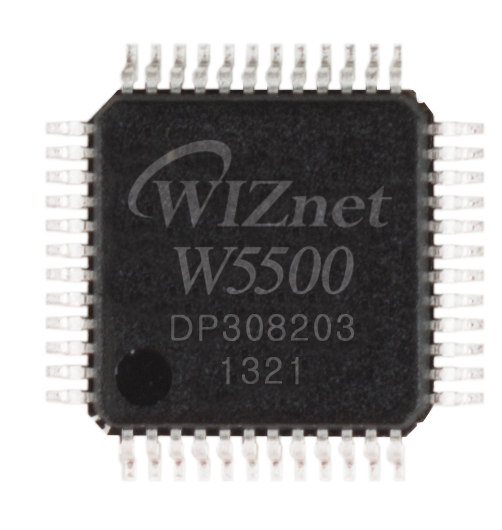
WIZnet - W5500
x 1

SPI Ethernet controller retained from V1. It carries ESPHome API, sensor, audio, and control traffic, while a separate DP1435-5V module handles PoE power conversion.
📌 What Is MultiSensor-V2?
MultiSensor-V2 is pkhodak's voice-capable revision of Carletz's original MultiSensor. Both are open hardware room nodes built around ESP32-S3, W5500 wired Ethernet, PoE power, environmental sensing, presence detection, and infrared control.
V2 does not replace the original network design. It keeps the same W5500 and even the same six ESPHome pin assignments, then expands the board around that stable wired backbone. The main additions are a higher-output PoE module, updated sensors, two microphones, a speaker amplifier, an RGBW status LED, IR reception, modular ESPHome firmware, and Home Assistant voice support.
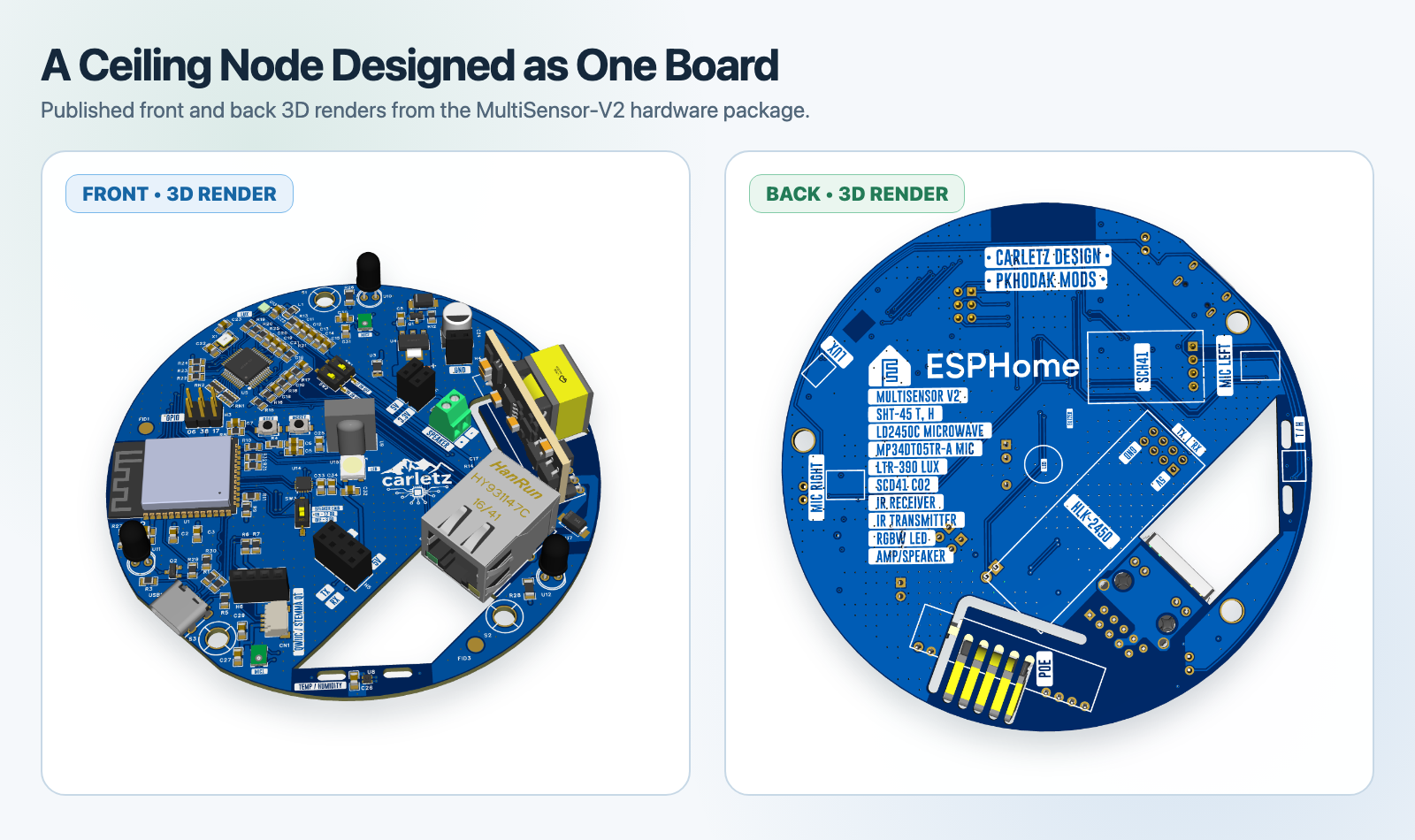
Direct answer: W5500 remains the wired data interface from V1. V2 adds the power and audio hardware needed to turn that sensor platform into a Home Assistant room and voice endpoint.
From MultiSensor V1 to V2
The V2 repository directly credits Carletz's 2025 design, and the V2 back silkscreen reads CARLETZ DESIGN / PKHODAK MODS. This is an evolution of the same idea, not an unrelated board with a similar name.
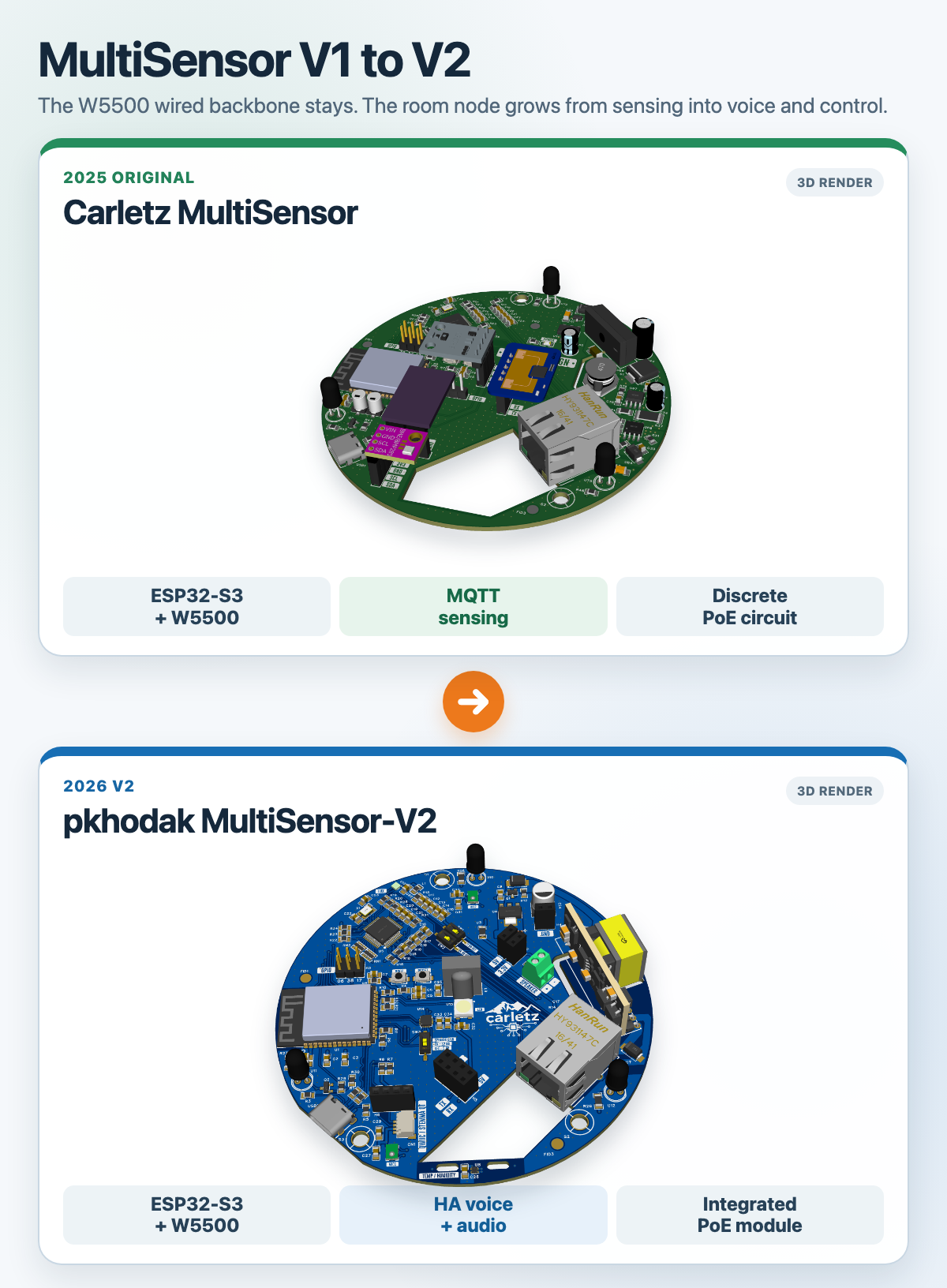
The clearest changes are:
- Network foundation: both revisions use ESP32-S3 and W5500, with GPIO43 for clock, GPIO44 for MOSI, GPIO42 for MISO, GPIO41 for chip select, GPIO2 for interrupt, and GPIO1 for reset.
- PoE power: V1 uses a discrete TPS2376-based path ending in a 5 V, 2 W isolated converter. V2 replaces that section with a DP1435-5V module rated by its datasheet for up to 12.4 W at 25 °C.
- Sensing: SHT45 replaces BME280, so V2 keeps temperature and humidity but drops pressure. LTR-390 replaces BH1750 and adds a UV-capable path, although the UV entity is disabled by default. LD2450 replaces LD2410C for multi-target-capable presence hardware, while SCD41 remains an optional external CO2 module.
- Voice and control: V2 adds two PDM microphones, a MAX98357A speaker amplifier, an RGBW status LED, and firmware-backed IR reception alongside IR transmission. V1 had an unpopulated receiver footprint, but no receiver BOM entry or ESPHome configuration.
- Home Assistant integration: V1's main configuration is a single MQTT-oriented ESPHome YAML file. V2 uses modular ESPHome packages, the encrypted native API, voice-assistant components, and local microWakeWord models.
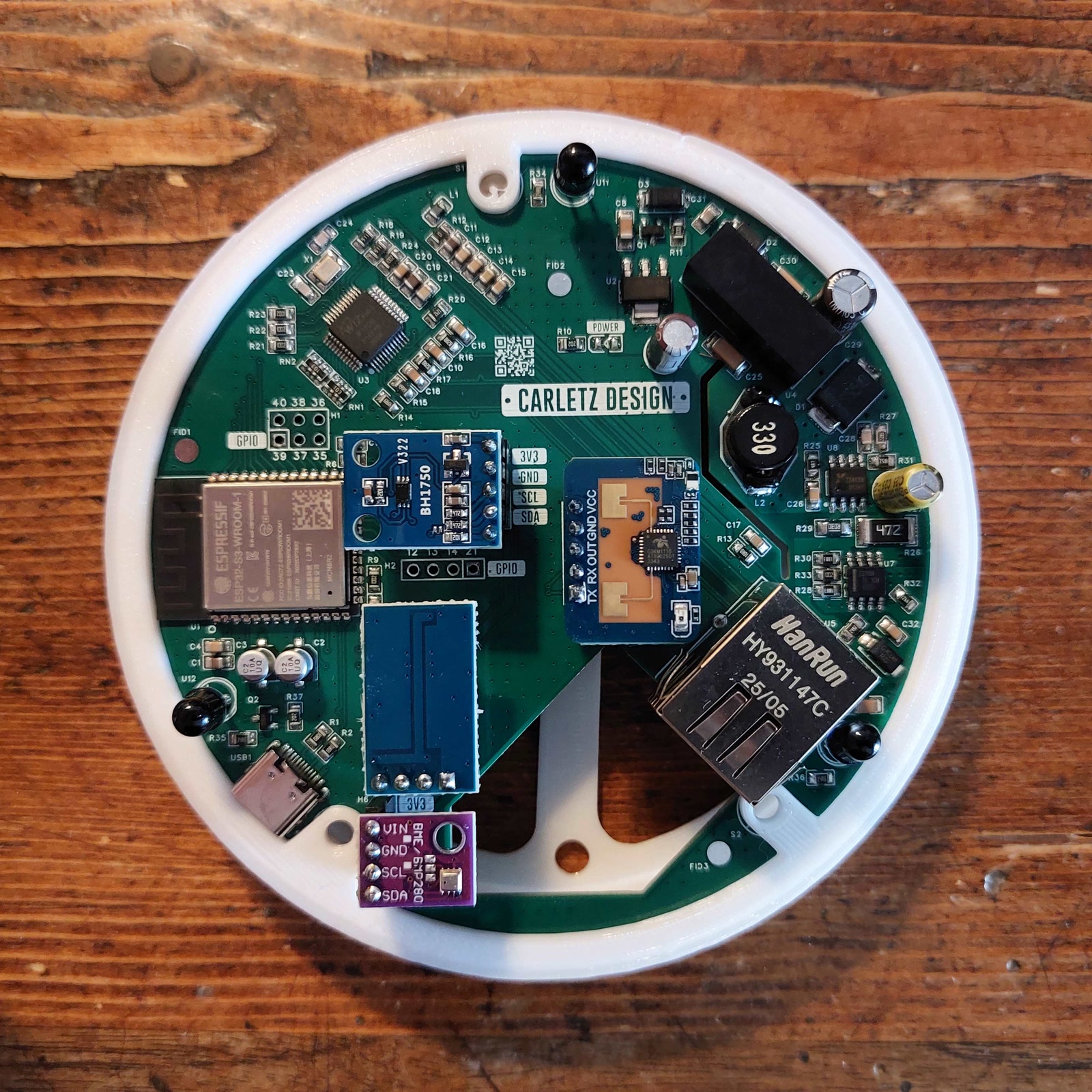
The comparison also shows an important evidence boundary. V1 has published assembly photos and a build video. V2 currently provides schematics, manufacturing files, firmware, and ECAD renders, but no public assembled-board photograph.
One Cable, Two Separate Jobs
A PoE Ethernet cable brings network data and electrical power to the same RJ45 connector, but W5500 and the PoE circuit do different work inside the node.
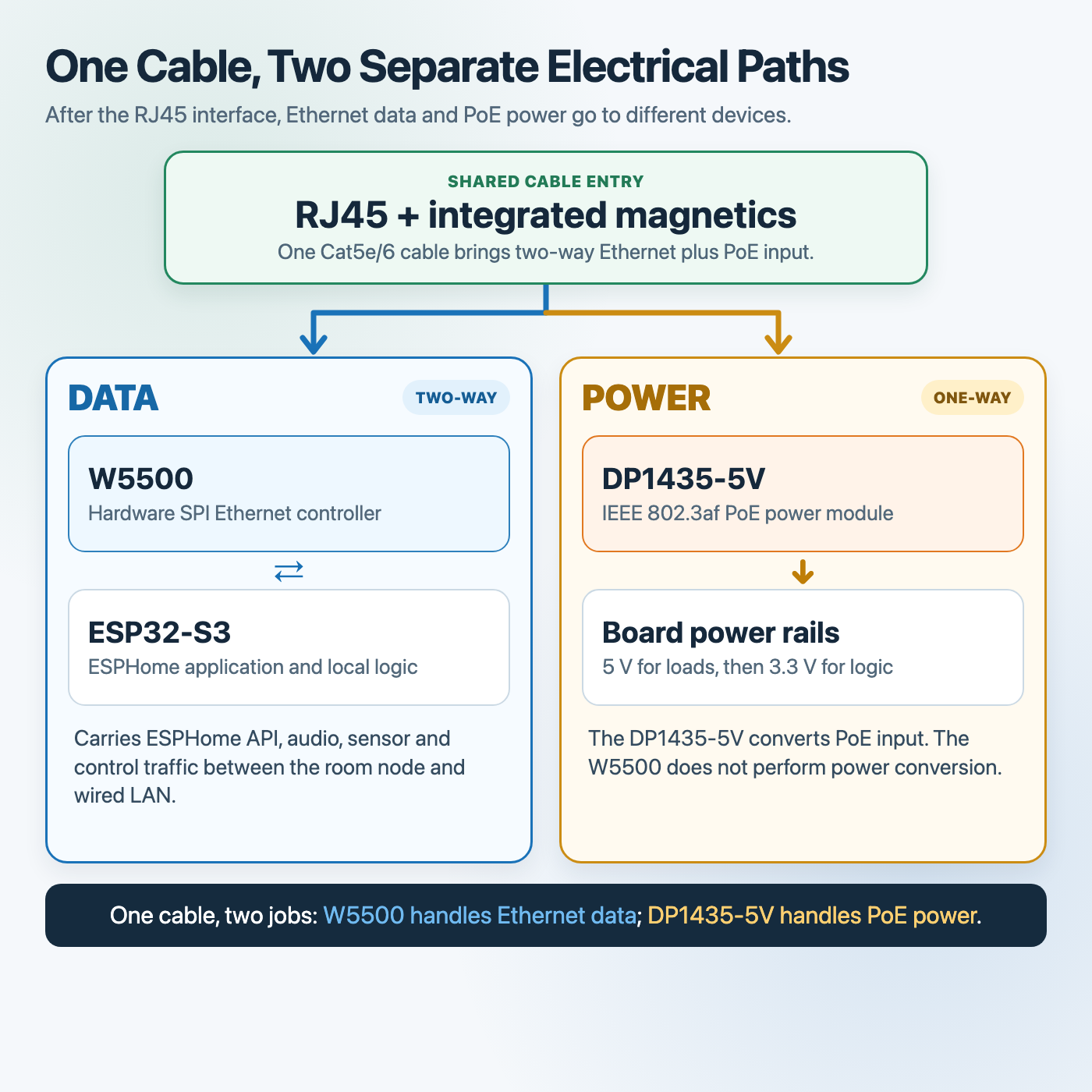
The ESP32-S3 communicates with W5500 over SPI. W5500 provides the wired 10/100 Ethernet interface used by ESPHome API traffic, sensor updates, voice audio, and control messages. Separately, the DP1435-5V module takes power from the PoE side of the Ethernet interface and produces the board's low-voltage supply.
This separation matters because W5500 does not negotiate or convert PoE power, and the PoE module does not process network packets. They share the cable and connector, not the job.
Why Did the PoE Section Change?
The V1 design's isolated 5 V converter is rated for 400 mA, or 2 W. V2 adds microphones, a speaker amplifier, more status lighting, and additional sensor interfaces. The V2 maintainer explains that the earlier power stage did not provide enough headroom for this expanded load, so the new board uses an integrated DP1435-5V module.
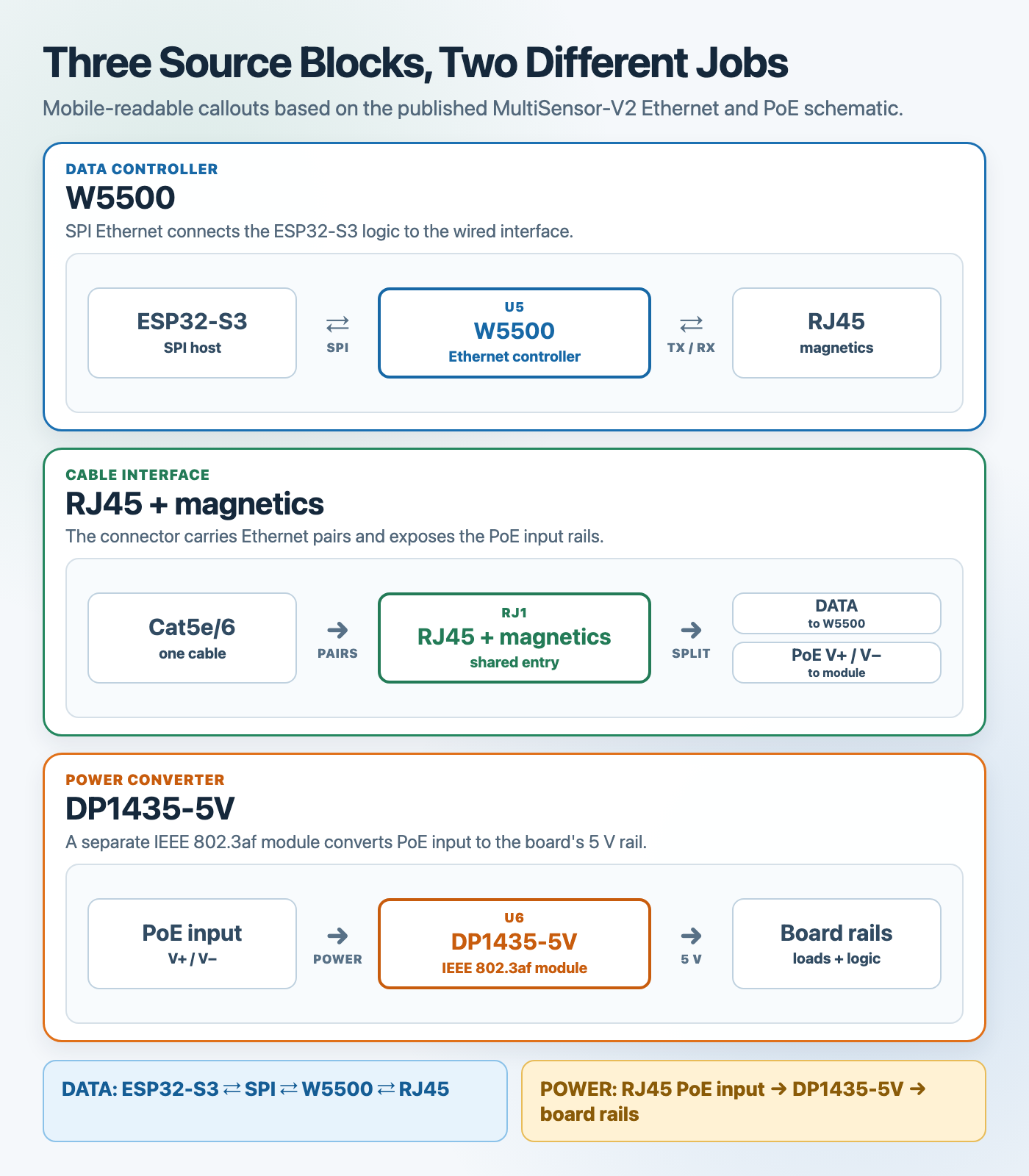
The included DP1435-5V datasheet specifies IEEE 802.3af operation, a 5.15 V/2.4 A output, and a 12.4 W maximum output at 25 °C. That rating gives V2 substantially more design headroom than the original 2 W converter. It is a component rating, not an independent measurement of the finished board's consumption.
How Do Voice and Local AI Work?
V2 contains real trained TensorFlow Lite wake-word model files and ESPHome's micro_wake_word configuration. The ESP32-S3 receives stereo PDM audio; by default, microWakeWord listens on one channel while voice_assistant uses the other. The small wake-word inference runs locally. Detecting a phrase starts the voice-assistant session without sending a continuous wake-word decision to a cloud AI service.
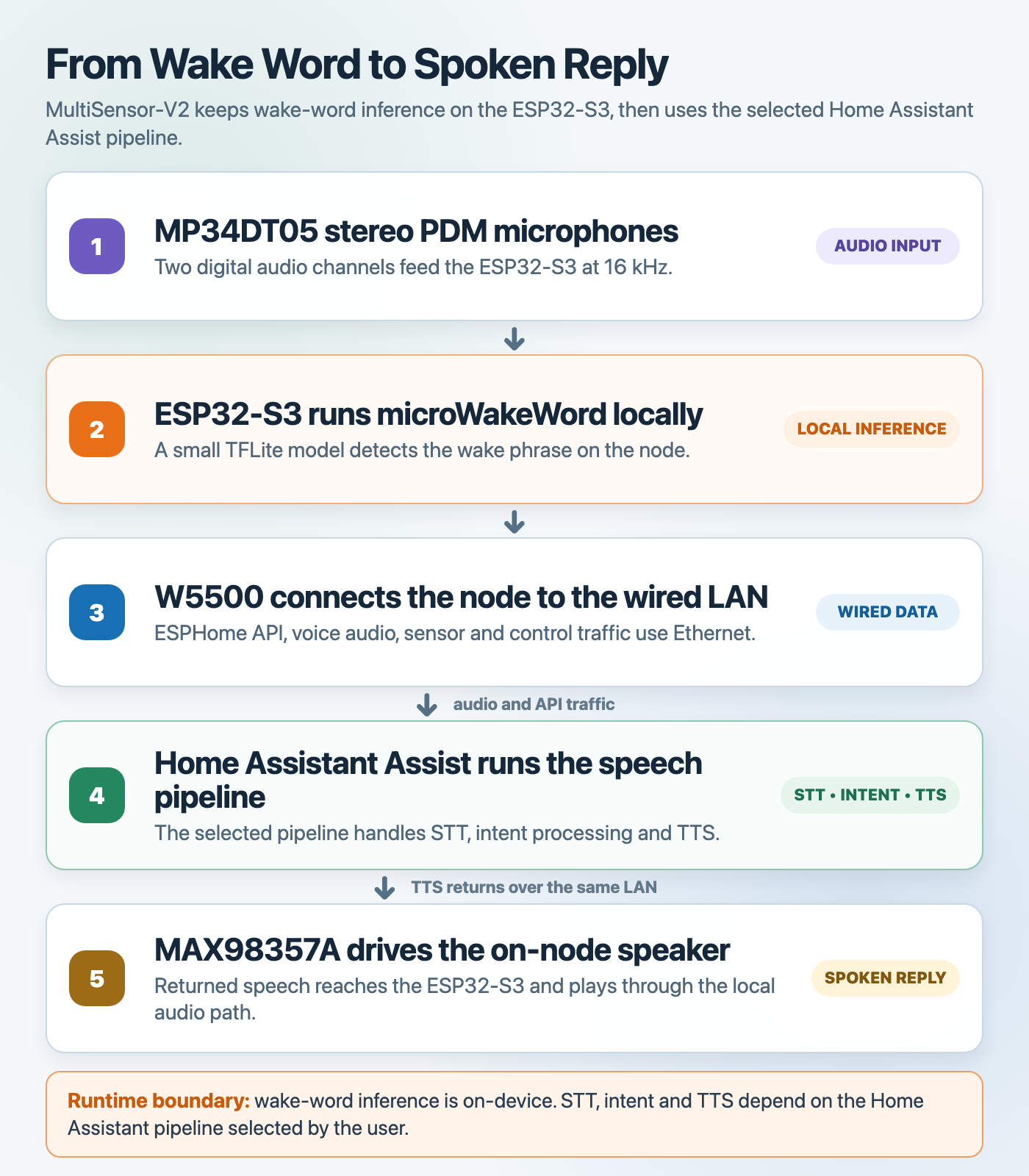
After detection, ESPHome streams the spoken request through the native API over W5500 to Home Assistant. The configured Assist pipeline performs speech-to-text, conversation or intent handling, and text-to-speech. Those stages can use local services or cloud providers depending on the Home Assistant setup. The returned audio is played through the MAX98357A amplifier and an external speaker.
In short, the local AI on the board is wake-word detection. W5500 transports audio and control data, while the larger speech pipeline belongs to Home Assistant.
What Is the Current Build Status?
MultiSensor-V2 is an open beta reference design, not a finished commercial product. The reviewed source is marked with the v0.1.0 Git tag, but there is no separate GitHub Release object. The maintainer reports using the prototype at home, while also documenting that its LD2450 header size and pin order were wrong. The prototype required the header to be removed and a short rewired cable workaround, and changes may still occur before 1.0.
Before building: The LD2450 and SCD41 modules, external speaker, and IR emitter/receiver are not included in the main PCBA BOM and must be sourced separately. The V2-specific enclosure is still pending, and the example API and OTA credentials must be replaced for a real installation.
Related Maker Reading
Start with ESPHome MultiSensor Board for Carletz's original V1 design. Satellite1 PoE SHOE shows another W5500-based Home Assistant voice endpoint, while Sensy-One E1 Pro Multi-Sense provides a commercial multi-sensor comparison point.
❓ FAQ
Did MultiSensor-V2 replace W5500? No. V2 keeps W5500 and the original board's exact ESPHome SPI and control pin assignment.
Does W5500 provide PoE power? No. W5500 handles Ethernet data. The separate DP1435-5V module converts PoE power for the board.
What AI model runs on the device? Small trained TensorFlow Lite microWakeWord models run on ESP32-S3 to detect a wake phrase locally.
Does every voice-processing stage run on the ESP32-S3? No. Wake-word detection is on-device, while speech recognition, intent processing, and speech synthesis run through the configured Home Assistant Assist pipeline.
Can I buy MultiSensor-V2 as a finished product? The repository presents it as a DIY beta reference design. It provides fabrication and firmware files, but no finished-product offer is documented, and the reviewed repository does not document an independent third-party reproduction.
한국어 (Korean)
📌 MultiSensor-V2는 무엇인가?
MultiSensor-V2는 Carletz의 기존 MultiSensor를 음성 기능까지 확장한 pkhodak의 개정 설계입니다. 두 프로젝트 모두 ESP32-S3, W5500 유선 Ethernet, PoE 전원, 환경 센서, 재실 감지, 적외선 제어를 결합한 오픈 하드웨어 룸 노드입니다.
V2는 기존 네트워크 설계를 교체하지 않았습니다. W5500과 ESPHome의 핀 6개 배치를 그대로 유지하면서, 안정적인 유선 기반 주변을 확장했습니다. 주요 추가 사항은 출력 여유가 커진 PoE 모듈, 변경된 센서, 마이크 2개, 스피커 앰프, RGBW 상태 LED, IR 수신, 모듈형 ESPHome 펌웨어, Home Assistant 음성 지원입니다.
핵심 답변: W5500은 V1부터 이어진 유선 데이터 인터페이스입니다. V2는 여기에 전원과 오디오 하드웨어를 보강해 센서 플랫폼을 Home Assistant 룸·음성 단말로 확장했습니다.
MultiSensor V1에서 V2로
V2 저장소는 Carletz의 2025년 설계를 원형으로 명시하며, V2 뒷면 실크에도 CARLETZ DESIGN / PKHODAK MODS라고 적혀 있습니다. 이름만 비슷한 별개 보드가 아니라 같은 아이디어를 발전시킨 설계입니다.
가장 분명한 변화는 다음과 같습니다.
- 네트워크 기반: 두 버전 모두 ESP32-S3와 W5500을 사용합니다. GPIO43은 클록, GPIO44는 MOSI, GPIO42는 MISO, GPIO41은 칩 선택, GPIO2는 인터럽트, GPIO1은 리셋으로 동일합니다.
- PoE 전원: V1은 TPS2376 기반 개별 회로와 5 V, 2 W 절연 컨버터를 사용합니다. V2는 데이터시트상 25 °C에서 최대 12.4 W를 제공하는 DP1435-5V 모듈로 이 부분을 교체했습니다.
- 센서: BME280 대신 SHT45를 사용해 온도와 습도는 유지하지만 기압 기능은 빠졌습니다. BH1750 대신 UV 경로를 지원하는 LTR-390을 사용하지만 UV 엔티티는 기본으로 꺼져 있습니다. LD2410C는 다중 표적 기능을 지원하는 LD2450 하드웨어로 바뀌고, SCD41은 선택형 외부 CO2 모듈로 유지됩니다.
- 음성과 제어: PDM 마이크 2개, MAX98357A 스피커 앰프, RGBW 상태 LED가 추가됐고, 기존 IR 송신에 펌웨어까지 연결된 수신 기능을 더했습니다. V1 회로도에도 미실장 수신기 풋프린트는 있었지만 BOM과 ESPHome 수신 구성에는 포함되지 않았습니다.
- Home Assistant 연동: V1의 메인 구성은 MQTT 중심의 단일 ESPHome YAML입니다. V2는 모듈형 ESPHome 패키지, 암호화된 native API, voice assistant 구성, 로컬 microWakeWord 모델을 사용합니다.
여기에는 중요한 근거의 차이도 있습니다. V1은 조립 사진과 제작 영상을 공개했습니다. V2는 회로도, 생산 파일, 펌웨어, ECAD 렌더를 제공하지만 실제 조립 보드 사진은 아직 공개하지 않았습니다.
케이블 하나, 서로 다른 두 가지 역할
PoE Ethernet 케이블은 같은 RJ45 커넥터로 네트워크 데이터와 전력을 가져오지만, 노드 내부에서 W5500과 PoE 회로가 맡는 일은 서로 다릅니다.
ESP32-S3는 SPI로 W5500과 통신합니다. W5500은 ESPHome API 트래픽, 센서 업데이트, 음성 오디오, 제어 메시지를 전달하는 10/100 유선 Ethernet 인터페이스를 제공합니다. 이와 별도로 DP1435-5V 모듈은 Ethernet 인터페이스의 PoE 전원부에서 전력을 받아 보드에 필요한 저전압 전원을 만듭니다.
이 구분이 중요한 이유는 W5500이 PoE 전원을 협상하거나 변환하지 않고, PoE 모듈도 네트워크 패킷을 처리하지 않기 때문입니다. 두 부품은 케이블과 커넥터를 공유할 뿐 역할은 공유하지 않습니다.
PoE 부분은 왜 바뀌었나?
V1 설계의 절연 5 V 컨버터 정격은 400 mA, 즉 2 W입니다. V2에는 마이크, 스피커 앰프, 더 많은 상태 표시, 추가 센서 인터페이스가 들어갑니다. V2 관리자는 확장된 부하에 기존 전원부의 여유가 부족했다고 설명하며, 새 보드에서는 통합형 DP1435-5V 모듈을 사용했습니다.
저장소에 포함된 DP1435-5V 데이터시트는 IEEE 802.3af, 5.15 V/2.4 A 출력, 25 °C에서 최대 12.4 W 출력을 명시합니다. 이 정격은 기존 2 W 컨버터보다 V2 설계에 훨씬 큰 전력 여유를 제공합니다. 다만 이는 부품 정격이며 완성 보드의 실제 소비 전력을 독립적으로 측정한 결과는 아닙니다.
음성과 로컬 AI는 어떻게 동작하나?
V2에는 실제로 학습된 TensorFlow Lite 웨이크워드 모델 파일과 ESPHome micro_wake_word 구성이 들어 있습니다. ESP32-S3는 스테레오 PDM 오디오를 받으며, 기본 구성에서는 한 채널을 microWakeWord에, 다른 채널을 voice_assistant에 사용합니다. 작은 웨이크워드 모델의 추론은 로컬로 실행됩니다. 따라서 호출 문구를 감지하는 단계에서는 지속적으로 클라우드 AI 서비스에 판정을 요청하지 않습니다.
호출 문구를 감지하면 ESPHome은 W5500을 통한 native API로 사용자의 음성을 Home Assistant에 전송합니다. 설정된 Assist 파이프라인이 음성 인식, 대화 또는 의도 처리, 음성 합성을 수행합니다. 이 단계들은 Home Assistant 구성에 따라 로컬 서비스 또는 클라우드 제공자를 사용할 수 있습니다. 완성된 음성 응답은 MAX98357A 앰프와 외부 스피커로 재생됩니다.
정리하면 보드에서 실행되는 로컬 AI는 웨이크워드 감지입니다. W5500은 음성과 제어 데이터를 전달하고, 더 큰 음성 파이프라인은 Home Assistant가 담당합니다.
현재 제작 상태는 어떤가?
MultiSensor-V2는 완성형 상용 제품이 아니라 오픈 베타 레퍼런스 설계입니다. 검토한 소스에는 v0.1.0 Git 태그가 있지만 별도의 GitHub Release 객체는 없습니다. 관리자는 프로토타입을 집에서 사용한다고 설명하는 한편, 프로토타입의 LD2450 헤더 크기와 핀 순서가 잘못되어 헤더를 제거하고 짧은 재배선 케이블로 우회해야 했다고 밝힙니다. 또한 1.0 이전에 변경될 수 있다고 안내합니다.
제작 전 확인: LD2450·SCD41 모듈, 외부 스피커, IR 송수신 부품은 메인 PCBA BOM에 포함되지 않아 별도 조달해야 합니다. V2 전용 인클로저는 아직 준비 중이며, 실제 설치에서는 예제 API·OTA 인증 정보를 반드시 교체해야 합니다.
관련 Maker 글
Carletz의 기존 V1 설계는 ESPHome MultiSensor Board에서 먼저 확인할 수 있습니다. Satellite1 PoE SHOE는 W5500 기반의 또 다른 Home Assistant 음성 단말 사례이며, Sensy-One E1 Pro Multi-Sense는 상용 멀티센서 비교 사례입니다.
❓ FAQ
MultiSensor-V2에서 W5500이 바뀌었나요? 아닙니다. V2는 W5500과 기존 보드의 ESPHome SPI·제어 핀 배치를 그대로 유지합니다.
W5500이 PoE 전원도 공급하나요? 아닙니다. W5500은 Ethernet 데이터를 처리하고, 별도의 DP1435-5V 모듈이 PoE 전원을 보드용 전압으로 변환합니다.
장치에서 어떤 AI 모델이 실행되나요? 학습된 소형 TensorFlow Lite microWakeWord 모델이 ESP32-S3에서 호출 문구를 로컬로 감지합니다.
음성 처리 전체가 ESP32-S3에서 실행되나요? 아닙니다. 웨이크워드 감지는 장치에서 실행되지만 음성 인식, 의도 처리, 음성 합성은 설정된 Home Assistant Assist 파이프라인에서 실행됩니다.
MultiSensor-V2 완제품을 살 수 있나요? 저장소는 이를 DIY 베타 레퍼런스 설계로 제공합니다. 제작·펌웨어 파일은 있지만 완제품 판매는 문서화되어 있지 않으며, 검토한 저장소에도 제3자의 독립 재현 사례가 기록되어 있지 않습니다.
-
MultiSensor-V2 Source Repository
Primary source for the V2 hardware, manufacturing files, modular ESPHome firmware, and custom microWakeWord model artifacts.

-
MultiSensor-V2 v0.1.0 Tag
The beta source snapshot reviewed for this update. This is a Git tag, not a GitHub Release object.
-
Original Carletz MultiSensor
The original ESP32-S3, W5500, PoE, sensor, and IR design that MultiSensor-V2 credits and extends.
-
V2 W5500 Ethernet Configuration
ESPHome W5500 configuration. It retains the original board's SPI and control pin assignment.
-
V2 Voice Assistant Configuration
ESPHome voice-assistant and microWakeWord runtime configuration for the dual microphones and speaker path.
-
MultiSensor-V2 Schematic
Three-sheet schematic covering the ESP32-S3 I/O, W5500 Ethernet and PoE power, sensors, and audio hardware.
-
DP1435-5V PoE Module Datasheet
Included module datasheet specifying IEEE 802.3af operation, 5.15 V/2.4 A output, and 12.4 W maximum output at 25 C.
-
ESPHome Micro Wake Word
Official ESPHome documentation for on-device wake-word inference with small TensorFlow Lite models.
-
ESPHome Voice Assistant
Official ESPHome documentation for streaming microphone audio to a configured Home Assistant Assist pipeline.


