



The "Minimalist Champion" of Embedded Communication —‑ How One‑Wire Does the Most with the Least Har
1-Wire is a half-duplex serial bus by Dallas Semiconductor, transmitting clock & data on one wire with parasitic power supply. It covers iButton tags, various s
The 1-Wire bus is a wired half-duplex (cannot send and receive data at the same time) serial bus designed by Dallas Semiconductor. It can provide low-speed data communication through a single wire (typical communication rate is 16.3 kbit/s, with a maximum communication rate up to 142 kbit/s). It uses a single signal line to transmit both the clock and bidirectional data.
The 1-Wire bus communication is commonly used in communication scenarios between a single master and multiple slave devices, such as a microcontroller communicating with small sensor devices (for example, digital thermometers and weather instruments).
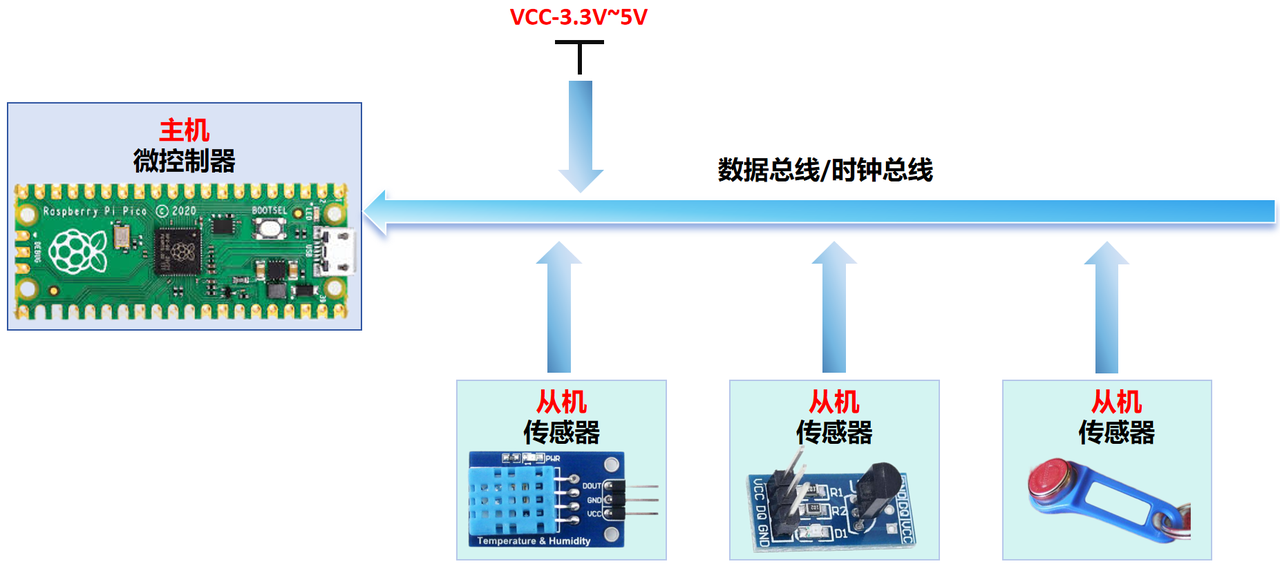
1-Wire bus communication has two notable features:
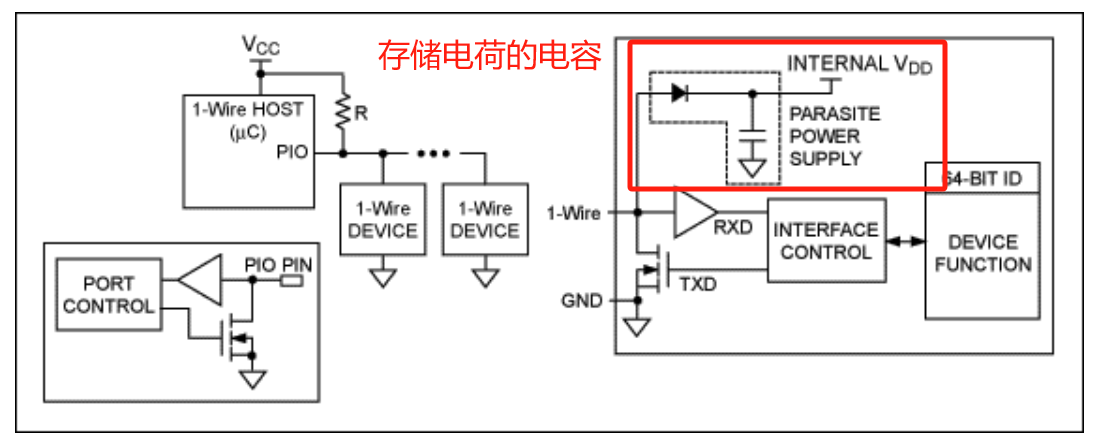
The data line can be used to provide power. Sensors using 1-Wire communication have a small capacitor (~800 pF) integrated inside to store charge, and this capacitor powers the device while the data line is active:
1-Wire communication is designed for momentary contact environments. When the host loses contact with or is disconnected from the 1-Wire device, the connected 1-Wire slave enters a reset state (such as power-off). When voltage is restored, the slave wakes up and emits a signal.
In addition, 1-Wire communication has advantages such as simple wiring, low hardware overhead, low cost, and easy bus expansion and maintenance.
2. History and Usage of the 1-Wire Communication Protocol
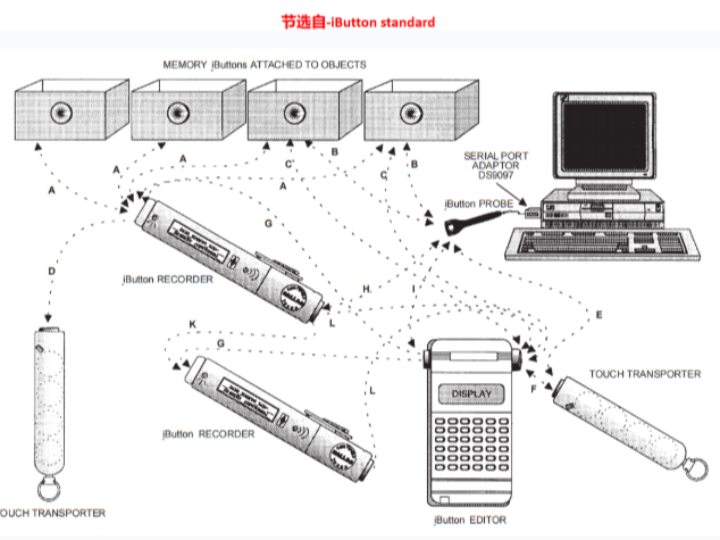
The 1-Wire communication protocol was invented by Dallas Semiconductor in the 1980s. Its main purpose was to use chips to create computer-readable tags to replace human-readable tags, and to apply them in scenarios such as large supermarkets, warehousing, and logistics. The earliest device using the 1-Wire communication protocol was the iButton touch socket. We can view the iButton standard at the following link:
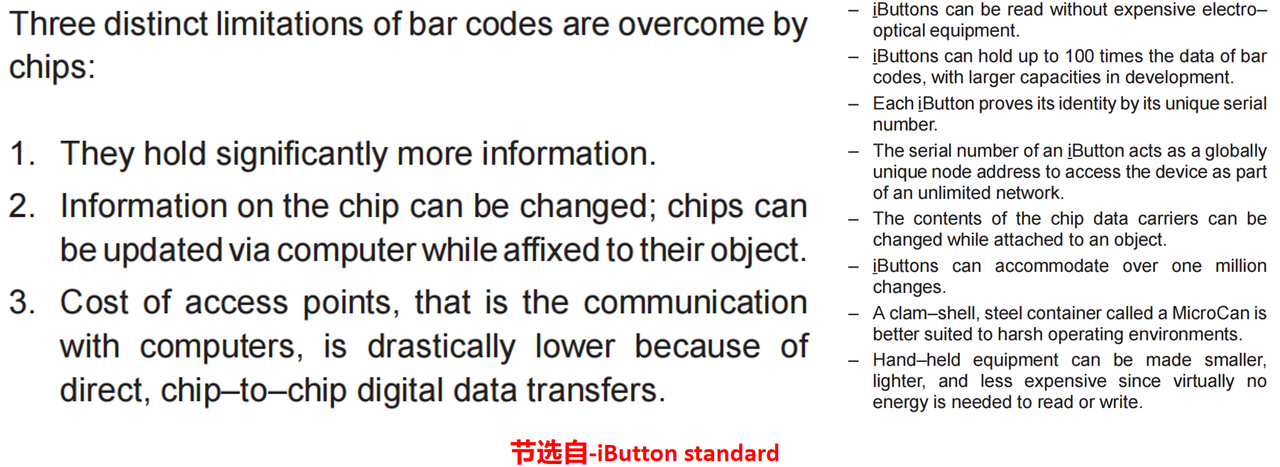
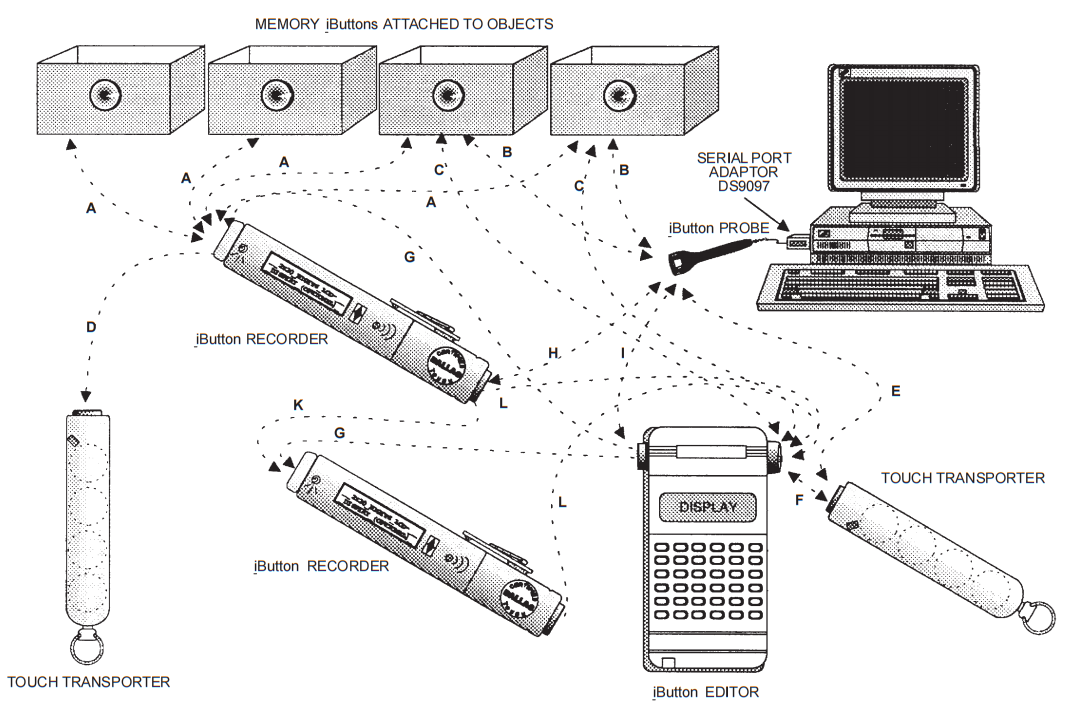
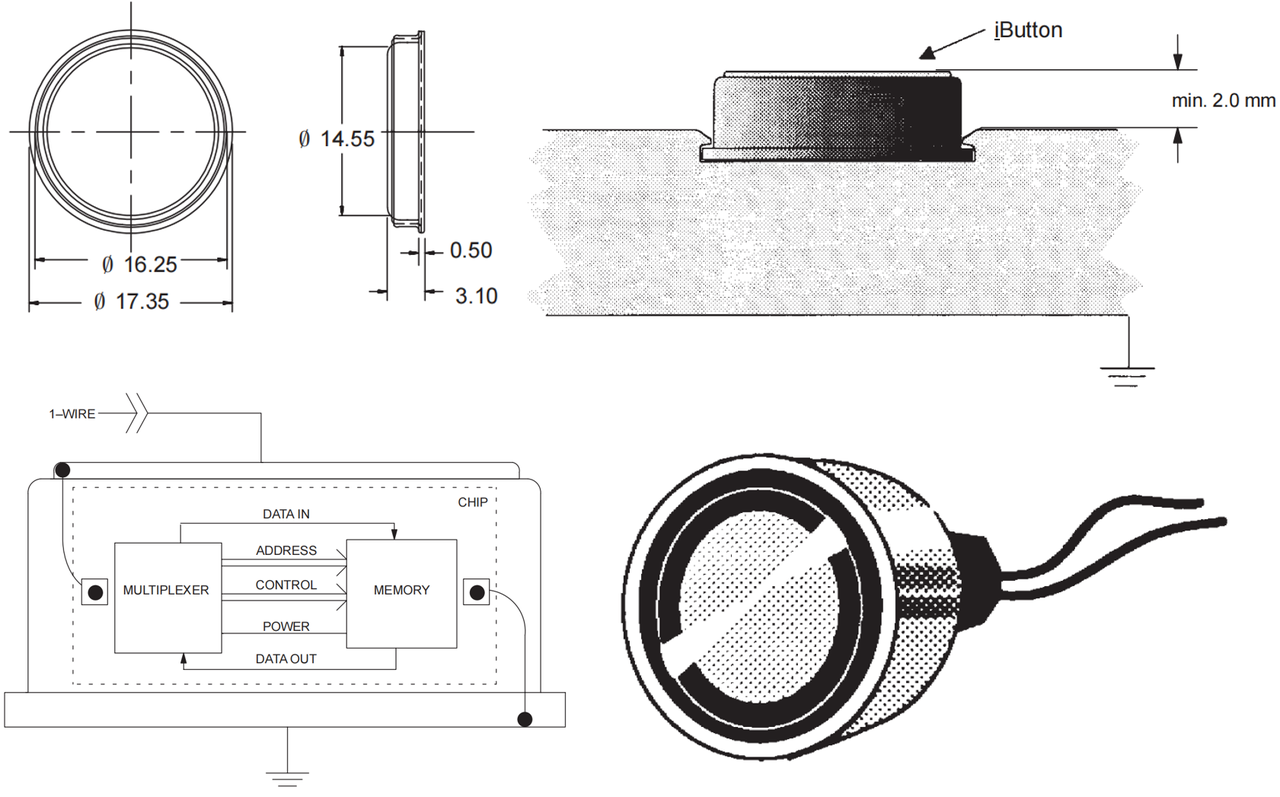
In short, the iButton standard is similar to today's 1-wire protocol. The simplest structure of the iButton standard is a data line and a ground line, except that there are some special requirements in the circuit structure:
The ground line is made of a two-piece stainless steel container called MicroCanTM, which also serves as the protective shell;
The data line is a cup-shaped probe with a round surface.
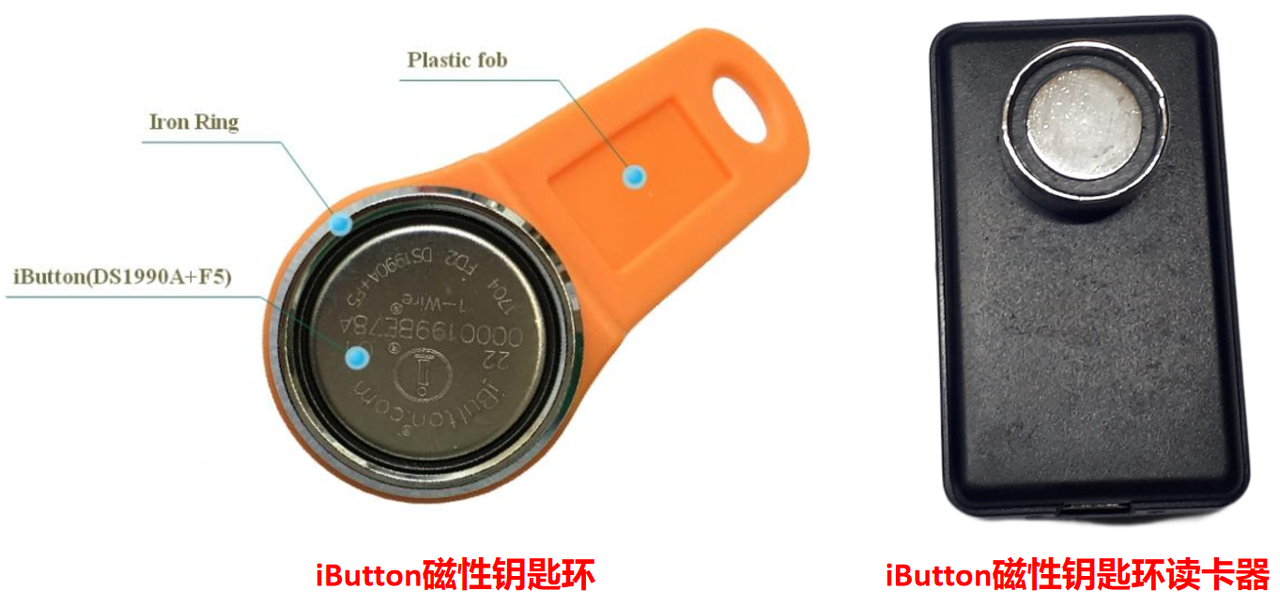
The most common device using 1-Wire communication is the iButton magnetic keyring (also known as the Dallas key). It consists of a button cell battery, an outer iron ring, a plastic keychain, and an internal circuit board. The iButton magnetic keyring needs to be used with a reader; the two communicate through the 1-Wire communication protocol to identify any iButton as a specific 48-bit ID number. iButtons can be built into rings, tags, and other personal items that can be carried on the body, for identifying specific people or items.
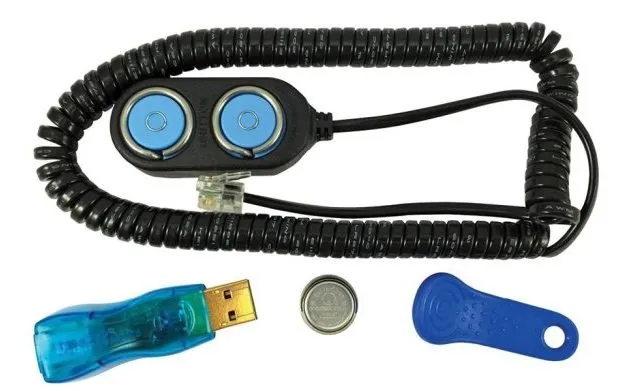
The following is a physical image of the iButton touch socket used to unlock personal computers in the 1980s:
In addition to the iButton standard circuit interface, 1-Wire communication devices also use traditional transistor (TO-92) and IC (TSOC, TDFN, SOT23) packages:
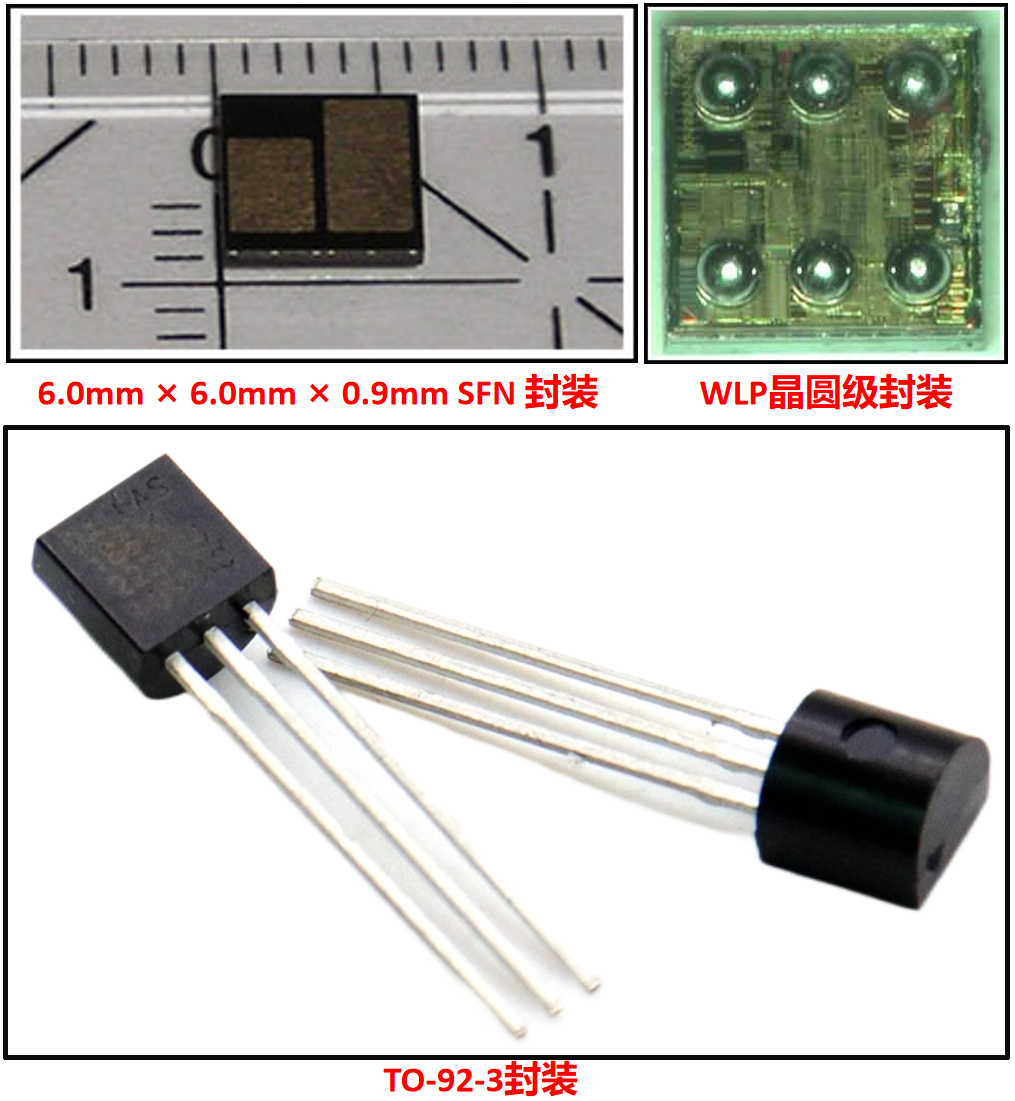
Currently, the voltage levels used by 1-Wire devices can be divided into the following four types:
1.71V (min) to 1.89V (max)
1.71V (min) to 3.63V (max)
2.97V (min) to 3.63V (max)
2.8V (min) to 5.25V (max)
1-Wire devices can be classified into the following categories according to their functions:
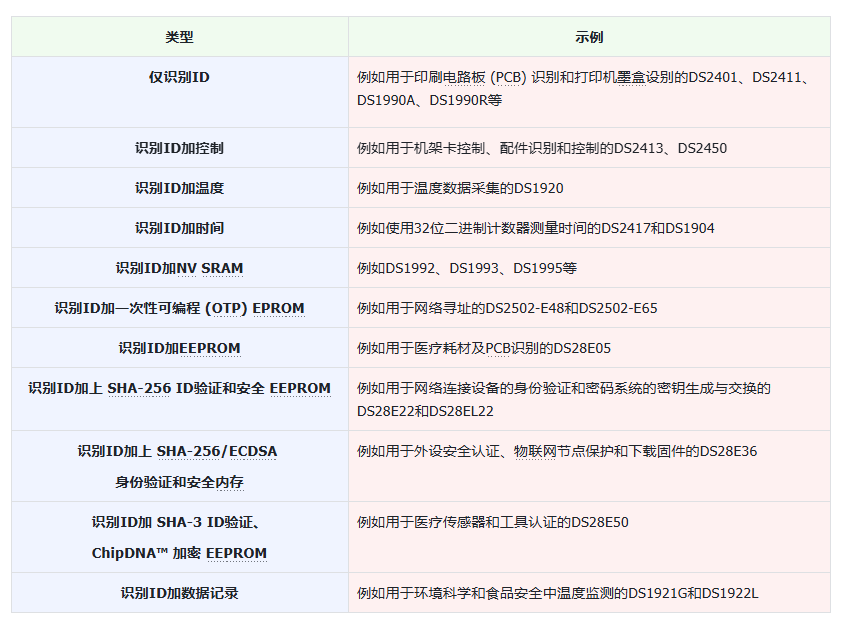
In addition to the above 1-Wire devices used for device ID identification, there are also many sensors in PCs that use the 1-Wire communication protocol, such as temperature recorders, timers, voltage and current sensors, battery monitors, and memories. These devices are connected to the PC through bus converters.