Embedded Beginner: Learn DIP, SOIC, QFP, BGA with RP2040
Let's break down the differences between DIP, SOIC, QFP and BGA with RP2040!
COMPONENTS
PROJECT DESCRIPTION
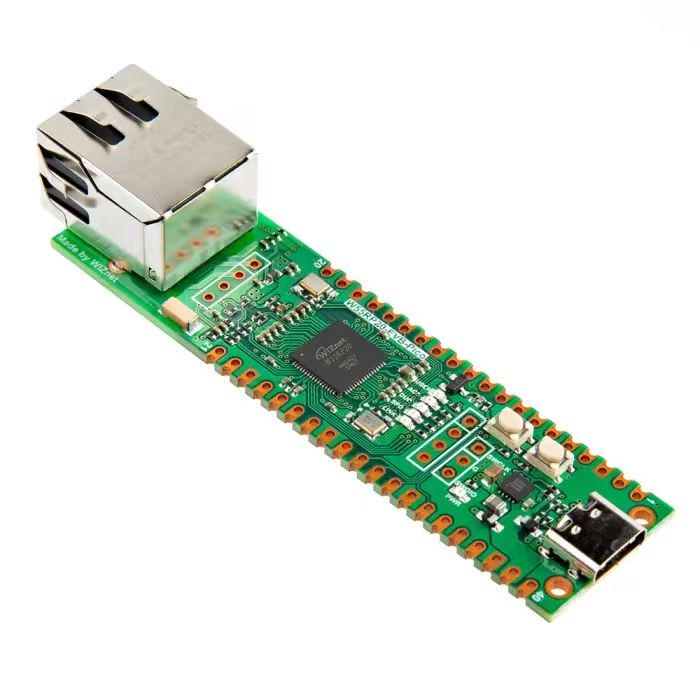
【Preliminary Note】The original hardware example in this article was written based on the RP2040. The actual hardware used in this hands-on demonstration features the W55RP20 as the main controller chip. The circuit logic and UF2 flashing operation principles are universally applicable, with only the main controller model differing. The original chip model mentioned in the circuit descriptions below is provided for reference purposes only.
What is "encapsulation"?
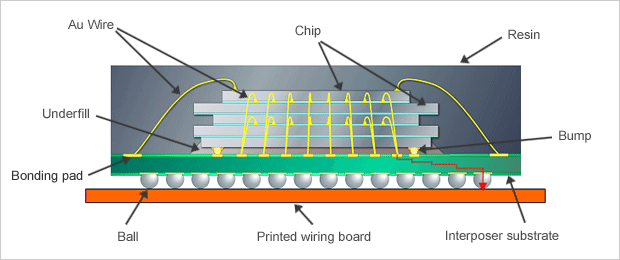
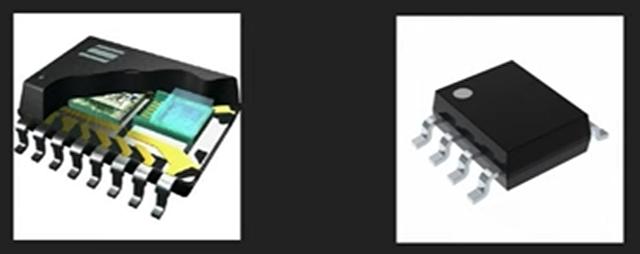
The core of a chip (the integrated circuit on the silicon wafer) can be understood as a "fragile bare die" — it is thin and delicate, vulnerable to impact and moisture, and has no directly connectable interfaces, making it impossible to use as-is. "Packaging" is the process of "fitting a protective casing and leading out interfaces" for this bare die:
It serves as the "protective casing" of a chip: it encloses the delicate core circuitry to resist impacts, moisture and dust, thereby preventing damage to the circuits.
It serves as the "external interface" of the chip: metal pins are drawn out from the core circuit to facilitate soldering the chip onto a circuit board, enabling the chip to receive power supply and transmit signals with external components.
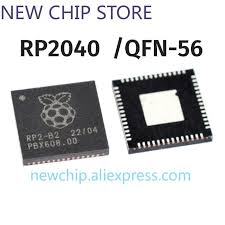
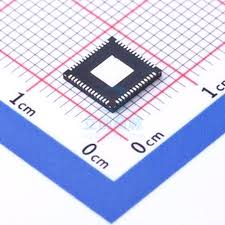
Different packages feature varying shapes and pin counts. Take the "7×7mm QFN-56 package" used for the RP2040 as an example: QFN denotes the package type (a flat, no-lead form factor), 56 indicates that this package has 56 pins, and 7×7mm refers to the package's dimensions.
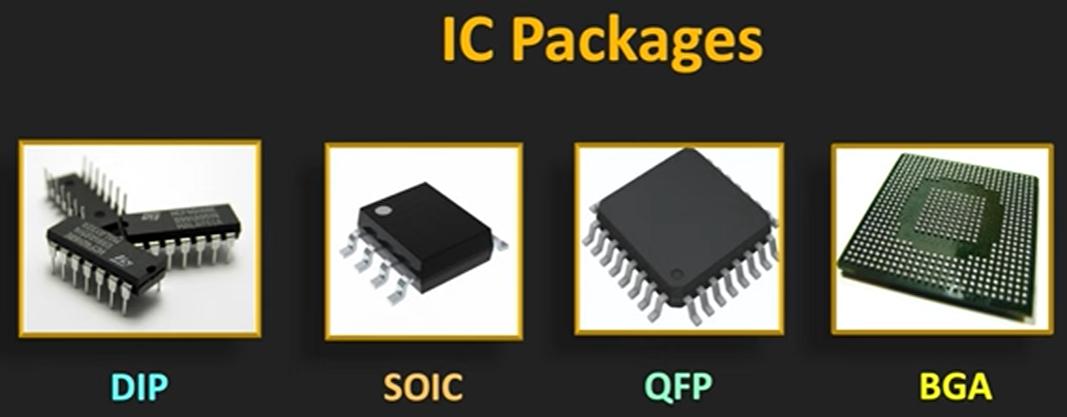
In addition to the QFN package used for the RP2040, here are other common chip packages:
DIP package (Dual In-line Package) Take "DIP-20" for example: its pins are long metal leads arranged in two rows, which can be directly inserted into a breadboard/perforated prototype board.
Features: beginner-friendly, easy to insert and solder, and easy to disassemble when damaged; however, it is relatively bulky.
Application scenarios: Experiments for beginners, prototype verification on breadboards (for example, early 51 single-chip microcontrollers commonly used DIP packages).
SOIC package (Small Outline Integrated Circuit package) For example, "SOIC-16": it is a surface-mount package, with pins being small metal leads on the surface of the circuit board, and its volume is much smaller than that of DIP.
Features: Compact size, suitable for tight-layout circuit boards; however, it requires surface-mount soldering, making manual soldering more difficult for beginners than DIP packages.
Application scenarios: Small consumer electronics (e. g., chips for Bluetooth modules, small-sized sensors).
QFP package (Quad Flat Package) Take "QFP-44" as an example: its pins are arranged on the four sides of the chip, and it has more pins than SOIC.
Features: It can support more functions (more pins correspond to more chip functions), with a size smaller than DIP but larger than BGA.
Applicable scenarios: Devices with medium complexity (such as some feature-rich microcontrollers and small industrial control board chips).
BGA package (Ball Grid Array package) For example, "BGA-100": its pins are solder balls on the bottom of the chip (not exposed pins), featuring an extremely compact size and a very large number of pins.
Features: It can accommodate a large number of pins (supporting high-performance chips) and has an extremely compact size; however, it requires professional equipment for soldering, making it hardly usable for beginners.
Application scenarios: High-end small devices (such as processors in mobile phones and tablets, high-performance sensor chips).
The core differences between these packages lie in their size, pin configuration, and soldering difficulty: DIP (easy to handle) is commonly used by beginners for experiments, SOIC/QFN is preferred for compact finished products, while BGA is adopted for high-end compact devices.