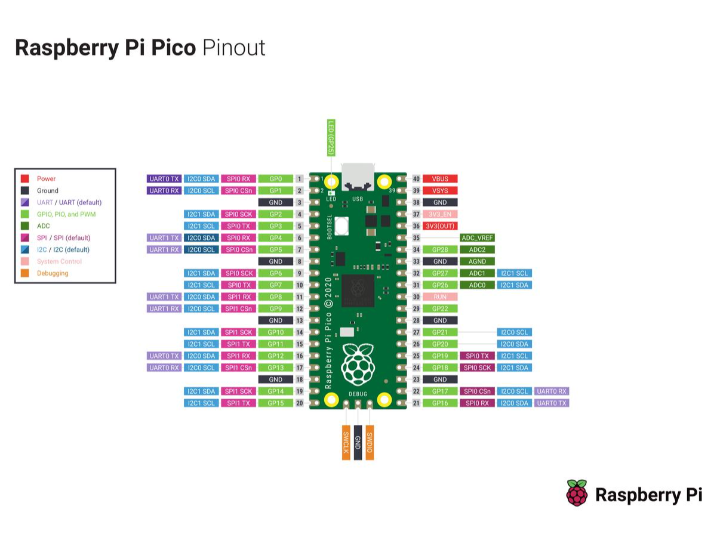
A beginner-friendly breakdown of Raspberry Pi Pico's circuits: power, clock, BOOT, debug, and GPIO — understanding dev boards from hardware up.
COMPONENTS
PROJECT DESCRIPTION
Basic Parameters of the Pico Development Board
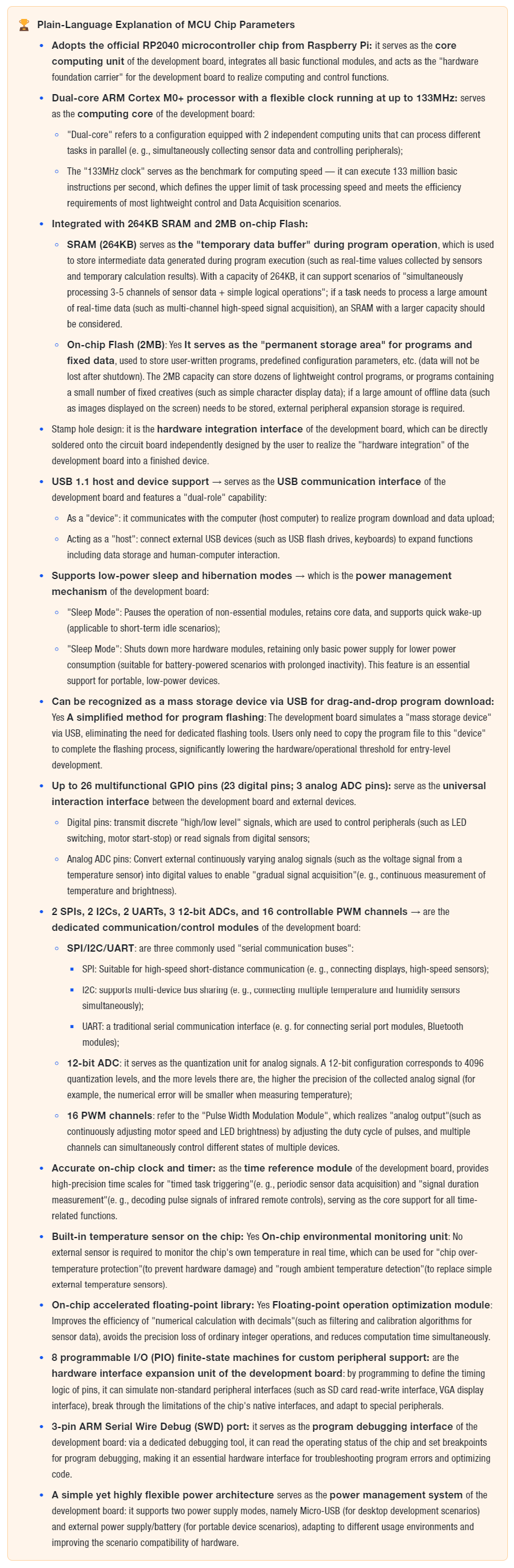
It adopts the RP2040 microcontroller chip independently designed by the official Raspberry Pi team;
Equipped with a dual-core ARM Cortex M0+ processor, it features a flexible clock with an operating frequency of up to 133MHz;
It features a built-in 264KB SRAM and 2MB on-chip flash, and adopts a stamp-hole design that can be directly soldered and integrated onto the baseboard independently designed by users.
USB 1.1 host and device support;
Supports low-power sleep and hibernation modes;
It can be recognized as a mass storage device via USB for drag-and-drop program download;