


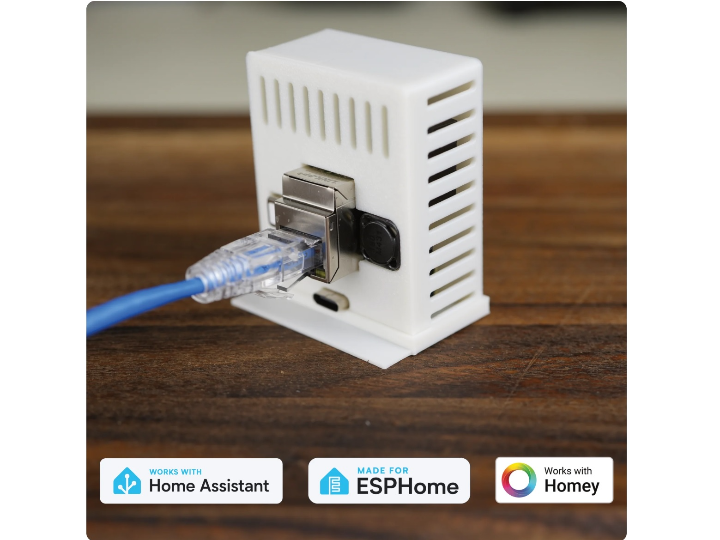
R PRO-1 PoE dual mmWave Multisensor (LD2450 | additional LD2412 optional)
A PoE dual mmWave multisensor with confirmed ESP32-S3 and W5500 Ethernet configuration, supporting presence detection, environmental sensing, and Home Assistant
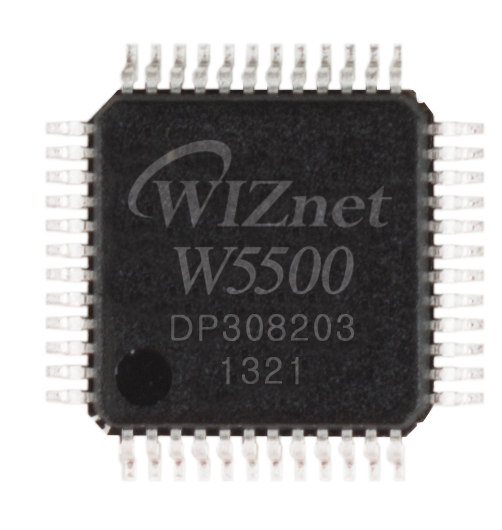
WIZnet - W5500
x 1

Apollo Automation R PRO-1 — W5500 Ethernet/PoE-Based Dual mmWave Smart Home Multisensor
URL Link
Product URL:
https://apolloautomation.com/products/r-pro-1
GitHub Repository:
https://github.com/ApolloAutomation/R_PRO-1
Ethernet Firmware Config:
https://github.com/ApolloAutomation/R_PRO-1/blob/main/Integrations/ESPHome/R_PRO-1_ETH.yaml
Core Config:
https://github.com/ApolloAutomation/R_PRO-1/blob/main/Integrations/ESPHome/Core.yaml
Recommended Components
- WIZnet W5500
- ESP32-S3
- PoE / Ethernet
- Wi-Fi
- Bluetooth / Bluetooth Proxy
- USB-C
- LD2450 mmWave Radar
- LD2412 mmWave Radar Add-on
- LTR390 Lux / UV Sensor
- SCD40 CO₂ Add-on
- RGB LEDs
- Piezo Buzzer
- ESPHome
- Home Assistant
- Zone Mapper / Zone Configuration
- Wall / Ceiling Mount
PRODUCT DESCRIPTION
📌 Overview
Apollo Automation R PRO-1 is a PoE-based dual mmWave multisensor designed for smart homes and commercial building automation.
This product is not just a simple motion sensor. It is a presence sensor designed to more precisely detect whether a person is present in a space, where they are located, whether they are moving, and whether they are sitting or resting still. It uses an LD2450 mmWave radar by default and can be expanded with an optional LD2412 add-on, combining motion tracking with still presence detection.
The R PRO-1 supports PoE, USB-C, Wi-Fi, and Bluetooth, and is designed around the Home Assistant and ESPHome ecosystems. The product page introduces it as a compact PoE mmWave sensor for smart homes and commercial buildings.
In short, the R PRO-1 is an advanced PoE smart home sensor that combines presence detection, zone-based automation, lux/UV sensing, optional CO₂ monitoring, RGB LEDs, buzzer feedback, and local-first Home Assistant integration.
📌 Company / Brand Context
Apollo Automation is a smart home hardware and software startup based in Versailles, Kentucky, USA. According to the company page, Apollo Automation launched in September 2023 and emphasizes privacy-first, open-source solutions and community-driven design.
The company is not simply selling a single sensor. It is building a local-first smart home hardware ecosystem centered around Home Assistant users. Its product ecosystem includes sensors, hubs, accessories, DIY kits, Z-Wave/Zooz products, 3D-printable files, documentation, Discord community support, and GitHub repositories.
Apollo Automation can be characterized by the following:
- Product design centered around Home Assistant / ESPHome
- Local-first, privacy-focused smart home direction
- Open-source firmware and public GitHub repositories
- Community-driven design based on user feedback
- 3D files, mounts, and accessories
- Support through Discord, wiki, and documentation
- A goal of creating high-tech jobs and local innovation in Kentucky
From this perspective, Apollo Automation can be viewed as a US-based open-source smart home hardware brand for Home Assistant users and smart home makers.
📌 What is a Dual mmWave Presence Sensor?
A mmWave presence sensor uses millimeter-wave radar to detect human presence and movement.
A typical PIR motion sensor detects infrared changes caused by movement. Because of this, it can lose detection when someone is sitting still at a desk or lying in bed. In contrast, a mmWave sensor can detect smaller movements and position changes, making it better at determining whether someone is still present in a space.
The R PRO-1 combines two mmWave modules.
The LD2450 is strong in multi-zone motion tracking and location-based target tracking. Users can build location-based automations, such as detecting whether someone is near the sofa, near the TV, or at a desk.
The optional LD2412 is useful for still presence detection, such as detecting seated or resting individuals who are barely moving.
Therefore, the R PRO-1 can be understood as a dual mmWave presence sensor that combines motion tracking and still presence detection, going beyond simple motion sensing.
📌 Product Specifications
The R PRO-1 is designed as a compact PoE mmWave multisensor.
- Processor and Firmware
The official GitHub core config confirms an ESP32-S3 variant. The firmware is based on ESPHome and is designed for easy integration with Home Assistant. - Network and Power
The product page describes true PoE, USB-C power, built-in Wi-Fi, and Bluetooth connectivity. The GitHub README also explains PoE or Wi-Fi usage, noting that PoE can provide both power and internet connectivity to the board, while USB-C power can be combined with Ethernet or Wi-Fi. - Ethernet Configuration
The official GitHub Ethernet firmware config shows the project nameApolloAutomation.R-PRO-1-ETHand includesethernet: type: W5500. SPI pins, interrupt pin, and reset pin are also defined, providing clear evidence of the W5500 Ethernet configuration. - mmWave Sensors
The base sensor includes the LD2450. The LD2450 is used for multi-zone motion tracking and target coordinate tracking. The optional LD2412 is used for still presence detection and is useful for detecting people who are sitting or resting. - Light and UV Sensing
The LTR390 sensor measures lux and UV index. This enables automations such as turning on lights only when the room is dark, or building sunlight and UV-based automations. - Optional Environmental Monitoring
With the optional SCD40 add-on, true NDIR CO₂ sensing can be added. This makes it possible to create air-quality, ventilation, and CO₂-based automations for rooms and offices. - Feedback Components
The product includes RGB LEDs and a piezo buzzer. RGB LEDs can be used for status indication, alerts, and automation feedback, while the buzzer can be used for high CO₂ alerts, door-open alerts, notification sounds, or fun feedback effects. - Mounting and Installation
The product is described as having a compact 57 × 45 mm form factor and supports wall mounting, ceiling mounting, and standard single-gang box installation. This makes it suitable for rooms, offices, ceilings, walls, and commercial spaces.
📌 What This Product Does
The R PRO-1 connects presence, motion, stillness, light, UV, and optional CO₂ data to Home Assistant automations.
The most basic use case is lighting automation. When a person enters a room, the LD2450 can detect motion and turn on the lights. If someone remains seated at a desk or lies in bed, the optional LD2412 can help maintain still presence detection so the lights do not turn off unexpectedly.
Zone-based automation is also possible. For example, if a person is near the sofa, the system can enable TV mode. If someone is near a desk, it can turn on task lighting. If installed near a bed, it can support sleep or wake-up automations.
Environmental sensing is also supported. The LTR390 provides lux and UV values for lighting or sunlight-based automations, while the optional SCD40 provides CO₂ values for ventilation alerts or HVAC control.
In summary, the R PRO-1 is a sensor that makes Home Assistant automation more precise by reading human presence, location, and indoor environmental conditions together.
📌 Why Ethernet / PoE Matters
A presence sensor is an always-on device. Automations such as detecting whether someone is in a room, turning on lights, starting ventilation, or triggering alerts work best when the sensor stays reliably connected to the network.
The R PRO-1’s PoE support is a major advantage.
With PoE, a single Ethernet cable can provide both power and network connectivity. For fixed ceiling or wall installation, this removes the need for a separate power adapter and reduces dependence on Wi-Fi signal quality.
Advantages of a PoE / Ethernet presence sensor include:
- Stable power and networking for always-on sensors
- Reduced dependence on Wi-Fi congestion or signal quality
- Better suitability for ceiling, wall, and commercial-space installations
- Improved reliability of Home Assistant connectivity
- Applicability to commercial building automation
- Strong alignment with privacy-first local automation
The R PRO-1 also supports Wi-Fi and Bluetooth, but PoE/Ethernet is especially valuable for fixed installations.
📌 Role and Application of the WIZnet Chip
Related WIZnet product: W5500
The official Apollo Automation R PRO-1 GitHub Ethernet firmware config confirms ethernet: type: W5500. The project name is also listed as ApolloAutomation.R-PRO-1-ETH, and clock, MOSI, MISO, CS, interrupt, and reset pins for the W5500 are defined.
Based on this, the W5500 acts as the Ethernet controller that connects the ESP32-S3-based PoE mmWave multisensor to a wired Ethernet network.
The R PRO-1 is not a high-bandwidth device. However, it continuously sends presence, zone, target coordinate, CO₂, lux, UV, and status event data to Home Assistant. For this kind of always-on sensor, stable connectivity and installation reliability matter more than raw bandwidth.
W5500-based Ethernet fits this use case well. A PoE sensor installed on a ceiling or wall is a strong example of reliable wired smart home infrastructure.
📌 Network Stack Note
Based on the official GitHub configuration, the R PRO-1 Ethernet firmware uses ESPHome’s ethernet: type: W5500 setting.
Therefore, this product should be understood as a product configuration that uses W5500 as an Ethernet network interface through ESPHome’s Ethernet component, rather than as a TOE example where the user directly calls the WIZnet socket library.
A safe technical description is:
Apollo Automation R PRO-1 is confirmed in the official GitHub configuration as using ESP32-S3 and W5500 Ethernet. However, rather than being a direct WIZnet socket-library TOE example, it is safer to describe it as a smart home sensor product that uses W5500 as a network interface through ESPHome’s W5500 Ethernet component.
📌 Hybrid Network Status
The R PRO-1 can be considered Hybrid Network-ready from a WIZnet perspective.
The product page explains that the R PRO-1 supports true PoE, USB-C power, built-in Wi-Fi, and Bluetooth connectivity. The GitHub README also describes PoE or Wi-Fi usage, explaining that the board can receive power and internet connectivity through PoE, or use USB-C power with Ethernet or Wi-Fi.
In other words, the R PRO-1 considers both wired Ethernet/PoE and wireless Wi-Fi/Bluetooth within one product family. However, it is not an Ethernet-to-Wi-Fi bridge or router.
A more accurate description is:
The R PRO-1 is a Hybrid Network-ready smart home sensor that supports PoE/Ethernet, Wi-Fi, and Bluetooth. Fixed installations can use wired Ethernet/PoE, while environments where wiring is difficult can use Wi-Fi-based installation.
📌 Features
- Dual mmWave presence sensing
The product can combine the LD2450 and optional LD2412 to support multi-zone motion tracking and still presence detection. - Zone-based automation
The LD2450 provides target position and zone information, enabling automations based on specific areas inside a room. - Still presence detection
The optional LD2412 is useful for detecting people who are sitting, resting, or moving very little. - PoE / Ethernet connectivity
PoE can provide power and networking through a single cable. The GitHub configuration confirms a W5500 Ethernet firmware setup. - Wi-Fi and Bluetooth
The product supports Wi-Fi firmware and Bluetooth connectivity. Bluetooth tracking and Bluetooth proxy features are also described in the product information and README. - ESPHome / Home Assistant integration
The product carries a Made for ESPHome badge and is designed for easy integration with Home Assistant. - Lux and UV sensing
The LTR390 sensor provides ambient light and UV index measurements. - Optional CO₂ monitoring
The SCD40 add-on can add NDIR CO₂ sensing. - RGB LEDs and buzzer
RGB LEDs and a piezo buzzer provide visual notifications, audio alerts, and automation feedback. - Open-source and local-first
Consistent with Apollo’s product direction, the R PRO-1 emphasizes local-first, open-source operation without a cloud subscription.
📌 System Architecture
The R PRO-1 can be understood through five layers: sensing layer, connectivity layer, firmware layer, automation layer, and ecosystem layer.
In the sensing layer, the LD2450 handles multi-zone motion tracking, while the optional LD2412 complements it with still presence detection. The LTR390 provides lux and UV sensing, and the optional SCD40 provides CO₂, temperature, and humidity data.
In the connectivity layer, PoE/Ethernet, Wi-Fi, and Bluetooth are used. In the Ethernet firmware config, W5500 is configured as the Ethernet controller.
In the firmware layer, ESPHome is the core. Ethernet firmware and Wi-Fi firmware are separated, and the firmware selector and OTA update structure are included.
In the automation layer, Home Assistant is the center. Users can build automations based on presence, zone, target location, lux, UV, CO₂, LED state, and buzzer state.
In the ecosystem layer, Apollo’s wiki, GitHub, Discord, 3D files, ceiling/wall mounts, and Zone Mapper are connected as community-driven tools.
📌 Usage, Market, and Application Value
The R PRO-1 is suitable for smart home users and commercial spaces that need advanced presence automation.
Main use cases include:
- Home Assistant-based lighting automation
- Room-level presence detection
- Office and meeting-room occupancy monitoring
- HVAC / ventilation automation
- CO₂-based ventilation alerts
- Bedroom sleep automation
- Desk, sofa, and TV-zone-based automation
- Lux-based daylight-aware lighting
- UV-based sunlight monitoring
- Bluetooth proxy / Bluetooth tracking
- PoE-based ceiling or wall-mounted sensor installation
- Commercial building smart occupancy sensing
From a market perspective, the R PRO-1 is a good fit for Home Assistant power users who want a more advanced presence sensor than a simple motion sensor. Since it supports PoE installation, it can also be applied to small offices, meeting rooms, and commercial building automation.
The ability to detect presence and location without a camera is also a major advantage for privacy-focused smart building automation.
📌 Company Ecosystem and Market Position
Apollo Automation is a US-based smart home hardware startup growing around Home Assistant users and local smart home users.
Its product family includes presence sensors, environmental sensors, automation hubs, accessories, DIY kits, Z-Wave/Zooz products, 3D-printable mounts, and community tools. The official site connects sensors, hubs, accessories, DIY, Z-Wave, Zooz, documentation, GitHub, Discord, blog content, and distributor channels.
Apollo Automation’s market position can be summarized as follows:
- Smart home hardware centered around Home Assistant / ESPHome
- Privacy-first local automation
- Open-source firmware and public GitHub repositories
- Fast product improvement driven by community feedback
- 3D-printable files and mounting accessories
- Flexible installation combining PoE, Wi-Fi, and Bluetooth
- A bridge between smart home and commercial building automation
Within this ecosystem, the R PRO-1 plays the role of Apollo’s high-end PoE mmWave multisensor.
📌 Additional Insight for W5500 / WIZnet
The R PRO-1 is meaningful from a WIZnet perspective because it shows the applicability of W5500 Ethernet in the PoE smart home sensor market.
The smart home sensor market has largely evolved around wireless technologies such as Wi-Fi, Zigbee, Thread, and Matter. However, a mmWave presence sensor must always stay powered, continuously deliver location and presence data, and is often installed permanently on a ceiling or wall.
In this environment, PoE/Ethernet is a very convincing option.
Key WIZnet insights include:
- W5500 can be used not only in industrial devices, but also in premium smart home sensors.
- PoE presence sensors are a strong example of reliable wired smart home infrastructure.
- The ESPHome / Home Assistant ecosystem is an important maker channel for WIZnet Ethernet products.
- The R PRO-1 is a real product example that combines W5500, ESP32-S3, ESPHome, PoE, and mmWave sensing.
- A structure that provides both Wi-Fi and Ethernet firmware fits well with the Hybrid Network-ready message.
- The value of wired Ethernet sensors can grow in the privacy-first, local-first smart home market.
📌 Things to Know Before Use
Since the R PRO-1 is a feature-rich advanced mmWave sensor, users should check several points before installation.
- Whether a PoE switch or PoE injector is available
- Whether Wi-Fi installation is more suitable
- Whether Ethernet firmware or Wi-Fi firmware should be used
- Whether the LD2412 add-on is needed
- Whether the SCD40 CO₂ add-on is needed
- Whether wall mount, ceiling mount, or gang box mount is the best installation method
- Whether Home Assistant is ready to use ESPHome devices
- Whether mmWave zone setup and calibration are needed
- Whether temperature, humidity, or CO₂ values need compensation when installed in recessed wall/ceiling locations
Because mmWave sensor performance can vary depending on installation position, direction, reflective objects, fans, and open spaces, it is recommended to perform zone setup and calibration after initial installation.
📌 Summary
Apollo Automation R PRO-1 is a PoE-based dual mmWave smart home multisensor. It provides LD2450-based multi-zone motion tracking, optional LD2412 still presence detection, LTR390 lux/UV sensing, optional SCD40 CO₂ monitoring, RGB LEDs, buzzer feedback, Wi-Fi/Bluetooth, and Home Assistant/ESPHome integration.
Apollo Automation is a smart home hardware and software startup based in Versailles, Kentucky, USA. The company emphasizes privacy-first, open-source, community-driven design. It is building a local-first smart home ecosystem that connects sensors, hubs, accessories, DIY kits, documentation, GitHub, Discord, and 3D files around Home Assistant users.
The key WIZnet-related point is that the official GitHub configuration confirms ESP32-S3 and ethernet: type: W5500. The W5500 acts as the Ethernet controller that provides PoE/Ethernet network connectivity in the R PRO-1.
From a WIZnet perspective, this product is a Hybrid Network-ready end-product case. It supports PoE/Ethernet, Wi-Fi, and Bluetooth, and clearly demonstrates the stability and installation advantages of W5500 Ethernet in an always-on presence sensor.
📌 Similar Existing WIZnet Maker Site Content
It is difficult to find an existing WIZnet Maker Site post that exactly matches Apollo Automation R PRO-1 as a “PoE dual mmWave multisensor.” However, the following existing contents can be connected from the perspectives of presence detection, smart automation, and Ethernet-based monitoring/control.
1. [AIoT] Smart Office Automation detecting Human Presence
Why it is similar:
This content uses a WIZnet Pico board to detect whether a person is present in an office and automatically turn electrical devices, such as lights, on or off based on that detection.
Apollo R PRO-1 also detects whether people are present in a space and connects that result to Home Assistant automations. Therefore, both contents share the same overall flow of human presence detection → room automation.
Difference:
Smart Office Automation is a maker-style UCC project using a webcam, OpenCV, AI processing, and W5100S-EVB-Pico. In contrast, Apollo R PRO-1 is a commercial PoE multisensor that uses LD2450 and optional LD2412 mmWave radar modules. It also includes Home Assistant / ESPHome integration, PoE/Ethernet, Wi-Fi/Bluetooth, lux/UV sensing, and optional CO₂ sensing, making it a more complete smart home sensor product.
2. Programmable IoT Edge ESP32 Ethernet IO Module
URL Link:
https://maker.wiznet.io/matthew/resellers/programmable-iot-edge-esp32-ethernet-io-module/
Why it is similar:
This content introduces an ESP32-based Ethernet I/O module and covers remote monitoring, secure I/O control, MODBUS TCP, MQTT, Ethernet, Wi-Fi, Bluetooth, environmental monitoring, alarm applications, and automated task applications.
Apollo R PRO-1 is also an ESP32-S3-based connected sensing device, and its W5500 Ethernet firmware configuration is confirmed. Both contents are similar in that they connect field data or sensor data to the network using ESP32 + Ethernet.
Difference:
The Programmable IoT Edge ESP32 Ethernet IO Module is closer to an industrial, facility, or general-purpose I/O monitoring and control product. Apollo R PRO-1, on the other hand, is a PoE mmWave presence multisensor for smart homes and commercial building automation. It is not a general I/O module, but a sensor end product that connects presence, position, zone, lux/UV, and optional CO₂ data directly to Home Assistant automations.
3. Apollo Automation R PRO-1 — Target Product
URL Link:
https://apolloautomation.com/products/r-pro-1
GitHub Firmware Reference:
https://github.com/ApolloAutomation/R_PRO-1/blob/main/Integrations/ESPHome/R_PRO-1_ETH.yaml
Why it should be connected:
Apollo R PRO-1 is a new VAR candidate that can be connected to existing WIZnet Maker Site content related to smart automation, presence detection, and Ethernet-based monitoring/control. The product page introduces R PRO-1 as a PoE dual mmWave multisensor for smart homes and commercial buildings. The official GitHub firmware configuration confirms ApolloAutomation.R-PRO-1-ETH and ethernet: type: W5500.
Therefore, this product can be introduced on the WIZnet Maker Site as a new smart home sensor case that connects ESP32-S3 + W5500 + ESPHome + Home Assistant + PoE mmWave sensing.
📌 Difference and Expansion Value
The biggest differentiator of Apollo Automation R PRO-1 is that, while many existing Maker Site posts focus on maker projects, Ethernet I/O modules, or AIoT automation demos, R PRO-1 is a commercially available premium smart home / commercial building PoE mmWave multisensor.
Compared with the existing related content, the connection can be summarized as follows:
[AIoT] Smart Office Automation detecting Human Presenceis similar because it detects human presence and connects it to room automation.Programmable IoT Edge ESP32 Ethernet IO Moduleis similar because it uses ESP32 + Ethernet for monitoring and control.Apollo R PRO-1expands these ideas into a real Home Assistant / ESPHome-based PoE smart sensor product.
Apollo R PRO-1 provides the following expansion value.
First, it can be introduced as an example of WIZnet Ethernet being applied to a premium smart home sensor end product.
It is not just a development board or demo project. It is a commercial presence sensor that users can purchase and install on a ceiling or wall.
Second, it connects the W5500 + ESP32-S3 + ESPHome + Home Assistant ecosystem.
The official GitHub configuration confirms the ESP32-S3 core config and the W5500 Ethernet firmware config, showing the visibility potential of WIZnet Ethernet within the Home Assistant / ESPHome maker ecosystem.
Third, it helps communicate the message of a PoE-based always-on smart sensor.
A presence sensor must always stay online and reliably trigger lighting, ventilation, and HVAC automations. PoE/Ethernet can be a more stable option than Wi-Fi for this kind of fixed-installation sensor.
Fourth, it can be used as a Hybrid Network-ready product example.
R PRO-1 supports PoE/Ethernet, Wi-Fi, and Bluetooth. Fixed installations can use wired Ethernet/PoE, while environments where wiring is difficult can use Wi-Fi.
Fifth, it shows a transition from AIoT-style presence automation to a mmWave-based commercial sensor.
While the existing Smart Office Automation project uses a webcam and OpenCV as a maker project, Apollo R PRO-1 provides camera-free presence sensing using mmWave radar as a real product. This is an important differentiator in the privacy-first smart home and smart building market.
Sixth, it can expand from smart homes into commercial building automation.
R PRO-1 can be used for room occupancy, meeting-room automation, HVAC/ventilation control, CO₂ alerts, and lighting automation in commercial spaces. It expands existing Maker Site automation content from hobby or maker projects into commercial-ready sensing products.
In conclusion, when connected with existing Maker Site content, Apollo Automation R PRO-1 becomes a strong expansion case that links human presence automation → ESP32 Ethernet monitoring/control → PoE mmWave smart sensor → Home Assistant / commercial building automation.
📌 FAQ
Q1. What is the Apollo Automation R PRO-1?
It is a PoE-based dual mmWave presence sensor. It uses the LD2450 and optional LD2412 to provide motion tracking and still presence detection, and connects that data to Home Assistant automations.
Q2. What kind of company is Apollo Automation?
Apollo Automation is a smart home hardware and software startup based in Versailles, Kentucky, USA. It develops privacy-first, open-source, community-driven smart home products.
Q3. What ecosystem is Apollo Automation building?
Apollo is building a smart home ecosystem around Home Assistant and ESPHome, connecting sensors, hubs, accessories, DIY kits, 3D files, GitHub, Discord, documentation, and local-first automation.
Q4. Which WIZnet chip is involved?
The official GitHub Ethernet firmware config confirms ethernet: type: W5500. Therefore, the R PRO-1 Ethernet firmware can be understood as using the W5500 Ethernet controller.
Q5. Is ESP32-S3 also confirmed?
Yes. The official GitHub core config confirms esp32 and variant: esp32s3.
Q6. Is the W5500 used through a TOE/socket-library approach?
Based on the public configuration, it uses ESPHome’s W5500 Ethernet component. It is safer to describe it as a product that uses W5500 as an Ethernet network interface, rather than as a direct WIZnet socket-library TOE example.
Q7. Is it a Hybrid Network product?
Yes. Since it supports PoE/Ethernet, Wi-Fi, and Bluetooth, it can be considered Hybrid Network-ready. However, it is not an Ethernet-to-Wi-Fi bridge or router.
Q8. What applications is it suitable for?
It is suitable for Home Assistant lighting automation, room presence detection, office occupancy monitoring, HVAC/ventilation automation, CO₂ alerts, sleep automation, and PoE ceiling/wall sensor installations.
Q9. Why is it meaningful for WIZnet?
The R PRO-1 can be viewed as an example of W5500 Ethernet/PoE being used in a commercially available premium smart home mmWave sensor. It shows the visibility potential of WIZnet Ethernet in the Home Assistant / ESPHome ecosystem.