


EasyEthernetLib
EasyEthernetLib
WIZnet - W5500
x 1

What the Project Does
이 프로젝트는 두 Arduino 계열 장치가 같은 네트워크 안에서 UDP 패킷을 주고받도록 단순화하는 데 초점이 있다. README에는 raw byte와 C 문자열 송수신, 대상 IP 지정, broadcast 사용, 작은 API 표면을 특징으로 제시하고 있으며, 데이터 전달 보장과 무결성은 목표가 아니고 제어 신호나 센서 데이터 같은 스트리밍성 데이터 전송용이라고 설명한다. 이 점에서 EasyEthernetLib는 범용 네트워크 스택이라기보다, 실제 프로젝트에서 반복되는 UDP 송수신 패턴을 줄이기 위해 직접 만든 업무형 helper library에 가깝다.
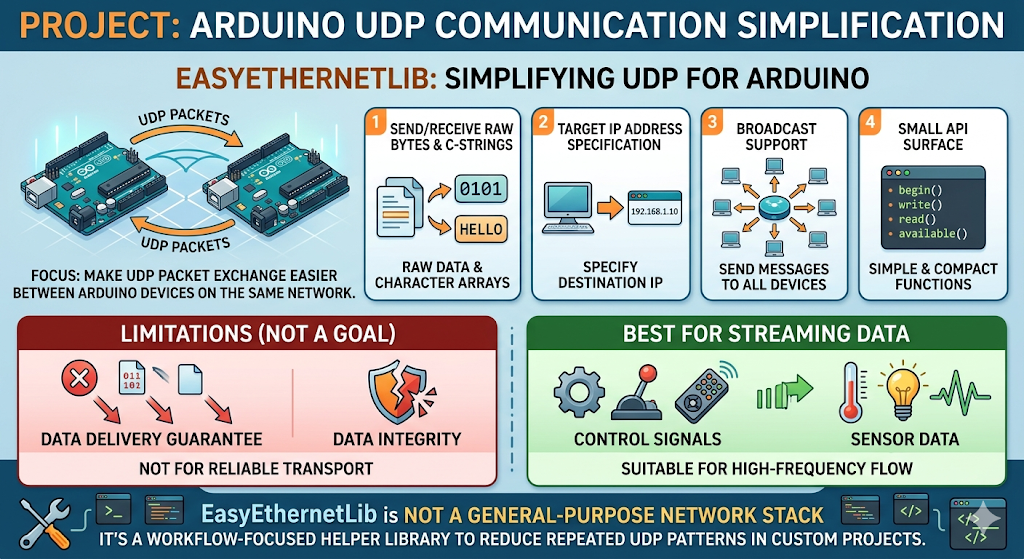
이미지 출처 : AI 생성
Where WIZnet Fits
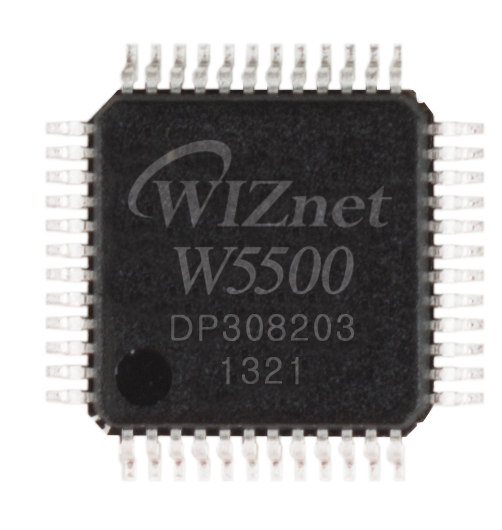
이 프로젝트에서 확인되는 WIZnet 제품은 W5500이다. 저장소 설명은 이 라이브러리가 W5500에서 테스트되었다고 적고 있고, 구현은 Arduino Ethernet 계층을 사용하므로 W5500은 애플리케이션이 직접 제어하는 객체가 아니라 하부 Ethernet 컨트롤러로 동작한다. 따라서 이 구조에서 W5500의 역할은 SPI 기반 Ethernet 연결과 UDP 통신 기반을 제공하는 것이고, EasyEthernetLib의 역할은 그 위에서 상위 송수신 정책을 직접 정의하는 것이다. 상업용 장치 관점에서는 네트워크 칩 수준의 안정된 유선 인터페이스와, 프로젝트 요구에 맞춘 단순한 상위 API를 분리했다는 점이 중요하다.
Implementation Notes
EasyEthernetLib를 설명할 때 가장 먼저 강조해야 할 부분은 이것이 직접 만든 custom library라는 점이다. 헤더를 보면 핵심 클래스는 DataTransmitter 하나이며, 내부 멤버로 EthernetUDP Udp;, IPAddress targetIP;, bool lockTargetIP;, const char* magicString; 등을 가진다. 즉, 설계 관점에서 이 라이브러리는 Ethernet 칩 제어 계층이 아니라, “누구에게 보낼지”, “어떤 패킷만 받을지”, “상대를 자동으로 찾을지” 같은 애플리케이션 정책을 캡슐화한 상위 레이어다.
실제 구현도 같은 방향을 보여 준다. init(IPAddress ip)에서는 SPI.begin();, Ethernet.begin(mac, ip);, Udp.begin(port); 순으로 초기화한다. 이것은 Ethernet 스택을 직접 쓰는 대신, 기존 Arduino Ethernet API를 감싸서 프로젝트 시작 코드를 줄이려는 구조다. 다시 말해 EasyEthernetLib는 Ethernet 자체를 다시 구현하지 않고, 공식 Ethernet 사용 절차를 더 짧고 일관된 형태로 묶어 놓은 직접 제작 래퍼다.
EthernetUDP Udp;
—src/easyEthernetLib.h
SPI.begin(); ... Ethernet.begin(mac, ip); ... Udp.begin(port);
—src/easyEthernetLib.cpp
이 라이브러리의 차별점은 UDP 송수신 자체보다, 그 위에 작성자가 직접 넣은 운영 규칙에 있다. sendData()는 필요하면 패킷 앞에 magicString을 붙여 보내고, receiveData()는 수신 패킷 길이를 검사한 뒤 같은 magicString이 없으면 버린다. 또한 자신의 IP에서 온 패킷은 무시하고, lockTargetIP가 꺼져 있으면 수신한 remoteIP를 새로운 targetIP로 갱신한다. 이런 로직은 범용 Ethernet 드라이버에서 제공하는 기능이 아니라, 특정 프로젝트에서 장치 짝짓기와 필터링을 쉽게 하려는 직접 설계한 상위 프로토콜 규칙이다.
if(magicStringLength > 0) Udp.write(magicString, magicStringLength);if (strncmp((char*)buffer, magicString, magicStringLength) != 0)
—src/easyEthernetLib.cpp
반대로 비교 대상으로 본 Ethernet3.cpp는 역할이 완전히 다르다. 이 파일은 w5500.init(_maxSockNum, _pinCS), w5500.setMACAddress(...), w5500.setIPAddress(...), w5500.setGatewayIp(...), w5500.setSubnetMask(...)를 수행하고, DHCP용 DhcpClass를 만들어 beginWithDHCP()와 checkLease()를 호출한다. 즉, Ethernet3는 W5500 하드웨어와 네트워크 인터페이스 초기화 자체를 책임지는 기반 계층이고, EasyEthernetLib는 그 위에서 “내 프로젝트의 UDP 데이터 교환을 더 쉽게 만들자”는 목적의 상위 라이브러리다. 둘은 경쟁 관계가 아니라 계층이 다르다.
EasyEthernetLib와 Ethernet3 차이
| 항목 | EasyEthernetLib | Ethernet3 |
|---|---|---|
| 성격 | 작성자가 직접 만든 상위 UDP 래퍼 라이브러리 | W5500 기반 Ethernet 인터페이스/드라이버 계층 |
| 핵심 목적 | 장치 간 UDP 데이터 전송 코드를 짧게 만들기 | W5500 초기화, IP 설정, DHCP, 네트워크 인터페이스 제공 |
| 내부 구조 | EthernetUDP Udp를 멤버로 보유 | w5500.init(...), setMACAddress(...), setIPAddress(...) 등 하드웨어 제어 |
| 초기화 방식 | SPI.begin() 후 Ethernet.begin(mac, ip)와 Udp.begin(port) 호출 | 직접 W5500 초기화 후 MAC/IP/Gateway/Subnet/DHCP 설정 |
| 프로젝트 특화 기능 | magicString, target IP 자동 학습, self-packet 무시, IP lock | 없음. 범용 Ethernet 기능 중심 |
| 계층 위치 | 애플리케이션 편의 레이어 | 네트워크 스택 기반 레이어 |
| 장점 | UDP 송수신 코드가 짧아지고, 장치 간 통신 규칙을 빠르게 구현할 수 있다. 프로젝트 전용 동작을 바로 넣기 쉽다. | W5500 제어와 네트워크 초기화를 폭넓게 다룰 수 있어 기반 라이브러리로 적합하다. IP, DHCP, 하드웨어 설정처럼 저수준 제어가 분명하다. |
| 한계 | Ethernet 자체를 구현한 것은 아니므로 공식 Ethernet 계층에 의존한다. 신뢰성 보장, 재전송, 범용성 측면에서는 제한적이고 특정 UDP 사용 패턴에 최적화되어 있다. | 장치 간 데이터 교환 로직은 직접 작성해야 하므로 애플리케이션 개발자가 추가 구현을 많이 해야 한다. 사용 코드는 더 길어질 수 있다. |
| 적합한 소개 문장 | “Arduino Ethernet 위에 직접 만든 custom UDP helper library” | “W5500용 Ethernet 인터페이스를 제공하는 기반 라이브러리” |
Practical Tips / Pitfalls
이 라이브러리는 현재 공개 구현 기준으로 init(IPAddress ip) 경로가 중심이며, 주석 처리된 DHCP 초기화 경로가 남아 있다. 따라서 그대로 쓰면 정적 IP 장비 구성에 더 자연스럽다.
magicString은 단순하지만 유용한 필터다. 다만 현장에서 송신기와 수신기의 문자열이 다르면 통신 자체가 끊긴 것처럼 보일 수 있으므로 버전 관리가 필요하다.
lockTargetIP를 켜면 지정한 상대 외 패킷을 무시한다. 브로드캐스트 탐색 후 고정 peer 모드로 전환하는 상업용 장치 구성에 적합하다.
README가 밝히듯 이 라이브러리는 전송 보장이나 데이터 무결성을 목표로 하지 않는다. 제어 명령 전송에는 시퀀스 번호, ACK, 재시도 정책을 별도로 넣는 편이 안전하다.
소개 문구를 작성할 때는 “Ethernet 라이브러리”라고 넓게 부르기보다, **“Arduino Ethernet 위에 직접 만든 UDP 통신 보조 라이브러리”**라고 쓰는 편이 코드 구조와 정확히 맞는다.
FAQ
1) 왜 이 프로젝트를 “직접 만든 Library”라고 불러야 하나요?
핵심 구현이 W5500 칩 제어나 Ethernet 드라이버 재작성에 있지 않고, DataTransmitter라는 사용자 정의 클래스로 상위 송수신 동작을 감싼 데 있기 때문이다. 내부에 EthernetUDP를 포함하고, 기존 Ethernet.begin(...)을 호출해 사용하므로, 이 코드는 Ethernet 기반 라이브러리라기보다 사용자가 직접 만든 프로젝트 전용 래퍼로 보는 것이 정확하다.
2) Arduino 공식 Ethernet Library와는 어떤 관계인가요?
대체 관계가 아니라 상위 활용 관계다. EasyEthernetLib는 공식 Ethernet 계층을 호출해 초기화하고 유지하며, UDP도 EthernetUDP를 그대로 쓴다. 즉, 공식 라이브러리를 감춘 것이 아니라 더 적은 코드로 쓰기 위해 감싼 것이다.
3) Ethernet3와 비교하면 가장 큰 차이는 무엇인가요?
Ethernet3는 W5500의 MAC/IP/Gateway/Subnet 설정과 DHCP 관리처럼 네트워크 인터페이스 자체를 다루고, EasyEthernetLib는 송신 대상 관리, 매직 문자열 검사, 원격 IP 자동 학습처럼 애플리케이션 규칙을 다룬다. 하나는 기반 계층, 다른 하나는 프로젝트 특화 상위 계층이다.
4) 이 프로젝트에서 W5500은 정확히 어떤 역할을 하나요?
W5500은 하부 Ethernet 통신 기반을 제공하는 칩이고, EasyEthernetLib는 그 위에서 UDP 패킷 송수신 흐름을 더 쉽게 쓰도록 만든 래퍼다. 저장소 설명은 W5500 테스트를 명시하고 있고, 구현은 Arduino Ethernet API를 통해 그 하드웨어를 사용한다.
5) 상업용 프로젝트에서 이 접근이 왜 유용한가요?
현장 장비는 보통 네트워크 칩 제어보다 장치 간 메시지 규칙과 상태 흐름 관리가 더 중요하다. EasyEthernetLib는 그 부분을 간단한 API로 정리해 주기 때문에, 소규모 제어 장치나 보조 보드 간 UDP 프레임 교환을 빠르게 구현하는 데 유리하다. 다만 신뢰성 보장은 별도 설계가 필요하다.
What the Project Does
This project focuses on simplifying UDP packet exchange between two Arduino-based devices on the same network. The README highlights raw byte and C-string transmission, target IP assignment, broadcast support, and a small API surface. It also makes clear that guaranteed delivery and data integrity are not the goal; instead, the library is intended for streaming-style data transfer such as control signals or sensor data. In that sense, EasyEthernetLib is closer to a custom helper library built to reduce repetitive UDP send/receive patterns in real projects than to a general-purpose network stack.
Image source: AI-generated
Where WIZnet Fits
The WIZnet product confirmed in this project is the W5500. The repository description states that the library was tested on the W5500, and because the implementation uses the Arduino Ethernet layer, the W5500 operates as the underlying Ethernet controller rather than an object directly managed by the application. In this structure, the W5500 provides the SPI-based Ethernet connection and the UDP communication foundation, while EasyEthernetLib defines the higher-level transmit and receive policies on top of it. From a commercial device perspective, the important point is that the design separates a stable wired network interface at the network-chip level from a simple upper-layer API tailored to the project’s needs.
Implementation Notes
The first point to emphasize when describing EasyEthernetLib is that it is a directly built custom library. Looking at the header, the core of the design is a single class, DataTransmitter, with internal members such as EthernetUDP Udp;, IPAddress targetIP;, bool lockTargetIP;, and const char* magicString;. In other words, from a design standpoint, this library is not an Ethernet chip control layer. It is an upper layer that encapsulates application-level policies such as “who to send to,” “which packets to accept,” and “whether to discover the peer automatically.”
The implementation follows the same direction. In init(IPAddress ip), initialization proceeds in the order of SPI.begin();, Ethernet.begin(mac, ip);, and Udp.begin(port);. Rather than implementing the Ethernet stack itself, this structure wraps the existing Arduino Ethernet API to reduce project startup code. In other words, EasyEthernetLib does not reimplement Ethernet itself. It is a custom-built wrapper that packages the standard Ethernet usage flow into a shorter and more consistent form.
EthernetUDP Udp;
—src/easyEthernetLib.h
SPI.begin(); ... Ethernet.begin(mac, ip); ... Udp.begin(port);
—src/easyEthernetLib.cpp
What distinguishes this library is not UDP transmission itself, but the operational rules that the author added on top of it. In sendData(), the library prepends a magicString to the packet when needed, and in receiveData(), it checks the packet length and discards packets that do not contain the expected magicString. It also ignores packets originating from its own IP, and if lockTargetIP is disabled, it updates targetIP using the received remoteIP. This logic is not something a general-purpose Ethernet driver normally provides. It is a directly designed upper-layer protocol rule intended to make device pairing and packet filtering easier in a specific project.
if(magicStringLength > 0) Udp.write(magicString, magicStringLength);if (strncmp((char*)buffer, magicString, magicStringLength) != 0)
—src/easyEthernetLib.cpp
By contrast, the compared Ethernet3.cpp serves a completely different role. That file performs operations such as w5500.init(_maxSockNum, _pinCS), w5500.setMACAddress(...), w5500.setIPAddress(...), w5500.setGatewayIp(...), and w5500.setSubnetMask(...), and it creates a DhcpClass instance to call beginWithDHCP() and checkLease(). In other words, Ethernet3 is a foundation layer responsible for W5500 hardware and network interface initialization itself, while EasyEthernetLib is an upper-layer library built with the goal of making UDP data exchange easier in a specific project. They are not competitors; they exist at different layers.
Differences Between EasyEthernetLib and Ethernet3
| Item | EasyEthernetLib | Ethernet3 |
|---|---|---|
| Nature | A directly built upper-layer UDP wrapper library by the author | A W5500-based Ethernet interface/driver layer |
| Main purpose | To shorten the code needed for UDP data transfer between devices | To initialize the W5500, configure IP settings and DHCP, and provide the network interface |
| Internal structure | Holds EthernetUDP Udp as a member | Direct hardware control through w5500.init(...), setMACAddress(...), setIPAddress(...), etc. |
| Initialization method | Calls SPI.begin(), then Ethernet.begin(mac, ip) and Udp.begin(port) | Directly initializes the W5500, then configures MAC/IP/Gateway/Subnet/DHCP |
| Project-specific features | magicString, automatic target IP learning, self-packet ignore, IP lock | None; focused on general Ethernet functionality |
| Layer position | Application convenience layer | Network stack foundation layer |
| Advantages | UDP send/receive code becomes shorter, and device-to-device communication rules can be implemented quickly. It is easy to add project-specific behavior immediately. | Suitable as a base library because it broadly covers W5500 control and network initialization. Low-level control is clear, including IP, DHCP, and hardware settings. |
| Limitations | It does not implement Ethernet itself, so it depends on the standard Ethernet layer. It is limited in guaranteed reliability, retransmission handling, and generality, and is optimized for a specific UDP usage pattern. | Device-to-device data exchange logic must be written separately, so the application developer has to implement more on top of it. Application code can become longer. |
| Best way to describe it | “A custom UDP helper library built directly on top of Arduino Ethernet” | “A base library that provides a W5500 Ethernet interface” |
Practical Tips / Pitfalls
This library currently centers on the init(IPAddress ip) path in the public implementation, and a DHCP initialization path remains commented out. As a result, it is more naturally suited to static-IP device configurations as-is.
magicString is a simple but useful filter. However, if the sender and receiver use different strings in the field, communication may appear to fail entirely, so version management is important.
When lockTargetIP is enabled, the library ignores packets from any peer other than the designated one. This fits commercial device setups that switch to a fixed peer mode after an initial broadcast-based discovery phase.
As the README states, this library does not aim to guarantee delivery or data integrity. For control commands, it is safer to add sequence numbers, acknowledgments, and retry policies separately.
When writing the introduction, it is more accurate to describe it not broadly as an “Ethernet library,” but as “a custom UDP communication helper library built on top of Arduino Ethernet.”
FAQ
1) Why should this project be described as a “custom-built library”?
Because its core implementation is not about controlling the W5500 chip directly or rewriting an Ethernet driver. Instead, it wraps higher-level send and receive behavior in a user-defined class called DataTransmitter. Since it contains EthernetUDP internally and uses the existing Ethernet.begin(...) flow, it is more accurate to view this code as a project-specific wrapper built by the author than as an Ethernet library in the strict sense.
2) What is its relationship with the official Arduino Ethernet Library?
It is not a replacement, but an upper-layer use of it. EasyEthernetLib calls the official Ethernet layer for initialization and maintenance, and it uses EthernetUDP directly for UDP as well. In other words, it does not hide or replace the official library; it wraps it so it can be used with less code.
3) What is the biggest difference compared with Ethernet3?
Ethernet3 handles the network interface itself, including W5500 MAC/IP/Gateway/Subnet configuration and DHCP management, while EasyEthernetLib handles application-level rules such as target management, magic string checking, and automatic remote IP learning. One is a foundation layer, and the other is a project-specific upper layer.
4) What exactly is the role of the W5500 in this project?
The W5500 provides the underlying Ethernet communication foundation, while EasyEthernetLib is the wrapper that makes UDP packet send and receive flows easier to use on top of it. The repository description states that the library was tested on the W5500, and the implementation uses that hardware through the Arduino Ethernet API.
5) Why is this approach useful in commercial projects?
In field devices, managing message rules and communication flow between devices is often more important than controlling the network chip itself. EasyEthernetLib organizes that part into a simple API, making it useful for quickly implementing UDP frame exchange between small control devices or auxiliary boards. However, reliability guarantees still need to be designed separately.
-
Github Code


