


Ethernet Master Extension (without PoE)
Ethernet Master Extension (without PoE)
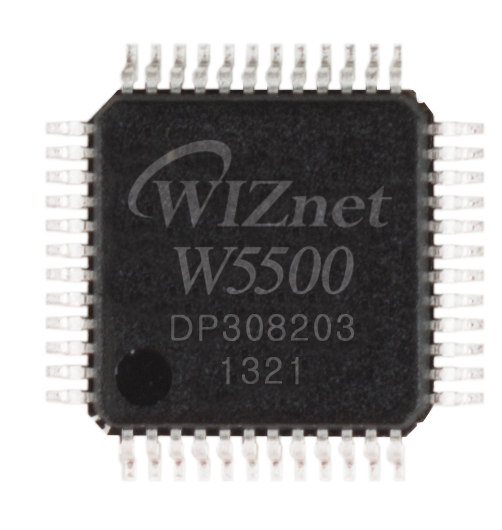
WIZnet - W5500
x 1

[소개] Tinkerforge 모듈러 플랫폼과 W5500 이더넷 솔루션
1. 모듈러 시스템의 산업용 구현
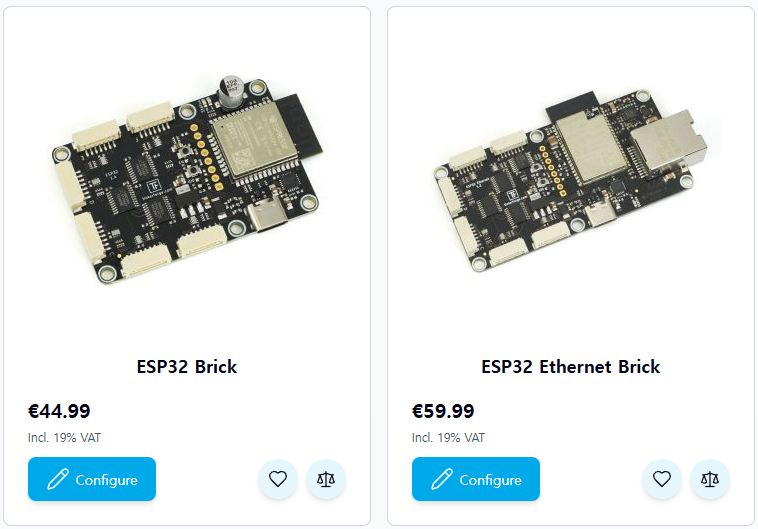
https://shop.tinkerforge.com/en/bricks.html
Tinkerforge는 복잡한 임베디드 시스템 설계를 규격화된 모듈로 분해하여, 개발자가 로우 레벨 회로 설계의 부담 없이 산업용 시스템을 구축할 수 있도록 돕는 모듈러 하드웨어 플랫폼을 지향합니다.
Brick 플랫폼의 역할: Tinkerforge의 완제품 라인업인 **WARP(전기차 충전기)**와 Energy Manager(스마트 그리드 솔루션) 내부에는 공통적으로 Brick 보드와 Bricklet이 핵심 컨트롤러로 탑재되어 있습니다. 즉, 이 플랫폼은 프로토타이핑 도구를 넘어 실제 양산 제품의 구동을 담당하는 **'검증된 엔진'**으로 기능합니다.
시스템 구성: 메인 연산을 담당하는 **Brick(주로 ESP32 기반)**과 특정 기능을 수행하는 **Bricklet(센서, 산업용 I/O 등)**이 7핀 케이블로 연결되는 직관적인 구조를 가집니다.
2. 기술적 핵심: W5500 기반 유선 백본(Backbone)
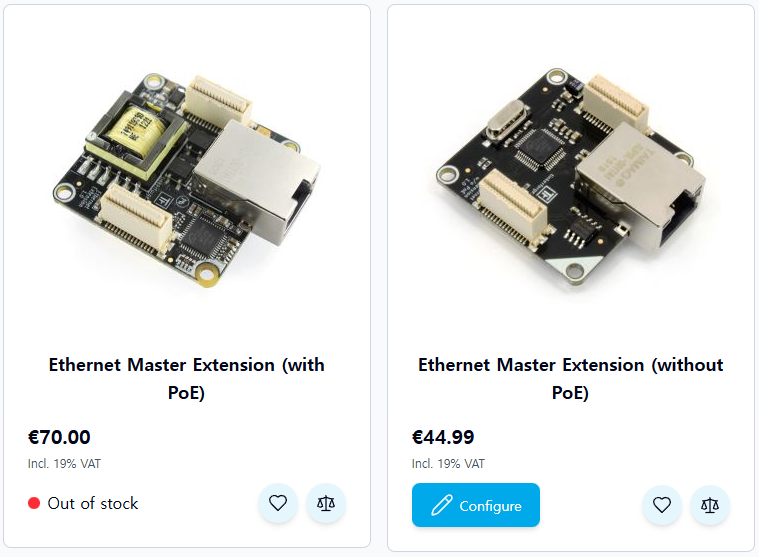
Tinkerforge 시스템에서 이더넷 연결은 단순한 통신 수단 그 이상의 의미를 갖습니다. 특히 전기차 충전기나 에너지 관리자와 같이 고신뢰성이 필수적인 환경에서 Wiznet W5500은 시스템의 유선 백본 역할을 수행합니다.
Hardwired TCP/IP의 이점: 소프트웨어 스택 부하 없이 하드웨어 레벨에서 네트워크 처리를 수행합니다. 이를 통해 메인 MCU인 ESP32가 충전 제어 로직이나 전력 모니터링 데이터 처리와 같은 핵심 작업에만 리소스를 집중할 수 있는 환경을 제공합니다.
산업 환경 안정성: 고전압 및 전자기 노이즈(EMI)가 상존하는 인프라 환경에서, 소프트웨어 기반 스택보다 하드웨어 기반의 W5500이 통신 무결성 확보 및 시스템 가용성 유지에 유리합니다.
3. Ethernet Master Extension: PoE와 Non-PoE 비교
Tinkerforge는 W5500을 활용하여 환경에 최적화된 두 가지 타입의 네트워크 인터페이스를 제공합니다.
항목 | Ethernet Master Extension | Ethernet Master Extension with PoE |
|---|---|---|
통신 칩셋 | Wiznet W5500 | Wiznet W5500 |
전원 공급 방식 | 별도 외부 전원 입력 필요 | Ethernet 케이블(PoE) 공급 |
표준 준수 | 10/100Base-TX | IEEE 802.3af (Class 0) |
기술적 가치 | 기본적인 고신뢰성 유선 통신 제공 | 배선 간소화 및 설치 편의성 극대화 |
특히 PoE 버전은 데이터 전송과 전원 공급을 단일 케이블로 통합함으로써, 실외 충전기 설치나 전원 확보가 어려운 공장 천장부의 센서 네트워크 구축 시 설계 복잡도를 획기적으로 낮춰줍니다.
4. 확장성: 사용자 어플리케이션을 위한 레퍼런스
Tinkerforge의 확장 모듈(Bricklets)의 각 모듈은 특정 산업 도메인의 문제를 해결하기 위한 **'기능 단위(Functional Unit)'**로 설계되어 있습니다.
주요 확장 모듈 및 어플리케이션 활용
Industrial Lineup (PLC 연동): 4-20mA 센서 인터페이스, RS485/Modbus 모듈 등은 기존 공정 장비를 이더넷망(W5500)으로 브릿지하여 **공장 설비 디지털화(Retrofit)**를 가능하게 합니다.
Environmental & Energy (상태 감시): 정밀 전력 측정(Energy Monitor), 공기 질(IAQ), 진동 센서 등은 스마트 그리드나 데이터 센터 환경 제어에 즉시 투입 가능한 레퍼런스를 제공합니다.
커스텀 서비스의 확장: 이러한 다양한 센서/모듈 레퍼런스는 위즈네트가 고객 맞춤형 솔루션을 기획할 때, "W5500 PoE + 특정 산업용 센서 + 맞춤형 펌웨어"를 결합한 통합 솔루션 패키지를 제안할 수 있는 강력한 토대가 됩니다.
1. 독일의 Tinkerforge 회사
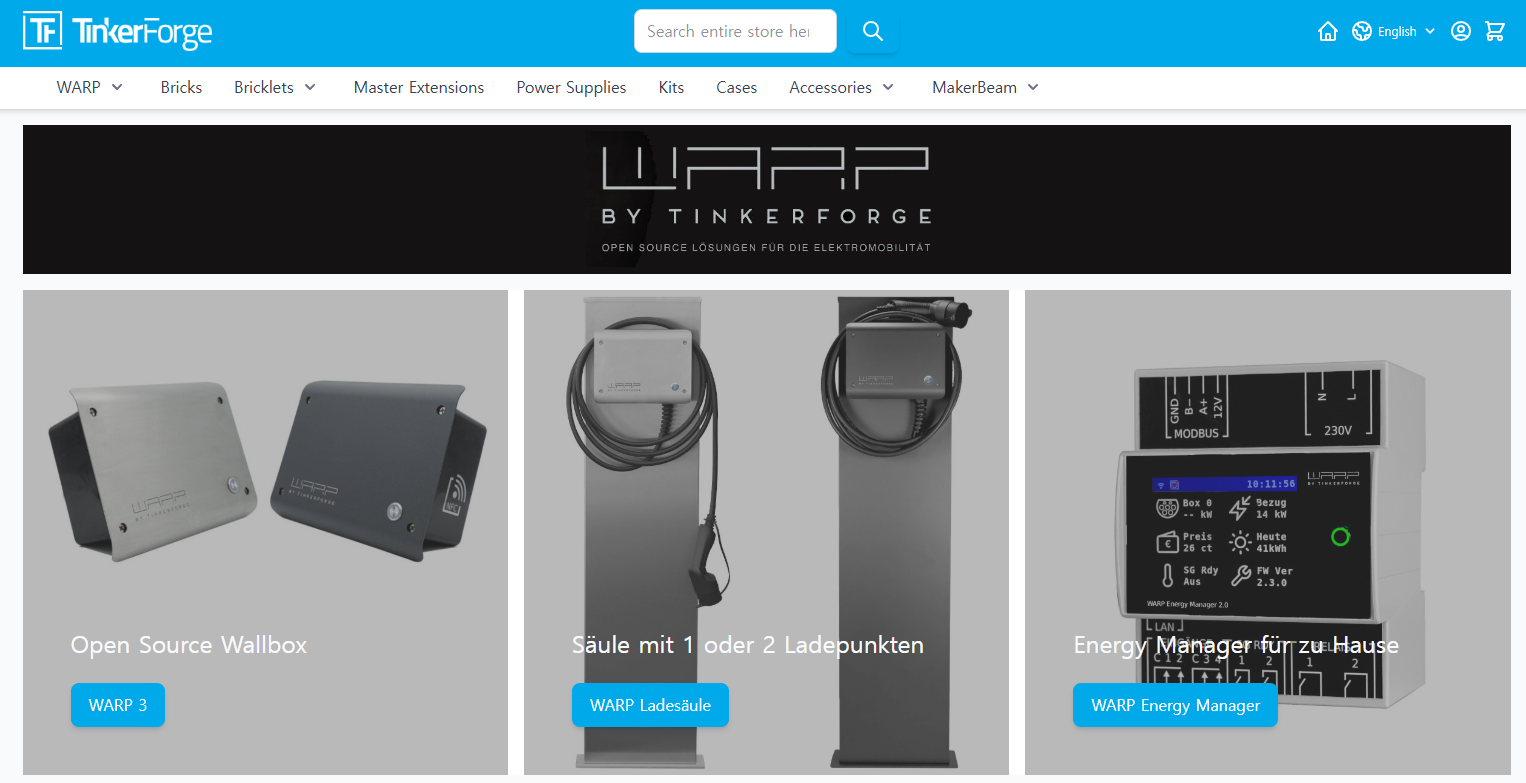
Tinkerforge의 비즈니스는 **'범용성'**과 **'수직 계열화'**라는 두 트랙 전략을 동시에 구사합니다.
컴포넌트 판매 (Horizontal): 다양한 기능의 Brick과 Bricklet을 개별 판매하여 연구소, 대학, 기업의 R&D 팀이 맞춤형 장비를 구성할 수 있게 합니다. 이는 전형적인 플랫폼 비즈니스의 형태를 띱니다.
완제품 솔루션 (Vertical): 자사의 모듈러 부품들을 조합하여 **WARP(전기차 충전기)**나 Energy Manager 같은 완제품을 시장에 공급합니다. 이는 "우리 부품으로 실제 양산 제품까지 만들 수 있다"는 강력한 기술적 증명(Proof of Concept)이 됩니다.
오픈 소스 생태계: 회로도(KiCad)와 펌웨어를 모두 공개함으로써 하드웨어 벤더 종속성(Lock-in)을 우려하는 산업계 고객들에게 투명성과 신뢰를 제공합니다.
2. 핵심 제품군 (Product Groups)
Tinkerforge의 하드웨어는 철저히 분산 제어 구조를 따릅니다.
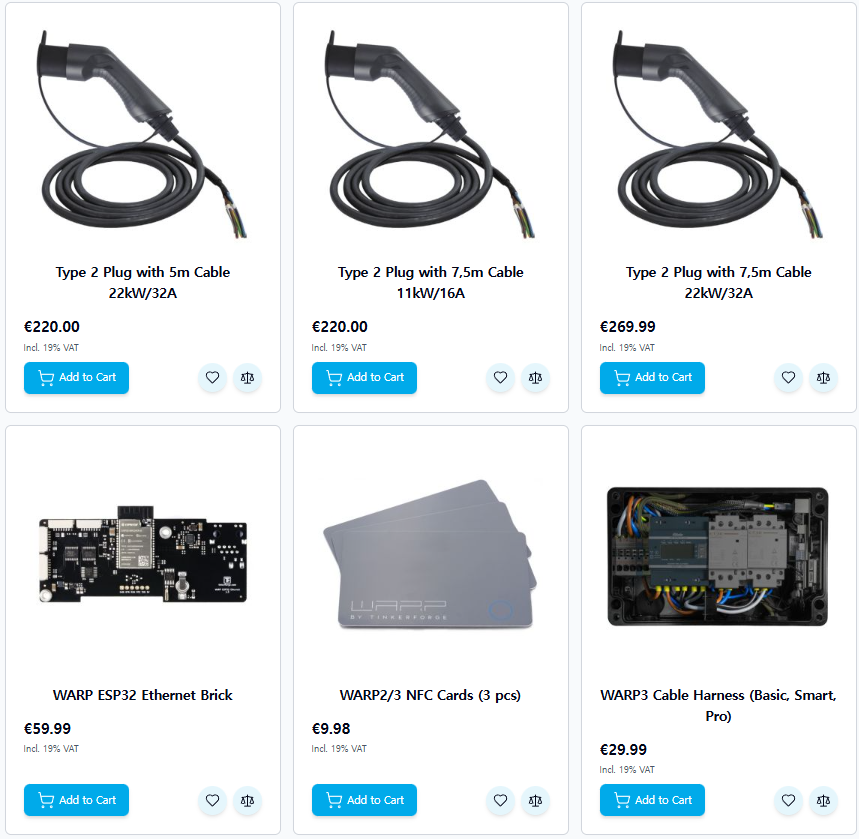
Mobility Charger systems
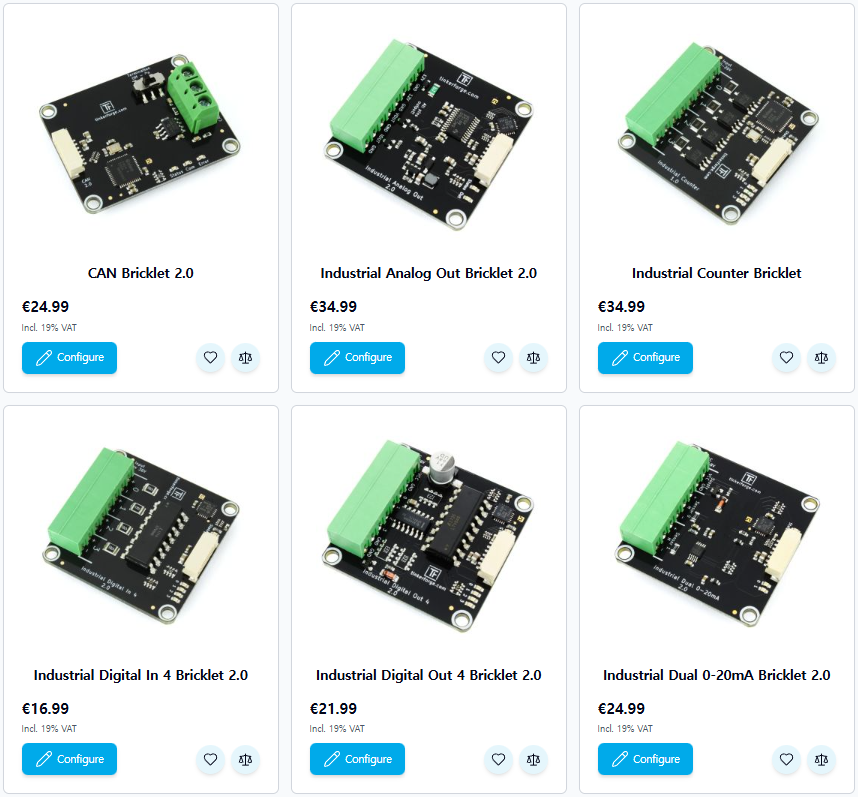
Industrial connecters
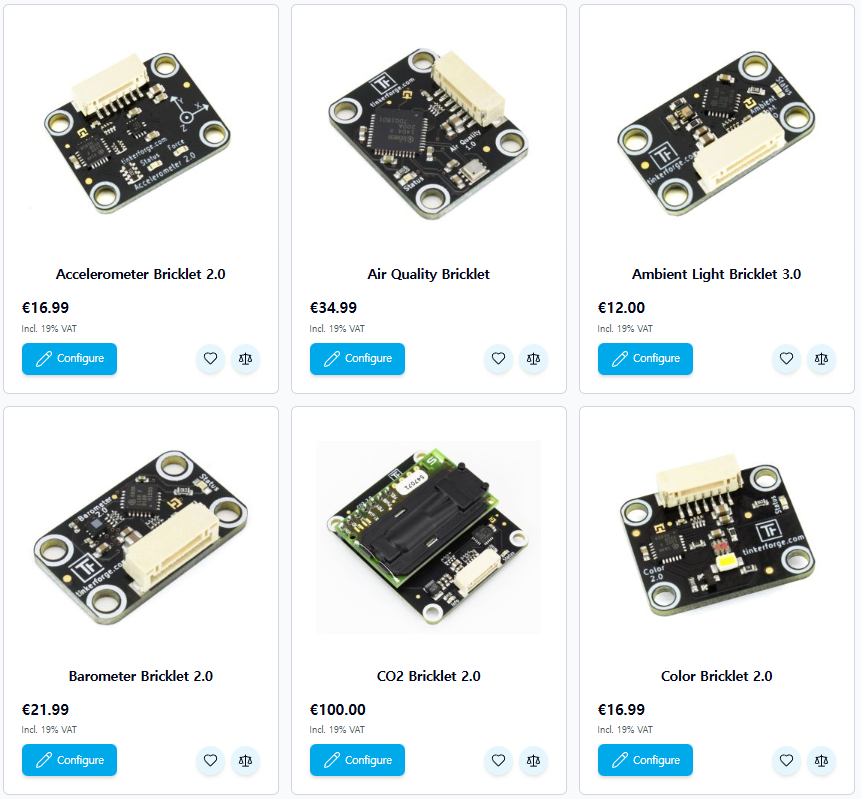
Sensor references
분류 | 특징 및 주요 제품 | 비고 |
|---|---|---|
Bricks (두뇌) | 시스템의 메인 컨트롤러. ESP32 Brick, Master Brick 등. | 스택(Stack) 구조로 확장 가능 |
Bricklets (감각/손) | 센서, 산업용 I/O, 디스플레이 등 70여 종의 기능 모듈. | 7핀 케이블로 즉시 연결 |
Extensions (연결) | Wiznet W5500 기반 이더넷(PoE), Wi-Fi 등 통신 인터페이스. | 시스템의 네트워크 백본 역할 |
Finished Products | WARP Wallbox(EV 충전기), Energy Manager. | 자사 모듈 기반의 실제 양산품 |
3. 비전 (Vision)
Tinkerforge가 지향하는 궁극적인 목표는 **"하드웨어 설계의 추상화와 규격화"**입니다.
산업용 레고(Industrial LEGO): 복잡한 임베디드 설계를 납땜과 회로 분석 없이도 '조립'만으로 완성할 수 있는 세상을 만드는 것입니다.
지속 가능한 하드웨어: 부품이 고장 나면 전체 보드를 버리는 것이 아니라, 해당 기능을 수행하는 Bricklet만 교체하면 되는 지속 가능한 인프라 구축을 지향합니다.
현실적인 IIoT(Industrial IoT): 클라우드에만 의존하는 소프트웨어 중심의 IoT가 아니라, 현장의 물리적인 센서와 장비를 가장 빠르고 견고하게 네트워크(W5500 등)에 연결하는 실행 중심의 IoT를 지향합니다.
[Introduction] Tinkerforge Modular Platform and the W5500 Ethernet Solution
1) Industrial Implementation of a Modular System
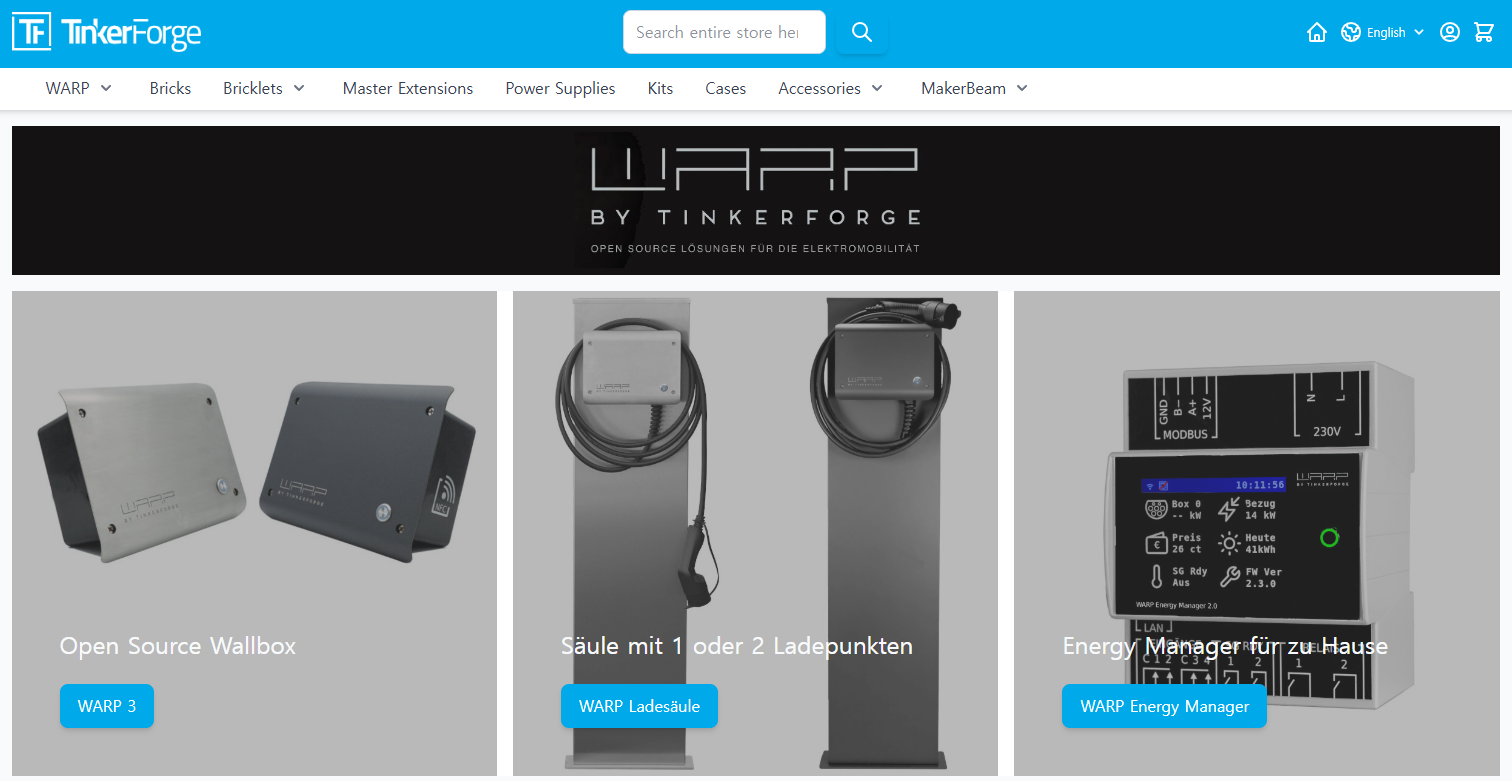
Tinkerforge is a modular hardware platform designed to break complex embedded system design into standardized building blocks—so developers can build industrial-grade systems without the burden of low-level circuit design.
Brick platform in real mass-produced products: In Tinkerforge’s finished product lineup—such as WARP (EV charger) and Energy Manager (smart grid solution)—the internal controller architecture commonly centers around Brick boards and Bricklets. In other words, the platform goes beyond prototyping and acts as a “proven engine” that drives real commercial products.
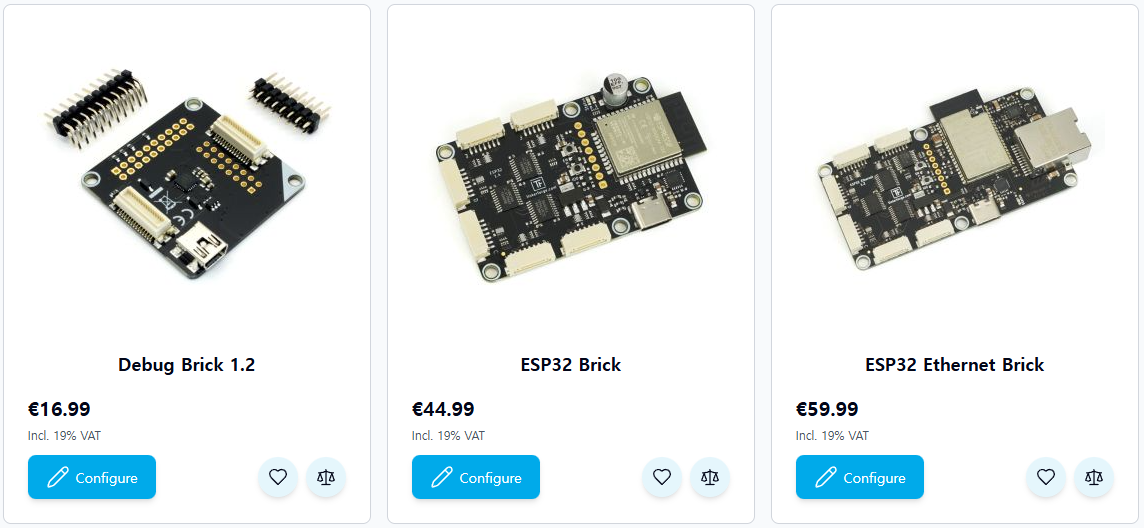
System architecture: A Brick (main compute, typically ESP32-based) connects to Bricklets (sensors, industrial I/O, etc.) via a straightforward 7-pin cable structure, enabling fast and intuitive system assembly.
Reference: https://shop.tinkerforge.com/en/bricks.html
2) Technical Core: W5500-Based Wired Backbone
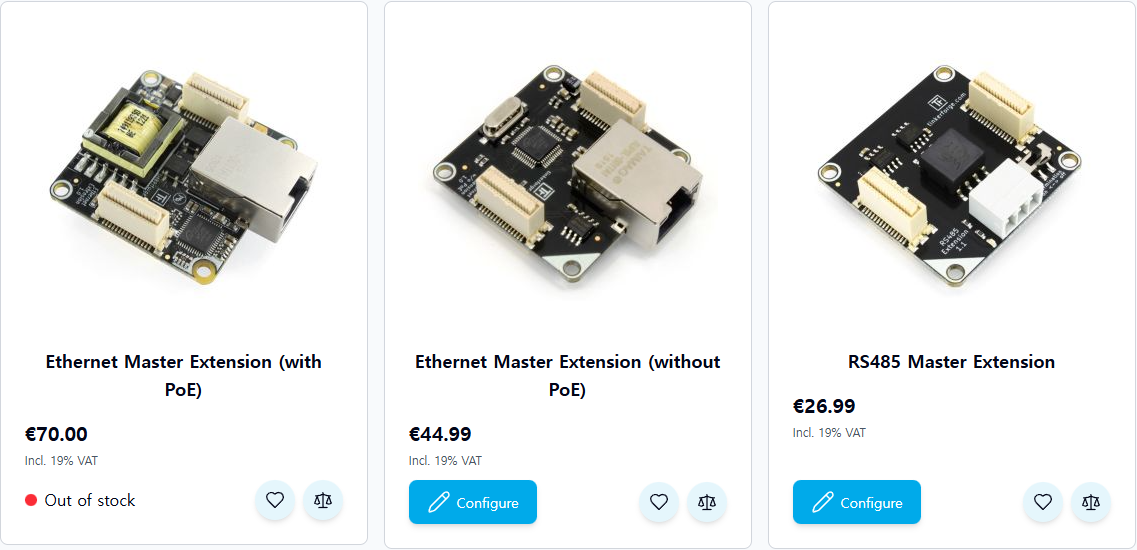
In Tinkerforge systems, Ethernet is more than just “a communication option.” In high-reliability environments—such as EV chargers and energy management infrastructure—the WIZnet W5500 functions as a robust wired backbone.
Benefits of Hardwired TCP/IP: Network processing is handled at the hardware level without relying on a software TCP/IP stack. This allows the main MCU (e.g., ESP32) to concentrate resources on mission-critical workloads like charging control logic and power monitoring data processing.
Stability in industrial environments: In infrastructure settings where high voltage and electromagnetic interference (EMI) are common, a hardware-based network approach (W5500) can be advantageous for maintaining communication integrity and overall system availability compared to software-stack-heavy designs.
3) Ethernet Master Extension: PoE vs. Non-PoE
Tinkerforge provides two Ethernet interface options based on the W5500, enabling selection based on installation constraints and deployment environment.
| Item | Ethernet Master Extension | Ethernet Master Extension with PoE |
|---|---|---|
| Network chipset | WIZnet W5500 | WIZnet W5500 |
| Power delivery | Requires separate external power input | Powered through Ethernet cable (PoE) |
| Standards compliance | 10/100Base-TX | IEEE 802.3af (Class 0) |
| Practical value | High-reliability wired connectivity | Simplified wiring and maximum installation convenience |
Why PoE matters: By combining data and power into a single cable, the PoE version dramatically reduces design and installation complexity—especially for outdoor EV charger deployments or for sensor networks mounted in hard-to-power locations (e.g., factory ceilings).
4) Scalability: Reference Architecture for User Applications
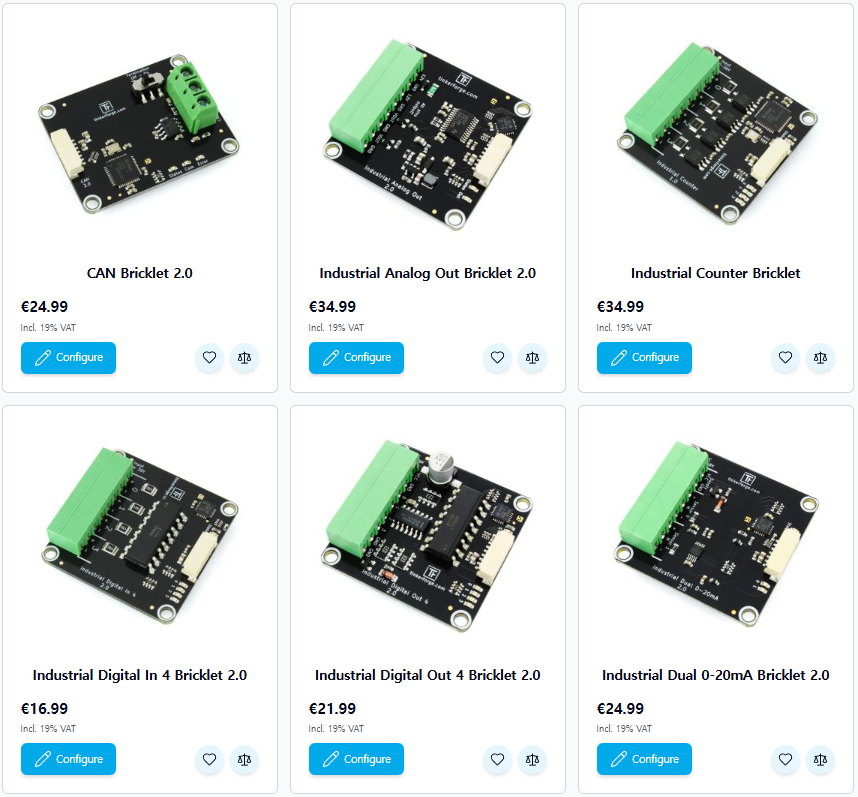
Each Tinkerforge expansion module (Bricklet) is designed as a “functional unit” to solve real problems in specific industrial domains.
Examples of key Bricklets and application references
Industrial lineup (PLC integration): Modules such as 4–20 mA sensor interfaces and RS485/Modbus Bricklets enable bridging legacy process equipment onto an Ethernet network (via W5500), supporting factory retrofit and digital transformation.
Environmental & energy monitoring (condition monitoring): Precision power measurement (Energy Monitor), air quality (IAQ), vibration sensors, etc., provide immediately deployable references for smart grid or data center environment control.
Value for custom solution packaging: These diverse module references can serve as a strong foundation for WIZnet solution planning—enabling integrated proposals like:
“W5500 PoE + industrial sensor module + custom firmware” as a complete, deployable package.
Company Overview: Tinkerforge (Germany)
1) Dual-Track Strategy: Horizontal + Vertical
https://shop.tinkerforge.com/en/
Tinkerforge’s business strategy effectively runs on two tracks—universality and vertical integration—at the same time.
Component sales (Horizontal): Bricks and Bricklets are sold individually, enabling labs, universities, and corporate R&D teams to build tailored equipment—typical of a platform business model.
Finished solutions (Vertical): Tinkerforge also ships finished products like WARP and Energy Manager built from its own modular components—serving as a strong proof point that “our modules can power real mass-produced products.”
Open-source ecosystem: By publicly releasing both hardware design files (e.g., KiCad schematics) and firmware, Tinkerforge provides transparency and trust for industrial customers concerned about vendor lock-in.
2) Core Product Groups
Tinkerforge hardware follows a thoroughly distributed control architecture.
| Category | Characteristics / Key Products | Notes |
|---|---|---|
| Bricks (Brains) | Main controllers such as ESP32 Brick, Master Brick | Expandable via stacking |
| Bricklets (Senses / Hands) | ~70+ functional modules: sensors, industrial I/O, displays, etc. | Quick connection via 7-pin cable |
| Extensions (Connectivity) | Ethernet (PoE) based on WIZnet W5500, Wi-Fi, etc. | Acts as the system network backbone |
| Finished Products | WARP Wallbox (EV charger), Energy Manager | Mass-produced products built on the modular platform |
3) Vision
Tinkerforge ultimately aims for “hardware design abstraction and standardization.”
Industrial LEGO: A world where complex embedded systems can be completed by assembly—without soldering, circuit debugging, or deep hardware redesign.
Sustainable hardware: Instead of discarding an entire board when something fails, you replace only the functional module (Bricklet), enabling more sustainable infrastructure.
Practical IIoT (Industrial IoT): Not a cloud-only, software-centric IoT narrative—but an execution-driven approach focused on connecting real physical sensors and equipment to a robust network (e.g., W5500) as quickly and reliably as possible.
Q1. What’s the difference between a Brick and a Bricklet?
A Brick is the main compute/controller board (often ESP32-based), while a Bricklet is a plug-in module that provides a specific function such as sensing, industrial I/O, or interface expansion.
Q2. Why does the 7-pin cable architecture matter?
The 7-pin cable approach makes systems easy to assemble, expand, and maintain, enabling fast module additions and replacements—useful for industrial deployments where serviceability matters.
Q3. What role does the WIZnet W5500 play in Tinkerforge systems?
The WIZnet W5500 serves as a reliable wired Ethernet backbone for Tinkerforge systems—especially important in high-availability applications like EV charging and energy management.
Q4. What are the key advantages of Hardwired TCP/IP (W5500)?
Hardwired TCP/IP offloads network processing to hardware, which reduces software stack overhead and allows the main MCU (e.g., ESP32) to focus on mission-critical control and data processing.
Q5. Why is hardware-based TCP/IP beneficial in industrial environments?
In environments with high voltage and EMI, hardware offload solutions like W5500 can be advantageous for communication integrity and system availability compared to software-heavy networking approaches.


