


QGate Browser Flasher for ESP32-S3 and W5500 Ethernet
A Web Serial flasher for QGate ESP32-S3 firmware with W5500 Ethernet, MQTT, NTP, and OTA evidence.
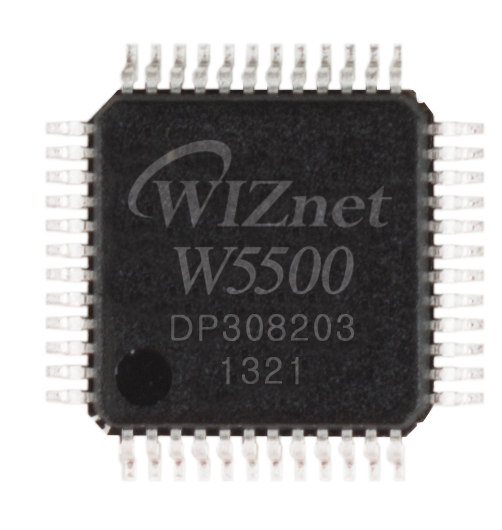
WIZnet - W5500
x 1


mqtt - MQTT
x 1
Browser Flashing for a W5500-Based QGate Device
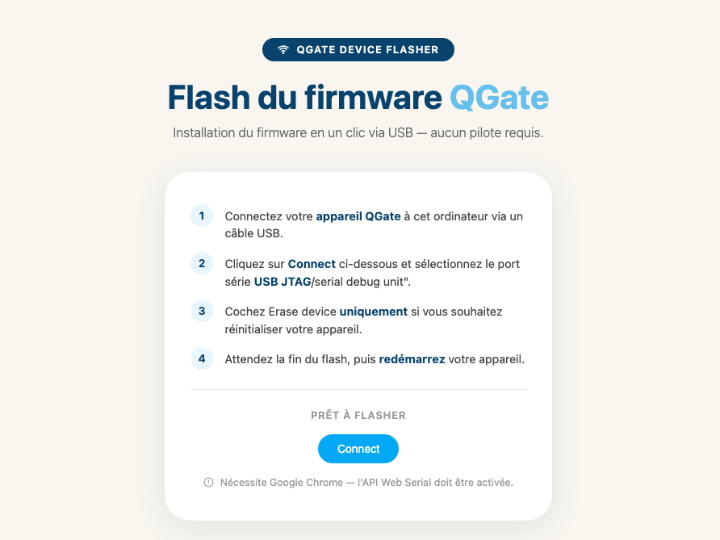
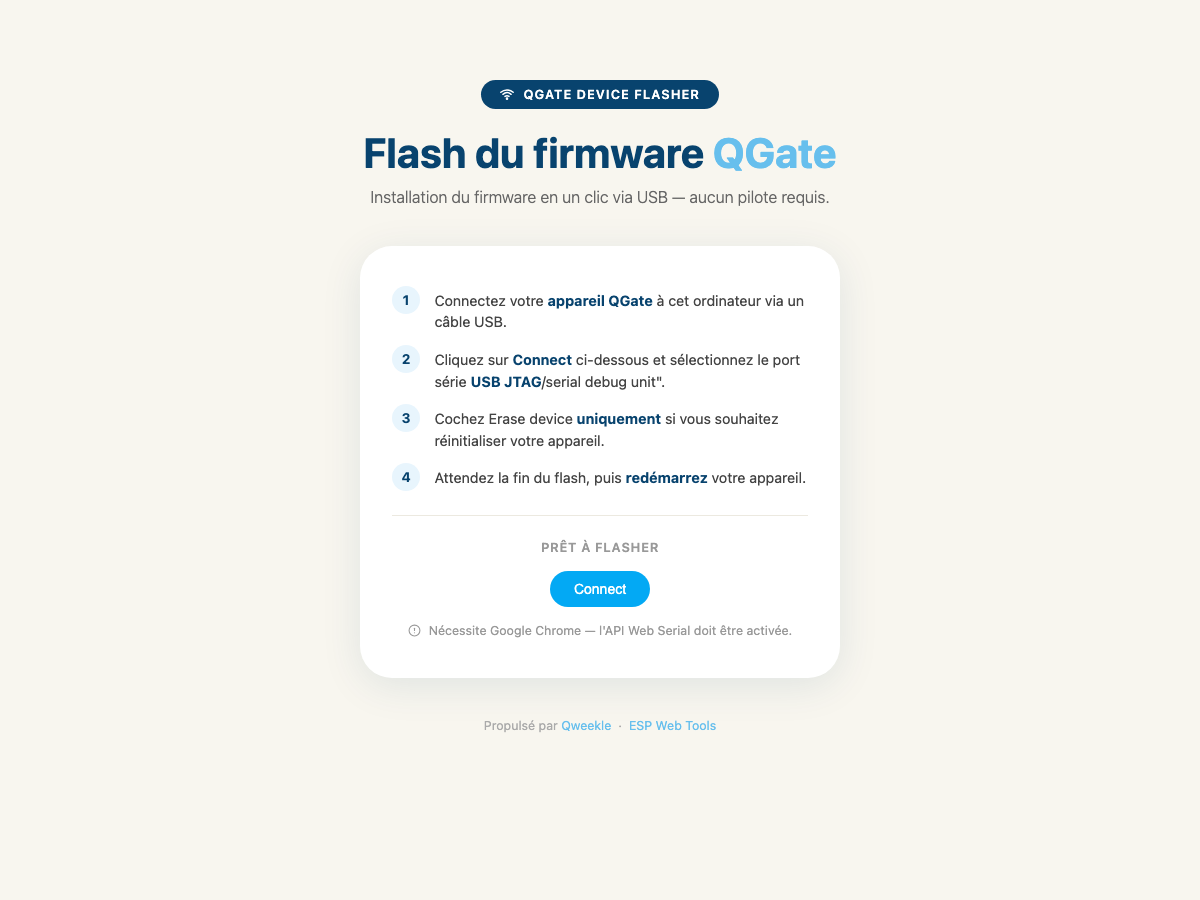
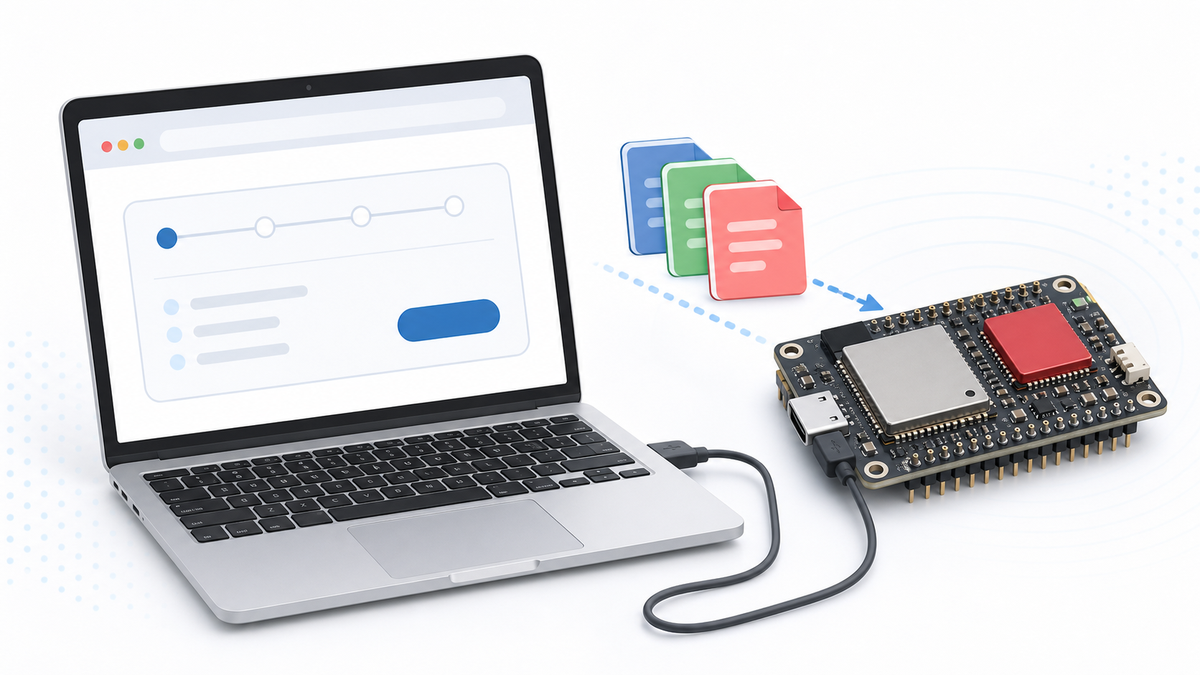
QGate ESP32 Flash is a public browser-based firmware installer for a QGate device built around ESP32-S3 firmware and W5500 Ethernet evidence. Instead of asking users to install a desktop flashing tool, the project hosts a simple GitHub Pages interface that uses ESP Web Tools and the browser Web Serial API to write bootloader, partition, boot app, and firmware binaries over USB. For WIZnet, the technically useful part is not the web UI alone. The release files show a W5500-based runtime firmware flow with MQTT, NTP, TLS, OTA update checks, and explicit W5500 socket-buffer tuning.
The repository is small by design. The default branch contains index.html, style.css, flash.js, manifest.json, a firmware changelog, and the binary images needed for flashing. It does not include the full firmware source tree, schematic, PCB files, or a PlatformIO project. That makes this project best understood as a release and installation package for QGate hardware rather than a complete open-source firmware reference.
ESP Web Tools Manifest for ESP32-S3
The flasher uses the ESP Web Tools custom element from unpkg.com and points it at a local manifest. That manifest identifies the target as ESP32-S3 and lists the binary parts to write at fixed offsets.
manifest.json:
{
  "name": "QGate Firmware",
  "version": "0.2.2",
  "new_install_prompt_erase": true,
  "builds": [
    {
      "chipFamily": "ESP32-S3",
      "parts": [
        { "path": "bootloader.bin", "offset": 0 },
        { "path": "partitions.bin", "offset": 32768 },
        { "path": "boot_app0.bin", "offset": 57344 },
        { "path": "firmware.bin", "offset": 65536 }
      ]
    }
  ]
}
The UI is written in French and gives the user four steps:
connect the QGate device over USB, choose the USB JTAG or serial debug port, optionally erase the device, then wait for the flash process and reboot. A small JavaScript file checks browser compatibility and hides driver choices that do not apply to the Waveshare ESP32-S3 CH343 USB serial path.
W5500 Ethernet Evidence in the Runtime Firmware
The public repo does not expose the QGate firmware source, so the WIZnet assessment must stay close to the available evidence. The strongest evidence is in FIRMWARE_CHANGELOG.md: version 0.2.1 says that ETHERNET_LARGE_BUFFERS with MAX_SOCK_NUM=2 was enabled to increase the W5500 socket RX buffer from 2 KB to 8 KB. That is a very specific W5500 socket-buffer note and points to a firmware design that depends on the W5500 Ethernet controller, not only a generic network label.
Additional evidence appears in firmware.bin strings. The binary includes references to WIZnet, Ethernet MAC status, DHCP, NTP synchronization, MQTT connection states, TLS client behavior, OTA download handling, and QGate MQTT topics. These strings match the changelog, which describes a connection state machine moving through link detection, DHCP, NTP, MQTT, and online states.
The practical limitation is that the article cannot point to public socket, send, recv, Arduino Ethernet client, or register-level code. The W5500 evidence is strong enough to describe Ethernet support in the released firmware, but not enough to present the repository as a reusable W5500 driver or full firmware reference.

OTA-Aware Firmware Distribution
The release notes show that QGate firmware is not only flashed once by USB. Version 0.2.0 added a boot-time OTA check against the GitHub Pages manifest, HMAC-SHA256 signature verification, firmware SHA256 checking, domain restrictions for firmware URLs, OTA timeouts, and anti-rollback behavior. Version 0.2.2 improved the connection state machine and MQTT reconnect behavior. A later dev branch includes 0.2.3 work around HID scan fragments and debug publishing, but the default public branch remains at manifest version 0.2.2.
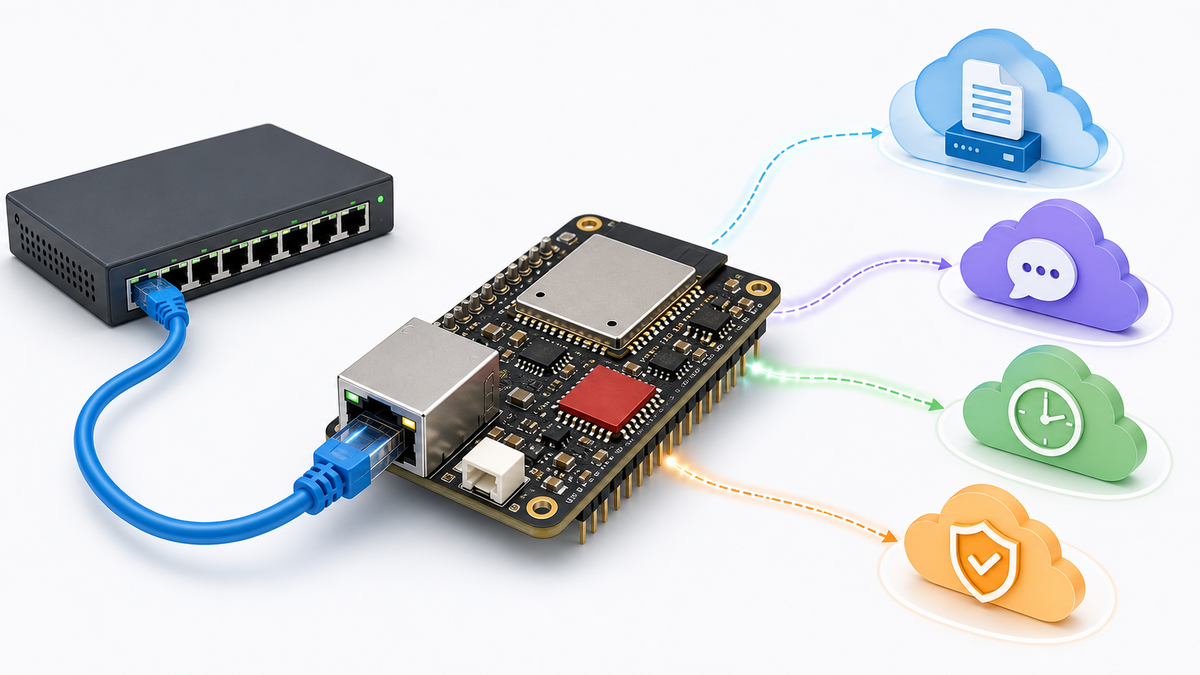
This makes the repository useful as a release-flow example: USB installation through a browser, then network-aware firmware that can check hosted metadata and apply updates. For small deployments, that can reduce setup friction because an operator only needs Chrome and a USB cable for initial provisioning.
Practical Limits
The main limit is visibility. There is no firmware source, schematic, BOM, W5500 pin map, or hardware assembly document in the repository. The W5500 and MQTT behavior is supported by changelog and binary evidence, not by inspectable source code. For a maker article, that means the project should be presented as a practical installer and firmware release package, not as a reusable W5500 driver example.
FAQ
1.What does this project use the W5500 for?
The runtime firmware evidence points to W5500 Ethernet for network connectivity. The changelog specifically mentions W5500 socket RX buffer tuning, and the firmware binary contains WIZnet, Ethernet, DHCP, NTP, MQTT, and OTA strings.
2. What firmware or library does it depend on?
The web installer depends on ESP Web Tools and the browser Web Serial API. The firmware binary strings point to Arduino ESP32 framework paths, SPI, WIZnet, SSLClient, MQTT, DHCP, NTP, and OTA components, but the full build configuration is not published.
3. Can this be reused for another ESP32-S3 product?
The browser flashing pattern can be reused if another project publishes compatible ESP32-S3 binary images and an ESP Web Tools manifest. The QGate runtime firmware itself is not directly reusable from this repo because its source and hardware configuration are not included.


