


How Does MoE Put MIDI Routing on a WIZnet Ethernet LAN?
MoE firmware turns Arduino/WIZnet Ethernet Shield nodes into MIDI-over-LAN devices with UDP beacons, channel subscriptions, and PC-side routing.
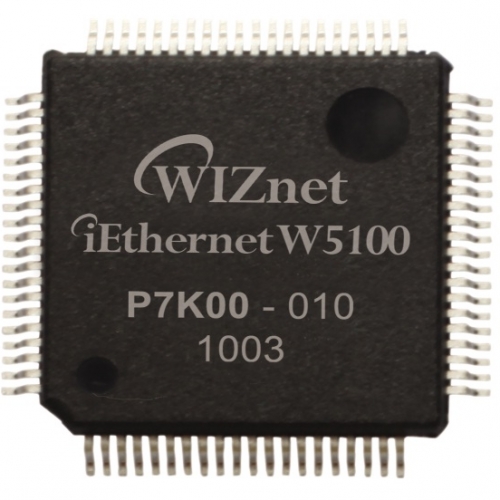
WIZnet - W5100
x 1

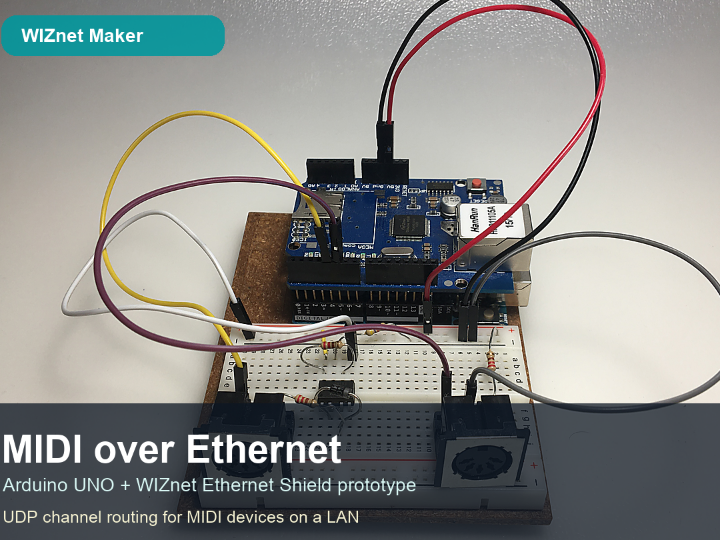
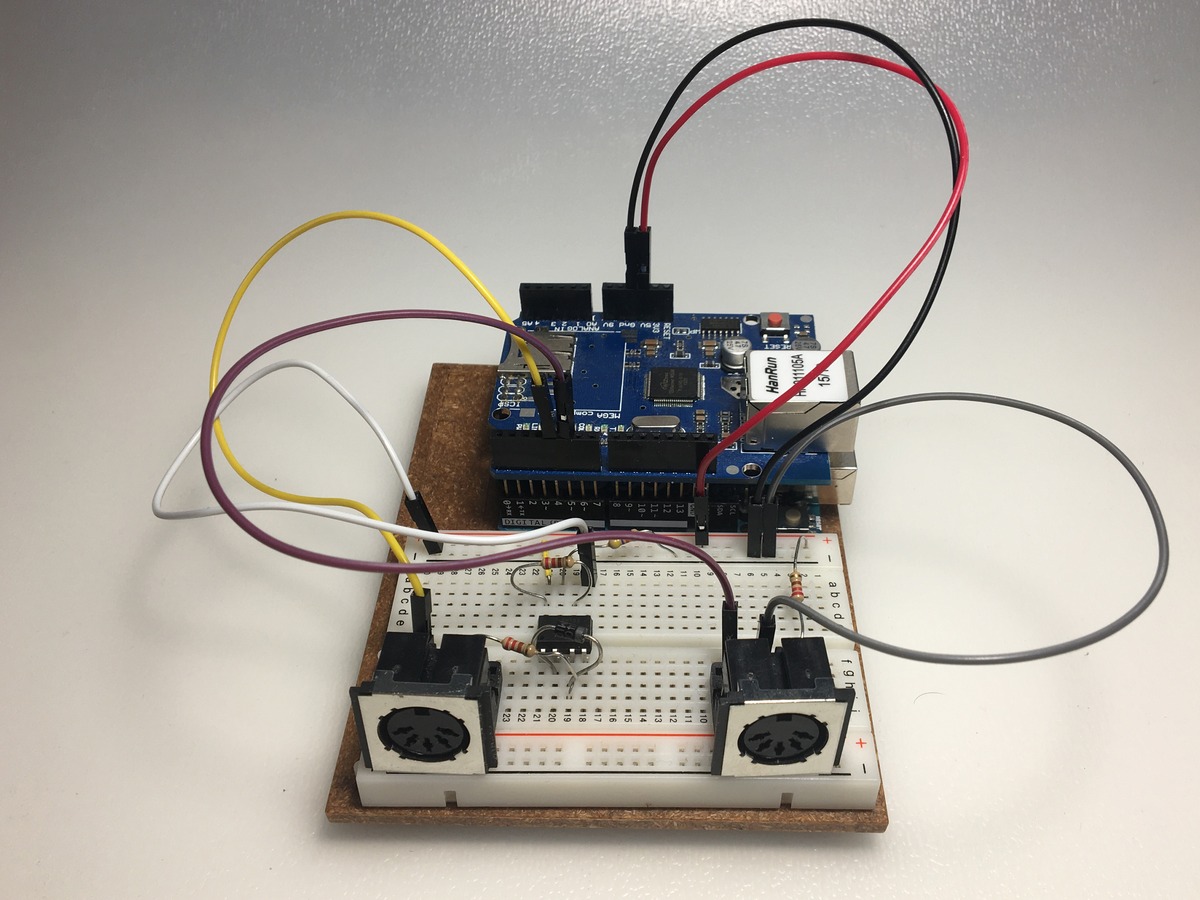
WIZnet Ethernet Shield class hardware used in the Arduino UNO MoE prototype photo and README. The firmware uses Arduino EthernetUDP for local UDP MIDI routing.
Overview
MoE firmware is a small but useful bachelor-project repository by Vojtěch Lukáš. The repository defines MoE as MIDI over Ethernet: a way to adapt MIDI devices for use inside a local network, while adding channel-level routing between devices.
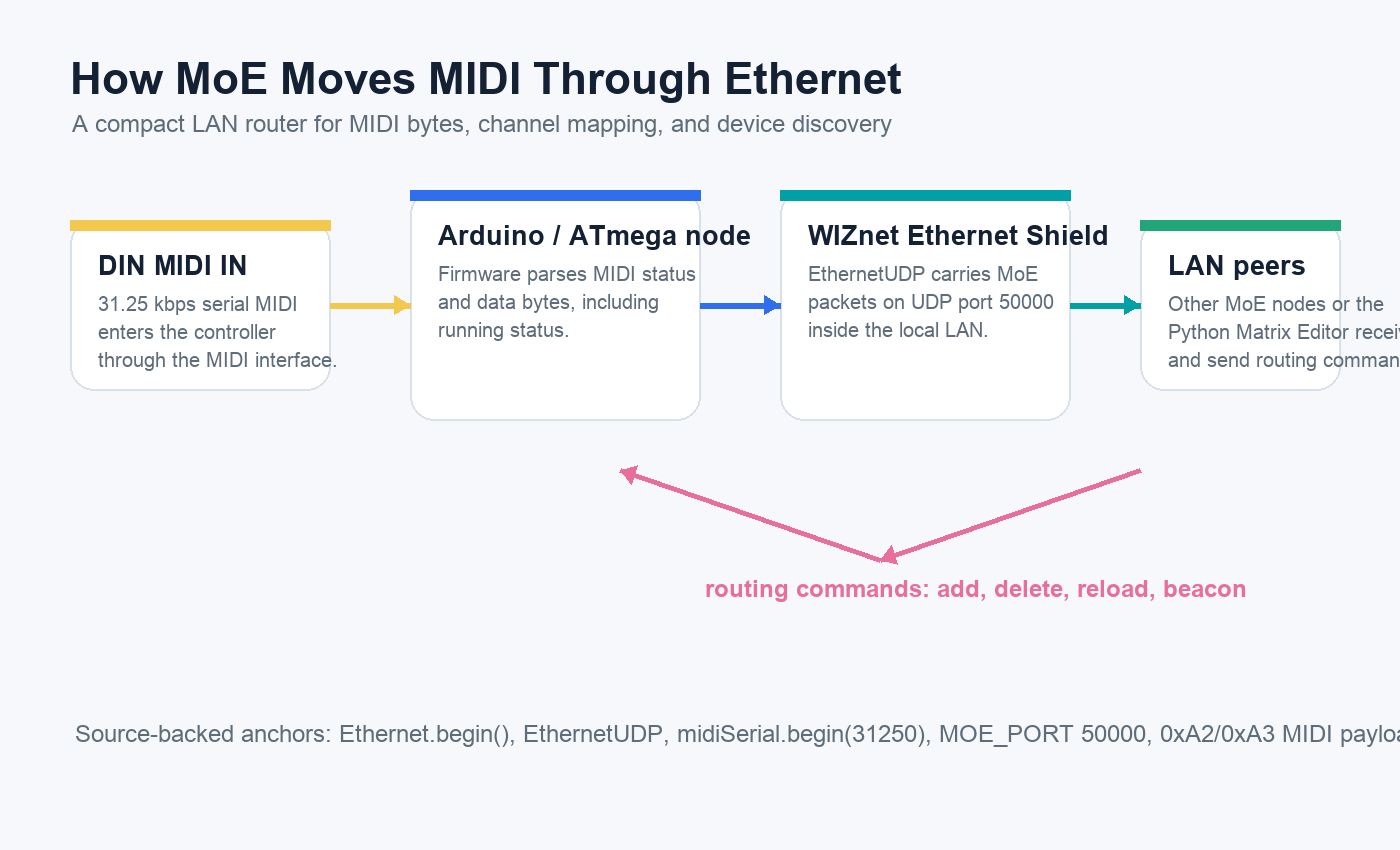
Direct answer: MoE turns an Arduino-class controller with a WIZnet Ethernet Shield into a LAN-connected MIDI node. The firmware receives MIDI bytes from a DIN-style serial interface, wraps them into small UDP packets, and routes them to other MoE devices based on subscription rules.
The source README says the prototype was built on an Arduino UNO with a WizNet Ethernet Shield. The same README also says the final custom PCB used an ATmega3208 and MegaCoreX, but no photograph of that final board was taken. For WIZnet Maker readers, the concrete evidence is the photographed prototype and the firmware's use of Arduino EthernetUDP.
This is not a large open-source platform with many contributors. As of July 9, 2026, the firmware repository showed 0 stars, 0 forks, one main branch, no releases, and no license file. Its value is different: it is an inspectable embedded example of how a maker can bridge a legacy music-control interface into wired Ethernet without relying on Wi-Fi or a full computer at each MIDI endpoint.
What Problem Is It Solving?
Traditional MIDI 1.0 over a DIN cable is simple and durable, but it is not naturally a flexible LAN protocol. A keyboard, controller, sound module, or effects unit can exchange compact serial MIDI messages, yet cable routing and channel routing quickly become awkward when several devices need to talk in different directions.
MoE addresses that practical studio and installation problem in a direct way:
- A local MIDI device connects to one MoE node.
- The MoE node watches incoming MIDI bytes.
- The node sends selected MIDI messages through UDP on the LAN.
- Another MoE node receives the packet and writes the bytes back to its MIDI output.
- A PC-side Matrix Editor configures which MIDI channel should go to which node and destination channel.
The important idea is not just "MIDI through Ethernet". The interesting part is that the project adds a small routing database, so the network can behave like a configurable MIDI patchbay instead of a fixed cable replacement.
Maker and Project Context
The repository owner profile identifies Vojtěch Lukáš as an embedded software engineer, with GitHub location shown as Brussels. The firmware repository was created on November 3, 2020, and its original commit history runs through a "Final Commit" on December 10, 2020. Later README updates in 2022 and 2024 clarified the project description, prototype photo, final-board note, and links.
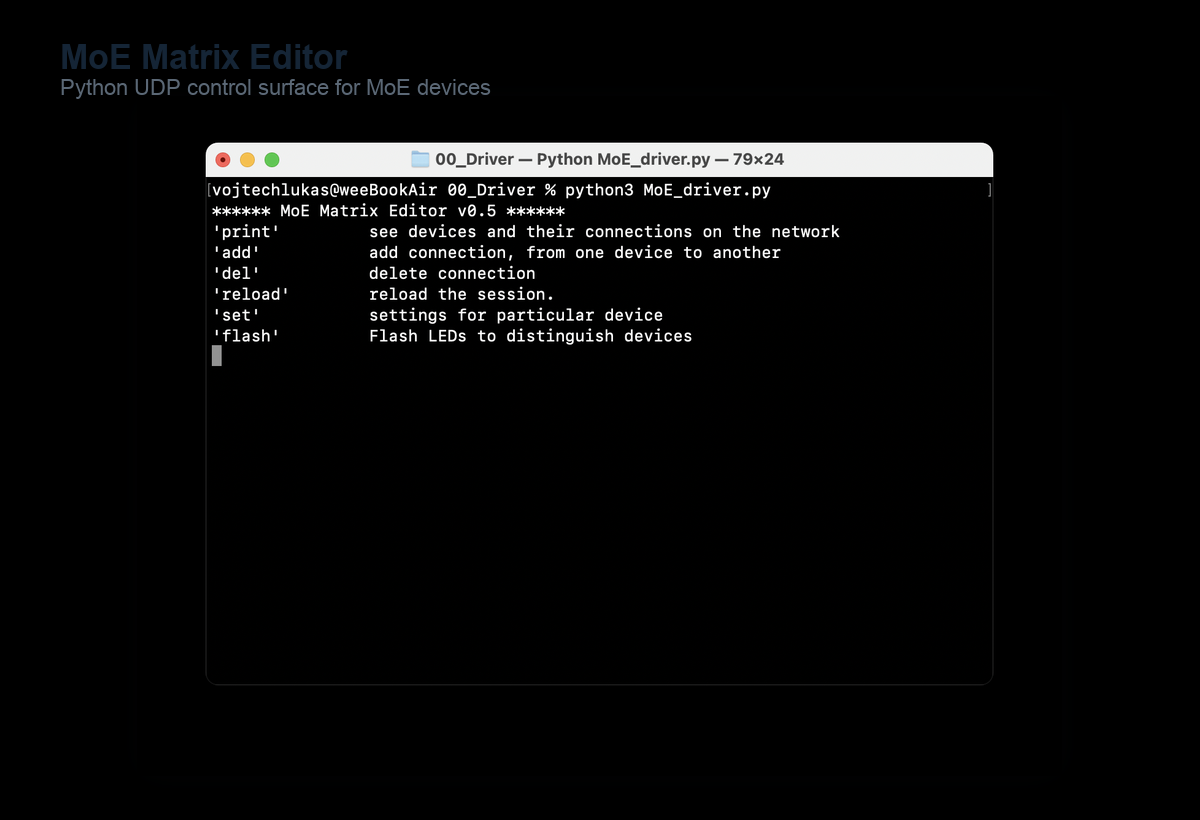
The related control tool, MoE Network Driver, was created on December 7, 2020. It is a Python command-line Matrix Editor for controlling MoE devices on the LAN. That companion repository matters because the firmware alone does not show the whole user experience. The driver discovers devices, prints routing subscriptions, and sends add/delete/reload commands.
How the Firmware Works
The firmware is compact: MoE_Controller.h, MoE_Controller.cpp, and one Arduino sketch. The sketch does three things in setup():
- Starts serial debug output at 9600 baud.
- Initializes Ethernet and MIDI.
- Sends a LAN beacon.
The loop then continuously calls handleMIDI(), handleUDP(), and maintain().
The Ethernet bring-up path is straightforward. The firmware loads a MAC address from EEPROM, tries DHCP with Ethernet.begin(_myMac), checks for missing hardware or cable link status, and falls back to 192.168.1.100 if DHCP fails. It starts an EthernetUDP listener on UDP port 50000.
The MIDI side uses SoftwareSerial and starts it at 31250 baud, the classic MIDI serial rate. Incoming MIDI bytes are collected into 3-byte or 2-byte forms. The 2-byte path supports MIDI running status, where repeated status bytes can be omitted after the receiver already knows the previous status context.
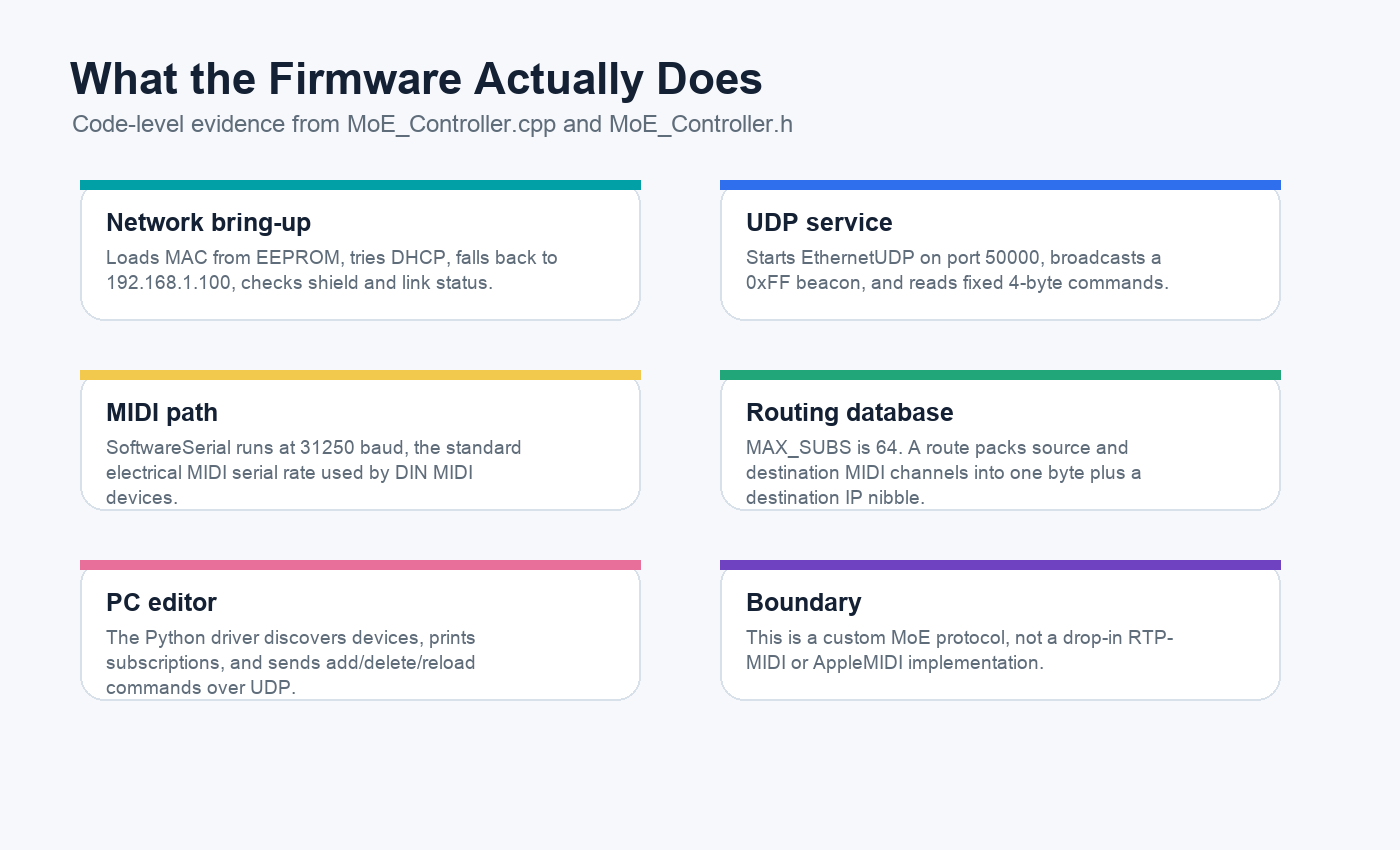
MoE_Controller.cpp, MoE_Controller.h, and the Python driver.
The Custom MoE Protocol
MoE does not appear to implement standard RTP-MIDI or AppleMIDI. That distinction is important. RFC 6295 defines an RTP payload format for MIDI and includes packet-loss recovery tools. MoE is much smaller and more local: it uses short custom UDP messages for discovery, route editing, and MIDI byte delivery.
The firmware uses fixed 4-byte UDP reads through a slightly edited EthernetUDP library. The header comment explicitly says the library was modified to add readByte(), which is one reason the firmware cannot be treated as a copy-paste Arduino build without the matching local library change.
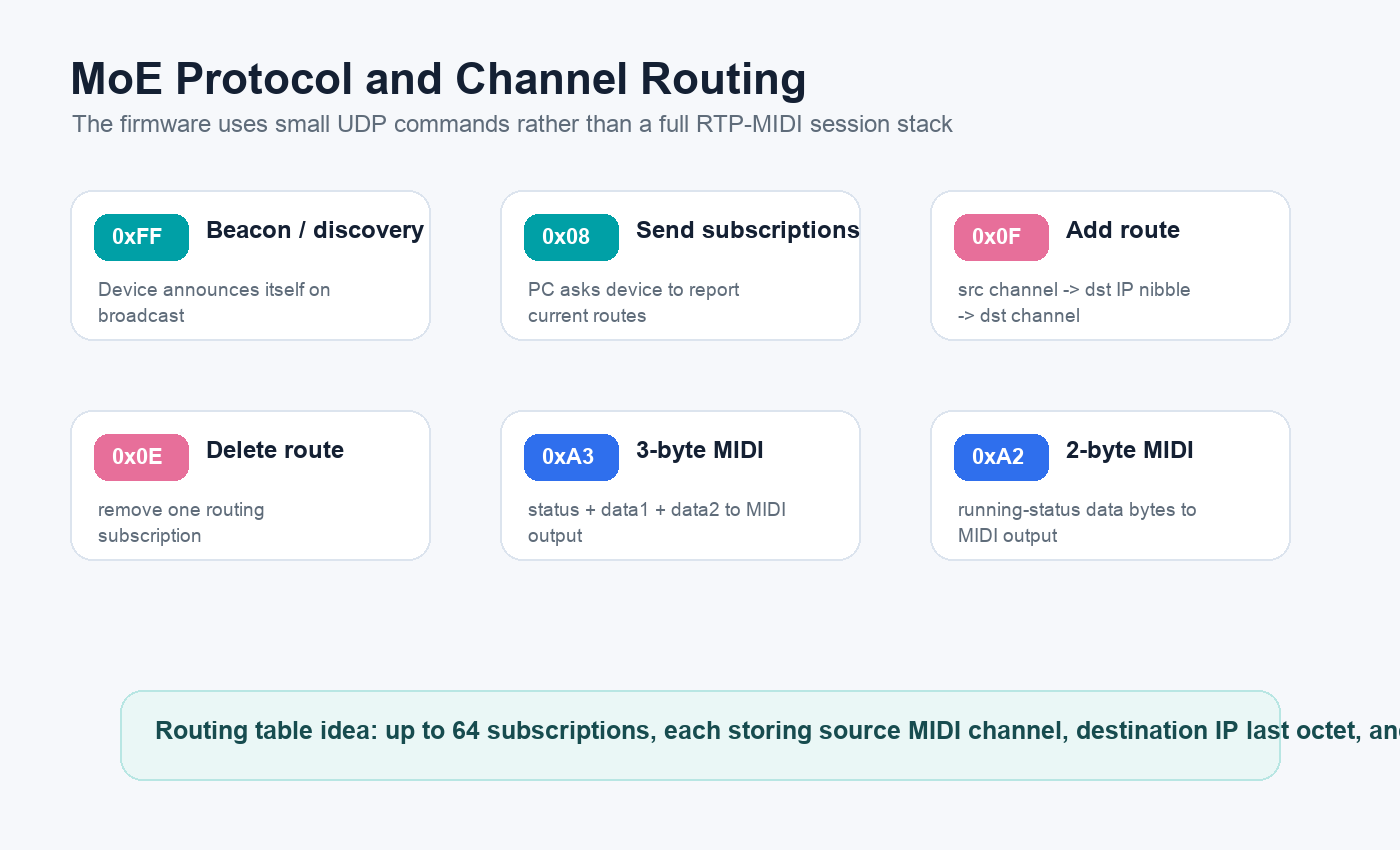
The command structure is easy to inspect:
0xFFis used as a beacon/discovery pattern.0x08asks a device to send its subscription table.0x0Fadds a subscription.0x0Edeletes a subscription.0xA3carries a 3-byte MIDI message.0xA2carries a 2-byte running-status MIDI message.
The routing table supports up to 64 subscriptions. Each subscription stores a source channel, a destination IP last-octet value, and a destination MIDI channel. In plain terms, it can express rules like: "take MIDI channel 1 arriving here, send it to the MoE device ending in .125, and rewrite it as MIDI channel 3."
Role of the WIZnet Ethernet Shield
WIZnet role: In the public prototype, the WIZnet Ethernet Shield is the wired LAN interface that lets an Arduino-class MIDI controller send and receive UDP packets on the local network.
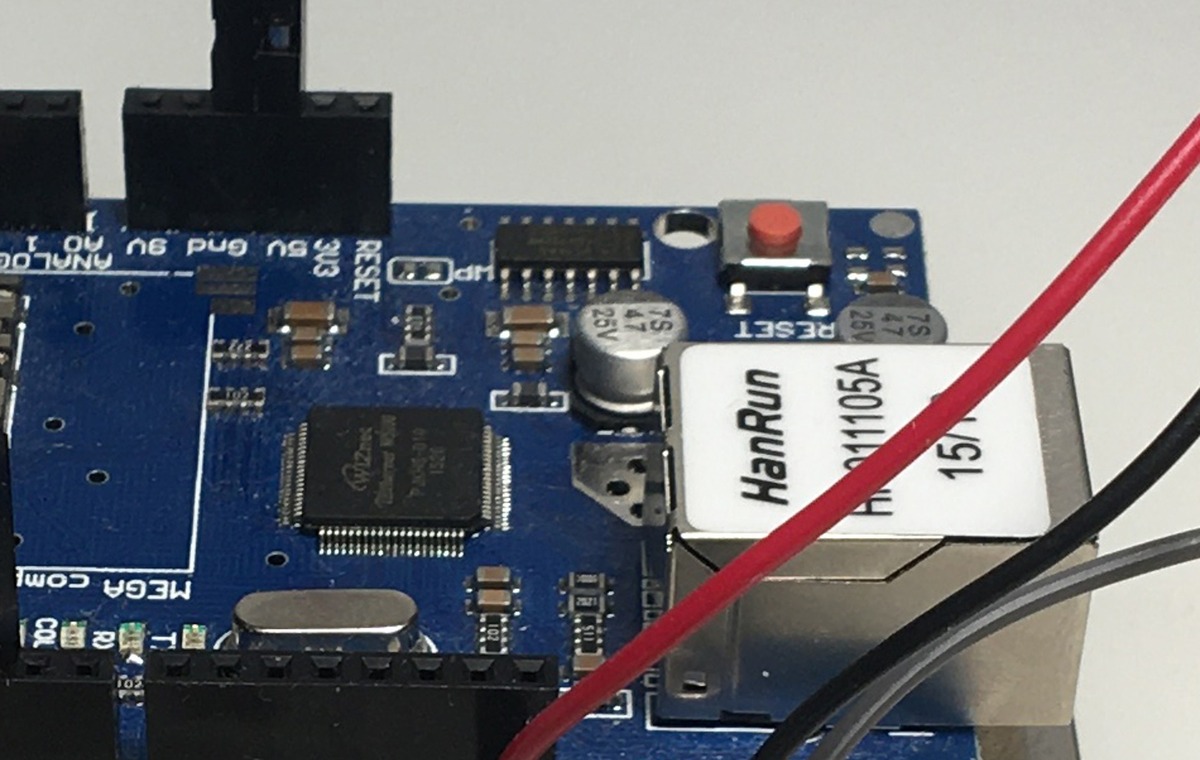
The README names the prototype hardware as an Arduino UNO with a WizNet Ethernet Shield. The source photo also shows a WIZnet-marked Ethernet controller on the Arduino-style shield. Because the README does not spell out the exact chip part number, this post avoids claiming more than the source proves. Visually and historically, this shield class aligns with W5100-era Arduino Ethernet Shield hardware, but the safer source-backed wording is WIZnet Ethernet Shield prototype.
From a system-design view, WIZnet is doing three useful jobs here:
- It gives the 8-bit Arduino prototype a wired Ethernet interface.
- It lets the firmware use Arduino
EthernetUDPfor local packet transport. - It keeps the MIDI routing node independent from a PC once routes are configured.
This is a good WIZnet Maker example because the chip is not being used for a generic web server demo. It is part of a real-time-ish control workflow where small musical-control messages need deterministic local delivery, low setup friction, and a stable wired network path.
Why This Is Different from Typical MIDI-over-IP Projects
Many MIDI networking projects focus on standard interoperability: RTP-MIDI, AppleMIDI, ipMIDI, or DAW integration. Those are valuable when a device needs to appear as a network MIDI endpoint to existing software.
MoE takes a simpler maker route. It creates its own compact LAN protocol and pairs it with a Python Matrix Editor. That makes the project less universal, but easier to understand:
- No session negotiation layer is visible in the firmware.
- The packet structure is short and readable.
- Channel routing is explicit in the code.
- The PC editor is simple enough to inspect in a single Python file.
That tradeoff is the article's main educational value. MoE is not trying to replace RTP-MIDI. It shows how a maker can build a purpose-built wired MIDI patchbay using an Arduino-style MCU, a WIZnet Ethernet shield, UDP, and a small route table.
Related WIZnet Maker Reading Path
AppleMidi for Arduino is the best standards-oriented neighbor. It covers an Arduino/ESP-oriented AppleMIDI library, including Arduino Ethernet Shield support. Read it when you want network MIDI interoperability; read MoE when you want to see a custom UDP routing protocol that is small enough to inspect.
RP2040 MIDI Scanner is the closest modern MIDI-over-Ethernet Maker example. It uses RP2040 and W5500 for IPMidi or USB MIDI output in a digital pipe-organ scanning system. MoE is older and simpler, but both posts show WIZnet Ethernet carrying MIDI-related traffic.
OpenDeck broadens the view from MIDI routing to configurable control surfaces. OpenDeck is a larger MIDI/OSC controller platform with W5500-supported boards, while MoE is a focused Arduino-era LAN patchbay experiment.
OSC is useful for readers coming from interactive media rather than music hardware. OSC and MIDI solve different control-message problems, but both often use UDP and Ethernet in stage, installation, or controller workflows.
Limits and Upgrade Ideas
The public source is honest but incomplete. There is no final-board photo, no schematic, no license file, no release package, and no full test report. The README also says the firmware expects a slightly edited EthernetUDP library, so reproducible setup would require that library patch or a small code update.
If this project were refreshed today, the most useful improvements would be:
- Publish the final ATmega3208 PCB schematic and board files.
- Replace the custom
readByte()dependency with standard Arduino Ethernet API calls. - Add a documented packet-format table and example route session.
- Add a simple simulator test for
0x0F,0x0E,0xA2, and0xA3. - Consider W5500, W5100S, or W55RP20 boards for a cleaner modern hardware path.
- Add a clear license so others can safely reuse the firmware and Python driver.
Source limit: The project is best treated as a compact educational reference and prototype history, not as a finished commercial MIDI-over-Ethernet product.
Source-Backed Summary
MoE firmware is a focused Arduino/WIZnet Ethernet Shield prototype for moving MIDI messages across a LAN. It parses MIDI serial input, sends compact UDP packets on port 50000, stores up to 64 channel-routing subscriptions, and works with a Python Matrix Editor for route control. Its strongest Maker value is that it shows wired Ethernet as a practical bridge between legacy DIN MIDI and local-network routing. Its main limitation is reproducibility: the final ATmega3208 board is not photographed, the EthernetUDP dependency was locally modified, and the repository has no license or release package.
FAQ
Q. What does MoE mean in this repository? MoE means MIDI over Ethernet. The README says these devices adapt MIDI for LAN use and add advanced routing for MIDI channels.
Q. Is this standard RTP-MIDI or AppleMIDI? No. The public firmware appears to use a custom UDP protocol with small command bytes such as 0x0F, 0x0E, 0xA3, and 0xA2. It is useful as a maker routing example, but not a drop-in RTP-MIDI endpoint.
Q. Which WIZnet chip is used? The README names a WizNet Ethernet Shield prototype, and the source photo shows a WIZnet-marked Ethernet controller on the shield. The README does not explicitly list the chip model, so this post classifies the hardware as a WIZnet Ethernet Shield rather than over-claiming a specific part.
Q. Why is UDP used? MIDI messages are short and timing-sensitive. For a local LAN patchbay prototype, UDP keeps the packet path simple. The tradeoff is that MoE itself must tolerate lost or out-of-order packets if the network becomes unreliable.
Q. Can I build it directly from the repository? Not completely from the public files alone. The code references a slightly edited EthernetUDP library with readByte(), and no final-board schematic is included. The Python driver does pass a syntax check.
한국어 (Korean)
개요
MoE firmware는 Vojtěch Lukáš가 학부 프로젝트로 만든 작은 펌웨어 저장소입니다. 여기서 MoE는 MIDI over Ethernet을 뜻합니다. 즉, 기존 MIDI 장비를 LAN 안에서 사용할 수 있게 만들고, 장비별 MIDI 채널 라우팅까지 추가하려는 프로젝트입니다.
한 줄로 말하면: MoE는 Arduino 계열 컨트롤러와 WIZnet Ethernet Shield를 이용해 MIDI 장비를 유선 LAN 노드로 바꾸는 펌웨어입니다. MIDI DIN 쪽에서 들어온 바이트를 읽고, 작은 UDP 패킷으로 감싸서 다른 MoE 장치로 전달합니다.
README에는 프로토타입이 Arduino UNO와 WizNet Ethernet Shield로 제작되었다고 적혀 있습니다. 최종 커스텀 PCB는 ATmega3208과 MegaCoreX 기반이었다고 설명하지만, 해당 최종 보드 사진은 공개되지 않았습니다. 따라서 WIZnet Maker 관점에서 가장 확실한 근거는 README의 프로토타입 설명, 실제 프로토타입 사진, 그리고 Arduino EthernetUDP를 사용하는 코드입니다.
이 프로젝트는 스타와 포크가 많은 대형 오픈소스는 아닙니다. 2026년 7월 9일 기준 firmware repo는 0 stars, 0 forks, main branch 1개, release 없음, license 없음으로 확인됩니다. 그래도 Maker Site에 올릴 가치는 있습니다. 이유는 분명합니다. 오래된 음악 제어 인터페이스인 MIDI를 작은 MCU와 유선 Ethernet으로 LAN 안에 넣는 구조를 코드 수준에서 볼 수 있기 때문입니다.
어떤 문제를 해결하나?
MIDI 1.0 DIN 케이블은 단순하고 안정적이지만, 여러 장비를 자유롭게 라우팅하기에는 불편합니다. 키보드, 컨트롤러, 음원 모듈, 이펙터가 서로 다른 방향으로 메시지를 주고받아야 하면 케이블과 채널 설정이 금방 복잡해집니다.
MoE는 이 문제를 다음 구조로 해결합니다.
- MIDI 장비 하나가 MoE 노드에 연결됩니다.
- MoE 노드는 들어오는 MIDI 바이트를 감시합니다.
- 선택된 MIDI 메시지를 UDP로 LAN에 보냅니다.
- 다른 MoE 노드는 이 패킷을 받아 MIDI 출력으로 다시 써 줍니다.
- PC의 Matrix Editor가 어떤 MIDI 채널을 어느 장치와 어느 목적지 채널로 보낼지 설정합니다.
핵심은 단순한 Ethernet 변환이 아닙니다. MoE는 작은 라우팅 데이터베이스를 가지고 있어서, 고정 케이블 대체품이 아니라 설정 가능한 MIDI 패치베이처럼 동작할 수 있습니다.
제작자와 프로젝트 배경
GitHub 프로필 기준으로 Vojtěch Lukáš는 embedded software engineer이며, 현재 위치는 Brussels로 표시됩니다. firmware repository는 2020년 11월 3일 생성되었고, 2020년 12월 10일 "Final Commit"까지 원래 프로젝트 흐름이 이어졌습니다. 2022년과 2024년에는 README가 업데이트되어 프로젝트 설명, 프로토타입 사진, 최종 보드 설명, 관련 링크가 보완되었습니다.
함께 봐야 할 저장소는 MoE Network Driver입니다. 이 저장소는 2020년 12월 7일 생성된 Python 기반 Matrix Editor입니다. 펌웨어만 보면 사용 흐름이 잘 보이지 않지만, 이 driver를 함께 보면 장치 검색, 라우팅 출력, add/delete/reload 명령 구조가 이해됩니다.
펌웨어 동작 방식
펌웨어는 매우 작습니다. 핵심 파일은 MoE_Controller.h, MoE_Controller.cpp, Arduino sketch 하나입니다. setup()에서는 Serial debug를 시작하고, Ethernet과 MIDI를 초기화한 뒤, LAN beacon을 보냅니다.
loop()에서는 세 가지를 반복합니다.
handleMIDI()로 MIDI 입력을 처리합니다.handleUDP()로 LAN에서 들어온 명령을 처리합니다.maintain()으로 Ethernet DHCP 상태를 유지합니다.
Ethernet 초기화는 MAC 주소를 EEPROM에서 읽고, DHCP를 먼저 시도합니다. 실패하면 192.168.1.100을 fallback IP로 사용합니다. 이후 EthernetUDP를 UDP port 50000에서 시작합니다.
MIDI 쪽은 SoftwareSerial을 사용하며 31250 baud로 시작합니다. 들어온 MIDI 바이트는 3-byte 메시지 또는 2-byte running status 메시지로 정리됩니다. running status는 같은 status byte가 반복될 때 status byte를 생략할 수 있는 MIDI 방식입니다.
MoE_Controller.cpp, MoE_Controller.h, Python driver에서 확인되는 핵심 코드 근거입니다.
MoE의 커스텀 UDP 프로토콜
MoE는 표준 RTP-MIDI나 AppleMIDI 구현으로 보이지 않습니다. 이 구분이 중요합니다. RFC 6295는 MIDI를 RTP payload로 다루는 표준이며 packet loss recovery 구조도 포함합니다. 반면 MoE는 훨씬 작고 로컬 LAN에 집중한 커스텀 UDP 프로토콜입니다.
펌웨어는 4-byte UDP 명령을 읽습니다. 코드 주석에는 readByte()를 추가한 약간 수정된 EthernetUDP library를 사용한다고 되어 있습니다. 즉, 공개 repo만 복사해서 바로 재현 빌드하기에는 부족한 부분이 있습니다.
명령 구조는 다음처럼 읽을 수 있습니다.
0xFF: beacon 또는 discovery 패턴0x08: 현재 subscription table 요청0x0F: subscription 추가0x0E: subscription 삭제0xA3: 3-byte MIDI 메시지 전송0xA2: running-status용 2-byte MIDI 메시지 전송
라우팅 테이블은 최대 64개 subscription을 저장합니다. 각 subscription은 source MIDI channel, destination IP 마지막 octet, destination MIDI channel을 담습니다. 쉽게 말해, "여기로 들어온 MIDI channel 1을 .125로 끝나는 MoE 장치에 보내고, 목적지에서는 channel 3으로 바꿔라" 같은 규칙을 만들 수 있습니다.
WIZnet Ethernet Shield의 역할
WIZnet 역할: 공개된 프로토타입에서 WIZnet Ethernet Shield는 Arduino 계열 MIDI 컨트롤러가 유선 LAN으로 UDP 패킷을 주고받게 해 주는 네트워크 인터페이스입니다.
README는 프로토타입 하드웨어를 Arduino UNO with WizNet Ethernet Shield라고 설명합니다. 출처 사진에서도 WIZnet 마킹이 보이는 Ethernet controller가 shield 위에 있습니다. 다만 README가 정확한 칩 파트넘버를 글로 명시하지는 않으므로, 본문에서는 특정 칩 모델을 과도하게 단정하지 않고 WIZnet Ethernet Shield prototype으로 표현합니다.
시스템 관점에서 WIZnet shield는 세 가지 일을 합니다.
- 8-bit Arduino prototype에 유선 Ethernet 인터페이스를 제공합니다.
- Arduino
EthernetUDP를 통해 로컬 UDP packet transport를 사용할 수 있게 합니다. - 라우팅 설정 후에는 PC 없이도 MIDI 라우팅 노드로 동작할 수 있게 합니다.
이 사례가 좋은 이유는 WIZnet chip이 단순 웹 서버 예제에 쓰인 것이 아니라는 점입니다. 짧고 빈번한 음악 제어 메시지를 LAN에서 안정적으로 주고받아야 하는 작은 routing workflow에 쓰였습니다.
기존 MIDI-over-IP 프로젝트와의 차이
MIDI 네트워크 프로젝트는 보통 RTP-MIDI, AppleMIDI, ipMIDI, DAW 연동처럼 표준 호환성에 초점을 둡니다. 그런 접근은 기존 소프트웨어와 바로 연결되어야 할 때 유리합니다.
MoE는 더 단순한 maker 접근입니다. 자체 UDP 프로토콜과 Python Matrix Editor를 같이 둡니다. 범용성은 낮지만, 구조가 훨씬 읽기 쉽습니다.
- 펌웨어에 복잡한 session negotiation layer가 보이지 않습니다.
- packet 구조가 짧고 명확합니다.
- channel routing이 코드에서 직접 보입니다.
- PC editor도 하나의 Python 파일로 따라갈 수 있습니다.
따라서 MoE는 RTP-MIDI를 대체하는 프로젝트라기보다, Arduino 계열 MCU, WIZnet Ethernet shield, UDP, 작은 route table로 목적 지향적인 유선 MIDI patchbay를 만드는 방법을 보여주는 사례입니다.
함께 보면 좋은 WIZnet Maker 글
AppleMidi for Arduino는 표준 네트워크 MIDI 쪽에서 가장 가까운 참고 글입니다. Arduino Ethernet Shield를 포함한 AppleMIDI library를 다룹니다. 표준 호환성이 궁금하면 이 글이 좋고, 작은 커스텀 UDP 라우터 구조가 궁금하면 MoE가 더 잘 맞습니다.
RP2040 MIDI Scanner는 더 현대적인 MIDI-over-Ethernet 예시입니다. RP2040과 W5500으로 digital pipe organ scanner의 IPMidi 또는 USB MIDI 출력을 처리합니다. MoE는 더 오래되고 단순하지만, 두 글 모두 WIZnet Ethernet이 MIDI 관련 트래픽을 운반한다는 공통점이 있습니다.
OpenDeck은 MIDI routing보다 넓은 control surface 관점에서 연결됩니다. OpenDeck은 W5500 지원 보드를 포함한 대형 MIDI/OSC controller platform이고, MoE는 Arduino 시대의 작은 LAN patchbay 실험에 가깝습니다.
OSC는 음악 하드웨어보다 interactive media 관점에서 좋은 후속 글입니다. OSC와 MIDI는 서로 다른 제어 메시지 문제를 다루지만, 둘 다 무대, 설치미술, 컨트롤러 환경에서 UDP와 Ethernet을 자주 사용합니다.
한계와 개선 아이디어
공개 자료는 유용하지만 완전하지는 않습니다. 최종 보드 사진, schematic, license file, release package, 테스트 리포트가 없습니다. 또 README와 코드 주석에 따르면 수정된 EthernetUDP library가 필요합니다.
오늘 기준으로 이 프로젝트를 다시 정리한다면 다음 개선이 가장 도움이 됩니다.
- 최종 ATmega3208 PCB schematic과 board file 공개
- custom
readByte()의존성을 표준 Arduino Ethernet API 호출로 정리 - packet format table과 예시 route session 문서화
0x0F,0x0E,0xA2,0xA3에 대한 간단한 simulator test 추가- W5500, W5100S, W55RP20 기반 최신 보드로 hardware path 정리
- 펌웨어와 Python driver 재사용을 위한 license 명시
자료 한계: 이 프로젝트는 완제품 상용 MIDI-over-Ethernet 장치라기보다, 교육적 가치가 있는 compact prototype history로 보는 편이 맞습니다.
요약
MoE firmware는 Arduino와 WIZnet Ethernet Shield를 이용해 MIDI 메시지를 LAN으로 보내는 프로토타입입니다. MIDI serial input을 파싱하고, UDP port 50000으로 작은 패킷을 보내며, 최대 64개 channel-routing subscription을 저장하고, Python Matrix Editor로 route를 제어합니다. WIZnet Maker 관점의 핵심 가치는 오래된 DIN MIDI 장비와 유선 LAN 사이를 작은 MCU로 연결하는 구조를 실제 코드와 사진으로 확인할 수 있다는 점입니다. 주요 한계는 재현성입니다. 최종 ATmega3208 board 사진이 없고, 수정된 EthernetUDP dependency가 필요하며, license와 release package도 없습니다.
FAQ
Q. 이 저장소에서 MoE는 무슨 뜻인가요? MIDI over Ethernet입니다. README는 MoE 장치가 MIDI를 LAN에서 사용할 수 있게 하고, MIDI channel routing을 추가한다고 설명합니다.
Q. 표준 RTP-MIDI나 AppleMIDI 프로젝트인가요? 아닙니다. 공개된 펌웨어는 0x0F, 0x0E, 0xA3, 0xA2 같은 command byte를 쓰는 커스텀 UDP 프로토콜로 보입니다.
Q. 어떤 WIZnet 칩을 썼나요? README는 WizNet Ethernet Shield prototype이라고 설명하고, 사진에는 WIZnet-marked Ethernet controller가 보입니다. README가 정확한 칩 모델을 텍스트로 명시하지 않기 때문에, 이 글에서는 WIZnet Ethernet Shield로 분류했습니다.
Q. 왜 UDP를 썼나요? MIDI 메시지는 짧고 지연에 민감합니다. 로컬 LAN patchbay prototype에서는 UDP가 단순한 경로를 제공합니다. 대신 네트워크가 불안정할 경우 packet loss나 순서 문제를 프로젝트 레벨에서 고려해야 합니다.
Q. repo만으로 바로 빌드할 수 있나요? 완전히는 어렵습니다. 코드가 readByte()를 추가한 수정 EthernetUDP library를 전제로 하고, 최종 보드 schematic도 공개되어 있지 않습니다. 다만 Python driver는 syntax check를 통과했습니다.
-
MoE firmware GitHub repository
Original firmware repository for MIDI over Ethernet devices using Arduino UNO, WIZnet Ethernet Shield prototype, UDP routing, and MIDI channel subscriptions.

-
MoE Network Driver repository
Companion Python Matrix Editor used to discover MoE devices and add, delete, reload, print, and set routing behavior over UDP.
-
Vojtěch Lukáš GitHub profile
Public profile for the repository owner and project author.
-
WIZnet W5100 documentation
Official W5100 documentation for WIZnet hardwired TCP/IP Ethernet controller context relevant to classic Arduino Ethernet Shield class hardware.
-
Arduino Ethernet library
Arduino Ethernet library family used by sketches with WIZnet-based Ethernet shields and EthernetUDP examples.
-
MIDI 1.0 Detailed Specification
MIDI Association reference for MIDI 1.0 background.
-
RFC 6295 RTP Payload Format for MIDI
Standards-track RTP-MIDI reference used to distinguish MoE's custom UDP protocol from standard RTP-MIDI.
-
Related Maker post: AppleMidi for Arduino
Existing WIZnet Maker post about AppleMIDI on Arduino and Ethernet Shield style hardware.
-
Related Maker post: RP2040 MIDI Scanner
Existing WIZnet Maker post about IPMidi/USB MIDI output using RP2040 and W5500.
-
Related Maker post: OpenDeck
Existing WIZnet Maker post about a larger MIDI/OSC controller platform with W5500-supported boards.


