Why W5500 in ESP32-S3 Zigbee Gateway? (Unofficial Firmware)
his unofficial firmware empowers the $15 ESP32-S3 board to function as a robust Zigbee gateway. Offloading internet connectivity to the W5500 Ethernet chip.
COMPONENTSHardware components
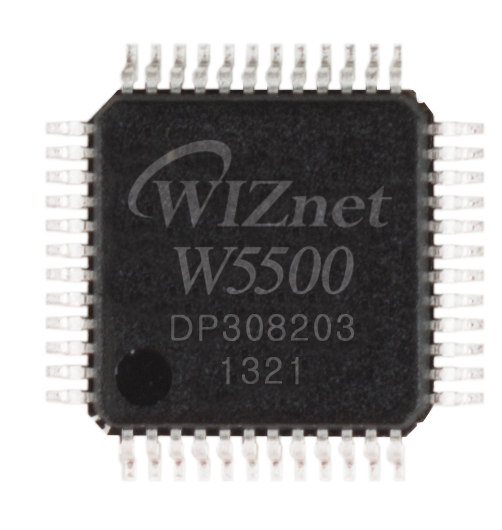
WIZnet - W5500
x 1
Software Apps and online services
platformio - PlatformIO IDE
x 1
Arduino - Arduino IDE
x 1
PROJECT DESCRIPTION
Project Overview
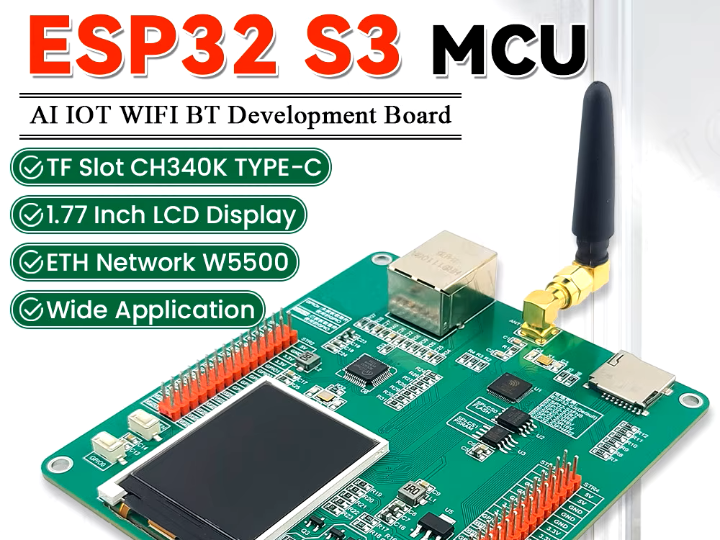
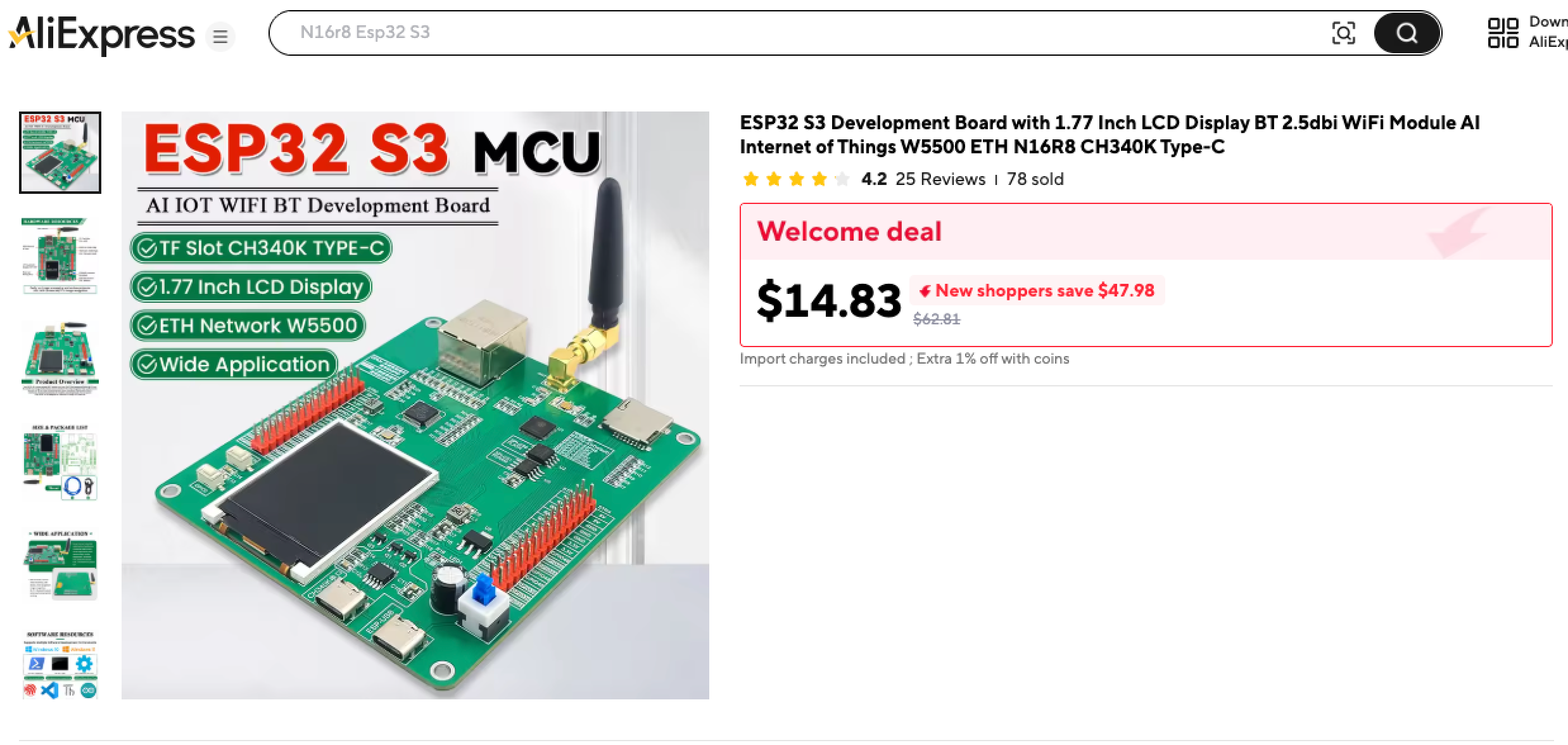
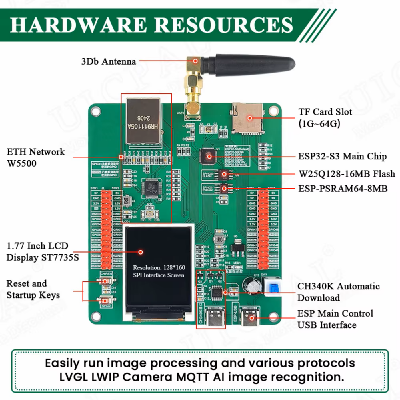
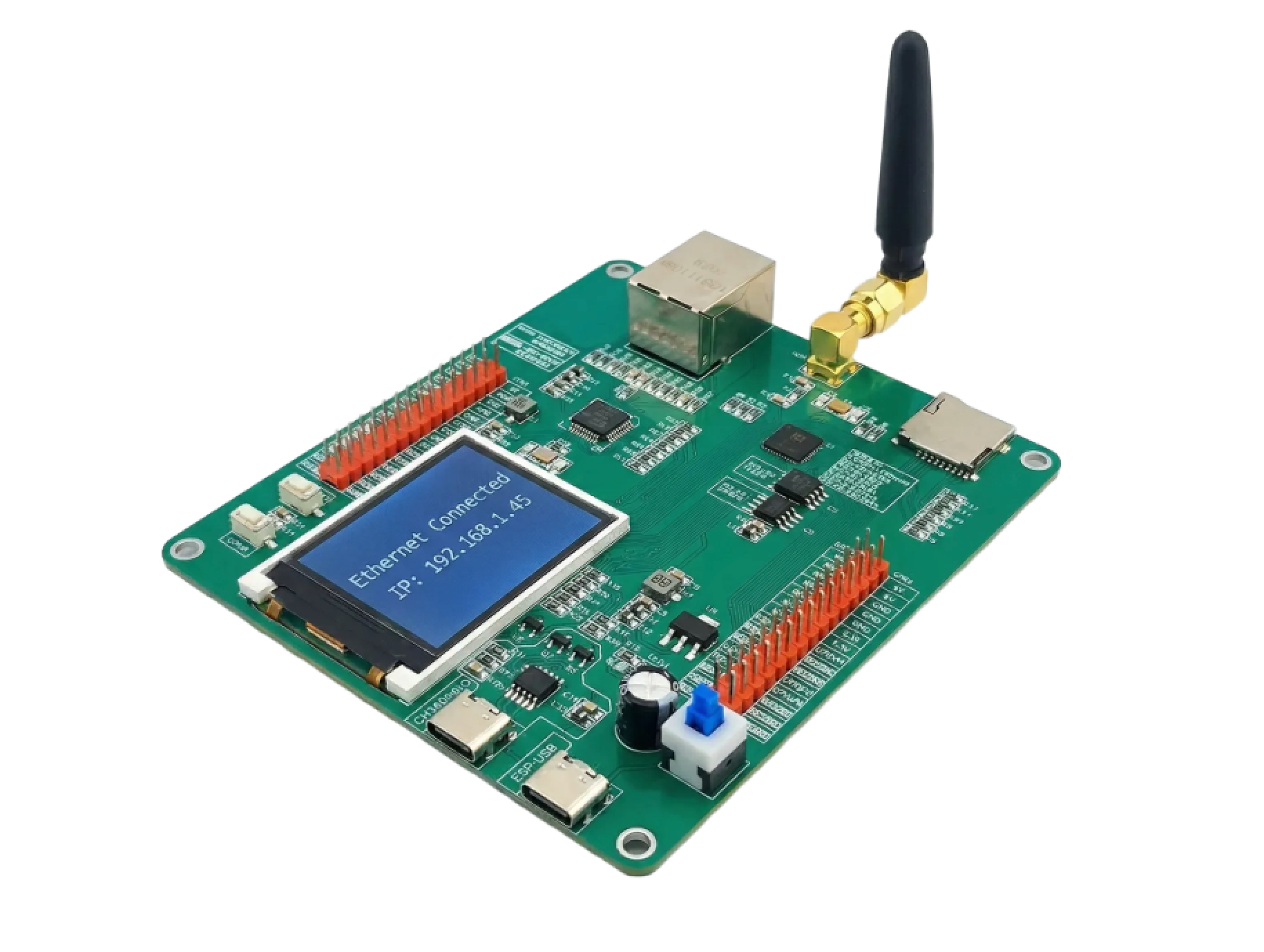
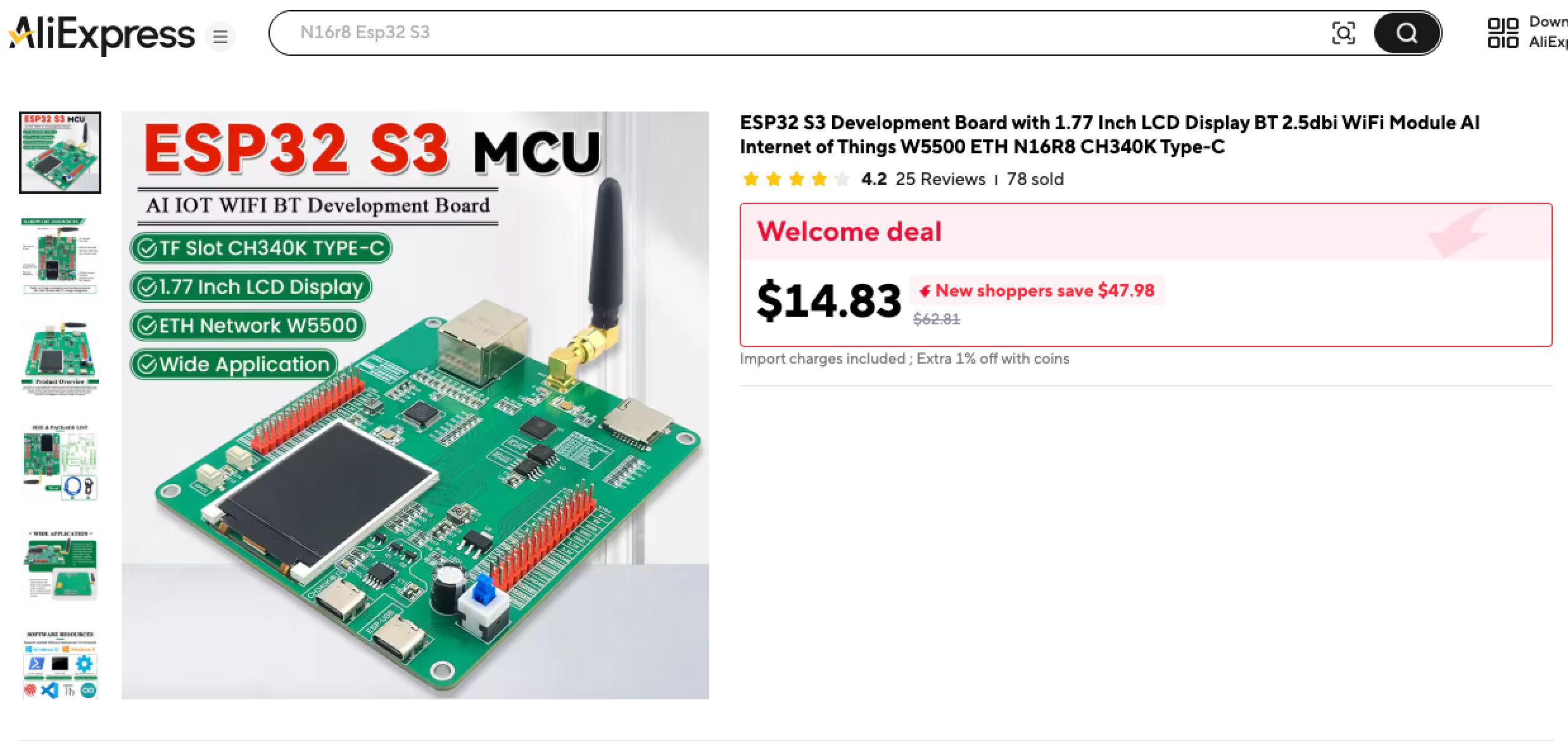
This project offers unofficial open-source firmware for the "ESP32-S3 1.77 Inch LCD W5500 Board" sold on AliExpress for approximately $15. This project is currently under very active development, with critical updates (such as PSRAM fixes) committed just 2-4 days ago (early Jan 2026). Given the lack of official software support from the hardware manufacturer, community user cristianprice analyzed the pin map and built a PlatformIO-based development environment. The core objective of this board is to build a high-performance Zigbee gateway at a low cost.
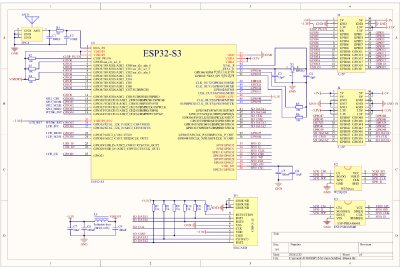
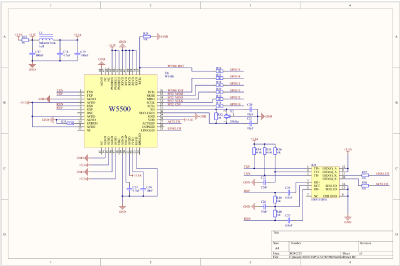
A key design feature is Shared Pin Usage. To address GPIO limitations, the LCD reset pin and W5500 reset pin are tied to a single pin, GPIO 15. This cost-saving design requires careful attention to the initialization sequence in the firmware.
Technical Analysis: Why WIZnet?
The ESP32-S3 supports Wi-Fi natively. However, the W5500 Ethernet chip was added for a specific reason: RF Interference Avoidance.
Avoiding 2.4GHz Congestion: Zigbee and Wi-Fi both operate in the 2.4GHz band. If the gateway connects to the internet via Wi-Fi, it causes RF interference when communicating with Zigbee sensors, leading to latency or connection drops.
Wired Backhaul: By handling the internet connection via the W5500 wired Ethernet, the ESP32's radio can be dedicated 100% to Zigbee communication.
Connection Stability & Efficiency: Wired Ethernet not only offers lower packet loss but also offloads TCP/IP processing to the hardware (W5500), reducing the CPU load on the ESP32. Additionally, disabling the power-hungry Wi-Fi reduces heat generation, extending the device's lifespan.
Firmware/Software Analysis
The firmware currently available on the GitHub repository was created in the PlatformIO environment.
Ethernet: Uses the Arduino Ethernet library to control the W5500, implementing random MAC generation and DHCP connection.
Display: Uses the TFT_eSPI library to display real-time Ethernet status and IP address on the LCD.
This project is an excellent example of how real users utilize the hardware introduced in VAR by Matthew on maker.wiznet.io. It demonstrates the versatility of WIZnet chips as they are integrated into commercial products, distributed to makers worldwide, and supported by a spontaneous open-source ecosystem.
FAQ
Q: Can Wi-Fi and Ethernet be used simultaneously?
A: Yes, but with technical constraints. The ESP32 uses a Coexistence Mechanism to time-slice a single 2.4GHz RF resource for both Wi-Fi and Zigbee. This inevitably causes Latency Jitter. To maximize gateway stability, it is ideal to disable Wi-Fi and rely solely on the W5500 wired backhaul.
Q: Does it support Matter or Thread?
A: Hardware-wise, the ESP32-S3 supports IEEE 802.15.4, so it is technically feasible. By porting the ESP-IDF OpenThread SDK, you could build a Thread Border Router using the W5500 as the backhaul. However, considering the memory requirements of the Thread stack, a model with 4MB+ Flash (this product has 16MB) is recommended.
Q: Does it support PoE (Power over Ethernet)?
A: No, it does not. Schematic analysis reveals the absence of PoE transformer and DC-DC converter circuits behind the RJ45 connector. Therefore, even if connected to a PoE switch, it cannot receive power; a 5V input via the USB-C port is mandatory.
프로젝트 개요
이 프로젝트는 알리익스프레스에서 약 $15에 판매되는 "ESP32-S3 1.77 Inch LCD W5500 Board"를 위한 비공식 오픈소스 펌웨어입니다. 불과 2~4일 전(2026년 1월 초)에도 PSRAM 관련 픽스가 업데이트되는 등 매우 활발하게 개발이 진행 중인 '현재진행형' 프로젝트입니다. 하드웨어 제조사가 제공하는 소프트웨어 지원이 부족한 상황에서, 커뮤니티 유저(cristianprice)가 직접 핀맵을 분석하고 PlatformIO 기반의 개발 환경을 구축했습니다. 이 보드의 핵심 목표는 저렴한 비용으로 고성능 Zigbee 게이트웨이를 구축하는 것입니다.
이 프로젝트는 WIZnet의 VAR로도 소개된 적이 있습니다. Matthew가 업로드한 maker.wiznet.io에서 소개한 하드웨어를 실제 유저가 어떻게 활용하는지 보여주는 좋은 사례입니다. 상용 제품에 W5500이 탑재되어 전 세계 메이커들에게 보급되고, 자발적인 오픈소스 생태계가 형성되는 과정은 WIZnet 칩의 범용성을 증명합니다.
FAQ
Q: Wi-Fi와 이더넷 동시 사용이 가능한가요?
A: 가능하지만, 기술적 제약이 따릅니다. ESP32는 Coexistence 메커니즘을 통해 단일 2.4GHz RF 자원을 시분할(Time Slicing)하여 Wi-Fi와 Zigbee를 처리합니다. 이로 인해 물리적 한계인 Latency Jitter(지연 시간 편차)가 필연적으로 발생합니다. 게이트웨이의 안정성을 최우선으로 한다면, Wi-Fi를 비활성화하고 W5500 유선 백홀만을 사용하는 것이 이상적입니다.
Q: Matter나 Thread도 지원하나요?
A: 하드웨어적으로 ESP32-S3는 IEEE 802.15.4를 지원하므로 기술적 구현은 가능합니다. Espressif에서 제공하는 ESP-IDF OpenThread SDK를 포팅하면 W5500을 백홀로 하는 Thread Border Router를 구축할 수 있습니다. 단, Thread 스택의 메모리 요구량을 고려할 때 4MB 이상의 Flash 메모리가 탑재된 모델(본 제품은 16MB) 사용이 권장됩니다.
Q: PoE(Power over Ethernet)를 지원하나요?
A: 지원하지 않습니다. 회로도(Schematic) 분석 결과, RJ45 커넥터 후단에 PoE 수전(Powered Device)을 위한 트랜스포머 및 DC-DC 컨버터 회로가 부재합니다. 따라서 PoE 스위치에 연결하더라도 전원을 공급받을 수 없으며, USB-C 포트를 통한 5V 전원 입력이 필수입니다.