


eBUS adapter 5
Hardware interface for communicating with eBUS heating system
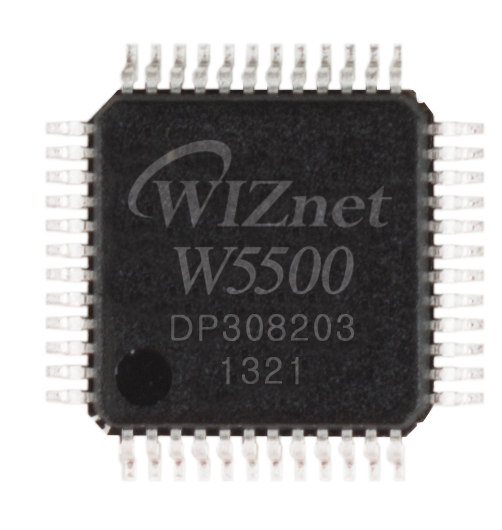
WIZnet - W5500
x 1

Original : https://adapter.ebusd.eu/v5/index.en.html
ebusd wiki : https://github.com/john30/ebusd/wiki
Author : ebusd
Published On : 2023-05-07
This content was created with the assistance of ChatGPT, an artificial intelligence language model developed by OpenAI.
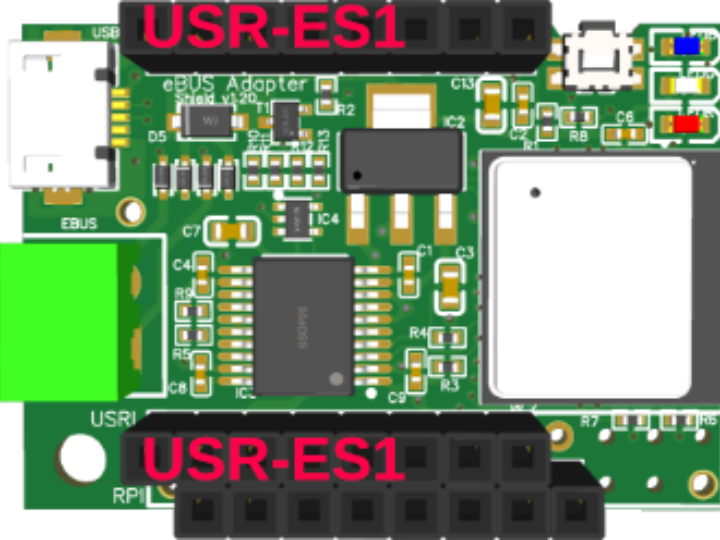
Version 5 of the eBUS adapter is a redesigned version of v3.1 that offers several enhancements to improve functionality and convenience. It features a significantly smaller footprint, measuring 37x26mm, and includes a pluggable eBUS connection. The adapter now incorporates on-board WiFi by transitioning to the ESP32-C3, allowing for wireless connectivity. It also supports different Ethernet modules and is compatible with many D1 mini shields, hence the provisional name "eBUS Adapter Shield."
Similar to v3.1 and v3.0, the adapter meets the arbitration time requirements specified by eBUS. This is achieved by utilizing an ESP32-C with RISC architecture, which offers several advantages including minimal time delay due to hardware-related programming. The adapter provides flexible and configurable options for connecting to the host device, such as USB serial via JTAG/serial interface (on board), direct WiFi connection through the ESP32-C3, connection to Raspberry Pi via GPIO/ttyAMA0, or Ethernet connection using modules like USR-ES1 or W5500.
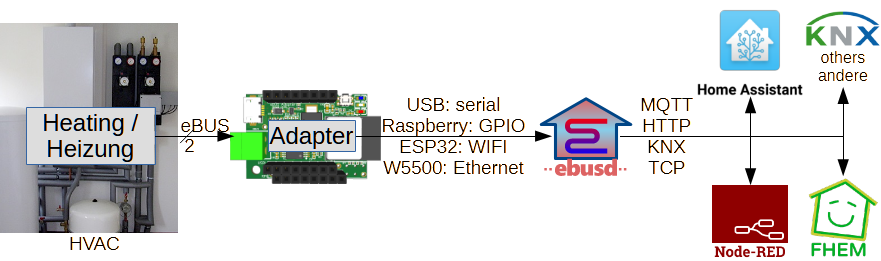
The eBUS adapter fully supports both the ebusd enhanced protocol and the standard protocol. It also features updatable firmware, which can be easily performed using a web browser through the USB JTAG/serial interface. Additionally, the adapter offers various possibilities for connecting sensors and displays, expanding its functionality.
With the inclusion of a DC-DC converter and galvanic isolation of the signals, the eBUS adapter ensures complete isolation of the eBUS from the host device. It draws only minimal current from the eBUS without any fluctuations, meeting class 0 specifications outlined in chapter 10.7 of the eBUS specification.
By providing this level of isolation and protection, the eBUS adapter ensures that the heating, ventilation, or solar system it is connected to remains perfectly safeguarded and unaffected by any power source issues.
Please visit ebusd for more details.
Thank you for reading.