


STM32 + W5500 기반 OpenPLC 산업 제어 시스템 (FreeRTOS)
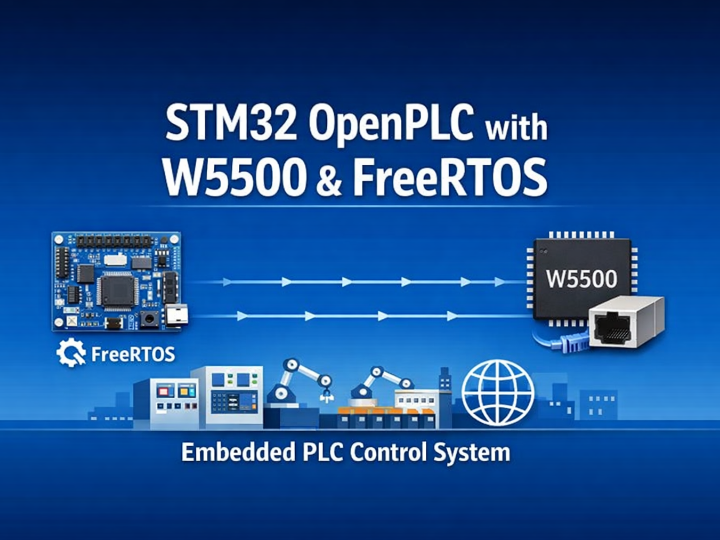
STM32 마이크로컨트롤러에서 OpenPLC 런타임을 실행하고, WIZnet W5500 Ethernet 칩을 통해 산업용 네트워크 통신을 구현한 임베디드 제어 시스템
STMicroelectronics - STM32F103RCT6
x 1

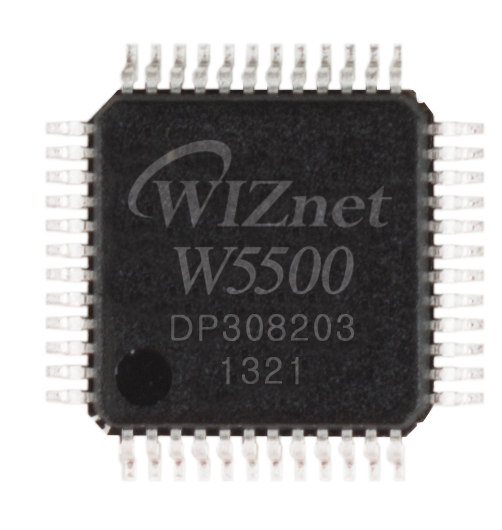
WIZnet - W5500
x 1
STM32 기반 OpenPLC 산업 제어 시스템: W5500과 FreeRTOS를 활용한 임베디드 PLC 구현
Summary
이 프로젝트는 STM32 마이크로컨트롤러 위에서 OpenPLC 런타임을 실행하고, WIZnet W5500 Ethernet 칩을 통해 산업용 네트워크 통신을 구현한 임베디드 제어 시스템입니다. FreeRTOS 기반의 실시간 운영 구조를 바탕으로 PLC 프로그램을 MCU에서 직접 실행할 수 있으며, Modbus 및 Modbus TCP 통신을 통해 외부 장치, 상위 제어기, HMI, SCADA와 연동할 수 있는 기반을 제공합니다.
이 프로젝트의 가장 큰 의미는 전통적으로 전용 하드웨어 영역으로 여겨졌던 PLC 기능을 범용 MCU 환경으로 옮겨왔다는 점입니다. 즉, 고가의 PLC 장비 없이도 비교적 작은 하드웨어 자원 안에서 제어 로직 실행, 실시간 태스크 관리, 네트워크 통신까지 하나의 시스템으로 구성할 수 있음을 보여줍니다. 따라서 이 프로젝트는 단순한 Ethernet 예제나 MCU 통신 데모가 아니라, 임베디드 기반 산업 제어 시스템의 가능성을 구체적으로 보여주는 실용적인 사례라고 할 수 있습니다.
Overview
openplc-stm32-freertos는 STM32 플랫폼에서 OpenPLC를 동작시키기 위해 설계된 오픈소스 프로젝트입니다. 일반적인 임베디드 예제들이 센서 값을 읽거나 간단한 네트워크 패킷을 송수신하는 수준에 머무는 것과 달리, 이 프로젝트는 실제 PLC 프로그램을 실행하는 것을 목표로 합니다. 다시 말해, MCU가 단순 주변장치 제어를 넘어 산업 제어 로직을 해석하고 실행하는 핵심 제어기로 동작하도록 만든 구조입니다.
프로젝트는 FreeRTOS를 기반으로 동작하므로, 제어 로직 실행과 통신 처리, 주기적인 시스템 동작을 서로 독립된 태스크로 관리할 수 있습니다. 이는 산업 자동화에서 매우 중요한 예측 가능한 동작과 일정한 주기성을 확보하는 데 유리합니다. PLC 시스템에서는 입력을 읽고, 로직을 계산하고, 출력을 갱신하는 작업이 반복적으로 안정적으로 수행되어야 하는데, RTOS 환경은 이러한 요구를 충족시키는 데 적합합니다.
또한 이 프로젝트는 W5500 Ethernet 인터페이스를 포함함으로써 네트워크 기능을 단순 부가 요소가 아니라 시스템의 핵심 구성요소로 통합하고 있습니다. 그 결과 이 시스템은 독립적으로 PLC 로직을 실행하는 데서 그치지 않고, 외부 장치와 데이터를 주고받고, 산업용 네트워크 상에서 다른 제어 시스템과 상호작용할 수 있는 임베디드 PLC 노드로 확장됩니다.
결국 이 프로젝트는 임베디드 시스템, 실시간 운영체제, 산업용 프로토콜, Ethernet 네트워크 기술이 하나로 결합된 형태이며, 전통적인 PLC 개념을 소형 MCU 기반으로 재구성한 사례로 볼 수 있습니다.
Key Features
1. STM32 기반 OpenPLC 런타임 실행
이 프로젝트의 핵심은 OpenPLC 런타임을 STM32에서 실행할 수 있도록 구성했다는 점입니다. 이를 통해 PLC 프로그램이 전용 PLC 장비가 아닌 MCU 위에서 직접 동작할 수 있습니다. 이는 하드웨어 비용을 낮추는 동시에, 필요에 따라 시스템을 더 유연하게 설계할 수 있는 가능성을 보여줍니다.
2. FreeRTOS 기반 실시간 멀티태스킹
FreeRTOS를 사용하면 제어 로직, 통신 처리, 시스템 관리 기능을 각각 별도의 태스크로 구성할 수 있습니다. 이 구조는 복잡한 기능을 한 개의 루프에 모두 몰아넣는 방식보다 훨씬 안정적이며, 기능 확장성도 좋습니다. 특히 산업 제어 환경에서는 주기적인 제어 처리와 통신 응답성이 중요하기 때문에 RTOS 기반 설계가 큰 장점이 됩니다.
3. Modbus 및 Modbus TCP 지원
프로젝트 구조상 Modbus와 Modbus TCP를 포함하고 있어 산업용 장비와의 연동 가능성이 높습니다. Modbus는 산업 자동화 분야에서 매우 널리 사용되는 표준 프로토콜이므로, 이 프로젝트는 PLC-상위 제어기, HMI, SCADA, 모니터링 시스템 간 통신 구조를 구현하는 데 적합한 기반을 제공합니다.
4. W5500 기반 Ethernet 통신
W5500은 이 시스템에서 Ethernet 네트워크를 연결하는 핵심 하드웨어입니다. MCU가 산업용 Ethernet 네트워크에 참여할 수 있도록 해주며, 유선 기반의 안정적인 통신 구조를 제공합니다. 특히 임베디드 환경에서는 네트워크 처리 부담이 커질 수 있는데, W5500을 활용하면 보다 효율적으로 Ethernet 기능을 통합할 수 있습니다.
5. 임베디드 PLC 구조 구현
이 프로젝트는 단순히 통신 모듈을 추가한 MCU 보드가 아니라, 실제로 PLC 성격을 가진 제어 시스템 구조를 지향합니다. 프로그램 실행, 태스크 스케줄링, 프로토콜 처리, 네트워크 인터페이스가 하나의 통합된 구조로 설계되어 있어, 임베디드 PLC 또는 소형 산업용 컨트롤러 설계의 출발점으로 볼 수 있습니다.
6. 교육 및 프로토타이핑에 적합
전통적인 PLC 장비는 비용이 높고 접근성이 제한될 수 있지만, STM32와 같은 MCU 플랫폼은 학습과 실험에 훨씬 유리합니다. 따라서 이 프로젝트는 산업 자동화 교육, PLC 개념 학습, 프로토타입 제어기 개발, 연구용 제어 시스템 설계에 매우 적합한 사례가 됩니다.
System Architecture
제어 계층
STM32 마이크로컨트롤러는 시스템의 중심에서 PLC 로직 실행과 장치 제어를 담당합니다. 입력 신호를 읽고, PLC 프로그램을 수행하고, 결과를 출력으로 반영하는 핵심 연산이 이 계층에서 이루어집니다.
실시간 운영 계층
FreeRTOS는 시스템 내 여러 기능을 독립적인 태스크로 분리하고 스케줄링합니다. 이를 통해 PLC 주기 실행, 통신 처리, 상태 관리, 인터페이스 동작 등을 안정적으로 운영할 수 있습니다.
PLC 런타임 계층
OpenPLC 런타임은 PLC 프로그램을 실제로 해석하고 실행하는 엔진 역할을 합니다. 이 계층이 있기 때문에 MCU는 단순한 마이크로컨트롤러를 넘어 PLC와 유사한 동작 모델을 갖게 됩니다.
통신 계층
Modbus 및 Modbus TCP 스택은 시스템 외부와의 데이터 교환을 담당합니다. 이를 통해 다른 산업용 장비, 제어기, 모니터링 시스템과 상호 연결이 가능해집니다.
네트워크 인터페이스 계층
W5500은 유선 Ethernet 연결을 담당하며, 임베디드 시스템이 네트워크 노드로 동작할 수 있도록 합니다. 결과적으로 이 장치는 단순 로컬 제어기를 넘어, 네트워크에 연결된 산업 제어 장치로 확장됩니다.
데이터 흐름
입력 신호
→ PLC 프로그램 실행
→ OpenPLC 런타임 처리
→ FreeRTOS 태스크 관리
→ Modbus / Modbus TCP 통신
→ W5500 Ethernet 인터페이스
→ 외부 네트워크 또는 상위 시스템
Protocol
이 프로젝트의 핵심 프로토콜은 Modbus와 Modbus TCP입니다.
Modbus는 산업 자동화 환경에서 가장 널리 사용되는 통신 프로토콜 중 하나이며, 센서, 액추에이터, PLC, HMI, SCADA 사이의 데이터 교환에 널리 활용됩니다. Modbus TCP는 이를 Ethernet 기반으로 확장한 형태로, 보다 현대적인 산업 네트워크 환경에 적합합니다.
따라서 이 프로젝트는 단순한 TCP/IP 통신 예제가 아니라, 실제 산업용 통신 프로토콜을 MCU 기반 제어 시스템에 적용한 사례라고 할 수 있습니다.
Hybrid Network
이 프로젝트는 하이브리드 네트워크 구조가 아닙니다.
Wi-Fi와 Ethernet을 혼합하거나, Cloud와 Fieldbus를 동시에 브리지하는 형태가 아니라, 기본적으로 유선 Ethernet 기반 산업 통신 구조에 가깝습니다. 따라서 분류상으로는 단일 네트워크 기반의 임베디드 산업 제어 시스템으로 보는 것이 가장 적절합니다.
Application
- 산업 자동화 컨트롤러
소형 장비 제어, 공정 제어, 자동화 설비 제어용 임베디드 컨트롤러로 활용할 수 있습니다. - 임베디드 PLC 시스템
전통적인 PLC를 대체하거나 보완하는 소형 PLC 노드로 적용할 수 있습니다. - 스마트 팩토리 제어 노드
공장 내 설비, 센서, 액추에이터를 Ethernet 기반으로 연결하고 제어하는 분산 제어 노드로 확장할 수 있습니다. - 설비 모니터링 및 제어 장치
장비의 상태를 읽고, 제어 명령을 수행하며, 상위 시스템과 통신하는 모니터링 장치로 사용할 수 있습니다.
교육용 플랫폼
PLC 구조, RTOS, 산업 프로토콜, Ethernet 통신을 동시에 학습할 수 있는 교육용 플랫폼으로도 적합합니다.
Role and Application of the WIZnet Chip
W5500은 이 프로젝트에서 단순한 네트워크 부품이 아니라, 시스템을 산업용 Ethernet 환경으로 확장시키는 핵심 인터페이스입니다. OpenPLC와 FreeRTOS가 내부 제어와 실행을 담당한다면, W5500은 그 결과를 외부 네트워크와 연결해주는 창구 역할을 합니다.
이 칩이 포함됨으로써 STM32 기반 시스템은 로컬 제어에 머무르지 않고, 네트워크를 통해 상위 제어 시스템과 연동되는 분산형 제어 노드로 발전할 수 있습니다. 즉, W5500은 MCU 기반 PLC 시스템을 실제 산업 자동화 환경과 연결시키는 중요한 매개체라고 볼 수 있습니다.
Market & Application Value
이 프로젝트는 산업 자동화 시장에서 점점 중요해지고 있는 저비용, 소형, 맞춤형 제어 시스템의 방향성과 잘 맞습니다. 모든 자동화 시스템이 대형 PLC나 산업용 PC를 필요로 하는 것은 아니며, 경우에 따라서는 특정 장비나 공정에 최적화된 소형 컨트롤러가 더 효율적일 수 있습니다.
이런 관점에서 STM32, FreeRTOS, OpenPLC, W5500의 조합은 매우 흥미롭습니다. 비교적 작은 하드웨어 리소스로 제어 로직과 네트워크 통신을 동시에 처리할 수 있으므로, 맞춤형 제어기, 교육용 장비, 소형 자동화 장치, 연구용 프로토타입 등에 적합합니다. 또한 오픈소스 기반이라는 점에서 실험과 확장이 쉬워 개발자와 연구자에게도 매력적인 구조입니다.
WIZnet Strategic Value
이 프로젝트는 WIZnet 칩이 단순한 IoT 네트워크 연결을 넘어, 산업 자동화와 임베디드 제어 시스템 분야에서도 중요한 역할을 할 수 있음을 보여줍니다. 특히 W5500은 임베디드 플랫폼이 산업용 Ethernet 프로토콜 기반 시스템으로 발전하는 데 핵심적인 연결고리가 됩니다.
즉, WIZnet 제품은 센서 네트워킹이나 소형 웹서버 같은 전통적인 응용을 넘어, PLC, 산업 자동화 노드, 설비 제어 장치, 분산 제어 시스템과 같은 보다 전문적인 시장 영역에서도 충분히 활용 가능하다는 점을 시사합니다.
Insight
이 프로젝트가 보여주는 가장 중요한 메시지는 PLC 기능이 반드시 전용 하드웨어 안에만 존재할 필요는 없다는 점입니다. 소형 MCU와 RTOS, 오픈소스 PLC 런타임, Ethernet 인터페이스를 결합하면, 목적에 맞는 유연하고 경제적인 산업 제어 시스템을 설계할 수 있습니다.
이는 산업 자동화의 진입 장벽을 낮추는 방향과도 연결됩니다. 고정된 기능의 폐쇄형 장비 대신, 필요한 기능을 직접 구성하고 확장할 수 있는 소프트웨어 정의형 제어 구조가 점점 더 중요해지고 있습니다. 그런 측면에서 이 프로젝트는 단순한 구현 예제를 넘어, 차세대 임베디드 산업 제어 시스템의 가능성을 보여주는 사례라고 볼 수 있습니다.
Conclusion
openplc-stm32-freertos는 STM32 기반 MCU 위에서 OpenPLC와 FreeRTOS를 활용해 실제 PLC 동작 구조를 구현하고, W5500을 통해 산업용 Ethernet 통신을 가능하게 만든 프로젝트입니다. 제어 로직, 실시간 처리, 산업용 프로토콜, 네트워크 연결이 하나의 구조로 통합되어 있다는 점에서 매우 완성도 높은 임베디드 산업 제어 사례로 볼 수 있습니다.
이 프로젝트는 소형 MCU가 단순 주변장치 제어를 넘어, 산업 자동화 시스템의 핵심 제어 노드가 될 수 있음을 보여줍니다. 따라서 저비용 PLC 대안, 교육용 플랫폼, 스마트 팩토리 노드, 맞춤형 장비 제어 시스템을 고민하는 개발자에게 매우 좋은 참고 사례가 됩니다.
Q1. 이 프로젝트는 어떤 프로젝트인가요?
이 프로젝트는 STM32 마이크로컨트롤러에서 OpenPLC 런타임을 실행하고, W5500 Ethernet 칩을 통해 산업용 네트워크 통신을 구현한 임베디드 PLC 시스템입니다.
Q2. 어떤 보드와 환경을 기반으로 하나요?
STM32 플랫폼을 기반으로 하며, FreeRTOS 환경에서 동작하는 구조입니다. 즉, MCU 위에서 실시간 태스크 관리와 PLC 로직 실행이 함께 이루어집니다.
Q3. 어떤 프로토콜을 사용하나요?
주요 프로토콜은 Modbus와 Modbus TCP입니다. 이를 통해 PLC, HMI, SCADA, 모니터링 시스템과의 통신이 가능합니다.
Q4. 하이브리드 네트워크 구조인가요?
아닙니다. 이 프로젝트는 기본적으로 유선 Ethernet 기반 산업 통신 구조이며, Wi-Fi나 Cloud를 결합한 하이브리드 네트워크는 아닙니다.
Q5. W5500은 어떤 역할을 하나요?
W5500은 STM32 기반 제어 시스템을 Ethernet 네트워크에 연결하는 핵심 인터페이스입니다. 이를 통해 MCU 기반 시스템이 산업용 네트워크 장치로 동작할 수 있습니다.
Q6. OpenPLC는 이 프로젝트에서 어떤 의미를 가지나요?
OpenPLC는 PLC 프로그램을 해석하고 실행하는 런타임 역할을 합니다. 이 덕분에 전용 PLC 하드웨어 없이도 MCU 위에서 PLC 기능을 구현할 수 있습니다.
Q7. FreeRTOS는 왜 필요한가요?
FreeRTOS는 PLC 로직 실행, 통신 처리, 시스템 관리 등의 기능을 독립적인 태스크로 나누어 안정적으로 운영할 수 있게 해줍니다. 이는 산업 제어에 필요한 주기성과 예측 가능한 동작을 확보하는 데 중요합니다.
Q8. 어떤 분야에 활용할 수 있나요?
산업 자동화 컨트롤러, 임베디드 PLC 시스템, 스마트 팩토리 제어 노드, 설비 모니터링 장치, 교육용 PLC 플랫폼 등 다양한 분야에 적용할 수 있습니다.
Q9. 이 프로젝트의 가장 큰 장점은 무엇인가요?
가장 큰 장점은 소형 MCU 환경에서도 실제 PLC 기능, 실시간 제어, 산업용 Ethernet 통신을 통합할 수 있다는 점입니다. 즉, 저비용이면서도 유연한 산업 제어 시스템 구현 가능성을 보여줍니다.
Q10. 이 프로젝트는 누구에게 유용한가요?
저비용 PLC 대안을 찾는 개발자, 산업 자동화 교육용 플랫폼을 설계하는 연구자, 맞춤형 제어기를 개발하려는 엔지니어에게 특히 유용한 참고 사례가 될 수 있습니다.
OpenPLC on STM32: An Embedded Industrial Control System with W5500 and FreeRTOS
Summary
This project presents an embedded industrial control system that runs the OpenPLC runtime on an STM32 microcontroller and uses the WIZnet W5500 Ethernet chip for industrial network communication. Built on top of a FreeRTOS-based real-time software structure, it enables PLC programs to run directly on an MCU while supporting external communication through Modbus and Modbus TCP.
What makes this project especially meaningful is that it moves PLC functionality away from traditional dedicated PLC hardware and into a compact, flexible microcontroller environment. It shows that control logic execution, real-time task management, and industrial Ethernet communication can coexist in a relatively small embedded platform. As a result, this is not just another Ethernet demo or MCU networking example, but a practical example of how embedded systems can evolve into industrial control platforms.
Overview
The openplc-stm32-freertos project is an open-source implementation designed to run OpenPLC on STM32-based hardware. Unlike many embedded examples that focus only on reading sensors or sending simple packets, this project aims to execute actual PLC logic on a microcontroller. In other words, the MCU is not just acting as a peripheral controller, but as the central logic engine of an industrial-style control system.
Because the project is built on FreeRTOS, it can separate PLC execution, communication handling, and system-level management into independent tasks. This is highly valuable in industrial automation, where predictability, timing consistency, and reliable cyclic execution matter. PLC systems typically need to repeat a control cycle that reads inputs, evaluates logic, and updates outputs in a stable and deterministic way, and an RTOS-based design fits that requirement well.
The inclusion of the W5500 Ethernet interface also makes networking a core part of the architecture rather than an optional add-on. This means the system is not limited to local execution of PLC logic. Instead, it can act as an embedded PLC node that exchanges data with external devices and interacts with larger automation systems over an industrial network.
Overall, this project can be seen as a convergence of embedded systems, real-time operating systems, industrial protocols, and Ethernet networking. It reinterprets the traditional PLC concept in a compact MCU-based form.
Key Features
1. OpenPLC Runtime on STM32
At the heart of the project is the ability to run the OpenPLC runtime on STM32 hardware. This allows PLC programs to execute directly on a microcontroller rather than requiring dedicated PLC hardware. It demonstrates both cost reduction potential and greater flexibility in control system design.
2. Real-time Multitasking with FreeRTOS
With FreeRTOS, PLC logic, communication services, and system-level functions can be organized into independent tasks. This is far more robust than putting everything into a single loop and gives the design much better scalability. In industrial environments, where both cyclic control execution and communication responsiveness are important, this is a major architectural advantage.
3. Modbus and Modbus TCP Support
The project structure includes Modbus and Modbus TCP, which makes it highly relevant for industrial integration. Since Modbus is one of the most widely used protocols in automation, the system can serve as a foundation for communication between controllers, HMIs, SCADA systems, and monitoring platforms.
4. Ethernet Connectivity through W5500
The W5500 is the key hardware element that provides Ethernet communication. It allows the MCU-based controller to participate in industrial Ethernet environments and supports a stable wired communication structure. In embedded systems, networking can become a processing burden, and the W5500 helps integrate Ethernet in a practical and efficient way.
5. Embedded PLC Architecture
This project is more than a simple MCU board with network capability. It is structured like an actual PLC-style controller, where program execution, task scheduling, protocol handling, and network interfacing are combined into one system. That makes it a strong starting point for designing embedded PLCs or compact industrial controllers.
6. Suitable for Education and Prototyping
Traditional PLC hardware can be expensive and less accessible for learning and experimentation. An STM32-based approach is much more approachable, making this project highly suitable for automation education, PLC concept training, prototype controller development, and research-oriented control platforms.
System Architecture
Control Layer
The STM32 microcontroller sits at the center of the system, executing PLC logic and managing device control. Reading inputs, processing PLC logic, and updating outputs all happen in this layer.
Real-time Operating Layer
FreeRTOS separates the different functions of the system into independently scheduled tasks. This enables stable operation of cyclic PLC execution, communication services, state management, and interface handling.
PLC Runtime Layer
The OpenPLC runtime acts as the engine that interprets and executes PLC programs. Because of this layer, the MCU behaves less like a generic microcontroller and more like a PLC-style control system.
Communication Layer
The Modbus and Modbus TCP stacks handle data exchange with external systems. This enables interoperability with industrial devices, supervisory systems, and operator interfaces.
Network Interface Layer
The W5500 provides wired Ethernet connectivity and allows the embedded controller to behave as a network node. As a result, the device can go beyond local control and become part of a distributed industrial system.
Data Flow
Input Signals
→ PLC Program Execution
→ OpenPLC Runtime
→ FreeRTOS Task Scheduling
→ Modbus / Modbus TCP Communication
→ W5500 Ethernet Interface
→ External Network or Supervisory System
Protocol
The main protocols used in this project are Modbus and Modbus TCP.
Modbus is one of the most widely adopted communication protocols in industrial automation, used for exchanging data among sensors, actuators, PLCs, HMIs, and SCADA systems. Modbus TCP is its Ethernet-based extension, making it more suitable for modern industrial networking environments.
Because of this, the project should not be viewed as a generic TCP/IP example. It is better understood as an embedded control platform implementing real industrial communication protocols.
Hybrid Network
This project is not a hybrid network architecture.
It does not mix Wi-Fi and Ethernet, nor does it bridge cloud systems and fieldbus layers simultaneously. Instead, it is best described as a wired Ethernet-based industrial communication system. From a classification standpoint, it fits well as a single-network embedded industrial controller.
Application
Industrial Automation Controller
It can be applied to compact equipment control, process control, and embedded automation systems.
Embedded PLC System
It can function as a small PLC node that complements or replaces traditional PLC hardware in selected use cases.
Smart Factory Control Node
It can be extended into a distributed control node that connects and manages sensors, actuators, and production equipment over Ethernet.
Equipment Monitoring and Control Device
It can be used as a monitoring and control unit that reads status data, performs control actions, and communicates with supervisory systems.
Educational Platform
It is also suitable as a training platform where users can learn PLC concepts, RTOS design, industrial protocols, and Ethernet communication together.
Role and Application of the WIZnet Chip
In this project, the W5500 is not just a network accessory. It is the key interface that expands the system into an industrial Ethernet environment. While OpenPLC and FreeRTOS handle control execution and internal system behavior, the W5500 is the element that links those functions to the outside network.
Because of the W5500, the STM32-based controller is not limited to local control tasks. It can evolve into a distributed networked control node that communicates with higher-level automation systems. In that sense, the W5500 is a critical bridge between an MCU-based PLC implementation and a real industrial networking environment.
Market & Application Value
This project aligns well with the growing demand for low-cost, compact, and application-specific industrial controllers. Not every automation system requires a large PLC or industrial PC. In many cases, a small controller optimized for a specific machine, device, or process can be much more efficient.
From that perspective, the combination of STM32, FreeRTOS, OpenPLC, and W5500 is very compelling. It enables both control logic and industrial networking to coexist in a compact hardware environment, making it suitable for custom controllers, training equipment, small automation devices, and research prototypes. Since it is built on an open-source foundation, it is also attractive for engineers and researchers who want to experiment, extend, and adapt the system.
WIZnet Strategic Value
This project shows that WIZnet chips can play an important role beyond general IoT connectivity. They can also be key components in industrial automation and embedded control systems. In particular, the W5500 becomes the link that allows an embedded platform to evolve into an industrial Ethernet-based control system.
That suggests WIZnet products are relevant not only to traditional networking applications such as sensor connectivity or lightweight embedded web services, but also to more specialized markets including PLC nodes, automation devices, equipment controllers, and distributed industrial systems.
Insight
One of the most important messages of this project is that PLC functionality no longer has to live only inside dedicated PLC hardware. By combining a compact MCU, an RTOS, an open-source PLC runtime, and an Ethernet interface, developers can design industrial control systems that are flexible, cost-effective, and application-specific.
This also connects with a broader shift in industrial automation. Instead of relying only on fixed-function closed hardware, more systems are moving toward software-defined and customizable control structures. In that context, this project is more than an implementation example. It is a strong illustration of where next-generation embedded industrial control platforms may be headed.
Conclusion
openplc-stm32-freertos is a project that brings together OpenPLC, FreeRTOS, and W5500 on an STM32-based MCU to create a practical embedded industrial controller. Because it integrates control logic execution, real-time behavior, industrial protocols, and Ethernet networking into one architecture, it stands out as a highly meaningful example of embedded industrial design.
It shows that a compact MCU can move beyond basic peripheral handling and become a core control node in an automation system. For developers exploring low-cost PLC alternatives, educational automation platforms, smart factory nodes, or custom equipment controllers, this project provides a valuable and inspiring reference.
FAQ
Q1. What kind of project is this?
This project is an embedded PLC system that runs the OpenPLC runtime on an STM32 microcontroller and uses the W5500 Ethernet chip for industrial network communication.
Q2. What hardware and software environment does it use?
It is based on the STM32 platform and operates in a FreeRTOS environment. This means real-time task handling and PLC logic execution are both performed on the MCU.
Q3. What protocols are used in this project?
The main protocols are Modbus and Modbus TCP. These allow communication with PLCs, HMIs, SCADA systems, and monitoring platforms.
Q4. Is this a hybrid network architecture?
No. This project is fundamentally a wired Ethernet-based industrial communication system and does not combine Wi-Fi or cloud-based hybrid networking.
Q5. What is the role of the W5500?
The W5500 serves as the core Ethernet interface that connects the STM32-based control system to the network. It allows the MCU platform to function as an industrial network device.
Q6. What does OpenPLC do in this project?
OpenPLC acts as the runtime engine that interprets and executes PLC programs. Because of this, PLC functionality can be implemented on an MCU without dedicated PLC hardware.
Q7. Why is FreeRTOS important here?
FreeRTOS allows PLC logic, communication handling, and system management to run as independent tasks. This is important for achieving the timing predictability and stability required in industrial control systems.
Q8. What applications is this project suitable for?
It can be applied to industrial automation controllers, embedded PLC systems, smart factory control nodes, equipment monitoring devices, and educational PLC platforms.
Q9. What is the biggest advantage of this project?
Its biggest advantage is that it integrates real PLC functionality, real-time execution, and industrial Ethernet communication into a compact MCU-based system. This makes it a flexible and cost-effective approach to industrial control.
Q10. Who would benefit most from this project?
It is especially useful for developers looking for low-cost PLC alternatives, engineers building custom controllers, and researchers or educators working on industrial automation platforms.