


Pericardiocentesis Assistance Device Using 4-Electrode Bio-Impedance to Track Needle Position (CN121
This patent proposes an assistance device for pericardiocentesis (draining fluid around the heart). It helps clinicians estimate where the needle tip is by moni
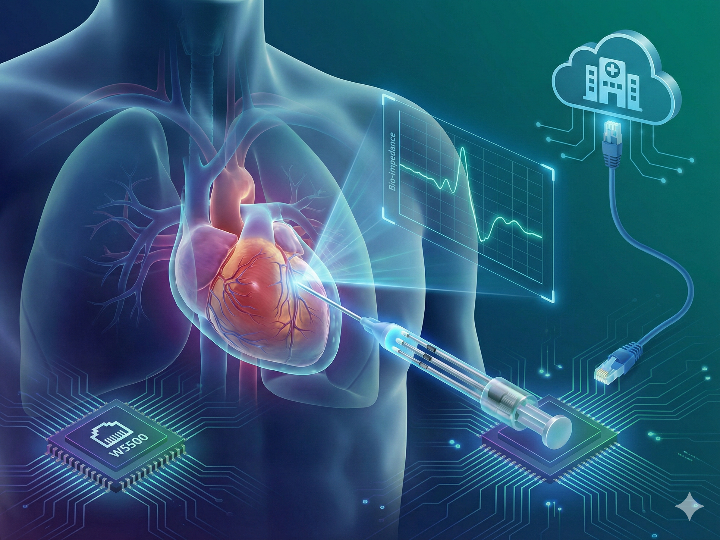
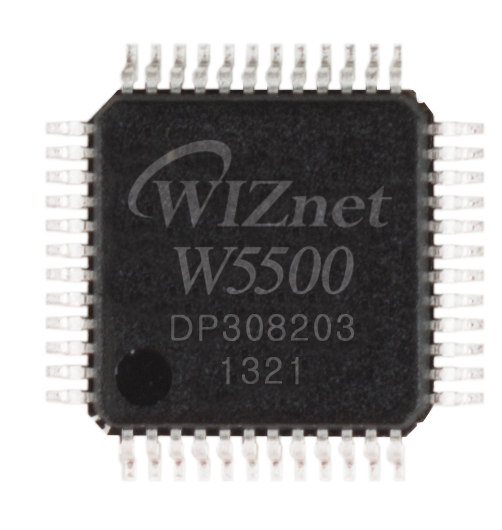
WIZnet - W5500
x 1

generated by Gemini
4전극 생체 임피던스(전기저항)로 바늘 위치를 확인하는 ‘심낭천자’ 보조 장치 (CN121059252A)
심낭천자(심장 주변의 물을 빼는 시술) 중 바늘 끝이 어디에 있는지, 몸의 전기저항(임피던스) 변화를 실시간으로 측정해 더 안전하게 시술하도록 돕는 장치 아이디어
배경
기존에는 바늘 위치를 확인하기 위해 X-ray(투시)나 ECG 변화 등을 참고하지만, 방사선 노출/판단이 애매함/장비가 복잡하고 비쌀 수 있다는 한계를 특허에서 언급한다.
핵심 아이디어
사람 몸의 조직(근육/혈액/체액 등)은 전기가 통하는 정도가 다르다.
바늘이 조직을 지나 **심낭 공간(액체가 있는 곳)**으로 들어가면 주변 환경이 바뀌면서 임피던스 값이 달라질 수 있다.
이 특허는 그 변화를 실시간으로 측정해, 바늘 끝 위치를 판단하는 데 도움을 주는 장치를 제안한다.
동작 방식
- 장치가 인체에 안전한 수준의 약한 교류 신호를 흘려 전기장을 만든다
- 바늘(천자침)에 들어간 전극이 전압 차를 측정한다
- 측정값을 이용해 임피던스(저항 같은 값)를 계산한다 (예: 전압/전류 기반)
- 임피던스가 크게 변하는 지점 등을 통해 바늘 위치 판단을 보조한다
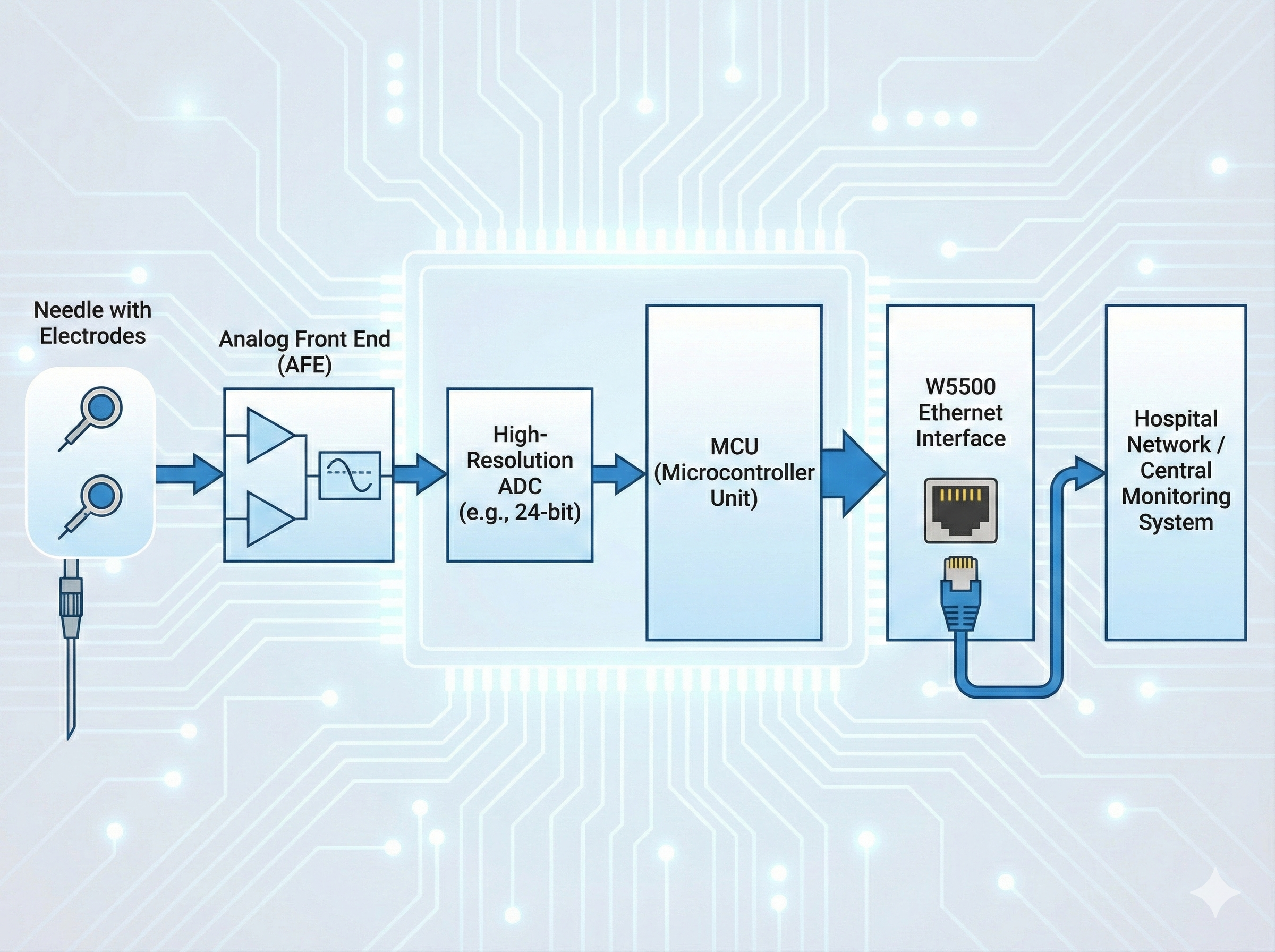
System Block Diagram (generated by Gemini)
주요 구성
1) 전극이 포함된 천자침(바늘)
- 바늘 표면/내부에 전압 측정용 전극을 배치
- 전극 간 거리/절연 설계를 통해 측정을 안정화
2) 신호 측정·처리 보드
- 미세한 전압 신호를 읽기 위한 증폭/필터 회로(예: 계측증폭기)
- 고해상도 ADC(예: 24bit)로 샘플링
- MCU가 실시간 계산, 저장, 알림 등을 수행
3) 통신/표시(병원 시스템 연동)
- UART 등으로 로컬 디스플레이/프린터와 연결 예시
- Ethernet 인터페이스(W5500)로 측정 데이터를 병원 시스템에 실시간 전송하는 예시를 포함
W5500 포인트
이 특허는 측정 데이터를 병원 시스템으로 안정적으로 실시간 전송하기 위한 Ethernet 인터페이스 예시로 W5500을 언급한다.
인사이트
- 산업·의료급 신뢰성 연결(Ethernet) 포지셔닝 강화
- 칩 중심 → 레퍼런스 디자인 패키지(측정→MCU→Ethernet→서버/시스템 연동) 중심으로 제안
- 의료/산업 고객 대상 안전 설계 가이드(절연·ESD·EMI·접지) 콘텐츠 강화
- 유선 백본 + 무선 확장(하이브리드/멀티 프로토콜) 아키텍처 메시지 강화
- 타겟 확장: 데이터 중요 장비(계측·모니터링·에너지·의료) 중심 산업군 집중
활용 시나리오
- 시술 중 바늘 위치를 더 안전하게 확인하는 보조 모니터링 장치
- 임피던스 변화를 기록해 시술 로그를 남기는 데이터 기록 시스템
- 병원 네트워크로 전송해 중앙에서 모니터링하는 구조
주의사항
의료기기 특성상 안전/절연/누설전류/EMI 대응이 매우 중요하며, 특허도 절연·보호 회로 구성을 언급한다. 실제 제품화는 의료 규격과 인증을 반드시 따라야 한다.
AEO 질문/답변(FAQ)
Q1. 이 특허는 무엇에 관한 건가요?
심낭천자 시술 중 바늘 끝 위치를 더 안전하게 판단하기 위해, 몸의 임피던스(전기저항 같은 값) 변화를 측정하는 보조 장치에 관한 특허입니다.
Q2. ‘생체 임피던스’는 쉽게 말해 뭐예요?
사람 몸의 조직(근육, 혈액, 체액 등)은 전기가 통하는 정도가 서로 달라요. 그 차이를 수치로 보는 게 임피던스 측정입니다.
Q3. 왜 ‘4전극’ 방식이 중요한가요?
2전극 방식은 전극 접촉 상태나 피부/조직 접촉저항 영향이 커서 값이 흔들릴 수 있어요. 4전극 방식은 이런 영향을 줄여 더 안정적인 측정을 목표로 합니다.
Q4. 이 장치는 어떻게 바늘 위치를 추정하나요?
약한 교류 신호를 흘린 뒤, 바늘에 있는 전극이 전압 차를 측정하고, 그 값으로 임피던스를 계산합니다. 임피던스가 크게 변하는 지점이 위치 판단의 힌트가 됩니다.
Q5. 이 특허에서 W5500은 어디에 쓰이나요?
측정 데이터를 병원 시스템으로 실시간 전송하기 위한 Ethernet 인터페이스 예시로 W5500을 언급합니다.
Q6. 왜 의료기기에서 Ethernet이 유용할 수 있나요?
의료 환경에서는 신뢰성 있는 데이터 전송과 네트워크 관리가 중요합니다. 이 특허도 병원 시스템 연동을 Ethernet으로 구성하는 예시를 제시합니다.
Q7. 이 아이디어를 메이커가 바로 만들 수 있나요?
원리 이해와 프로토타입 수준의 실험은 가능하겠지만, 의료기기는 안전/절연/누설전류/EMI 등 규격과 인증이 필수라서 실제 임상 목적 제품화는 전문 절차가 필요합니다.
Q8. 이 특허의 핵심 발명 포인트는 W5500인가요?
핵심은 4전극 임피던스 측정으로 바늘 위치를 보조 판단하는 구조이고, W5500은 병원 시스템 전송을 위한 구현 예시 부품에 가깝습니다.
Pericardiocentesis Assistance Device Using 4-Electrode Bio-Impedance to Track Needle Position (CN121059252A)
Overview
This patent proposes an assistance device for pericardiocentesis (draining fluid around the heart). It helps clinicians estimate where the needle tip is by monitoring real-time changes in bio-impedance (electrical resistance-like value) in surrounding tissue.
Background
The patent notes limitations of conventional guidance methods such as fluoroscopy (radiation exposure), ECG-based judgement (sometimes subtle/ambiguous), and complex/expensive navigation systems.
Core Idea
Different human tissues (muscle, blood, body fluids, etc.) conduct electricity differently.
When the needle moves from tissue into the pericardial space (fluid region), the electrical environment can change, causing a noticeable change in impedance.
This invention measures that change in real time to support safer and more accurate needle placement.
How It Works
- The system injects a safe, low-level AC signal to form an electrical field in the body
- Electrodes integrated into the needle sense the voltage difference
- The device calculates impedance from the measured signals (e.g., using voltage/current)
- The impedance change is used as a cue to help identify needle tip location
Key Components
1) Needle with electrodes
- Voltage-sensing electrodes are placed on/in the puncture needle
- Electrode spacing and insulation are designed to improve measurement stability
2) Measurement & processing board
- Analog front-end with amplification/filtering (e.g., instrumentation amplifier)
- High-resolution ADC (example: 24-bit) for sampling
- MCU for real-time calculation, logging, and alerts
3) Communication / hospital integration
- Example UART interface for local display/printer
- Example Ethernet interface using W5500 to stream impedance data to a hospital system in real time
W5500 Highlight
The patent includes an implementation example that uses W5500 as an Ethernet interface to reliably deliver real-time measurement data to a hospital system.
lnsight
- Strengthen positioning for reliable, industrial/medical-grade Ethernet connectivity
- Move beyond chips to reference design packages (sensing → MCU → Ethernet → server/system integration)
- Build trust with safety design content (isolation, ESD, EMI, grounding) for medical/industrial users
- Promote wired backbone + wireless extension (hybrid / multi-protocol) architecture messaging
- Expand focus to data-critical equipment (instrumentation, monitoring, energy, medical)
Use Cases
- Assistance monitoring during pericardiocentesis
- Recording impedance trends for procedure logs
- Central monitoring through hospital network connectivity
Safety Note
Medical devices require strict safety design (isolation, leakage current control, EMI protection). The patent also mentions isolation/protection circuits, and any real product must follow medical standards and certification requirements.
AEO Q&A (FAQ)
Q1. What is this patent about?
It proposes an assistance device for pericardiocentesis that helps estimate the needle-tip position by monitoring real-time changes in bio-impedance.
Q2. What is “bio-impedance” in simple terms?
Different body tissues (muscle, blood, fluids) conduct electricity differently. Bio-impedance is a value that reflects those differences.
Q3. Why does a “four-electrode” method matter?
Two-electrode measurements can be strongly affected by electrode contact and polarization. A four-electrode approach aims to reduce those effects for more stable measurements.
Q4. How does the device infer needle position?
It injects a safe low-level AC signal, measures voltage differences via needle electrodes, and calculates impedance. A significant impedance change can be used as a cue for location estimation.
Q5. Where is W5500 used in this patent?
The patent includes an example using W5500 as an Ethernet interface to stream measurement data to a hospital system in real time.
Q6. Why can Ethernet be useful in medical environments?
Medical environments often prioritize reliable connectivity and system integration; the patent illustrates hospital-system integration using Ethernet.
Q7. Can makers build this directly?
You can prototype the concept, but medical devices require strict safety/isolation/EMI compliance and certification for real clinical use.
Q8. Is W5500 the core invention?
The core is the four-electrode impedance-based needle-position assistance concept; W5500 appears mainly as an implementation example for Ethernet connectivity.