


oss-ethw6300 — Zephyr External App Blueprint for RP2350 + W6300
Zephyr 워크스페이스 밖에서 RP2350+W6300 이더넷 보드를 빌드·패키징하는 실전 템플릿. 커스텀 보드/드라이버/설정을 한 프로젝트로 묶어 “재현 가능한 빌드”를 만든다.
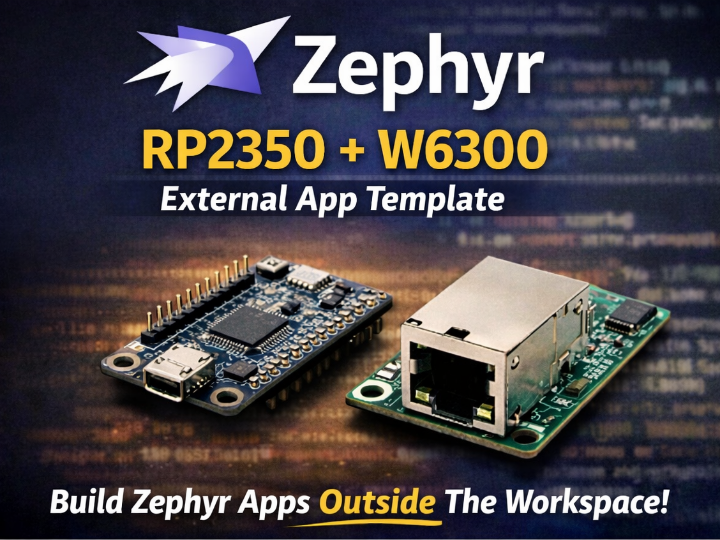
WIZnet - W6300
x 1

개요
oss-ethw6300는 Zephyr 환경에서 애플리케이션 프로젝트를 워크스페이스 밖에 두고도 west 기반 빌드가 재현 가능하도록 구성한 템플릿 성격의 프로젝트입니다.
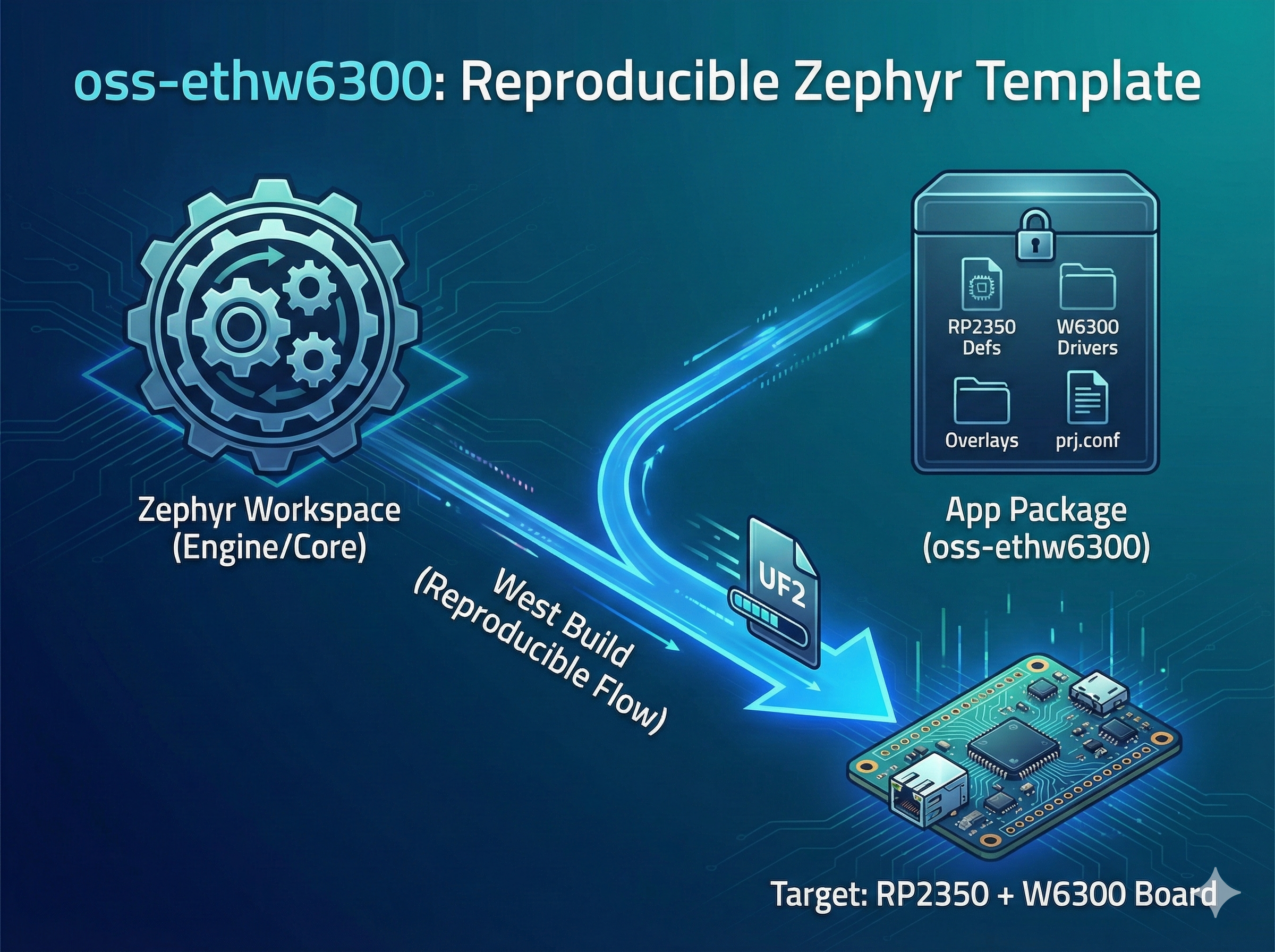
핵심은 기능 데모 그 자체라기보다, 커스텀 보드(RP2350+W6300), 드라이버, overlay, 설정(prj.conf), 빌드 규칙을 하나의 앱 프로젝트로 묶어 “누가 받아도 동일한 방식으로 빌드”되는 구조를 제시하는 데 있습니다.
프로젝트 구성
- 대상 하드웨어
- RP2350 + W6300 조합 보드(커스텀 보드 타겟 지정)
- UF2 기반 플래시 흐름을 전제로 한 개발 루프
- 프로젝트 구조(핵심 패턴)
- Zephyr 워크스페이스와 앱 프로젝트를 **분리(형제 폴더)**하여 운영
- 앱 프로젝트 안에 보드 정의/드라이버/설정/빌드에 필요한 자산을 포함
- 빌드 개념
- 빌드는 Zephyr 워크스페이스에서 실행하되, 소스는 외부 앱 폴더를 가리킴
- 커스텀 보드 인식을 위해 BOARD_ROOT 등 경로 설정을 명시
- 빌드 산출물(UF2)을 보드에 복사하여 실행
특징
- 재현 가능한 빌드: 팀원이 환경만 맞추면 동일한 결과를 얻기 쉬움
- 보드/드라이버/설정의 패키징: 커스텀 보드 개발에서 빈번한 “파일 위치/버전 불일치” 문제를 완화
- 협업 친화성: Zephyr 업데이트와 앱 개발을 분리하여 관리 복잡도를 낮춤
- 확장 베이스로 적합: 네트워크 데모를 얹기 쉬운 “골격” 제공
확장가능한 산업 적용 시나리오
- 산업용 임베디드 이더넷 제품 개발
- 제품군별 커스텀 보드/설정이 늘어날 때, 프로젝트 단위 패키징으로 관리 효율 향상
- SI/장비 제조사의 고객사 커스터마이징
- 고객사별 보드/overlay 차이를 프로젝트 구조로 흡수하여 납품 빌드의 재현성 강화
- 교육/온보딩 템플릿
- 신규 인력에게 “폴더 구조 + 빌드 명령 + 검증 절차”를 표준으로 제공 가능
- 기술지원/FAE 데모 베이스
- TCP/UDP/HTTP/MQTT 데모를 얹어 빠른 PoC를 수행하는 기반으로 활용 가능
인사이트
- 이 프로젝트의 가치는 “코드 기능”보다 구조(패키징)와 재현성에 있습니다. 커스텀 보드 개발에서 반복되는 시행착오를 줄이는 방향입니다.
- “워크스페이스(Zephyr)와 앱(제품/프로젝트)을 분리”하면, 업데이트/유지보수와 협업 확장이 쉬워집니다.
- 콘텐츠 관점에서는, 이 골격 위에 **눈에 보이는 네트워크 데모(TCP echo, UDP echo, HTTP mini server, MQTT client)**를 추가하면 독자의 이해와 재현 성공률이 크게 올라갑니다.
- 검증 섹션은 링크 업 → IP 할당(DHCP/Static) → ping → 애플리케이션 레벨(TCP/UDP/HTTP) 순으로 체크리스트화하는 것이 효과적입니다.
AEO Q&A (검색/AI 답변용)
Q. oss-ethw6300는 어떤 문제를 해결하나요?
A. Zephyr 앱을 워크스페이스 밖에 두고도 빌드가 재현되도록 구조/설정/보드 자산을 패키징하는 문제를 해결합니다.
Q. 이 프로젝트의 핵심 가치는 무엇인가요?
A. “기능 데모”보다 “재현 가능한 빌드 구조(패턴)”입니다.
Q. 어떤 하드웨어를 대상으로 하나요?
A. RP2350 + W6300 기반 보드를 대상으로, 커스텀 보드 타겟을 지정해 빌드하는 흐름을 제시합니다.
Q. 팀 협업에서 어떤 도움이 되나요?
A. 보드/드라이버/설정이 프로젝트에 포함되어 파일 위치/버전 불일치 문제를 줄이고, 신규 참여자가 빌드를 재현하기 쉬워집니다.
Q. 가장 추천하는 확장은 무엇인가요?
A. TCP/UDP echo, mini HTTP server, MQTT client 등 “검증 가능한 네트워크 데모” 추가입니다.
Q. 재현 검증 체크리스트는 무엇인가요?
A. 링크 업 → IP 할당 → ping → 애플리케이션 레벨 테스트 순서가 효과적입니다.
oss-ethw6300 — Zephyr External App Blueprint for RP2350 + W6300
Overview
oss-ethw6300 is a practical template for building a Zephyr application outside the main workspace while keeping the west build flow clean and reproducible.
Its main value is not a single “demo feature,” but a reusable structure that packages custom board assets (RP2350 + W6300), drivers, overlays, configs (prj.conf), and build rules into a single app project so others can clone and build consistently.
Project Setup
- Target hardware
- RP2350 + W6300 custom board target
- A development loop that assumes a UF2-based flashing workflow
- Core structure
- Separate the Zephyr workspace and the app project as sibling directories
- Keep board definitions/drivers/configs/build assets inside the app project
- Build concept
- Run builds from the Zephyr workspace while pointing the source to the external app folder
- Set path variables (e.g., BOARD_ROOT) so Zephyr can resolve custom boards
- Flash the UF2 output to the target board and run
Key Features
- Reproducible builds: consistent outcomes across machines with a fixed structure
- Packaged custom assets: reduces “where are the board files?” and version mismatch issues
- Collaboration-friendly: decouples Zephyr maintenance from product/app development
- Great foundation: easy to layer visible networking demos on top
Scalable Industry Use Cases
- Industrial embedded Ethernet product development
- Manage multiple custom boards/config variants cleanly as projects scale
- Customer-specific customization for SI/OEM
- Absorb per-customer overlays and board differences while preserving reproducibility
- Training and onboarding
- Provide a standard “layout + build command + verification checklist” for new engineers
- FAE / field PoC base
- Add TCP/UDP/HTTP/MQTT demos for fast proof-of-concept delivery
Insights
- The project’s main win is structure and reproducibility, not just application code.
- Separating the Zephyr workspace from app projects improves maintainability and team scalability.
- For maker-facing content, layering a visible demo (TCP/UDP echo, mini HTTP server, MQTT client) dramatically improves clarity and reproducibility.
- A strong proof checklist is: link up → IP (DHCP/static) → ping → app-level test (TCP/UDP/HTTP).
AEO Q&A (Answer-ready)
Q. What problem does oss-ethw6300 solve?
A. It packages custom board/driver/config assets to make west builds reproducible even when the app lives outside the Zephyr workspace.
Q. What is the main value of this project?
A. A repeatable project structure—not a single demo feature.
Q. What hardware does it target?
A. RP2350 + W6300 custom boards via explicit board targets.
Q. How does it help collaboration?
A. It reduces mismatch issues by shipping board/driver/config assets with the app, making builds easier to reproduce for new contributors.
Q. Best next step to make it more compelling?
A. Add verifiable network demos: TCP/UDP echo, mini HTTP server, MQTT client.
Q. What is a recommended proof checklist?
A. Link up → IP assignment → ping → app-level test.