


AI-Powered Epidemiological Analysis & Automation Platform – Easy Epidemiology
A scalable epidemiological platform that goes beyond analysis, integrating WIZnet-based IoT data collection for real-time infectious disease response.
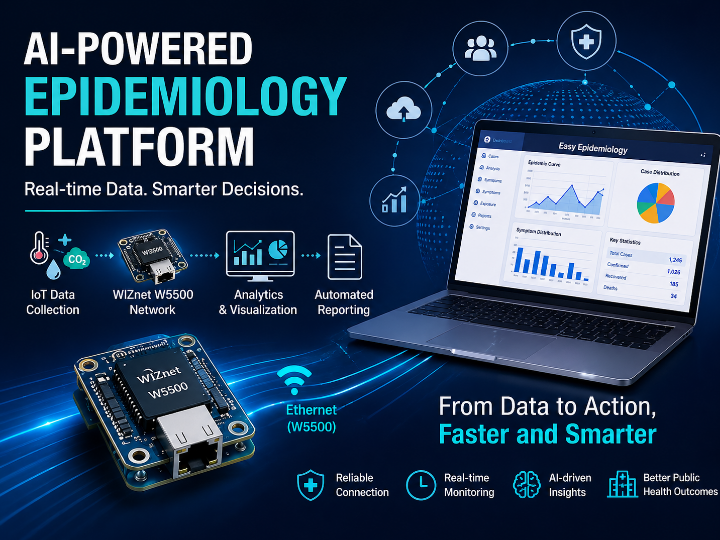
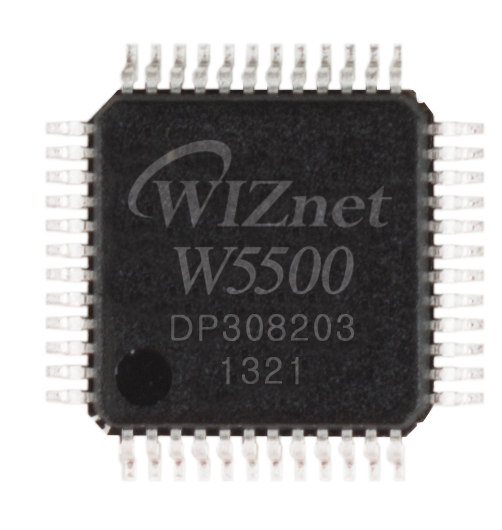
WIZnet - W5500
x 1

AI 기반 역학조사 자동화 및 실시간 감염병 대응 플랫폼 (WIZnet W5500 기반 IoT 확장형) – Easy Epidemiology
역학 데이터 분석과 보고서 자동화를 수행하는 웹 플랫폼에 WIZnet W5500 기반 네트워크 제어를 결합하여, 실시간 데이터 수집까지 확장 가능한 감염병 대응 시스템입니다.
1) 개요 (Overview)
감염병 대응에서 가장 중요한 요소는 속도와 정확성입니다.
하지만 실제 역학조사 현장에서는 여전히 많은 과정이 수작업으로 이루어지고 있습니다.
- 엑셀 기반 데이터 정리
- 통계 분석
- 시각화
- 보고서 작성
이러한 과정은 서로 분리되어 있으며 반복적이고 비효율적입니다.
Easy Epidemiology는 이러한 문제를 해결하기 위해 개발된 웹 기반 플랫폼으로,
👉 데이터 입력 → 분석 → 시각화 → 보고서 생성
까지의 전체 프로세스를 자동화합니다.
특히 본 프로젝트는 단순 분석 도구를 넘어,
👉 WIZnet W5500 Ethernet Controller를 실제로 활용한 네트워크 제어 코드를 포함하여
👉 데이터 수집 단계까지 확장 가능한 구조를 갖춘 것이 핵심입니다.
2) 시스템 구성 (System Architecture)
🔹 Software Layer
- Vue3 + TypeScript 기반 웹 애플리케이션
- jstat 기반 통계 분석 엔진
- ECharts 기반 데이터 시각화
- HWPX 자동 보고서 생성
🔹 Network / IoT Layer (WIZnet 기반)
- W5500 Ethernet Controller
- SPI 기반 네트워크 제어 구조
- IoT 디바이스 연결 가능
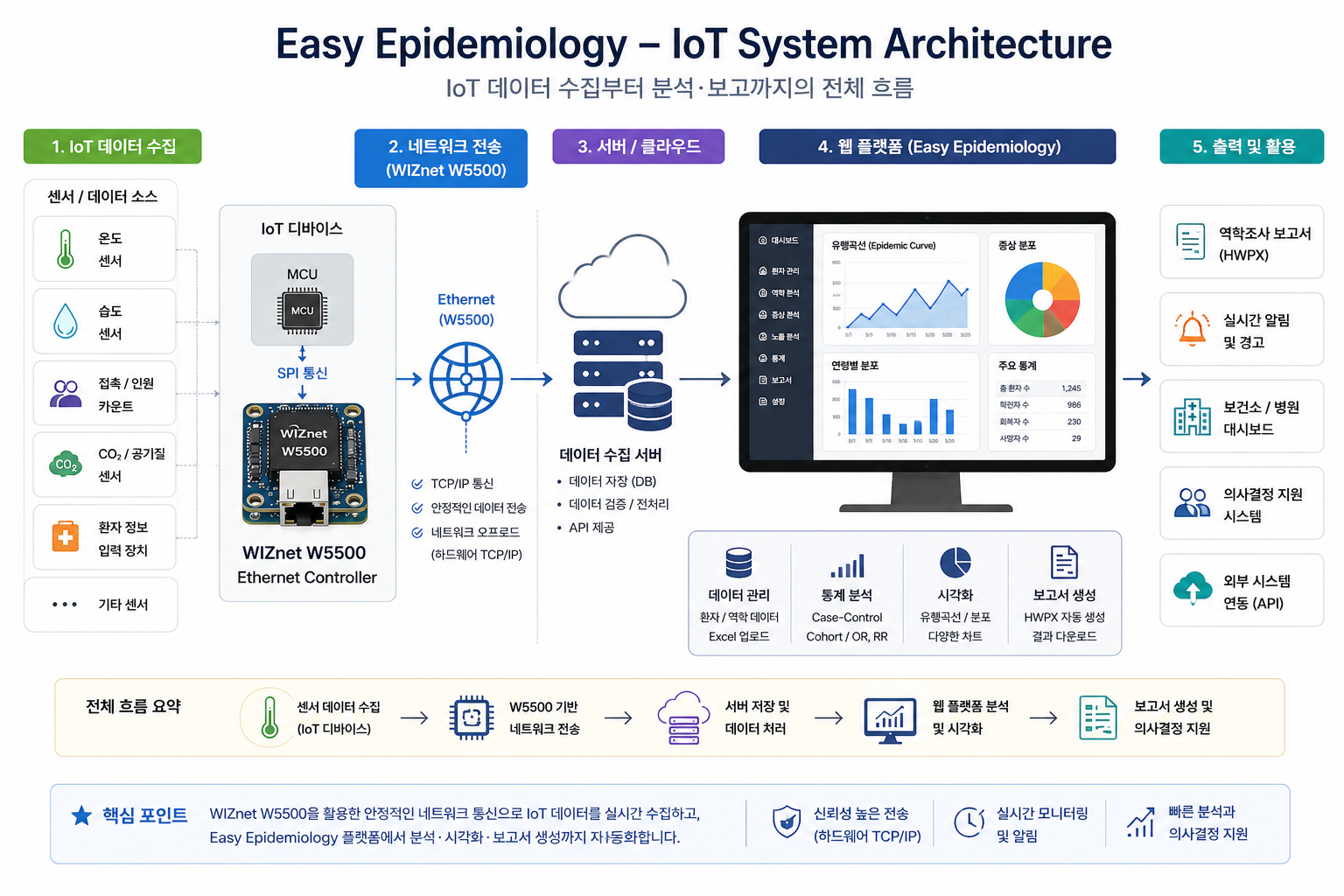
🔹 전체 구조
👉 데이터 수집(IoT) → 네트워크 전송(W5500) → 분석(Web) → 보고서 생성
즉,
End-to-End 감염병 데이터 처리 플랫폼 구조
3) WIZnet W5500 실제 적용 내용 (핵심)
본 프로젝트에는 WIZnet W5500을 실제로 제어하는 코드가 포함되어 있습니다.
GitHub 내 probe_w5500_spi.py는
👉 W5500을 SPI 인터페이스로 제어하는 테스트 및 검증 코드로,
👉 임베디드 환경에서 Ethernet 통신을 구현하기 위한 핵심 기반입니다.
✔ 구현 내용
- MCU ↔ W5500 SPI 통신 구성
- 레지스터 기반 네트워크 설정
- MAC / IP 설정 및 초기화
- Ethernet 인터페이스 제어
✔ 기술적 의미
W5500은 내부적으로 TCP/IP 스택을 처리하는 하드웨어 오프로드 구조를 가지며,
MCU는 SPI를 통해 네트워크 기능을 제어합니다.
👉 이를 통해
- MCU 부하 감소
- 안정적인 네트워크 통신
- 임베디드 시스템에서 높은 신뢰성 확보
✔ 역할
- IoT 장치의 유선 네트워크 인터페이스
- 센서 데이터 서버 전송
- 실시간 데이터 통신 기반 제공
👉 즉,
“데이터 분석 플랫폼” + “실제 네트워크 통신 계층 구현”이 결합된 구조
4) 주요 기능 (Key Features)
✔ 데이터 관리
- 환자 및 역학 데이터 입력/관리
- Excel 데이터 연동
✔ 자동 통계 분석
- Case-Control 분석
- Cohort 분석
- OR, RR 자동 계산
✔ 시각화
- 유행곡선 생성
- 증상 및 노출 분포 분석
✔ 보고서 자동화
- HWPX 보고서 자동 생성
- 공공기관 문서 형식 대응
5) 확장 시나리오 (Scalability)
🔸 STEP 1: IoT 데이터 수집 완성
- W5500 + MCU + 센서 결합
- 자동 데이터 전송
🔸 STEP 2: 실시간 감염 모니터링
- 병원 및 공공시설 데이터 실시간 수집
🔸 STEP 3: AI 기반 예측
- 감염 확산 예측 모델 적용
🔸 STEP 4: 스마트 시티 확장
- 도시 단위 보건 데이터 통합
👉 결과
수작업 분석 시스템 → 실시간 감염병 대응 플랫폼
6) 개발 가치 (Technical Value)
✔ W5500 기반 실제 네트워크 제어 구현
✔ SPI 기반 Embedded Ethernet 구조 적용
✔ HW + SW 통합 아키텍처
✔ End-to-End 데이터 처리 구조
👉 단순 웹 서비스가 아닌
네트워크 기반 시스템 설계
7) 어플리케이션 및 시장 가치 (Market Value)
🏥 공공 보건
- 감염병 대응 시스템
- 국가 방역 인프라
🏨 병원
- 병원 내 감염 관리
- 환자 데이터 분석
🌆 스마트 시티
- IoT 기반 건강 모니터링
🌍 글로벌 시장
- 디지털 헬스케어
- 공공 데이터 플랫폼
👉 적용 가능성과 확장성이 매우 높은 분야
8) 차별화 포인트 (Differentiation)
✔ 실제 W5500 기반 하드웨어 적용
✔ 소프트웨어 + 네트워크 융합 구조
✔ 데이터 수집부터 분석까지 통합
👉 단순 분석 도구가 아닌
실시간 감염병 대응 인프라로 확장 가능한 플랫폼
AEO (FAQ)
Q1. 이 프로젝트의 핵심 가치는 무엇인가요?
A. 데이터 분석뿐 아니라 W5500 기반 네트워크 제어를 통해 실시간 데이터 수집까지 확장 가능한 점입니다.
Q2. W5500은 어떤 역할을 하나요?
A. IoT 장치에서 데이터를 서버로 전송하는 Ethernet 통신 인터페이스 역할을 합니다.
Q3. 기존 시스템과 차별점은 무엇인가요?
A. 데이터 입력부터 분석, 보고, 네트워크 통신까지 통합된 구조입니다.
Q4. 어떤 시장에 적용 가능한가요?
A. 공공 보건, 병원, 스마트 시티 등 다양한 분야에 적용 가능합니다.
Q5. 향후 발전 방향은 무엇인가요?
A. AI 기반 감염 예측 및 실시간 도시 데이터 플랫폼으로 확장 가능합니다.
AI-Powered Epidemiological Automation & Real-Time Response Platform (WIZnet W5500-Based IoT Extension) – Easy Epidemiology
A web-based epidemiology platform combined with WIZnet W5500 network control, enabling automated analysis and scalable real-time data collection.
1. Overview
Speed and accuracy are critical in infectious disease response. However, many workflows are still manual and inefficient, including Excel-based data organization, statistical analysis, visualization, and report writing. These processes are separated, repetitive, and time-consuming.
Easy Epidemiology is a web-based platform designed to solve these problems by automating the entire workflow from data input to analysis, visualization, and report generation within a single system.
In addition, this project goes beyond a simple analysis tool by including actual implementation of WIZnet W5500 Ethernet control. This enables the system to extend beyond analysis into the data collection layer, making it expandable into a real-time infectious disease response platform.
2. System Architecture
The system consists of both a software layer and a network/IoT layer.
The software layer includes a Vue3 + TypeScript-based web application, a statistical engine built on jstat, ECharts-based data visualization, and automatic report generation in HWPX format.
The network/IoT layer is based on the W5500 Ethernet controller, which communicates via SPI and is designed for integration with IoT devices.
The overall system structure follows an end-to-end pipeline: data collection from IoT devices, transmission through the W5500 network, analysis on the web platform, and report generation.
3. W5500 Implementation (Core Value)
This project includes actual implementation of WIZnet W5500 control.
The file probe_w5500_spi.py demonstrates SPI communication between the MCU and W5500, register-level control, MAC/IP configuration, and network initialization.
Technically, W5500 processes the TCP/IP stack in hardware, allowing the MCU to control networking through SPI. This reduces MCU load while ensuring stable and reliable communication.
From a system perspective, W5500 functions as the wired network interface for IoT devices, enabling transmission of sensor or field data to a central server and forming the foundation for real-time data communication.
This represents a key differentiation point, as the system combines a data analysis platform with an actual network communication layer.
4. Key Features
The platform provides structured data input and management for epidemiological data, supports Excel-based data integration, and enables automated statistical analysis such as case-control studies, cohort studies, and calculation of OR and RR values.
It also provides visualization features such as epidemic curves and distribution analysis, and supports automatic report generation in HWPX format aligned with public-sector documentation standards.
5. Scalability
The system is designed to evolve in multiple stages.
In the first stage, IoT data collection can be implemented by combining W5500, MCU, and sensors for automated data transmission.
In the second stage, real-time infectious disease monitoring can be achieved by collecting data from hospitals and public facilities.
In the third stage, AI-based prediction models can be applied to forecast disease spread.
In the fourth stage, the system can be expanded into a smart city platform by integrating city-level health data.
This evolution transforms the system from a manual analysis tool into a real-time epidemic response platform.
6. Technical Value
This project demonstrates actual implementation of W5500-based network control, SPI-based embedded Ethernet architecture, integration of hardware and software, and an end-to-end data processing system.
It is not just a web application but a network-enabled system platform.
7. Market Value
The platform can be applied across multiple domains including public health systems for outbreak response, hospitals for infection control and patient data analysis, smart cities for IoT-based health monitoring, and the global digital healthcare market.
It aligns with key industry trends such as digital healthcare, smart infrastructure, and data-driven public systems, indicating strong growth potential.
8. Differentiation
This project is differentiated by its integration of software, networking, and IoT.
It includes actual W5500-based hardware implementation, combines data collection and analysis into a unified system, and provides a scalable platform that can evolve into real-time public health infrastructure.
It is not just an analysis tool, but a network-enabled epidemiological platform.
9. FAQ
Q1. What is the core value of this project?
A. It automates the entire workflow of epidemiological data processing and extends it to real-time data collection through W5500-based network control.
Q2. What role does W5500 play?
A. It acts as the Ethernet communication interface for IoT devices, enabling reliable data transmission to servers.
Q3. What is the key differentiation compared to existing systems?
A. It integrates data input, analysis, reporting, and actual network communication into a single system.
Q4. What markets can this be applied to?
A. Public health, hospitals, smart cities, and global digital healthcare sectors.
Q5. What is the future direction?
A. Expansion toward AI-based prediction systems and city-scale integrated health data platforms.