


SURIOTA MODULE – MODBUS GATEWAY IIOT (SRT-MGATE 1210)
Bridging Industrial Modbus Systems to the Cloud: Building an IIoT Gateway with ESP32-S3 and Ethernet Connectivity
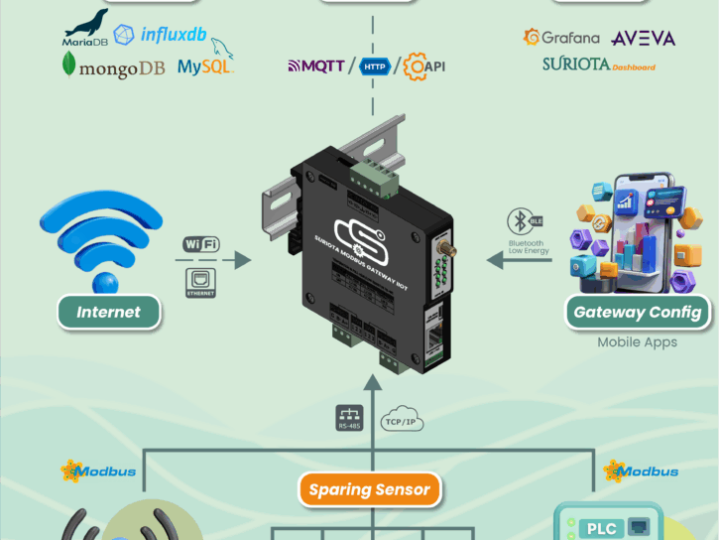
WIZnet - W5500
x 1

산업 자동화 환경에서는 PLC, 센서, 계측기 등 다양한 장비가 Modbus RTU 또는 Modbus TCP 프로토콜을 사용하여 데이터를 교환합니다. Modbus는 산업 현장에서 널리 사용되는 안정적인 프로토콜이지만, 현대 IoT 시스템과 직접 연결하기에는 한계가 있습니다.
IoT 플랫폼은 일반적으로 다음과 같은 프로토콜을 사용합니다.
- MQTT
- HTTP / HTTPS
- REST API
이 때문에 산업 장비에서 생성되는 데이터를 클라우드나 데이터 플랫폼으로 전달하려면 프로토콜 변환 장치, 즉 IoT 게이트웨이가 필요합니다.
Suriota Modbus Gateway IIoT는 이러한 역할을 수행하는 산업용 게이트웨이로, Modbus 기반 산업 데이터를 수집하고 IoT 플랫폼에서 사용할 수 있는 형식으로 변환합니다. 이를 통해 기존 산업 설비를 변경하지 않고도 클라우드 기반 모니터링 시스템을 구축할 수 있습니다.
이 장치는 제조, 에너지 관리, 해양 산업, 농업, 환경 모니터링 등 다양한 산업 환경에서 활용될 수 있습니다.
Suriota 소개
Suriota는 산업 환경에서 발생하는 데이터를 IoT 플랫폼과 연결하는 솔루션을 개발하는 기술 기업입니다. 산업 자동화 시스템에서 생성되는 데이터를 수집하고 이를 클라우드 기반 데이터 플랫폼으로 전달하는 다양한 IoT 장비와 시스템을 개발하고 있습니다.
특히 Modbus 기반 산업 장비와 IoT 데이터 플랫폼을 연결하는 Industrial IoT Gateway 기술에 집중하고 있으며, 데이터 수집, 통신 변환, 그리고 클라우드 연동을 통합적으로 지원하는 솔루션을 제공하고 있습니다.
Suriota Modbus Gateway는 이러한 산업 데이터 연결을 위한 핵심 장비로 설계된 제품입니다.
Suriota Modbus Gateway IIoT
SRT-MGATE-1210은 Modbus 기반 산업 장비를 IoT 플랫폼과 연결하기 위한 산업용 게이트웨이입니다.
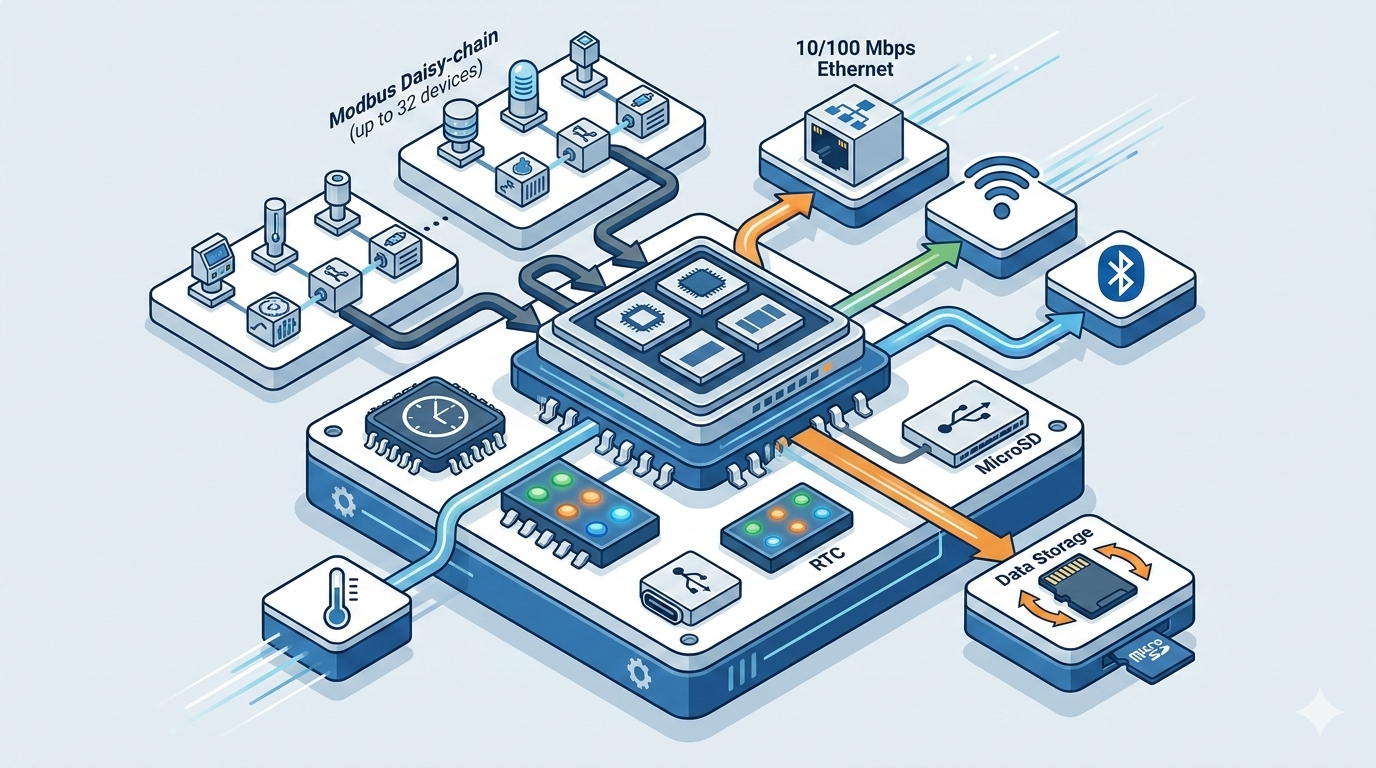
이 장치는 다음과 같은 역할을 수행합니다.
- 산업 장비의 Modbus 데이터 수집
- Modbus 데이터를 구조화된 데이터로 변환
- MQTT 또는 HTTP를 통한 데이터 전송
- IoT 플랫폼 및 데이터 분석 시스템과 연동
산업 장비에서 생성되는 다양한 데이터를 실시간으로 수집하여 대시보드나 클라우드 플랫폼에서 모니터링할 수 있도록 지원합니다.
대표적으로 다음과 같은 데이터를 수집할 수 있습니다.
- 장비 상태 정보
- 온도 및 환경 데이터
- 전력 및 에너지 데이터
- 장비 운영 지표
이러한 데이터는 JSON 형식 또는 MQTT 메시지 형태로 변환되어 데이터 플랫폼으로 전달됩니다.
Gateway 하드웨어 구조
Suriota Modbus Gateway는 ESP32-S3 기반 하드웨어 플랫폼을 중심으로 구성되어 있습니다.
주요 하드웨어 구성은 다음과 같습니다.
메인 프로세서
- ESP32-S3-WROOM-1
- Dual-core 240 MHz
- 512 KB SRAM
- 8 MB PSRAM
네트워크 인터페이스
- Ethernet 10/100 Mbps
- Wi-Fi 2.4 GHz
- Bluetooth Low Energy (BLE)
산업용 인터페이스
- RS-485 포트 2개
- 포트당 최대 32개의 Modbus 장비 연결 가능
저장 장치
- MicroSD 슬롯 (최대 32GB)
MicroSD 저장 기능은 네트워크 장애 발생 시 데이터를 로컬에 저장하여 데이터 손실을 방지하는 역할을 합니다.
또한 장치에는 RTC(Real-Time Clock), 상태 표시 LED, USB-C 디버깅 포트 등이 포함되어 있습니다.
산업 환경에서의 사용을 고려하여 장치는 약 −40°C ~ 75°C 범위의 환경에서도 동작하도록 설계되었습니다.
통신 인터페이스와 프로토콜
Suriota Gateway는 산업 장비와 IoT 플랫폼 사이에서 프로토콜 변환 역할을 수행합니다.
지원되는 산업 프로토콜은 다음과 같습니다.
Industrial Protocol
- Modbus RTU
- Modbus TCP
이를 통해 기존 산업 장비와 직접 통신할 수 있습니다.
IoT 플랫폼과의 통신을 위해 다음 프로토콜을 지원합니다.
IoT Protocol
- MQTT
- HTTP / HTTPS
- REST API
이 구조를 통해 산업 장비 데이터는 IoT 플랫폼에서 쉽게 활용할 수 있는 데이터 형식으로 변환됩니다.
Gateway 소프트웨어 구조
Gateway의 펌웨어는 FreeRTOS 기반 구조로 동작하며 여러 서비스가 동시에 실행됩니다.
주요 소프트웨어 모듈은 다음과 같습니다.
- Modbus RTU Service
- Modbus TCP Service
- Network Manager
- MQTT Manager
- HTTP Manager
- Queue Manager
- Configuration Manager
이 구조는 데이터 수집, 처리, 전송 과정을 병렬적으로 처리할 수 있도록 설계되어 있습니다.
또한 데이터 큐 기반 구조를 사용하여 네트워크 장애 발생 시에도 데이터가 손실되지 않도록 설계되었습니다.
네트워크 연결과 안정성
산업 환경에서는 네트워크 안정성이 매우 중요합니다.
Suriota Gateway는 다음과 같은 이중 네트워크 구조를 지원합니다.
- Ethernet 연결
- Wi-Fi 연결
일반적으로 Ethernet이 기본 네트워크로 사용되며, 필요할 경우 Wi-Fi를 보조 네트워크로 사용할 수 있습니다.
이러한 구조는 네트워크 장애 상황에서도 데이터 전송을 유지할 수 있도록 설계되었습니다.
또한 다음과 같은 기능을 통해 안정성을 강화합니다.
- 데이터 큐 기반 전송
- 자동 재연결 기능
- 로컬 데이터 저장
WIZnet Insight
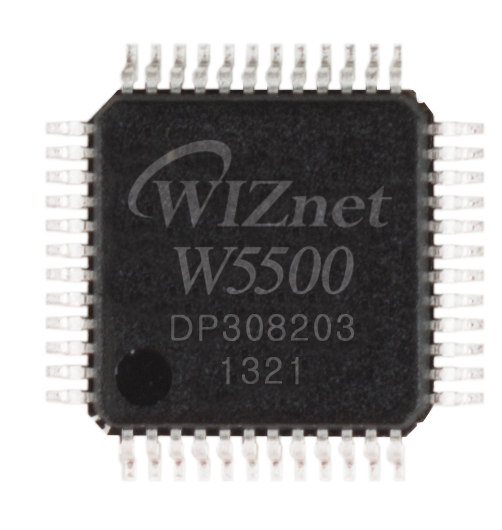
산업용 IoT 게이트웨이에서 안정적인 네트워크 연결은 매우 중요한 요소입니다. 이 Gateway 설계에서는 WIZnet W5500 Ethernet 컨트롤러를 사용하여 유선 네트워크 연결을 구현합니다.
W5500은 SPI 인터페이스를 통해 MCU와 연결되는 Ethernet 컨트롤러로, 하드웨어 기반 TCP/IP 처리를 지원합니다. 이를 통해 마이크로컨트롤러의 네트워크 처리 부담을 줄이고 안정적인 통신을 유지할 수 있습니다.
산업용 IoT 게이트웨이에서 이러한 구조는 다음과 같은 장점을 제공합니다.
- 안정적인 유선 네트워크 연결
- MCU 네트워크 처리 부하 감소
- 임베디드 시스템과의 간단한 SPI 인터페이스 연결
이러한 이유로 W5500과 같은 하드웨어 Ethernet 컨트롤러는 산업용 Edge IoT 장치에서 널리 사용됩니다.
산업 적용 사례
Suriota Modbus Gateway는 다양한 산업 환경에서 활용될 수 있습니다.
공장 자동화 모니터링
생산 장비의 상태와 운영 데이터를 수집하여 실시간 모니터링 시스템을 구축할 수 있습니다.
에너지 관리 시스템
전력 계측기 데이터를 수집하여 에너지 사용량 분석과 최적화를 지원합니다.
환경 모니터링
온도, 습도, 공기 품질 등 환경 데이터를 수집하여 산업 시설의 환경 상태를 관리할 수 있습니다.
설비 예지 정비
장비 운영 데이터를 분석하여 이상 징후를 조기에 발견하고 유지보수를 예측할 수 있습니다.
FAQ
Modbus Gateway가 필요한 이유는 무엇인가요?
많은 산업 장비는 Modbus 프로토콜을 사용하지만 IoT 플랫폼은 MQTT나 HTTP 기반으로 동작합니다. Gateway는 이 두 시스템을 연결하는 역할을 수행합니다.
Gateway에는 몇 개의 장비를 연결할 수 있나요?
RS-485 포트 2개가 제공되며 각 포트에 최대 32개의 Modbus 장비를 연결할 수 있습니다.
네트워크 장애가 발생하면 어떻게 되나요?
Gateway는 데이터를 로컬에 저장하거나 큐에 보관한 후 네트워크가 복구되면 다시 전송합니다.
클라우드 플랫폼과 연결할 수 있나요?
MQTT, HTTP, REST API를 통해 다양한 IoT 플랫폼과 연동할 수 있습니다.
왜 산업 환경에서는 Ethernet이 중요한가요?
Ethernet은 안정적이고 예측 가능한 통신 환경을 제공하기 때문에 산업 네트워크에서 중요한 역할을 합니다.
Industrial automation systems frequently depend on devices that communicate using Modbus RTU over RS-485 or Modbus TCP networks. While Modbus is widely adopted and reliable in industrial environments, it is not directly compatible with modern IoT platforms that use protocols such as MQTT or REST APIs.
Typical IoT systems rely on:
- MQTT
- HTTP / HTTPS
- REST APIs
As a result, bridging industrial equipment with modern cloud systems requires a protocol translation device, commonly known as an Industrial IoT gateway.
The Suriota Modbus Gateway IIoT is designed to fulfill this role. It collects operational data from Modbus-based equipment and converts it into IoT-compatible formats that can be transmitted to cloud platforms or on-premise servers.
This approach allows organizations to modernize their monitoring systems without replacing existing industrial equipment.
Typical data sources include:
- PLC controllers
- Environmental sensors
- Energy meters
- Industrial machinery
The gateway converts raw device data into structured formats such as JSON payloads or MQTT messages, enabling integration with dashboards, analytics platforms, and monitoring systems.
About Suriota
Suriota develops Industrial IoT solutions designed to connect operational technology (OT) systems with modern data platforms. The company focuses on enabling industrial environments to collect, transmit, and analyze operational data through IoT technologies.
Its product portfolio centers on technologies that enable industrial connectivity, including gateways that integrate Modbus-based automation systems with modern cloud infrastructures. Through these solutions, Suriota helps organizations build scalable data collection systems without requiring major changes to existing industrial installations.
Suriota Modbus Gateway IIoT
The SRT-MGATE-1210 is an industrial IoT gateway designed to connect Modbus-based devices with IoT platforms.
The device performs several key functions:
- Collecting data from Modbus-enabled equipment
- Parsing and mapping industrial data registers
- Converting Modbus data into structured formats
- Publishing data to IoT systems through MQTT or HTTP
This capability allows industrial operational data to be monitored through dashboards, data platforms, or cloud analytics services.
Typical data types collected include:
- Machine operating status
- Environmental sensor readings
- Energy consumption data
- Equipment performance metrics
Once collected, the data can be transmitted in structured formats suitable for real-time monitoring and analytics.
Hardware Architecture
The gateway hardware platform is built around the ESP32-S3-WROOM-1 module, a dual-core microcontroller designed for network-connected embedded systems.
Key hardware specifications include:
Main Processor
- ESP32-S3 dual-core processor (240 MHz)
- 512 KB SRAM
- 8 MB PSRAM
Network Connectivity
- 10/100 Mbps Ethernet interface
- 2.4 GHz Wi-Fi connectivity
- Bluetooth Low Energy (BLE 5.0) for device configuration
Industrial Interfaces
- Two isolated RS-485 ports for Modbus RTU communication
- Up to 32 Modbus devices per port
- Storage and Logging
- MicroSD slot supporting up to 32 GB storage
The MicroSD storage allows the gateway to store operational data locally in CSV or JSON formats when network connectivity is temporarily unavailable.
Additional hardware components include a real-time clock (RTC), system status indicators, and a USB-C interface for debugging and firmware updates.
The device is designed for industrial environments and supports an operating temperature range of −40°C to 75°C, enabling reliable operation in harsh deployment conditions.
Communication Interfaces and Protocol Support
The Suriota gateway supports both industrial automation protocols and modern IoT communication standards.
Industrial Protocols
- Modbus RTU (RS-485)
- Modbus TCP/IP
These protocols allow the gateway to communicate directly with existing industrial equipment.
IoT Communication Protocols
MQTT
- HTTP / HTTPS
- REST API
Through this protocol conversion capability, Modbus data can be integrated with cloud platforms, monitoring dashboards, and analytics systems.
Data payloads are typically formatted as structured JSON messages or custom MQTT topics.
Software Architecture
The firmware of the gateway is built on a FreeRTOS-based architecture, allowing multiple services to operate concurrently.
Key software components include:
- Modbus RTU Service
- Modbus TCP Service
- Network Manager
- MQTT Manager
- HTTP Service
- Queue Manager
- Configuration Manager
This modular design allows the gateway to simultaneously perform data acquisition, processing, and network communication tasks.
A queue-based data processing mechanism ensures that collected data is temporarily stored before transmission, improving reliability in environments where network connectivity may fluctuate.
Connectivity and Network Reliability
Reliable connectivity is critical in industrial IoT systems. The Suriota gateway supports dual network connectivity to enhance communication reliability.
The device includes:
- Ethernet connectivity
- Wi-Fi connectivity
Ethernet is typically used as the primary network interface, while Wi-Fi can serve as a secondary connection when required.
Additional reliability features include:
- Automatic network reconnection
- Local data buffering
- Real-time system monitoring through LED indicators
These capabilities help ensure that operational data can be reliably transmitted even in challenging industrial environments.
WIZnet Insight
Stable wired connectivity plays an essential role in industrial IoT gateway design. In this gateway architecture, Ethernet connectivity is implemented using the WIZnet W5500 Ethernet controller, which communicates with the ESP32-S3 through an SPI interface.
The W5500 integrates a hardware TCP/IP offload engine that manages network protocol processing internally. This design reduces the networking workload placed on the microcontroller and helps maintain reliable communication in systems where multiple tasks and protocols are operating simultaneously.
For industrial IoT gateways, this architecture provides several advantages:
- Stable wired Ethernet connectivity in industrial environments
- Reduced microcontroller processing overhead for networking
- Efficient integration with embedded platforms through SPI interfaces
These characteristics make hardware Ethernet controllers such as the W5500 well suited for industrial edge devices responsible for continuous data collection.
Industrial Application Scenarios
The Suriota Modbus Gateway can be deployed in a wide range of industrial monitoring applications.
Factory Equipment Monitoring
Operational data from industrial machines can be collected and visualized through centralized dashboards.
Energy Management Systems
Energy meters and power monitoring devices can transmit usage data for energy optimization and reporting.
Environmental Monitoring
Facilities can monitor environmental parameters such as temperature, humidity, and air quality.
Predictive Maintenance
Machine performance data can be analyzed to identify anomalies and predict maintenance requirements.
FAQ
Why is a Modbus gateway required for industrial IoT systems?
Many industrial devices communicate using Modbus protocols that are not directly compatible with modern IoT platforms. A gateway converts these protocols into IoT-compatible communication methods such as MQTT or HTTP.
How many devices can the gateway connect to?
The gateway provides two RS-485 ports, each capable of connecting up to 32 Modbus devices.
What happens if network connectivity is lost?
The gateway can temporarily store collected data locally and retransmit it once network connectivity is restored.
Can the gateway connect to cloud platforms?
Yes. Through MQTT, HTTP, or REST APIs, the gateway can integrate with cloud services or on-premise monitoring systems.
Why is Ethernet still important in industrial IoT systems?
Ethernet provides stable, deterministic communication that is often preferred in industrial environments where reliability is critical.
-
GatewaySuriotaPOC

-
SRT-MGATE-1210 User Guide Project