


Amped-ESP32 & Amped-ESP32-Plus
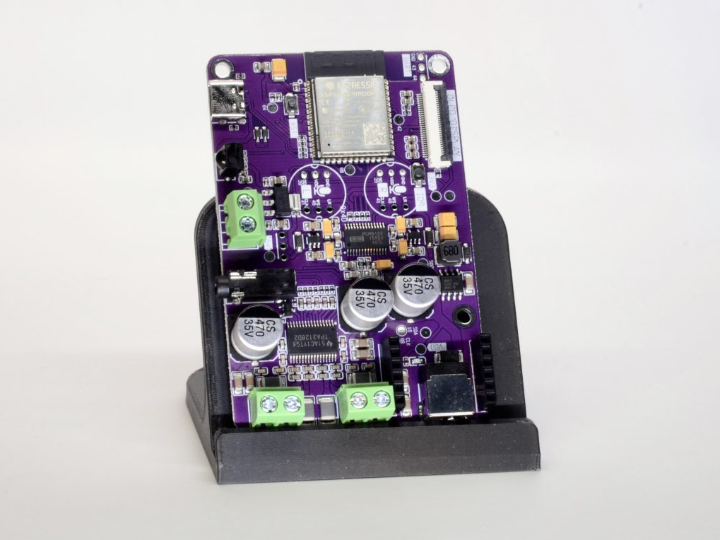
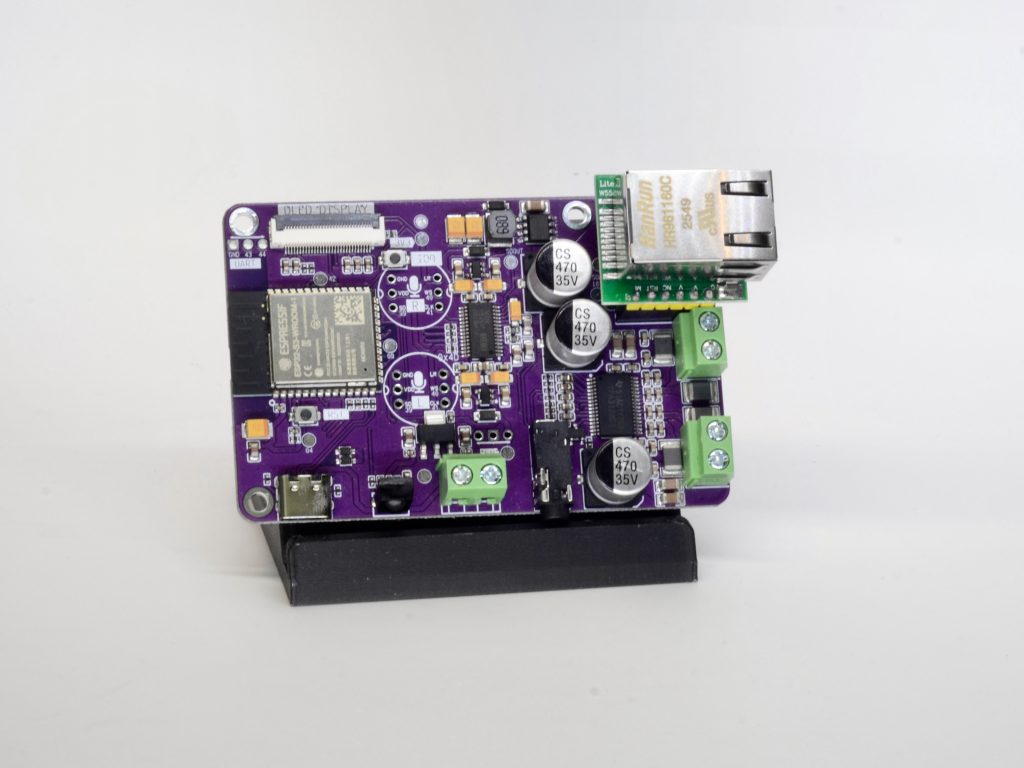
Amped-ESP32 and Amped-ESP32-Plus combine ubiquitous ESP32 with a PCM51XX series HiFi DAC, teamed up with a highly efficient TPA3110 or TPA3118 D-class amplifier
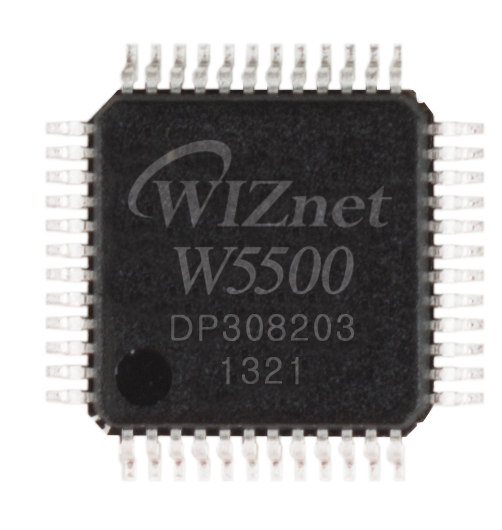
WIZnet - W5500
x 1

요약
Amped-ESP32는 ESP32 MCU, 32비트 HiFi DAC, D급 앰프를 단일 보드에 통합한 오픈소스 네트워크 오디오 플레이어 플랫폼입니다. W5500 SPI 이더넷 모듈을 선택적으로 장착할 수 있는 헤더를 기본 제공하여, Wi-Fi 혼잡 환경에서도 안정적인 고비트레이트 오디오 스트리밍을 실현합니다. Squeezelite-ESP32, Snapclient, Home Assistant 등 주요 오픈소스 펌웨어를 모두 지원하는 완결형 플랫폼으로, 스마트홈 메이커부터 임베디드 오디오 교육자까지 폭넓게 활용할 수 있습니다.
개요
ESP32로 오디오 프로젝트를 시작하면 비슷한 벽에 부딪힙니다. DAC 보드 따로, 앰프 따로, 여기에 Wi-Fi 혼잡 환경에서의 스트리밍 끊김까지. 그리고 매번 반복되는 I2S 배선과 라이브러리 충돌 문제. Sonocotta의 Amped-ESP32는 이 고민들을 하나의 보드로 해결하기 위해 설계되었습니다.
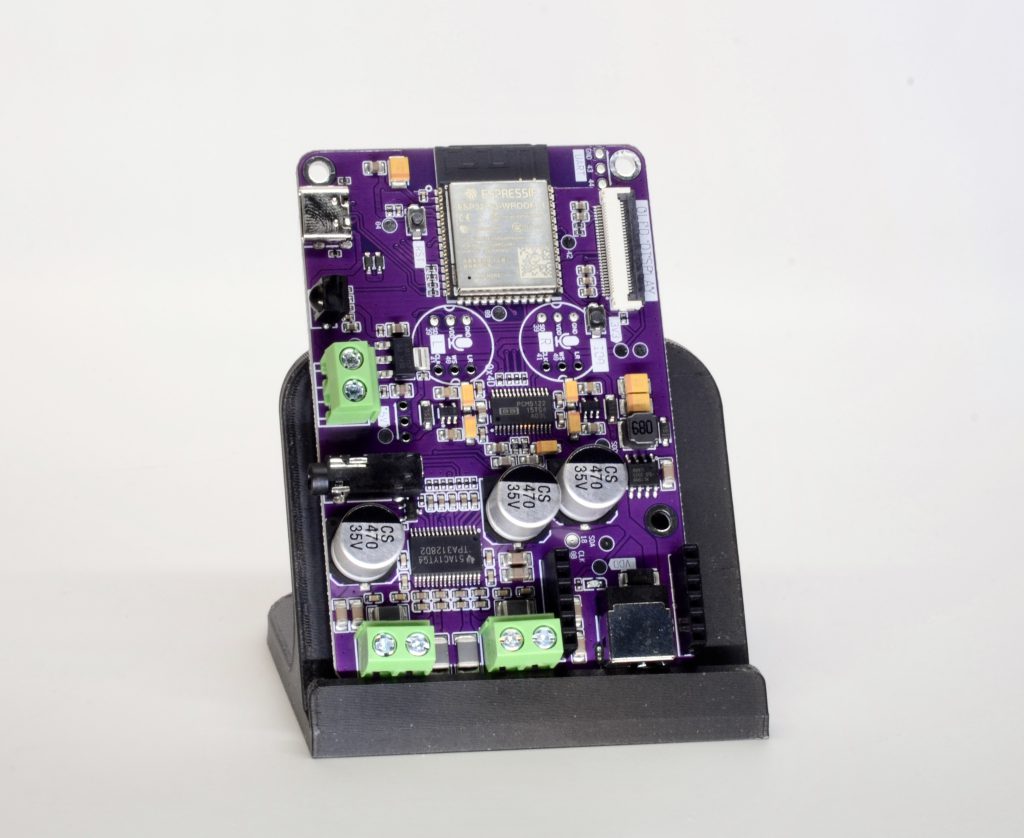
PCM51xx 계열 HiFi DAC와 TPA31xx D급 앰프를 ESP32와 함께 단일 PCB에 통합해, I2S 신호만 있으면 스피커에 직접 연결할 수 있는 완결형 구성을 제공합니다. 8MB PSRAM을 탑재해 스트리밍 버퍼링을 안정적으로 처리하며, 하드웨어는 완전히 오픈소스로 공개되어 있습니다.
네트워크 측면에서는 Wi-Fi를 기본으로 사용하되, 혼잡한 무선 환경을 위해 W5500 SPI 이더넷 모듈을 납땜할 수 있는 전용 헤더를 모든 보드 버전에 제공합니다. 스마트홈 DIY 메이커, 멀티룸 오디오 구축자, 임베디드·디지털 오디오 교육자가 주요 대상입니다.
하드웨어 구성 한눈에 보기
Amped 라인업은 DAC와 앰프 조합에 따라 네 가지 구성으로 나뉩니다.
| 항목 | Amped-ESP32 (TPA3110) | Amped-ESP32 (TPA3128) | Amped-ESP32-Plus (TPA3110) | Amped-ESP32-Plus (TPA3118) |
|---|---|---|---|---|
| DAC | PCM5100A | PCM5100A | PCM5122 | PCM5122 |
| 노이즈 레벨 | -100 dB | -100 dB | -112 dB | -112 dB |
| DSP | ❌ | ❌ | 6밴드 EQ, 디지털 볼륨 | 6밴드 EQ, 디지털 볼륨 |
| 앰프 출력 (4Ω) | 2×25W | 2×40W | 2×25W | 2×40W |
| 전원 | 9~28V | 5~28V | 9~28V | 5~28V |
| Line-out | 2.1V RMS | 2.1V RMS | 2.1V RMS | 2.1V RMS |
공통 사양:
- MCU: ESP32-WROVER-N8R8 또는 ESP32-S3-WROOM-N8R8 선택
- Flash / PSRAM: 8MB / 8MB
- 연결성: Wi-Fi + BT4.2 + BLE + Ethernet (W5500 옵션)
- 선택 주변기기: OLED 0.96", WS2812B RGB LED, IR 수신기, W5500 이더넷
⚠️ 헤드폰과 스피커 동시 구동은 지원하지 않습니다. 헤드폰 출력만 필요한 경우 HiFi-ESP32, 스피커 직결만 필요한 경우 Loud-ESP32가 더 적합합니다.
아키텍처
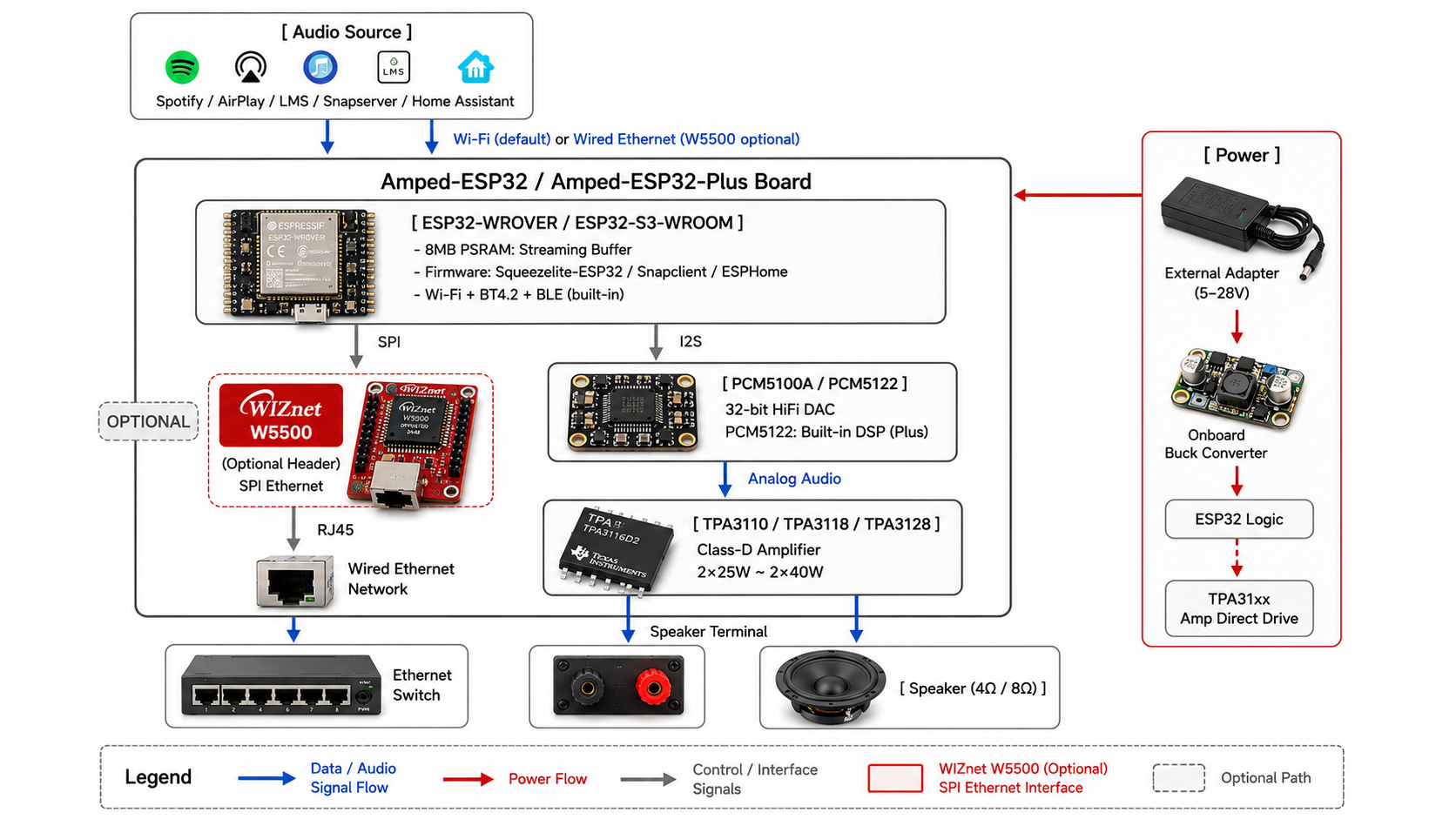
Amped-ESP32의 신호 흐름은 크게 네트워크 수신 → 디코딩·버퍼링 → I2S 출력 → DAC → 앰프 → 스피커로 구성됩니다.
기술 특징
8MB PSRAM — 스트리밍 안정성의 핵심
오디오 스트리밍은 네트워크 지연이 발생해도 재생이 끊기지 않도록 충분한 버퍼를 유지해야 합니다. ESP32 기본 내장 RAM(약 500KB)만으로는 고비트레이트 스트리밍에서 버퍼 고갈이 발생하기 쉽습니다. Amped-ESP32는 8MB PSRAM을 고속 인터페이스로 연결해 이 문제를 구조적으로 해결합니다.
오픈소스 펌웨어 생태계
별도 개발 없이 바로 사용할 수 있는 펌웨어가 다수 지원됩니다.
- Squeezelite-ESP32: Spotify Connect, AirPlay, Logitech Media Server(LMS) 지원. 브라우저 기반 웹 인스톨러로 플래싱 가능
- Snapclient: Snapserver와 연동한 멀티룸 오디오 동기화. 지연 보정으로 여러 노드 간 완벽한 동기 재생
- ESPHome: Home Assistant와 직접 통합. 미디어 플레이어, TTS 알림, 음악 재생 자동화 설정 가능
- Tasmota: MQTT 브로커 연동, 경량 스마트홈 통합
- Arduino IDE / PlatformIO: 커스텀 펌웨어 개발 환경, 예제 코드 제공
PCM5122 DSP (Plus 모델 전용)
Amped-ESP32-Plus에 탑재된 PCM5122 DAC는 내장 DSP를 통해 다음 기능을 제공합니다.
- 6밴드 파라메트릭 EQ: 룸 보정 및 스피커 특성 조정
- 디지털 볼륨 컨트롤: 소프트웨어 볼륨 대비 해상도 손실 없음
- DRC(Dynamic Range Compression): 동적 범위 제어
- 2.1 시스템 구성 가능: PCM5122 + PCM5102 마스터-슬레이브 연결로 서브우퍼 채널 추가
W5500이 이 보드에서 하는 일
Sonocotta는 제품 페이지에서 그 이유를 직접 밝히고 있습니다. "고비트레이트 오디오를 Wi-Fi로 스트리밍할 때 혼잡 환경에서 문제가 생길 수 있으므로, 모든 보드에 W5500 SPI 이더넷 모듈을 납땜할 수 있는 헤더를 제공한다"고 명시합니다. 설계 단계부터 유선 이더넷을 대안으로 고려했다는 의미입니다.
W5500 적용 구조:
- 인터페이스: SPI → W5500 → RJ45 유선 이더넷
- 조달: 시중에서 쉽게 구할 수 있는 W5500 SPI 모듈을 보드 헤더에 납땜
- 운영 방식: W5500 장착 후 Squeezelite-ESP32 등 펌웨어의 Ethernet 설정을 활성화하면 Wi-Fi 대신 유선 이더넷으로 네트워크 연결
실용적 효과:
- 아파트, 강의실, 오피스 등 Wi-Fi 혼잡 환경에서 오디오 스트리밍 안정성 확보
- Snapclient 멀티룸 구성 시 유선 연결로 노드 간 동기화 정확도 향상
- 무선 채널 경쟁 없는 일정한 네트워크 지연 보장
⚠️ [추정] 네트워크 스택 주의: Squeezelite-ESP32, Snapclient, ESPHome 모두 ESP-IDF 또는 Arduino 프레임워크 기반으로 동작합니다. 이 경우 W5500은 ESP32의
esp_eth드라이버를 경유하며, TCP/IP 처리는 ESP32 위의 LwIP 스택에서 수행될 가능성이 높습니다.
Amped vs. Louder — 어떤 보드를 선택할까?
Sonocotta의 ESP32 오디오 라인업에서 Amped와 Louder는 같은 플랫폼을 공유하면서도 설계 철학이 다릅니다.
| 항목 | Amped-ESP32 | Louder-ESP32 |
|---|---|---|
| DAC + 앰프 구성 | PCM51xx(DAC) + TPA31xx(앰프) 분리형 | TAS5805M 통합형 (DAC + 앰프 일체) |
| DSP 역량 | Plus 모델: 6밴드 EQ, 기본 DRC | Plus 모델: 15밴드 EQ, 128-tap FIR, 3밴드 DRC, Smart Bass 등 |
| Line-out | ✅ 2.1V RMS (외부 앰프·헤드폰 연결 가능) | ❌ |
| 최소 전원 | TPA3110: 9V 이상 필요 | TPA3128 기반: 5V USB-C 가능 (저출력 시) |
| BOM 복잡도 | DAC + 앰프 분리 → 설계 유연성 높음 | 단일 칩 통합 → BOM 단순 |
| 음질 특성 | 아날로그 단 분리 설계, 라인레벨 출력 별도 제공 | TAS5805M 내장 DSP로 디지털 처리 중심 |
Amped를 선택하면 좋은 상황:
- 외부 앰프나 헤드폰으로 Line-out 출력이 필요한 경우
- PCM5122의 6밴드 EQ로 스피커 보정을 직접 제어하고 싶은 경우
- 2.1 채널 시스템(서브우퍼 추가)을 구성하려는 경우
Louder를 선택하면 좋은 상황:
- 강력한 DSP(15밴드 EQ, Smart Bass 등)를 적극 활용하고 싶은 경우
- BOM을 단순화해 설계를 간결하게 유지하고 싶은 경우
- 5V 단일 전원으로 동작시켜야 하는 경우
Louder ESP32 Plus Maker's Link: https://maker.wiznet.io/bruno/resellers/louder-esp32-plus/
실제 사용 시나리오
스마트홈 오디오 & TTS 알림 Home Assistant + ESPHome 조합으로 Amped-ESP32를 스마트홈 오디오 노드로 구성합니다. 현관 도어벨, 보안 알림, 날씨 안내 등 TTS 음성 알림을 고음질로 출력할 수 있으며, 음악 재생 중 알림 시 자동 볼륨 덕킹(ducking)도 지원합니다.
멀티룸 오디오 — Snapclient 구성 각 방에 Amped-ESP32를 Snapclient 노드로 배치하고 Snapserver와 연결하면, 여러 방에서 음악을 완벽하게 동기화해 재생할 수 있습니다. 이 구성에서 W5500 유선 이더넷의 효과가 가장 두드러집니다. Wi-Fi 혼잡 환경에서 동기화가 흔들릴 때, 유선 이더넷 전환만으로 안정성이 크게 개선됩니다.
독립 네트워크 플레이어 — Squeezelite-ESP32 Squeezelite-ESP32 펌웨어를 사용하면 외부 컴퓨터 없이 Spotify Connect, AirPlay, Logitech Media Server 스트리밍을 단독으로 처리할 수 있습니다. 플래싱은 브라우저 기반 웹 인스톨러로 간단히 진행할 수 있어 진입 장벽이 낮습니다.
교육·연구 플랫폼 임베디드 시스템, 디지털 오디오, 네트워킹을 하나의 보드에서 통합 실습할 수 있어 학교·대학·기술교육기관에서 활용하기에 적합합니다. I2S 인터페이스, PCM5122 DSP 레지스터 제어, ESPHome YAML 설정까지 실습 범위가 다양합니다. 오픈소스 하드웨어·소프트웨어 구조 덕분에 커스텀 실습 환경 구성도 자유롭습니다.
한계 및 개선 방향
Amped-ESP32는 완성도 높은 플랫폼이지만, 몇 가지 구조적 트레이드오프가 있습니다. 이는 비판보다 다음 단계로 발전시킬 수 있는 지점으로 이해하는 것이 적절합니다.
현재 한계:
- W5500 장착 시 케이스 미적용: W5500 모듈을 납땜하면 보드 높이가 증가해 Raspberry Pi 4 호환 케이스에 들어가지 않습니다. 유선 이더넷과 케이스를 동시에 갖추려면 케이스 가공이 필요합니다.
- 네트워크-오디오 CPU 경합 가능성 [추정]: W5500을 esp_eth 드라이버 경유로 사용할 경우, LwIP 처리가 ESP32 코어 일부를 점유합니다. 오디오 디코딩과 네트워크 처리 간 CPU 경합이 발생할 수 있으며, 고부하 상황에서의 동작 안정성은 별도 검증이 필요합니다.
- 헤드폰·스피커 동시 구동 불가: 하드웨어 구조상 헤드폰 출력과 스피커 출력을 동시에 사용할 수 없습니다. (보드 개조 시 가능하다고 명시되어 있음)
- TPA3110 모델 발열: TPA3110 기반 모델은 TPA3128 대비 효율이 낮아 장시간 고출력 운용 시 발열 관리가 필요합니다.
개선 방향:
- 케이스 대응: W5500 모듈 높이를 수용하는 커스텀 케이스 또는 확장 스페이서를 적용하면 케이스 문제를 해결할 수 있습니다. 저프로파일 W5500 모듈을 선택하는 것도 한 방법입니다.
- CPU 부하 분산: ESP32-S3 버전 선택 시 듀얼코어 구조를 활용해 오디오 처리 코어와 네트워크 처리 코어를 분리하면 경합을 줄일 수 있습니다 [추정].
- 앰프 모델 선택: 발열이 우려되는 환경에서는 TPA3128 기반 모델(5V 지원, 고효율)을 선택하면 더 안정적인 장시간 운용이 가능합니다.
FAQ
Q1. W5500 이더넷 모듈은 꼭 필요한가요? Wi-Fi만으로는 부족한가요? 환경에 따라 다릅니다. Wi-Fi가 안정적인 가정 환경에서는 W5500 없이도 대부분의 스트리밍이 원활합니다. 다만 멀티룸 Snapclient 구성, 아파트·오피스 등 혼잡한 Wi-Fi 환경, 24시간 무중단 운용 시나리오에서는 W5500 유선 이더넷이 체감 차이를 만들어냅니다. 헤더가 기본 제공되므로 나중에 추가 장착도 쉽습니다.
Q2. Amped-ESP32-Plus는 어떤 경우에 선택해야 하나요? 기본형(PCM5100A)은 단순 음악 재생과 TTS 알림에 충분합니다. 스피커 특성 보정, 룸 EQ, 2.1 채널 구성이 필요하다면 Plus(PCM5122) 모델을 선택하세요. 디지털 볼륨 컨트롤도 소프트웨어 볼륨 대비 음질 손실이 없어 오디오 품질에 민감한 용도에 유리합니다.
Q3. 기존 ESP32 Arduino 코드를 그대로 사용할 수 있나요? 네. Amped-ESP32는 I2S 신호만 있으면 동작하도록 설계되어, 기존 ESP32 Arduino 오디오 예제 코드를 그대로 적용할 수 있습니다. W5500 이더넷 사용 시에는 Ethernet 설정 부분만 추가하면 됩니다.
Q4. W5500 장착 후 케이스를 사용할 방법이 있나요? 현재 Raspberry Pi 4 호환 케이스는 W5500 모듈 높이를 수용하지 못합니다. 케이스 상단에 슬롯을 가공하거나, 스페이서로 높이를 확보하는 방식이 현실적인 해결책입니다. 혹은 케이스 없이 DIN 레일 마운트 플레이트를 활용하는 방법도 있습니다.
Q5. Snapclient 멀티룸 구성 시 권장 네트워크 설정은? 가능하면 모든 Snapclient 노드를 W5500 유선 이더넷으로 연결하고, 동일 스위치에 집결시키는 것이 이상적입니다. Snapserver와 클라이언트 간 지연 편차를 최소화할 수 있습니다. Wi-Fi 혼용 시에는 Wi-Fi 노드의 동기화 오차가 발생할 수 있으므로, 중요한 청취 공간부터 유선으로 전환하는 것을 권장합니다.
Summary
Amped-ESP32 is an open-source network audio player platform that integrates an ESP32 MCU, a 32-bit HiFi DAC, and a Class-D amplifier onto a single board. Every board version includes a dedicated header for an optional W5500 SPI Ethernet module, enabling stable high-bitrate audio streaming even in congested Wi-Fi environments. With native support for Squeezelite-ESP32, Snapclient, Home Assistant, and more, Amped-ESP32 is a complete, ready-to-run platform for smart home makers, multi-room audio builders, and embedded audio educators alike.
Overview
Anyone who has built an ESP32 audio project knows the familiar frustrations: sourcing a DAC board separately, wiring up an amplifier, and dealing with stuttering streams over a crowded Wi-Fi network. Sonocotta's Amped-ESP32 was designed to address all of these in a single board.
By integrating a PCM51xx-series HiFi DAC and a TPA31xx Class-D amplifier alongside the ESP32 on one PCB, the board delivers a complete audio chain — from network stream to speaker output — requiring nothing more than a valid I2S signal to operate. An onboard 8MB PSRAM handles streaming buffers reliably, and the full hardware design is released as open-source.
On the network side, Wi-Fi is the default, but every board version ships with a dedicated header for soldering in a W5500 SPI Ethernet module — a deliberate provision for environments where wireless connections fall short. The primary audience includes smart home DIY makers, multi-room audio enthusiasts, and educators working at the intersection of embedded systems and digital audio.
Hardware at a Glance
The Amped lineup comes in four configurations, differentiated by DAC and amplifier pairing.
| Spec | Amped-ESP32 (TPA3110) | Amped-ESP32 (TPA3128) | Amped-ESP32-Plus (TPA3110) | Amped-ESP32-Plus (TPA3118) |
|---|---|---|---|---|
| DAC | PCM5100A | PCM5100A | PCM5122 | PCM5122 |
| Noise Floor | −100 dB | −100 dB | −112 dB | −112 dB |
| DSP | ❌ | ❌ | 6-band EQ, digital volume | 6-band EQ, digital volume |
| Output (4Ω) | 2×25W | 2×40W | 2×25W | 2×40W |
| Power Input | 9–28V | 5–28V | 9–28V | 5–28V |
| Line-out | 2.1V RMS | 2.1V RMS | 2.1V RMS | 2.1V RMS |
Common specs across all variants:
- MCU: ESP32-WROVER-N8R8 or ESP32-S3-WROOM-N8R8 (selectable)
- Flash / PSRAM: 8MB / 8MB
- Connectivity: Wi-Fi + BT4.2 + BLE + Ethernet (W5500 optional)
- Optional peripherals: 0.96" OLED, WS2812B RGB LED, IR receiver, W5500 Ethernet
⚠️ Simultaneous headphone and speaker output is not supported. If you only need line-level output, consider HiFi-ESP32. If you only need speaker output without headphone support, Loud-ESP32 is a simpler fit.
Architecture
The Amped-ESP32 signal chain follows a straightforward path: network receive → decode and buffer → I2S output → DAC → amplifier → speaker.
Technical Highlights
8MB PSRAM — The Foundation of Streaming Stability
Audio streaming demands a consistent buffer to survive network jitter without dropouts. The ESP32's built-in RAM (~500KB) is too limited for high-bitrate streams, making buffer starvation a recurring problem in many DIY builds. Amped-ESP32 solves this structurally by connecting 8MB PSRAM over a high-speed interface, providing enough headroom for reliable buffered playback.
Open-Source Firmware Ecosystem
The board works out of the box with several well-maintained open-source firmware options — no custom development required.
- Squeezelite-ESP32: Supports Spotify Connect, AirPlay, and Logitech Media Server (LMS). Flash directly from a browser-based web installer.
- Snapclient: Multi-room audio synchronization via Snapserver. Latency compensation keeps multiple nodes in perfect sync.
- ESPHome: Native Home Assistant integration. Supports media player components, TTS announcements, and music playback automation with volume ducking.
- Tasmota: MQTT broker integration for lightweight smart home setups.
- Arduino IDE / PlatformIO: Custom firmware development with example code provided.
PCM5122 DSP (Plus Models Only)
The PCM5122 DAC in the Plus variants includes an onboard DSP with the following capabilities:
- 6-band parametric EQ: Room correction and speaker characteristic tuning
- Digital volume control: No resolution loss compared to software volume adjustment
- DRC (Dynamic Range Compression): Dynamic range management
- 2.1 system support: PCM5122 + PCM5102 master-slave configuration for adding a subwoofer channel
Where W5500 Fits
Sonocotta states the rationale directly on the product page: "Streaming high-bitrate audio over Wi-Fi can be problematic in congested areas, so every board has a header that allows soldering in the W5500 SPI Ethernet module." Wired Ethernet was a deliberate design consideration from the start, not an afterthought.
How the W5500 integrates:
- Interface: SPI → W5500 → RJ45 wired Ethernet
- Module sourcing: Standard W5500 SPI breakout modules, widely available and easy to solder onto the onboard header
- Activation: Once soldered, enable the Ethernet interface in firmware (e.g., Squeezelite-ESP32's network settings) and the board switches from Wi-Fi to wired connectivity
Practical benefits:
- Stable audio streaming in apartments, offices, and classrooms with congested Wi-Fi
- Improved synchronization accuracy in Snapclient multi-room setups, where per-node latency consistency is critical
- Consistent, competition-free network latency regardless of wireless channel conditions
⚠️ [Inferred] Note on network stack: Squeezelite-ESP32, Snapclient, and ESPHome all run on the ESP-IDF or Arduino framework. In this context, the W5500 is most likely accessed via ESP32's
esp_ethdriver, with TCP/IP handled by the LwIP stack on the ESP32 — not by W5500's onboard hardwired TCP/IP engine. Whether the WIZnet hardware TCP/IP stack is directly utilized requires source-level firmware verification.
Amped vs. Louder — Which Board Should You Choose?
Within Sonocotta's ESP32 audio lineup, Amped and Louder share the same platform foundation but take different design approaches.
| Spec | Amped-ESP32 | Louder-ESP32 |
|---|---|---|
| DAC + Amp Architecture | PCM51xx (DAC) + TPA31xx (Amp) — separate chips | TAS5805M — integrated DAC + Amp |
| DSP Capability | Plus: 6-band EQ, basic DRC | Plus: 15-band EQ, 128-tap FIR, 3-band DRC, Smart Bass, and more |
| Line-out | ✅ 2.1V RMS (external amp or headphone output) | ❌ |
| Minimum Power | TPA3110 variant: 9V required | TPA3128-based: 5V USB-C possible (at lower output) |
| BOM Complexity | Separate DAC + Amp — more design flexibility | Single integrated chip — simpler BOM |
| Audio Design Philosophy | Discrete analog stage, separate line-level output | Digital processing-centric via TAS5805M DSP |
Choose Amped when:
- You need line-level output for an external amplifier or headphones
- You want to tune speaker response with PCM5122's 6-band EQ
- You plan to build a 2.1 system with a dedicated subwoofer channel
Choose Louder when:
- You want to leverage advanced DSP (15-band EQ, Smart Bass, Smart Thermal, etc.)
- You prefer a simpler BOM with fewer chips
- You need 5V single-supply operation
Louder ESP32 Plus Maker's Link: https://maker.wiznet.io/bruno/resellers/louder-esp32-plus/
Use Cases
Smart Home Audio and TTS Announcements Pair Amped-ESP32 with Home Assistant via ESPHome for high-quality audio output across your smart home. Door alerts, security notifications, and weather briefings can all be delivered as TTS announcements, with automatic volume ducking during music playback.
Multi-Room Audio with Snapclient Deploy multiple Amped-ESP32 units as Snapclient endpoints and connect them to a central Snapserver. Each node plays in perfect synchronization across rooms. This is where the W5500 Ethernet option delivers the most noticeable benefit — in Wi-Fi-congested environments, switching to wired connections significantly improves sync stability.
Standalone Network Player with Squeezelite-ESP32 Flash Squeezelite-ESP32 and get a self-contained player supporting Spotify Connect, AirPlay, and Logitech Media Server — no external computer required. Browser-based flashing keeps the setup process accessible to makers of all skill levels.
Education and Research Platform Amped-ESP32 covers I2S interfacing, PCM5122 DSP register control, network audio protocols, and ESPHome YAML configuration — all on a single board. Its fully open-source hardware and software make it straightforward to build custom lab exercises around. Sonocotta explicitly offers sponsorship discounts or free boards for schools, universities, and volunteer-driven initiatives.
Limitations and Future Improvements
Amped-ESP32 is a well-rounded platform, but it does involve a few structural trade-offs worth understanding before deployment.
Current limitations:
- Case incompatibility with W5500 installed: Soldering the W5500 module increases board height beyond what Raspberry Pi 4-compatible cases can accommodate. Using wired Ethernet and a case simultaneously requires case modification.
- Potential CPU contention [Inferred]: When W5500 is driven via the
esp_ethdriver, LwIP processing occupies part of the ESP32's CPU. Under heavy load, contention between audio decoding and network processing is possible and warrants testing in production-like conditions. - No simultaneous headphone and speaker output: A hardware limitation — both outputs cannot be active at the same time without board modification.
- TPA3110 heat dissipation: The TPA3110 variant runs less efficiently than TPA3128. Extended high-power operation may require thermal management considerations.
Paths forward:
- Case workaround: A custom enclosure, low-profile W5500 module, or spacer-based approach can resolve the height conflict without redesigning the board.
- CPU load distribution: On ESP32-S3 variants, pinning audio processing and network handling to separate cores can reduce contention and improve stability [Inferred].
- Amplifier selection: In thermally constrained environments, choosing the TPA3128-based variant (higher efficiency, 5V-capable) provides more headroom for sustained operation.
FAQ
Q1. Is the W5500 Ethernet module necessary, or is Wi-Fi sufficient? It depends on your environment. Wi-Fi works well for most home streaming scenarios. However, Snapclient multi-room setups, congested wireless environments (apartments, offices), and 24/7 unattended operation are cases where wired Ethernet makes a tangible difference. Since the header ships on every board, adding W5500 later is straightforward.
Q2. When should I choose the Plus model over the base model? The base model with PCM5100A handles music playback and TTS announcements well. Choose the Plus (PCM5122) if you need speaker correction EQ, room tuning, or a 2.1 channel configuration. Digital volume control on the PCM5122 also avoids the resolution loss associated with software-level volume adjustment.
Q3. Can I use existing ESP32 Arduino audio code with this board? Yes. Amped-ESP32 is designed to work with any valid I2S signal, so standard ESP32 Arduino audio examples apply directly. For W5500 Ethernet, you only need to add the Ethernet initialization and configuration — the audio path remains unchanged.
Q4. Is there a way to use the W5500 and a case at the same time? Not with the standard Raspberry Pi 4-compatible case. Practical options include cutting a slot in the case top, using a spacer to add vertical clearance, or mounting the board on a DIN rail plate without a case enclosure.
Q5. What network setup is recommended for Snapclient multi-room configurations? Connect all Snapclient nodes to wired Ethernet via W5500 where possible, and aggregate them on the same switch as the Snapserver. This minimizes per-node latency variance and keeps synchronization tight. In mixed wired/Wi-Fi setups, Wi-Fi nodes will introduce more jitter — prioritize wired connections for the most critical listening spaces first.