


ESP32 Ethernet Controller Comparison: W5500 vs DM9051ANX Performance and Design Analysis
ESP32 Ethernet Controller Comparison: W5500 vs DM9051ANX Performance and Design Analysis
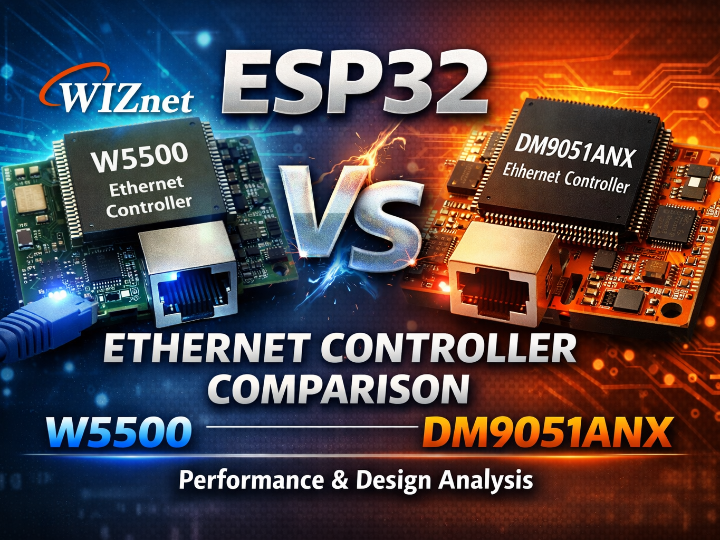
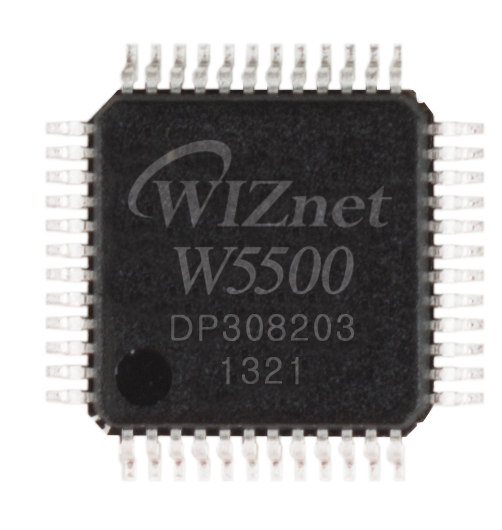
WIZnet - W5500
x 1

Espressif - ESP32
x 1
ESP32는 Wi-Fi 기반 IoT 장치에서 널리 사용되지만 다음과 같은 환경에서는 유선 Ethernet 연결이 요구됩니다.
- 산업용 제어 시스템
- 데이터 수집 장비
- 공장 자동화 장비
- 안정적인 네트워크 연결이 필요한 IoT 장치
ESP32에서 Ethernet을 구현하는 가장 일반적인 방법은 SPI 기반 Ethernet 컨트롤러를 사용하는 것입니다. 대표적인 두 칩은 다음과 같습니다.
W5500 (WIZnet)
DM9051ANX (Davicom)
두 칩은 동일하게 SPI 인터페이스 기반 Ethernet 컨트롤러이지만 내부 구조와 설계 특성이 다르며 실제 프로젝트에서는 성능과 설계 난이도에서 차이가 발생합니다.
시스템 아키텍처
이 프로젝트의 중요한 특징은 두 칩 모두 ESP-IDF의 LwIP TCP/IP 스택을 사용하는 동일한 네트워크 구조에서 테스트되었다는 점입니다.
즉 비교는
Ethernet Controller 비교
입니다.
DM9051ANX 기반 구조

특징
- TCP/IP 처리는 ESP32 내부 LwIP 스택에서 수행
- DM9051ANX는 SPI Ethernet MAC/PHY 인터페이스 역할
W5500 기반 구조 (본 테스트 기준)

중요한 점
- W5500은 Hardwired TCP/IP Engine을 포함하지만
- 이 테스트에서는 해당 기능을 사용하지 않음
따라서 본 비교는
ESP32 + LwIP + SPI Ethernet Controller
구조에서의 성능 비교입니다.
테스트 환경
테스트 플랫폼
- MCU: ESP32-S3
- Network stack: ESP-IDF LwIP
- 테스트 툴: iperf3
네트워크 환경
- 서버: Intel NUC i5
- NIC: Gigabit Ethernet
- 스위치: Gigabit Ethernet switch
- 케이블: Cat6 (1m)
주요 테스트 파라미터
- MSS = 1460
- SPI Clock = 40 MHz
- Test duration = 10s
- Nagle algorithm disabled
성능 테스트 결과
iperf3 테스트 결과는 다음과 같습니다.
| Test 항목 | DM9051ANX | W5500 |
|---|---|---|
| TCP 단방향 | 14.2 Mbps | 8.7 Mbps |
| TCP 양방향 | 9.8 Mbps | 5.3 Mbps |
| UDP 최대 | 18.1 Mbps | 11.4 Mbps |
| 64B 패킷 | 4200 pps | 3800 pps |
| 연결 수립 | 12 ms | 15 ms |
테스트 결과에서는 DM9051ANX가 전반적으로 더 높은 throughput을 보였습니다.
이 차이는 다음 요소에 영향을 받습니다.
- SPI 인터페이스 처리 방식
- Ethernet 드라이버 구현
- 네트워크 버퍼 구조
- ESP-IDF LwIP 스택 처리 방식
CPU 사용률
ESP32-S3(240 MHz 듀얼코어)에서 LwIP 기반 네트워크 처리 시 CPU 사용률은 다음과 같이 관찰되었습니다.
- 최대 부하 시 약 15~20%
ESP32 성능 기준에서는 네트워크 처리로 인한 CPU 부담은 비교적 제한적인 수준입니다.
전력 소비
| Mode | DM9051ANX | W5500 |
|---|---|---|
| 10M Half | 28 mA | 78 mA |
| 10M Full | 32 mA | 82 mA |
| 100M Half | 38 mA | 105 mA |
| 100M Full | 45 mA | 120 mA |
Deep Sleep
| Chip | Current |
|---|---|
| DM9051ANX | 15 µA |
| W5500 | 20 µA |
전력 측면에서는 DM9051ANX가 더 낮은 소비 전력을 보였습니다.
발열 특성
열화상 카메라 측정 결과
- DM9051ANX: 약 30°C
- W5500: 약 60°C
이 차이는 장시간 동작 환경에서 열 설계 중요성을 보여줍니다.
고온 환경 안정성
70°C 환경에서 24시간 네트워크 테스트 수행 결과
- DM9051ANX: 안정적 동작
- W5500: 장시간 테스트 시 간헐적 패킷 손실 발생
이는 산업 환경에서 Ethernet 칩 선택 시 열 관리 설계가 중요함을 보여줍니다.
BOM 비용 분석
1000pcs 기준 BOM 비교
| 항목 | DM9051ANX | W5500 |
|---|---|---|
| 총 BOM 비용 | $2.6 ~ $3.1 | $4.1 ~ $4.6 |
비용 차이는 다음 요소에서 발생합니다.
- 추가 디커플링 회로
- 외부 ESD 보호 회로
- EEPROM(MAC 저장)
- PCB 면적 증가
생산 테스트 시간
- DM9051ANX: 약 12초
- W5500: 약 18초
대량 생산에서는 이러한 차이가 누적 비용으로 이어질 수 있습니다.
선택 결정 프레임워크
원문 작성자는 앞선 테스트와 분석을 기반으로 Ethernet 칩 선택을 위한 의사결정 프레임워크를 다음과 같이 제시합니다.
DM9051ANX이 적합한 경우
- 산업 제어 장비
EMC 요구사항이 높고 환경이 열악한 경우 - 배터리 구동 장비
전력 소비가 중요한 시스템 - 고밀도 장비 설계
PCB 공간이 제한된 경우 - 고온 환경
동작 온도가 60°C 이상인 환경 - 비용 민감형 양산 제품
BOM 비용이 중요한 제품
W5500이 적합한 경우
- 교육용 개발 보드
자료가 풍부하고 사용 사례가 많아 학습과 실험에 적합 - 프로토타입 개발
네트워크 기능을 빠르게 검증할 때 유리 - 저가 소비자 제품
비교적 안정적인 환경에서 사용하는 경우 - 기존 W5500 설계 경험이 있는 경우
기존 설계를 재사용하여 개발 리스크를 줄일 수 있음 - 하드웨어 TCP/IP가 필요한 특수 애플리케이션
MCU 자원이 매우 제한된 시스템에서 활용 가능
※ 위 내용은 원문 작성자의 테스트 경험과 설계 관점에 기반한 의견이며, 실제 제품 설계에서는 프로젝트 요구사항과 시스템 아키텍처에 따라 선택이 달라질 수 있습니다.
핵심 지표 비교 요약
원문에서는 ESP32-S3 환경에서 ESP-IDF의 LwIP 네트워크 스택을 동일하게 사용한 조건에서 DM9051ANX와 W5500의 성능을 비교했습니다. 따라서 실제 테스트 결과는 **“Ethernet 컨트롤러 비교”**에 해당하며, W5500의 Hardwired TCP/IP Engine은 사용되지 않았습니다. 아래 표는 원문에 제시된 실측 데이터를 기준으로 성능, CPU 사용률, 전력, 발열, 안정성, BOM 비용을 한눈에 비교할 수 있도록 정리한 것입니다.
원문 테스트 결과 기반 비교
| 평가 항목 | DM9051ANX | W5500 | 우수 |
|---|---|---|---|
| TCP 단방향 성능 | 14.2 Mbps | 8.7 Mbps | DM9051ANX |
| TCP 양방향 성능 | 9.8 Mbps | 5.3 Mbps | DM9051ANX |
| UDP 최대 처리량 | 18.1 Mbps | 11.4 Mbps | DM9051ANX |
| CPU 사용률 | 약 15~20% | 약 15~20% | 동등 |
| 전력 소비 (100M Full) | 약 45 mA | 약 120 mA | DM9051ANX |
| 발열 (표면 온도) | 약 30°C | 약 60°C | DM9051ANX |
| 고온 안정성 | 안정적 | 장시간 테스트 시 패킷 손실 발생 | DM9051ANX |
| BOM 비용 | $2.6 ~ $3.1 | $4.1 ~ $4.6 | DM9051ANX |
이 결과는 ESP32 + LwIP 환경에서의 SPI Ethernet 컨트롤러 비교이며, 이 조건에서는 DM9051ANX가 대부분의 지표에서 더 높은 효율을 보였습니다.
다만 W5500의 주요 특징인 Hardwired TCP/IP Engine을 실제로 사용한다면 비교의 기준이 달라질 수 있습니다. 이 경우 TCP/IP 처리를 칩 내부에서 수행하게 되어 MCU의 네트워크 처리 부담이 크게 줄어들 수 있습니다.
W5500 Hardwired TCP/IP 사용 시 예상 비교
| 평가 항목 | DM9051ANX (LwIP 기반) | W5500 (Hardwired TCP/IP) | 우수 방향 |
|---|---|---|---|
| TCP 처리 방식 | MCU(LwIP) 처리 | W5500 내부 처리 | 구조 차이 |
| TCP 처리 성능 | 약 10~14 Mbps | 최대 약 34 Mbps 수준 사례 존재 | W5500 |
| CPU 사용률 | 약 15~20% | 낮음 (TCP 오프로딩) | W5500 |
| 전력 소비 | 낮음 | 상대적으로 높음 | DM9051ANX |
| 발열 특성 | 낮음 | 상대적으로 높음 | DM9051ANX |
| 고온 안정성 | 안정적 | 열 설계 영향 가능 | DM9051ANX |
| BOM 비용 | 낮음 | 상대적으로 높음 | DM9051ANX |
정리하면, ESP-IDF + LwIP 기반 시스템에서는 DM9051ANX가 전력 효율, 발열, 비용 측면에서 유리한 결과를 보였으며, W5500은 Hardwired TCP/IP Engine을 활용하는 구조에서 MCU 리소스 절감과 높은 TCP 처리 성능이라는 장점을 가질 수 있습니다. 따라서 실제 제품 설계에서는 단순 성능 비교보다 네트워크 스택 구조와 MCU 자원 활용 방식을 함께 고려한 선택이 필요합니다.
WIZnet Insight
W5500은 SPI 인터페이스 기반 Ethernet 컨트롤러로 다양한 MCU와 쉽게 연결할 수 있는 구조를 제공합니다. 특히 임베디드 시스템에서 널리 사용되어 많은 레퍼런스 설계와 개발 자료가 존재합니다.
다만 본 테스트에서는 W5500의 Hardwired TCP/IP Engine을 사용하지 않았기 때문에, 하드웨어 TCP/IP 오프로딩 구조의 장점은 테스트 결과에 반영되지 않았습니다. 따라서 본 비교는 ESP-IDF + LwIP 환경에서의 SPI Ethernet 컨트롤러 성능 비교로 이해해야 합니다.
FAQ
ESP32에서 SPI Ethernet 최대 속도는 얼마인가요?
일반적으로 10~20 Mbps 수준입니다.
SPI 클록 속도는 성능에 영향을 주나요?
SPI 인터페이스는 Ethernet 데이터 경로이기 때문에 클록 속도가 throughput에 영향을 줍니다.
왜 Hardwired TCP/IP 비교가 아니었나요?
ESP-IDF 네트워크 스택이 LwIP 기반이기 때문에 동일 조건 비교를 위해 두 칩 모두 LwIP 기반으로 테스트되었습니다.
Ethernet 설계에서 EMC가 중요한 이유는 무엇인가요?
Ethernet 인터페이스는 고속 신호를 사용하기 때문에 EMC 설계가 인증 통과에 중요한 영향을 미칩니다.
ESP32 is widely used in Wi-Fi based IoT devices, but in the following environments wired Ethernet connectivity is often required:
- Industrial control systems
- Data acquisition equipment
- Factory automation devices
- IoT systems that require stable and deterministic network connectivity
The most common way to implement Ethernet on ESP32 is by using an SPI-based Ethernet controller. Two representative chips are:
- W5500 (WIZnet)
- DM9051ANX (Davicom)
Both chips are SPI-based Ethernet controllers, but they differ in internal architecture and design characteristics. As a result, they show differences in performance and system design complexity in real projects.
System Architecture
An important aspect of this project is that both chips were tested using the same network architecture based on the ESP-IDF LwIP TCP/IP stack.
Therefore, the comparison is essentially a comparison of Ethernet controllers, not TCP/IP stack implementations.
DM9051ANX Architecture
Key characteristics
- TCP/IP processing is handled by the LwIP stack inside the ESP32
- DM9051ANX functions as an SPI Ethernet MAC/PHY interface
W5500 Architecture (in this test)
Important note
Although the W5500 includes a Hardwired TCP/IP Engine, this feature was not used in this test.
Therefore, the comparison reflects performance under the following architecture:
ESP32 + LwIP + SPI Ethernet Controller
Test Environment
Test Platform
- MCU: ESP32-S3
- Network stack: ESP-IDF LwIP
- Test tool: iperf3
Network Environment
- Server: Intel NUC i5
- NIC: Gigabit Ethernet
- Switch: Gigabit Ethernet switch
- Cable: Cat6 (1 m)
Key Test Parameters
- MSS = 1460
- SPI Clock = 40 MHz
- Test duration = 10 seconds
- Nagle algorithm disabled
Performance Test Results
The iperf3 test results are summarized below.
| Test Item | DM9051ANX | W5500 |
|---|---|---|
| TCP (single direction) | 14.2 Mbps | 8.7 Mbps |
| TCP (bidirectional) | 9.8 Mbps | 5.3 Mbps |
| UDP maximum | 18.1 Mbps | 11.4 Mbps |
| 64B packet | 4200 pps | 3800 pps |
| Connection setup | 12 ms | 15 ms |
Overall, DM9051ANX showed higher throughput performance.
The performance difference is influenced by several factors:
- SPI interface handling
- Ethernet driver implementation
- Network buffer architecture
- ESP-IDF LwIP stack processing behavior
CPU Utilization
When running the LwIP-based network stack on an ESP32-S3 (240 MHz dual-core), CPU utilization was observed as follows:
- Approximately 15–20% under maximum load
Given the performance of the ESP32-S3, the CPU overhead caused by network processing remains relatively moderate.
Power Consumption
| Mode | DM9051ANX | W5500 |
|---|---|---|
| 10M Half | 28 mA | 78 mA |
| 10M Full | 32 mA | 82 mA |
| 100M Half | 38 mA | 105 mA |
| 100M Full | 45 mA | 120 mA |
Deep Sleep
| Chip | Current |
|---|---|
| DM9051ANX | 15 µA |
| W5500 | 20 µA |
In terms of power consumption, DM9051ANX demonstrated significantly lower power usage.
Thermal Characteristics
Thermal imaging measurements showed the following temperatures:
- DM9051ANX: ~30 °C
- W5500: ~60 °C
This difference highlights the importance of thermal design considerations for long-running systems.
High-Temperature Stability
A 24-hour network test was conducted in a 70 °C environment.
Results:
- DM9051ANX: Stable operation
- W5500: Intermittent packet loss during long-duration testing
This result emphasizes that thermal management is critical when selecting Ethernet controllers for industrial environments.
BOM Cost Analysis
BOM comparison (based on 1000-unit production volume):
| Item | DM9051ANX | W5500 |
|---|---|---|
| Total BOM cost | $2.6 – $3.1 | $4.1 – $4.6 |
The cost difference comes from several factors:
- Additional decoupling circuits
- External ESD protection components
- EEPROM for MAC storage
- Larger PCB area
Production Test Time
- DM9051ANX: ~12 seconds
- W5500: ~18 seconds
In large-scale manufacturing, these differences can accumulate into significant production costs.
Selection Decision Framework
Based on the tests and analysis, the original author proposes the following decision framework for selecting an Ethernet controller.
Suitable scenarios for DM9051ANX
- Industrial control equipment
High EMC requirements and harsh environments - Battery-powered devices
Power efficiency is critical - High-density system designs
Limited PCB space - High-temperature environments
Operating temperature above 60 °C - Cost-sensitive mass-production products
BOM cost is a major factor
Suitable scenarios for W5500
- Educational development boards
Extensive documentation and community resources - Prototype development
Quick validation of networking functionality - Low-end consumer products
Operating environments are relatively stable - Existing W5500 design experience
Reuse existing designs and reduce development risk - Applications requiring hardware TCP/IP
Useful when MCU resources are extremely limited
Note: These recommendations reflect the author's testing experience and design perspective. Actual design decisions may vary depending on project requirements and system architecture.
Key Metric Comparison Summary
In the original tests, DM9051ANX and W5500 were compared under the same ESP32-S3 + LwIP architecture. Therefore, the results represent a comparison of SPI Ethernet controllers, not TCP/IP offloading solutions.
Comparison Based on Original Test Results
| Metric | DM9051ANX | W5500 | Better |
|---|---|---|---|
| TCP throughput (single direction) | 14.2 Mbps | 8.7 Mbps | DM9051ANX |
| TCP throughput (bidirectional) | 9.8 Mbps | 5.3 Mbps | DM9051ANX |
| UDP maximum throughput | 18.1 Mbps | 11.4 Mbps | DM9051ANX |
| CPU usage | ~15–20% | ~15–20% | Equal |
| Power consumption | ~45 mA | ~120 mA | DM9051ANX |
| Thermal performance | ~30 °C | ~60 °C | DM9051ANX |
| High-temperature stability | Stable | Packet loss observed | DM9051ANX |
| BOM cost | $2.6–3.1 | $4.1–4.6 | DM9051ANX |
Under the ESP32 + LwIP architecture, DM9051ANX showed higher efficiency in most categories.
However, the comparison changes if the W5500 Hardwired TCP/IP Engine (TOE) is actually used.
Expected Comparison with W5500 TOE
| Metric | DM9051ANX (LwIP) | W5500 (Hardwired TCP/IP) | Advantage |
|---|---|---|---|
| TCP processing | MCU (LwIP) | W5500 hardware | Architectural difference |
| TCP throughput | ~10–14 Mbps | Up to ~34 Mbps reported | W5500 |
| CPU usage | ~15–20% | Lower (TCP offloading) | W5500 |
| Power consumption | Lower | Higher | DM9051ANX |
| Thermal behavior | Lower | Higher | DM9051ANX |
| High-temperature stability | Stable | Thermal design dependent | DM9051ANX |
| BOM cost | Lower | Higher | DM9051ANX |
In summary:
DM9051ANX performs better in power efficiency, thermal behavior, and BOM cost when using an LwIP-based architecture.
W5500 becomes advantageous when its Hardwired TCP/IP Engine is utilized, offering reduced MCU load and potentially higher TCP throughput.
Therefore, selecting the appropriate Ethernet controller should consider not only raw performance but also network stack architecture and MCU resource utilization.
WIZnet Insight
The W5500 is an SPI-based Ethernet controller designed for easy integration with a wide range of MCUs. It has been widely adopted in embedded systems, resulting in abundant reference designs and development resources.
However, since the Hardwired TCP/IP Engine was not used in this test, the advantages of hardware TCP/IP offloading were not reflected in the measured results. Consequently, this comparison should be interpreted as a performance comparison of SPI Ethernet controllers under the ESP-IDF + LwIP environment.
FAQ
What is the maximum SPI Ethernet throughput on ESP32?
Typically around 10–20 Mbps, depending on SPI clock speed and software architecture.
Does SPI clock speed affect Ethernet performance?
Yes. Since the SPI interface is the primary data path between the MCU and the Ethernet controller, the clock speed directly impacts throughput.
Why wasn't the Hardwired TCP/IP Engine compared?
Because the ESP-IDF networking framework is based on LwIP, both chips were tested under the same LwIP architecture to maintain consistent conditions.
Why is EMC important in Ethernet design?
Ethernet interfaces operate with high-speed signals, so EMC design plays a critical role in passing regulatory certification and ensuring stable operation.