



How to Retrofit Legacy Air Compressors with IoT: A Guide to Using W5500 and Home Assistant in Noisy
Monitoring The Air Compressor In My TARDIS
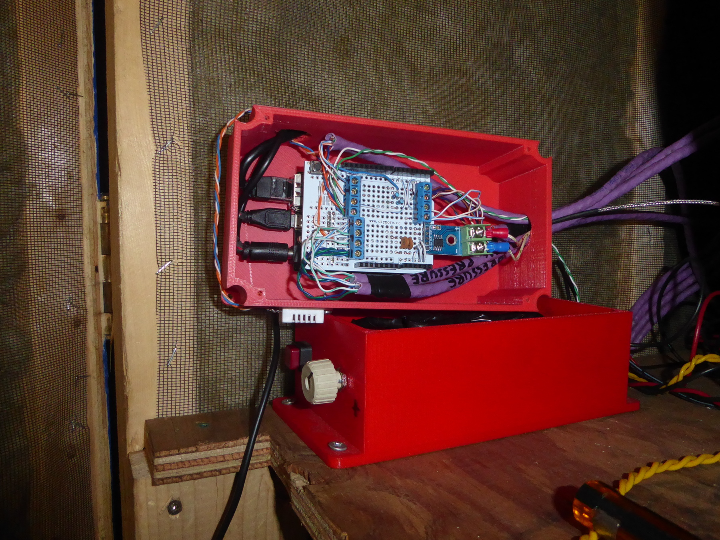
거대한 5마력(5HP) 모터가 굉음을 내며 돌아가고, 펌프 헤드는 수백 도까지 치솟습니다. 이 모든 과정이 두꺼운 금속 방음 캐비닛(일명 'TARDIS') 안에서 일어납니다.
이곳은 에어 툴의 심장인 '에어 컴프레서'가 사는 곳이지만, 동시에 IoT 장비에게는 무덤과도 같은 환경입니다. 고열, 심한 진동, 강력한 전자기 노이즈, 그리고 무선 신호를 차단하는 금속 차폐까지.
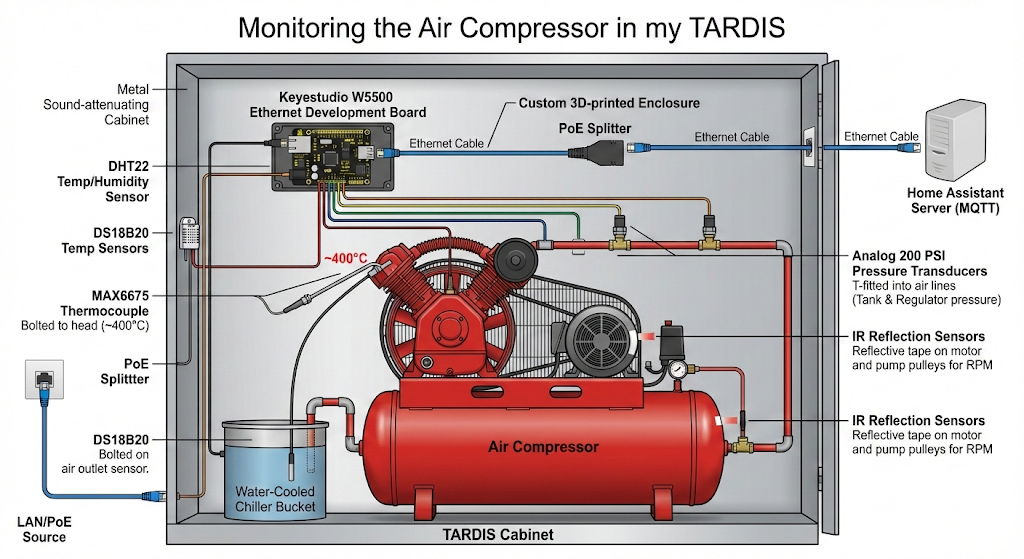
Home Assistant 커뮤니티의 AaronCake 님이 공개한 "Monitoring the Air Compressor in my TARDIS" 프로젝트는 이러한 악조건 속에서 W5500 이더넷과 산업용 센서들을 조합하여, 어떻게 '죽지 않는' 모니터링 시스템을 구축했는지 보여주는 훌륭한 레트로핏(Retrofit) 사례입니다.
1. 연결의 핵심: 왜 Wi-Fi 대신 W5500인가?
가장 먼저 눈에 띄는 것은 컨트롤러의 선택입니다. 보통의 DIY 프로젝트가 ESP32나 Wi-Fi 모듈을 선택하는 것과 달리, 이 프로젝트는 Keyestudio W5500 Ethernet Development Board를 두뇌로 채택했습니다.
이유는 명확합니다. 컴프레서가 작동할 때 발생하는 전자기 간섭(EMI)과 금속 캐비닛이 만드는 '파라데이 케이지(Faraday Cage)' 효과 때문입니다. 무선 신호가 불안정한 이 환경에서 W5500 칩은 하드웨어 TCP/IP 처리를 통해 노이즈에 강한 유선 연결을 제공하며, 아두이노(ATmega328P)의 리소스를 점유하지 않고 안정적으로 MQTT 메시지를 전송합니다.
2. 시스템의 눈과 귀: 컴포넌트
단순한 ON/OFF 모니터링을 넘어, 장비의 상태를 정밀하게 파악하기 위해 선정된 부품들은 그 자체로 훌륭한 엔지니어링 교보재입니다.
① 400°C의 열기를 견디다: MAX6675와 DS18B20
컴프레서의 펌프 헤드는 작동 시 약 400°C에 육박합니다. 일반적인 반도체 온도 센서는 녹아내릴 수 있는 온도입니다.

- MAX6675 & K-Type 열전대: 작성자는 이를 해결하기 위해 산업용 K-Type 열전대(Thermocouple)를 사용했습니다. 이를 SPI 인터페이스로 변환해 주는 MAX6675 모듈과 결합하여, 극한의 헤드 온도를 실시간으로 감시합니다.
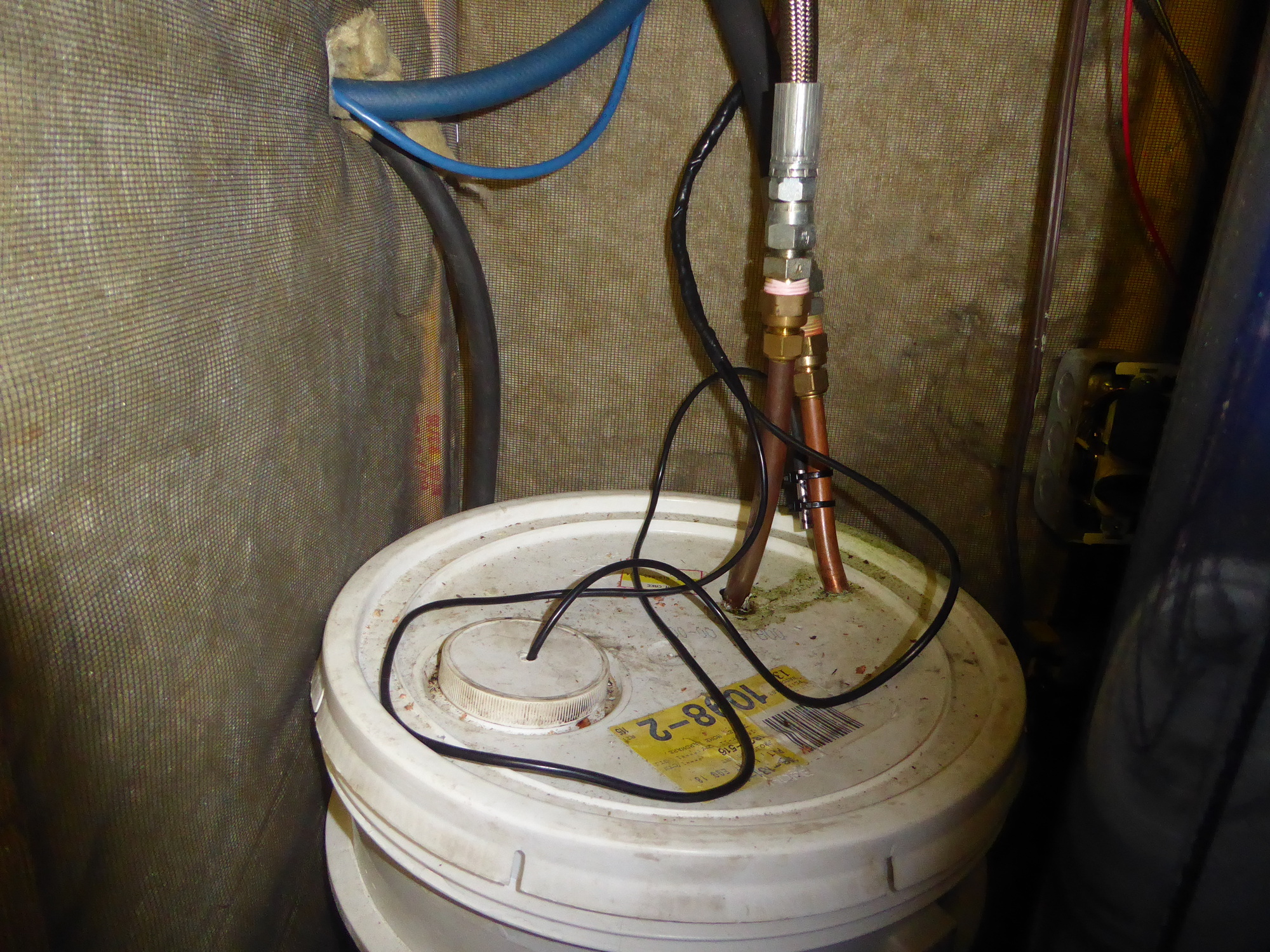
- DS18B20: 반면, 수냉 냉각기(Chiller)의 물 온도와 공기 출구 온도는 DS18B20 방수 센서가 담당합니다. 1-Wire 통신 덕분에 긴 배선에도 신호가 안정적이며, 복잡한 배선 없이 여러 지점의 온도를 동시에 측정합니다.
- DHT22: 캐비닛 내부의 일반적인 대기 환경(온/습도)은 가성비 좋은 DHT22가 맡아 환기 팬 가동 여부를 판단합니다.
② 기계적 이상 징후 포착: IR 반사 센서와 압력 트랜스듀서
모터는 돌지만 벨트가 미끄러져 펌프가 돌지 않는다면? 전원만 체크해서는 알 수 없는 고장입니다.

- IR 반사 센서 (Optical Reflector): 모터와 펌프 풀리에 알루미늄 테이프를 부착하고, IR 센서로 반사광을 감지해 RPM을 측정합니다. 아두이노의 인터럽트(Interrupt) 핀을 활용해 고속 회전을 놓치지 않고 카운팅 하여, 벨트 슬립이나 모터 효율 저하를 즉시 잡아냅니다.

- 아날로그 압력 트랜스듀서 (Pressure Transducer): 탱크와 레귤레이터 압력은 0.5V~4.5V를 출력하는 산업용 압력 센서로 측정합니다. 여기서 주목할 점은 노이즈 처리입니다. 아날로그 신호의 왜곡을 막기 위해 신호선을 꼬아서(Twisted pair) 연결하고, 커패시터 필터를 추가하는 등 하드웨어적인 노이즈 대책을 충실히 수행했습니다.
③ 깔끔한 마무리의 비결: PoE Splitter
복잡한 전원 선은 노이즈의 원인이자 유지 보수의 적입니다. 이 시스템은 PoE(Power over Ethernet) Splitter를 사용하여, 랜선 하나로 데이터 통신과 전원 공급을 동시에 해결했습니다. 덕분에 캐비닛 내부에 별도의 220V 어댑터를 들이지 않고도 안전한 저전압 환경을 구축했습니다.
3. 단순 ON/OFF를 넘어선 '진단(Diagnostics)'
이 시스템은 단순히 컴프레서가 켜졌는지 확인하는 수준을 넘어섭니다. 수집된 센서 데이터를 바탕으로, 마치 의사가 환자를 진찰하듯 장비의 상태를 다각도로 분석합니다.
- 기계적 건강 상태 (RPM 모니터링): IR 반사 센서를 이용해 모터와 펌프의 회전수(RPM)를 각각 측정합니다. 만약 모터는 도는데 펌프 RPM이 낮다면? 이는 벨트가 미끄러지거나(Slip) 끊어졌다는 명확한 신호입니다.
- 열 관리 (Thermal Management): 400°C에 달하는 펌프 헤드는 열전대(Thermocouple)로, 수냉식 칠러의 수온과 출구 온도는 DS18B20으로 정밀 측정하여 과열로 인한 장비 손상을 미연에 방지합니다.
- 압력 밸런스: 탱크 압력과 레귤레이터 압력을 동시에 측정하여 공기 공급이 설정된 값대로 원활하게 이루어지는지 감시합니다.
- 공기 품질 관리 (Moisture Control): 압축 공기의 치명적인 적인 '수분'을 잡기 위해 설치한 수냉 냉각기(Water Chiller)의 효율을 감시합니다. 냉각기의 수온이 너무 높으면 수분 응축이 제대로 안 된다는 뜻이므로, 이를 통해 습한 공기가 에어 툴을 부식시키거나 도장 작업을 망치는 것을 미리 막을 수 있습니다.
4. 데이터의 목적지: Home Assistant와의 연동
하드웨어가 수집한 데이터는 소프트웨어를 만나 비로소 가치를 지닙니다. 이 프로젝트는 오픈소스 홈 오토메이션 플랫폼인 Home Assistant를 통해 관제 시스템을 완성했습니다.

- 가벼운 통신, MQTT: 아두이노는 수집된 온도, 압력, RPM 데이터를 가볍고 신뢰성 높은 메시징 프로토콜인 **MQTT(Message Queuing Telemetry Transport)**를 통해 Home Assistant 서버로 전송합니다. W5500의 안정적인 이더넷 연결 덕분에 전송 실패 없이 실시간 데이터 스트리밍이 가능합니다.
- 대시보드 시각화: Home Assistant의 Lovelace UI에서는 전송받은 데이터를 게이지(Gauge)와 그래프로 시각화합니다. 사용자는 스마트폰이나 PC를 통해 방음 캐비닛을 열지 않고도 내부 상황을 한눈에 파악할 수 있습니다.
- 스마트한 자동화 (Automation):
- 알림: 펌프 헤드 온도가 위험 수치에 도달하면 즉시 사용자에게 경고 메시지를 보냅니다.
- 제어: 컴프레서 가동이 멈춘 후에도 내부 온도가 높다면, 자동으로 배기 팬을 더 오래 가동하여 잔열을 식히는 로직을 구현할 수 있습니다.
5. 왜 이 프로젝트에 주목해야 하는가?
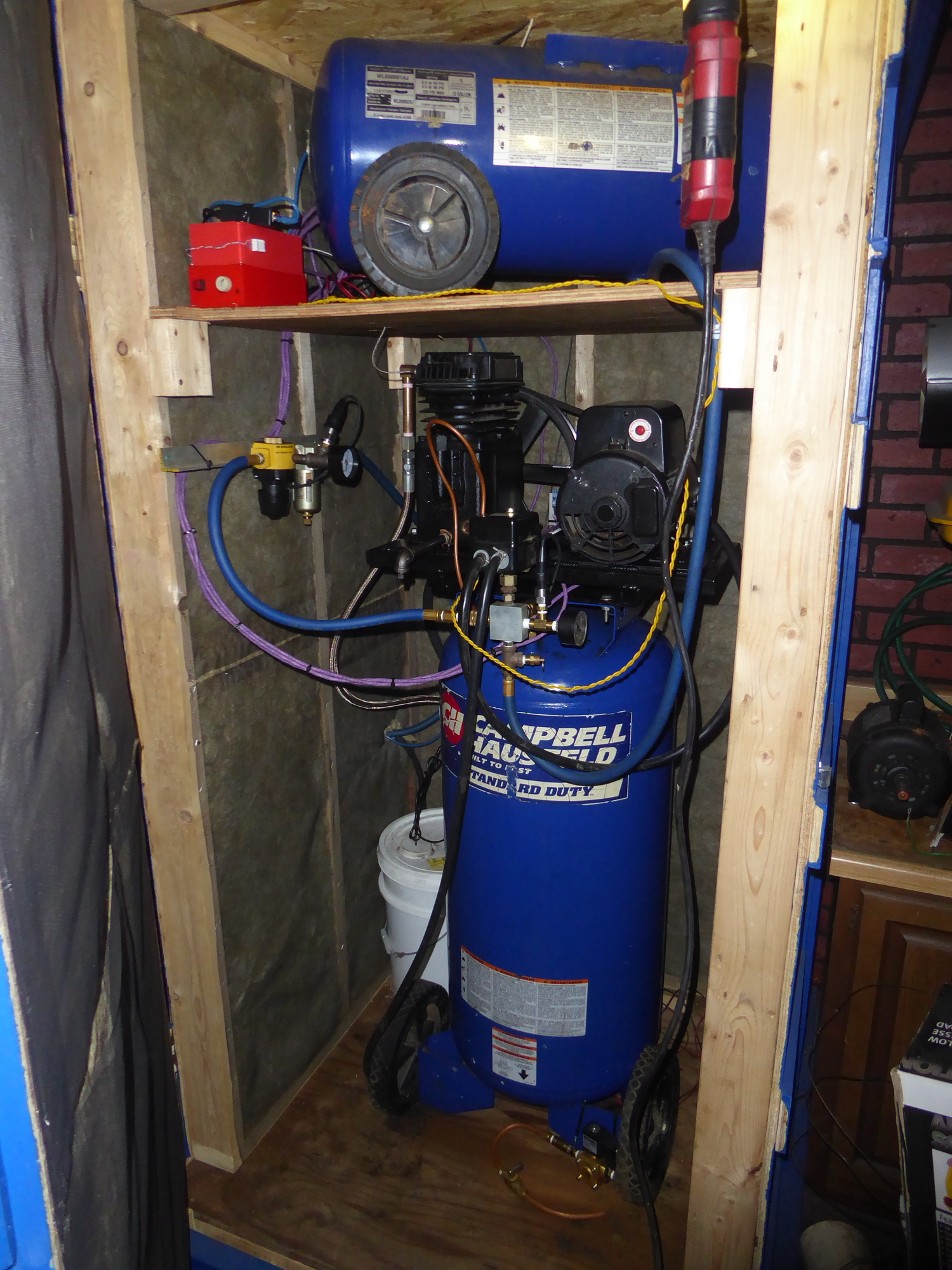
이 프로젝트는 MCU가 없는 구형 장비(Legacy Equipment)를 적은 비용으로 스마트하게 변모시키는 '브라운필드(Brownfield) 모니터링'의 정석을 보여줍니다.
특히 산업 현장이나 노이즈가 심한 환경에서 Wi-Fi 기반 솔루션이 겪는 불안정성을 WIZnet의 W5500 칩을 통한 유선 연결로 해결했다는 점은, 안정적인 IIoT 시스템을 구축하려는 엔지니어들에게 강력한 시사점을 줍니다.
"가장 시끄러운 곳에서, 가장 조용하고 정확하게 데이터를 전송하다."
이 프로젝트는 화려한 최신 무선 기술보다, 환경에 맞는 적정 기술(Right Technology)의 선택이 얼마나 중요한지를 증명하고 있습니다.
❓ FAQ
Q1. 왜 편리한 Wi-Fi(ESP32) 대신 유선 이더넷(W5500)을 사용했나요?
A. 두 가지 결정적인 이유가 있습니다. 첫째, 에어 컴프레서는 거대한 금속 방음 캐비닛(패러데이 케이지) 안에 있어 무선 신호 감쇠가 심각합니다. 둘째, 대형 모터가 기동할 때 발생하는 전자기 노이즈(EMI)는 Wi-Fi 연결을 끊기게 할 수 있습니다. 산업용 환경에서 데이터의 **신뢰성(Reliability)**을 최우선으로 고려한다면, 절연 트랜스포머가 내장된 유선 이더넷이 정답입니다.
Q2. 400°C나 되는 고온을 아두이노로 측정해도 안전한가요?
A. 일반적인 반도체 센서(예: LM35, DHT22)는 100~150°C를 넘어가면 파손됩니다. 이 프로젝트에서는 서로 다른 금속의 전위차를 이용하는 **K-Type 열전대(Thermocouple)**와 전용 컨버터인 MAX6675를 사용하여 고온을 안전하게 디지털 신호로 변환했습니다.
Q3. 모터 회전수(RPM)는 어떻게 측정하나요?
A. 비접촉 광학 방식을 사용했습니다. 회전하는 풀리에 빛을 반사하는 알루미늄 테이프를 붙이고, 적외선(IR) 센서가 이 반사광을 감지합니다. 테이프가 센서 앞을 지날 때마다 발생하는 펄스를 MCU의 인터럽트(Interrupt) 핀으로 감지하여 회전수를 정밀하게 카운팅 합니다.
Q4. 220V 전원이 들어가는 곳인데, 저전압 센서 회로를 같이 둬도 되나요?
A. 안전을 위해 전원을 물리적으로 분리하는 것이 좋습니다. 이 시스템은 PoE(Power over Ethernet) Splitter를 사용하여, 랜선을 통해 들어오는 전력을 12V/5V DC로 변환해 사용합니다. 덕분에 캐비닛 내부에 별도의 220V AC 어댑터나 배선을 추가할 필요 없이, 깔끔하고 안전한 전원 구성이 가능했습니다.
Q5. 지금 이 프로젝트를 따라 한다면 더 좋은 하드웨어 옵션이 있을까요?
A. 원작자는 아두이노 우노 기반 보드를 썼지만, 현재라면 위즈네트의 W5100S-EVB-Pico나 W5500-EVB-Pico를 추천합니다. 라즈베리 파이 피코(RP2040) 기반이라 훨씬 강력한 성능을 제공하며, MicroPython이나 CircuitPython을 사용할 수 있어 복잡한 C++ 코드 없이도 MQTT 통신과 센서 제어를 더 쉽게 구현할 수 있습니다.
A massive 5HP motor roars to life, and the pump head temperature spikes to hundreds of degrees. All of this happens inside a thick, metal sound-attenuating cabinet known as the 'TARDIS'.
This is the home of the air compressor—the heart of any workshop's pneumatic tools—but it is also a graveyard for wireless IoT devices. Extreme heat, intense vibration, powerful electromagnetic interference (EMI), and a metal enclosure that blocks RF signals make it a nightmare for connectivity.
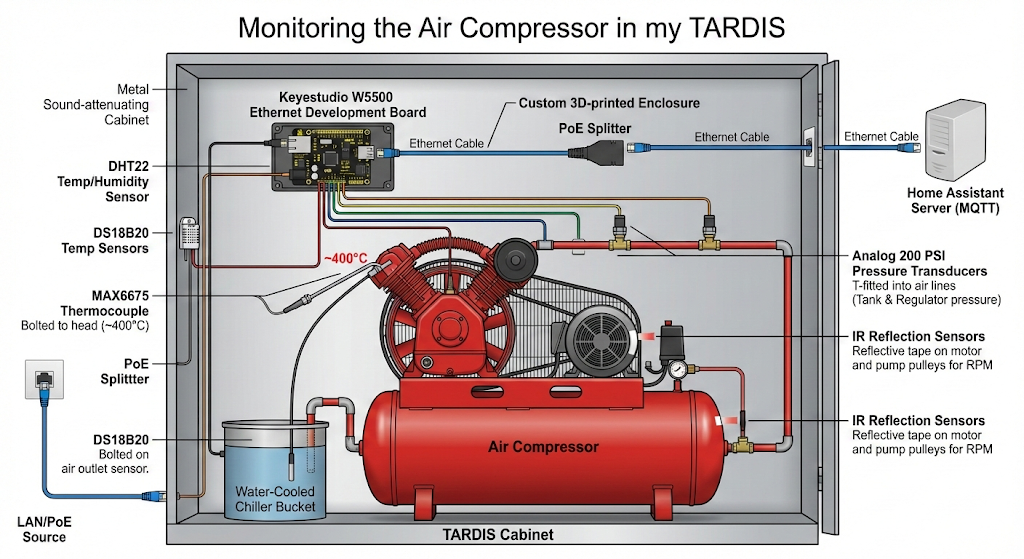
In a project shared by AaronCake from the Home Assistant community titled "Monitoring the Air Compressor in my TARDIS," we see a brilliant example of retrofitting. By combining W5500 Ethernet with robust industrial sensors, he built a monitoring system that survives where others fail.
1. The Connectivity Core: Why W5500 over Wi-Fi?
The most critical design choice was the controller. Unlike typical DIY projects that rely on ESP32 or Wi-Fi modules, this project utilizes the Keyestudio W5500 Ethernet Development Board.
The reasoning is sound. The operation of a large compressor generates significant EMI, and the metal cabinet acts as a Faraday cage, blocking wireless signals. In this unstable environment, the W5500 chip provides a hardwired TCP/IP connection that is immune to RF noise. It offloads network processing from the main MCU (ATmega328P), ensuring stable MQTT message transmission without consuming valuable system resources.
2. Eyes and Ears of the System: Component Breakdown
To go beyond simple ON/OFF monitoring and achieve precise diagnostics, the component selection serves as an excellent engineering case study.
① Enduring 400°C Heat: MAX6675 & DS18B20
The pump head can reach nearly 400°C during operation—temperatures that would melt standard semiconductor sensors.
- MAX6675 & K-Type Thermocouple: The creator used an industrial K-Type Thermocouple paired with a MAX6675 converter (SPI interface) to safely digitize and monitor these extreme temperatures in real-time.

- DS18B20: For the water-cooled chiller, DS18B20 waterproof sensors monitor the water and air outlet temperatures. Their 1-Wire protocol allows for stable signal transmission over long cable runs.
- DHT22: A standard DHT22 handles the ambient temperature and humidity inside the cabinet to control ventilation fans.
② Detecting Mechanical Anomalies: IR Reflectors & Pressure Transducers
What if the motor is spinning, but the belt slips and the pump doesn't turn? Monitoring power consumption alone won't detect this.

- IR Reflection Sensors: By placing reflective aluminum tape on the motor and pump pulleys, IR sensors detect the reflections. The MCU uses interrupt pins to count these pulses, calculating RPM to instantly identify belt slippage or motor inefficiency.

- Analog Pressure Transducers: Tank and regulator pressures are monitored using industrial sensors outputting 0.5V–4.5V. Noise handling is key here: the creator used twisted pair cabling and capacitor filters to ensure the analog signals remained clean despite the noisy electrical environment.
③ Clean Power: PoE Splitter
Complex power wiring invites noise and maintenance headaches. This system uses a PoE (Power over Ethernet) Splitter to deliver both data and power via a single Ethernet cable. This eliminates the need for a high-voltage AC adapter inside the cabinet, creating a safer, low-voltage environment.
3. Beyond ON/OFF: True Diagnostics
This system doesn't just check if the machine is running; it analyzes the equipment's health like a doctor diagnosing a patient.
- Mechanical Health (RPM Monitoring): By measuring Motor RPM vs. Pump RPM, the system can detect mechanical failures. If the motor spins but the pump doesn't, it indicates a broken or slipping belt.
- Thermal Management: With precise readings from the thermocouple and DS18B20s, the system prevents overheating damage by monitoring the 400°C pump head and the cooling efficiency of the chiller.
- Pressure Balance: Simultaneous monitoring of tank and regulator pressure ensures the air supply meets the required specifications without fluctuation.
4. Destination Data: Integration with Home Assistant
Hardware collects the data, but software gives it value. This project completes the loop using Home Assistant, an open-source home automation platform.

- Lightweight Communication (MQTT): The Arduino transmits temperature, pressure, and RPM data via MQTT, a lightweight messaging protocol. Thanks to the W5500's stable Ethernet connection, data streams in real-time without packet loss.
- Dashboard Visualization: The Home Assistant Lovelace UI visualizes this data with gauges and graphs. The user can check the internal status of the "TARDIS" from a smartphone without ever opening the noisy cabinet.
- Smart Automation:
- Alerts: Instant notifications if the pump head temperature exceeds critical safety limits.
- Control: Logic to keep exhaust fans running after the compressor stops until the internal temperature drops to a safe level.
5. Why This Project Matters

This project is a definitive example of "Brownfield Monitoring"—transforming legacy equipment into smart devices without replacing them.
It demonstrates that for industrial environments or high-noise areas, the instability of Wi-Fi can be effectively solved using WIZnet’s W5500 chip for wired connectivity.
"Transmitting data quietly and accurately from the noisiest place in the shop."
It proves that the "Right Technology"—in this case, robust wired Ethernet and industrial sensors—is far superior to chasing the latest wireless trends when reliability is paramount.
❓ FAQ: 5 Questions Engineers Might Ask
Q1. Why use wired Ethernet (W5500) instead of the more convenient Wi-Fi (ESP32)?
A. Two decisive factors: RF Shielding and EMI. The compressor sits inside a metal cabinet that acts as a Faraday cage, blocking Wi-Fi. Additionally, the massive inrush current and operation of the motor generate electromagnetic interference that can cause Wi-Fi connections to drop. For reliability in industrial settings, isolated wired Ethernet is the gold standard.
Q2. Is it safe to measure 400°C with an Arduino?
A. Standard silicon sensors (like LM35 or DHT22) will fail above 150°C. This project uses a K-Type Thermocouple, which uses the voltage difference between two dissimilar metals to measure heat, combined with a MAX6675 digital converter. This allows the low-voltage Arduino to safely read extreme temperatures.
Q3. How is RPM measured accurately?
A. It uses a non-contact optical method. Reflective tape is applied to the pulleys, and an IR sensor detects the light reflected as it passes. The MCU captures these pulses via Interrupt pins to count the revolutions precisely, ensuring no data is missed even at high speeds.
Q4. Can low-voltage sensors coexist with 220V power lines?
A. Ideally, they should be physically separated. This system uses a PoE Splitter to bring in 12V/5V DC power via the Ethernet cable. This avoids running additional 220V AC lines for the monitoring system inside the cabinet, significantly improving safety and reducing noise.
Q5. If I were to build this today, is there a better hardware option?
A. While the original used an Arduino Uno clone, today we recommend the W5100S-EVB-Pico or W5500-EVB-Pico. These are based on the Raspberry Pi Pico (RP2040), offering much higher performance. They also support MicroPython or CircuitPython, making it far easier to implement MQTT and sensor logic compared to C++.