


How to Build an Industrial BACnet/IP Energy Monitor with Arduino and WIZnet W5500
bacnet-device
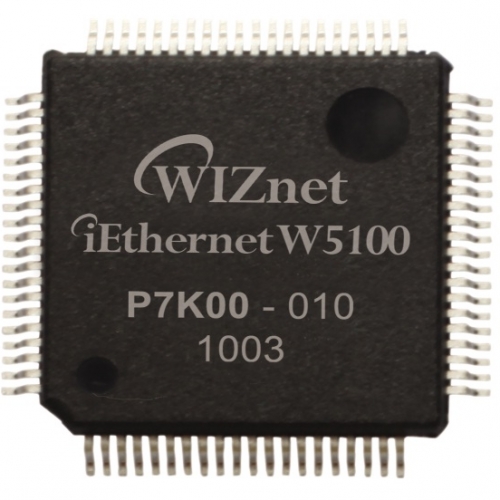
WIZnet - W5100
x 1

빌딩 자동화 시스템(BAS)의 세계는 오랫동안 폐쇄적인 산업용 장비들의 독무대였습니다. 하지만 최근 오픈소스 하드웨어의 발전으로, 아두이노(Arduino)와 같은 저가형 마이크로컨트롤러로 산업 표준 프로토콜을 구현하려는 시도가 꾸준히 이어지고 있습니다.
오늘은 그 선구적인 시도 중 하나인 bacnet-energy-monitor 프로젝트를 분석하고, 이 프로젝트가 채택한 BACnet 프로토콜의 개념과 향후 시장 전망까지 함께 살펴보겠습니다.
1. 프로젝트 분석: bacnet-energy-monitor
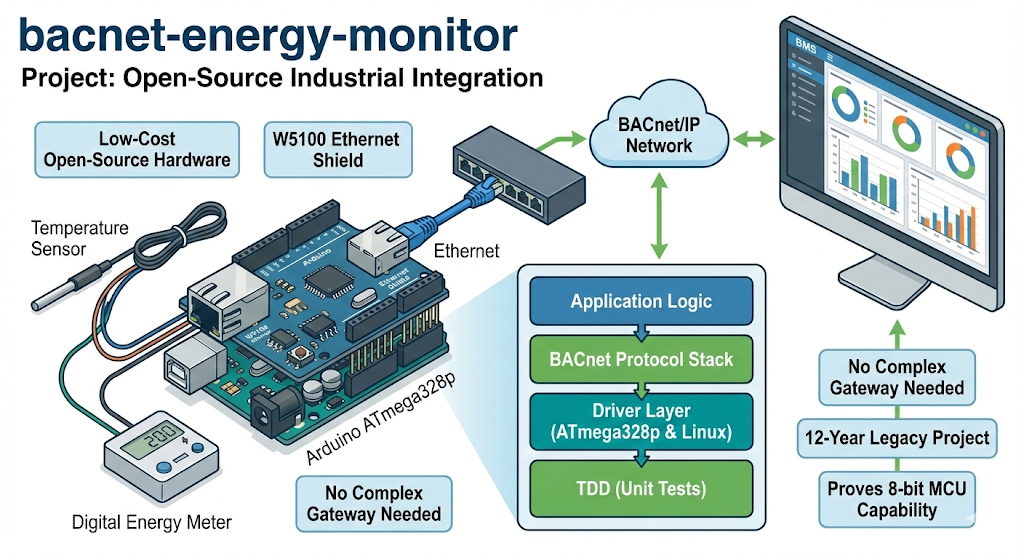
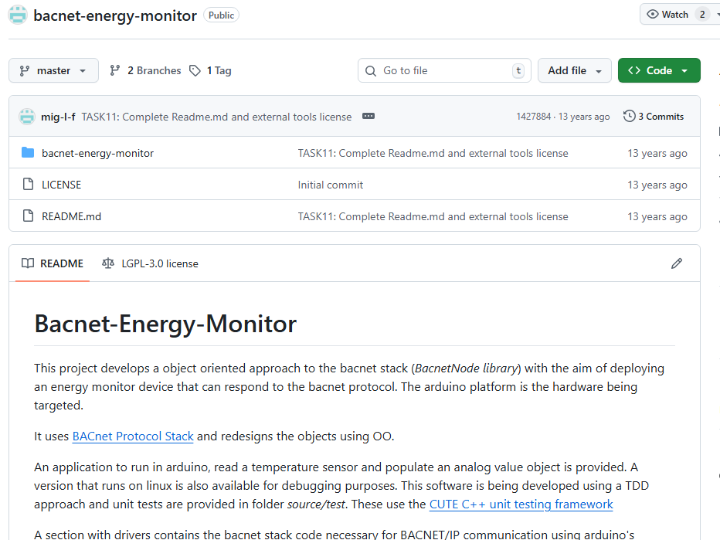
이 프로젝트(GitHub: mig-l-f/bacnet-energy-monitor)는 아두이노를 이용해 실제 빌딩 관리 시스템과 통신할 수 있는 '에너지 모니터링 장치'를 만들기 위해 시작되었습니다.
source/
├── drivers/
│   ├── atmega328p/    # Arduino W5100용 드라이버
│   └── linux/         # 디버깅 및 테스트용 Linux 구현
└── test/              # 단위 테스트
핵심 기능 및 기술적 특징
- 목표: 아두이노와 W5100 이더넷 쉴드를 결합하여, BACnet/IP 네트워크에 자신을 '에너지 미터' 장비로 등록하고 센서 데이터를 송출하는 것입니다.
- 실용적 접근: 복잡한 전용 장비 없이도 범용 MCU를 사용하여 온도 센서 등의 데이터를 BACnet 표준 규격으로 변환합니다. 이를 통해 중앙 관제실(BMS)에서 별도의 복잡한 게이트웨이 없이도 이 작은 장비의 데이터를 표준적인 방법으로 읽을 수 있게 설계되었습니다.
- 아키텍처:
- Drivers: 아두이노(ATmega328p)와 리눅스 환경을 모두 지원하도록 하드웨어 의존성을 분리했습니다.
- TDD (테스트 주도 개발): 임베디드 프로젝트로서는 드물게 단위 테스트(Unit Test)를 포함하여 코드의 안정성을 검증하려 했습니다.
현시점에서의 가치
이 프로젝트는 오래되어 최신 개발 환경에서는 바로 동작하지 않을 수 있습니다. 하지만 "제한된 자원을 가진 8비트 MCU에서도 산업용 표준 프로토콜인 BACnet 통신이 가능하다"는 것을 증명한 중요한 사례입니다. 특히 고가의 장비 없이도 저비용 IoT 장비를 기존의 거대한 빌딩 시스템에 통합할 수 있다는 가능성을 보여주었다는 점에서 큰 의미가 있습니다.
2. 기술적 난제와 해법: 저사양 MCU로 BACnet/IP가 가능한가?
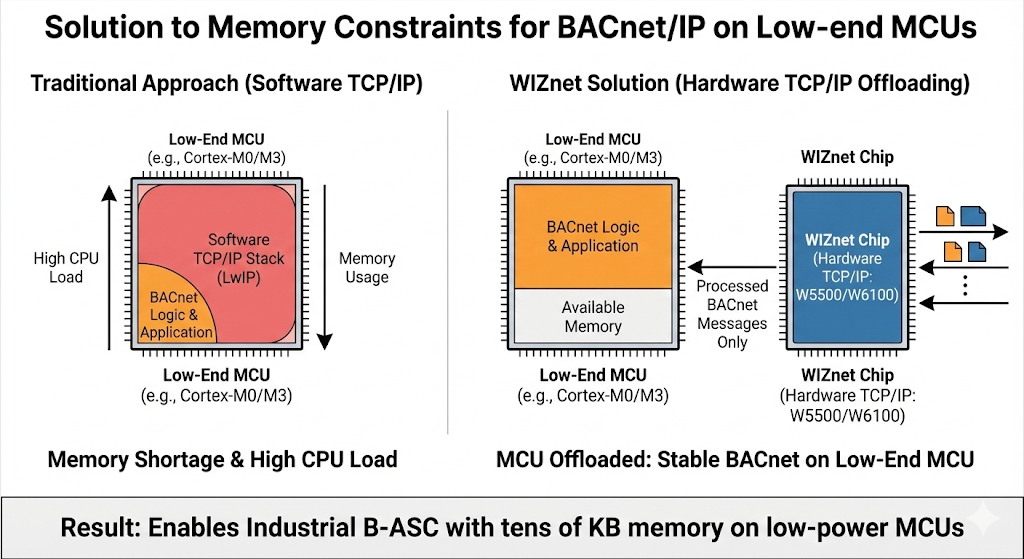
많은 개발자가 "BACnet은 무거운 프로토콜이라 리눅스급 OS나 고성능 메모리가 필요하지 않을까?"라고 우려합니다. 하지만 하드웨어 TCP/IP 기술을 활용하면 저사양 MCU로도 충분히 구현 가능합니다.
메모리 부족의 진짜 원인은 'TCP/IP 스택'
일반적인 MCU(Cortex-M 시리즈 등)에서 BACnet/IP를 구현할 때 가장 큰 리소스를 차지하는 것은 BACnet 애플리케이션 자체가 아니라, 네트워크 통신을 위한 **소프트웨어 TCP/IP 스택(LwIP 등)**입니다. 이 스택이 MCU의 RAM과 Flash 메모리를 상당 부분 점유하기 때문에 BACnet 로직을 올릴 공간이 부족해지는 것입니다.
해결책: WIZnet 칩(Hardware TCP/IP)을 활용한 Offloading
WIZnet의 W5500, W6100과 같은 이더넷 컨트롤러를 사용하면 이 문제를 해결할 수 있습니다.
- 원리: 네트워크 패킷 처리(TCP/IP)를 MCU가 아닌 WIZnet 칩이 하드웨어적으로 전담합니다.
- 효과: MCU는 네트워크 부하에서 해방되어 오직 BACnet 메시지 처리에만 자원을 집중할 수 있습니다.
- 결과: 수십 KB의 메모리만으로도 안정적인 BACnet Smart Sensor(B-ASC 등급) 구현이 가능해져, Cortex-M0나 M3급의 저전력/저가형 MCU로도 충분히 산업용 제품을 개발할 수 있습니다.
3. BACnet(백넷)이란 무엇인가?
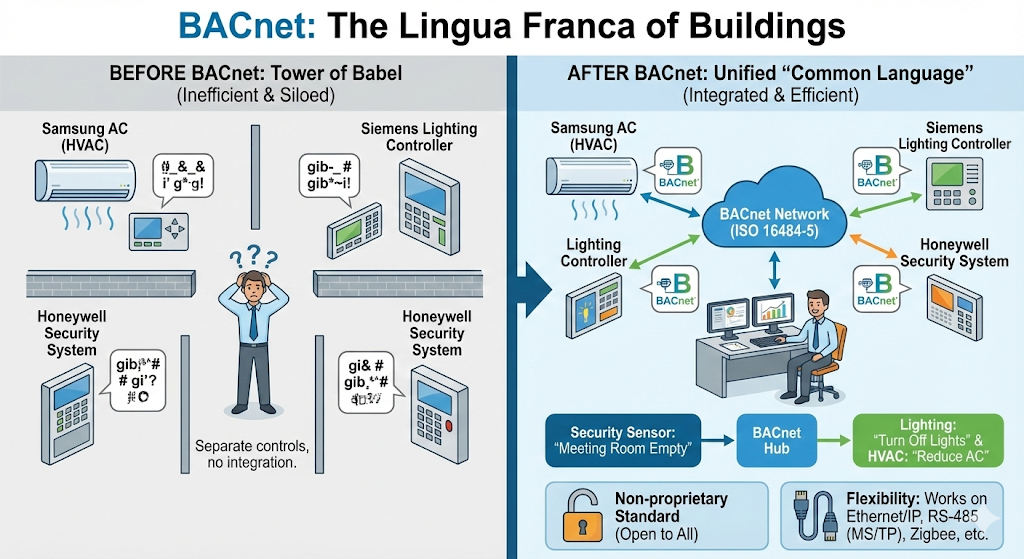
이 프로젝트가 구현하고자 했던 **BACnet(Building Automation and Control Network)**은 빌딩 자동화를 위한 전 세계 표준 통신 규약(ISO 16484-5)입니다.
쉽게 이해하기: "빌딩의 공용어"
빌딩 안에는 수많은 설비가 있습니다. 삼성의 에어컨, 지멘스의 조명 제어기, 하니웰의 보안 시스템 등이 섞여 있죠. 과거에는 이들이 서로 말이 통하지 않아 통합 관리가 불가능했습니다.
- BACnet 이전: 에어컨 제어 따로, 조명 제어 따로, 전력 관리 따로 (비효율적)
- BACnet 도입: 모든 장비가 "BACnet"이라는 하나의 언어를 씁니다. "지금 회의실 비었으니(보안 센서), 조명 끄고(조명), 에어컨 줄여(공조)"라는 통합 제어가 가능해짐.
주요 특징
- 비독점적 표준: 특정 기업의 소유가 아니므로 누구나 사용할 수 있습니다.
- 유연성: 이더넷(IP), RS-485(MS/TP), Zigbee 등 다양한 통신선 위에서 동작합니다.
4. BACnet 시장 전망: 왜 지금 주목해야 하는가?
단순히 오래된 프로토콜이라고 생각하면 오산입니다. 스마트 빌딩과 탄소 중립 트렌드와 맞물려 BACnet 시장은 폭발적인 성장을 앞두고 있습니다.
시장 성장 규모 (2025~2030)
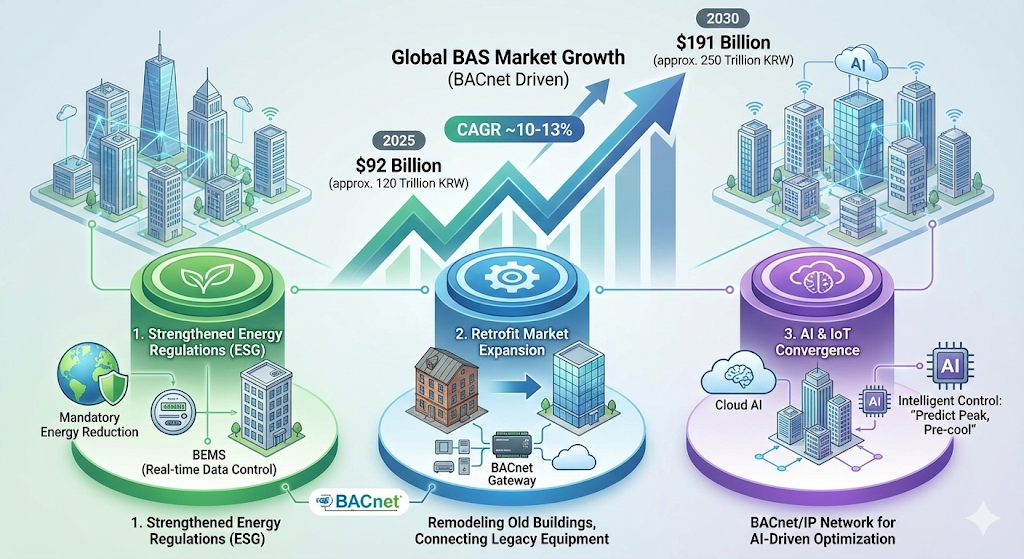
최신 시장 조사 보고서(Mordor Intelligence, 2025)에 따르면, 글로벌 빌딩 자동화 시스템(BAS) 시장은 2025년 약 920억 달러(약 120조 원)에서 2030년 약 1,910억 달러(약 250조 원) 규모로 성장할 것으로 전망됩니다. (연평균 성장률 약 10~13%)
성장을 견인하는 3가지 키워드
- 에너지 효율 규제 강화 (ESG): 전 세계적으로 빌딩의 에너지 소비를 줄이는 것이 의무화되고 있습니다. 이를 위해선 단순한 검침을 넘어, 실시간 데이터를 기반으로 설비를 제어하는 **BEMS(빌딩 에너지 관리 시스템)**가 필수적인데, 이 통신의 핵심이 바로 BACnet입니다.
- 레트로핏(Retrofit) 시장의 확대: 신축 건물뿐만 아니라, 수십 년 된 노후 건물을 스마트 빌딩으로 리모델링하는 수요가 급증하고 있습니다. 기존 설비를 다 뜯어고치는 대신, BACnet 게이트웨이를 통해 구형 장비를 최신 네트워크에 연결하는 방식이 선호됩니다.
- IoT와 AI의 결합: 과거의 BACnet이 단순한 '제어'였다면, 미래의 BACnet은 클라우드 AI와 연결됩니다. "오후 2시에 전력 피크가 예상되니 미리 냉방 부하를 조절하라"는 식의 지능형 제어가 BACnet/IP 네트워크를 통해 이루어집니다.
5. 미래 기술 전망: WIZnet SPE 칩과 BACnet의 시너지
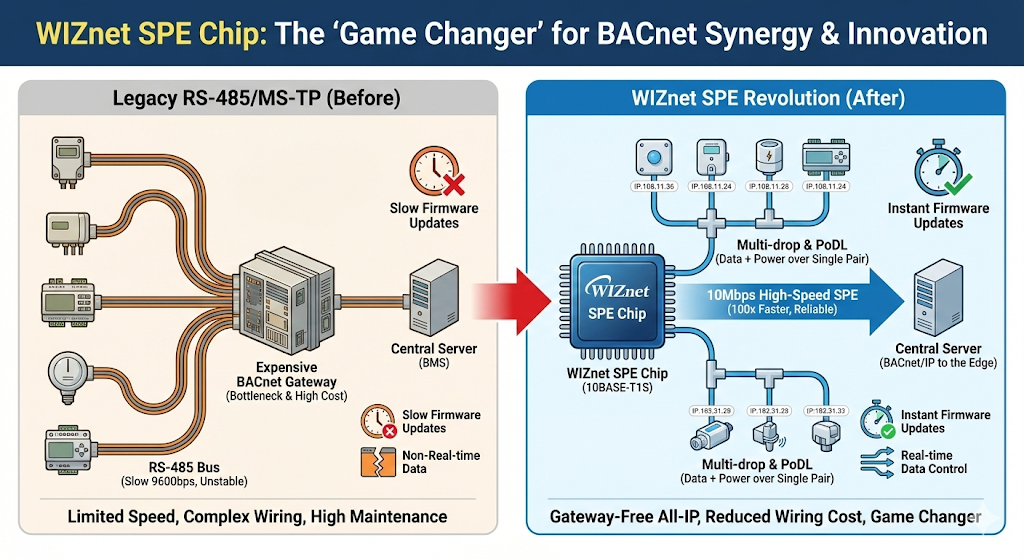
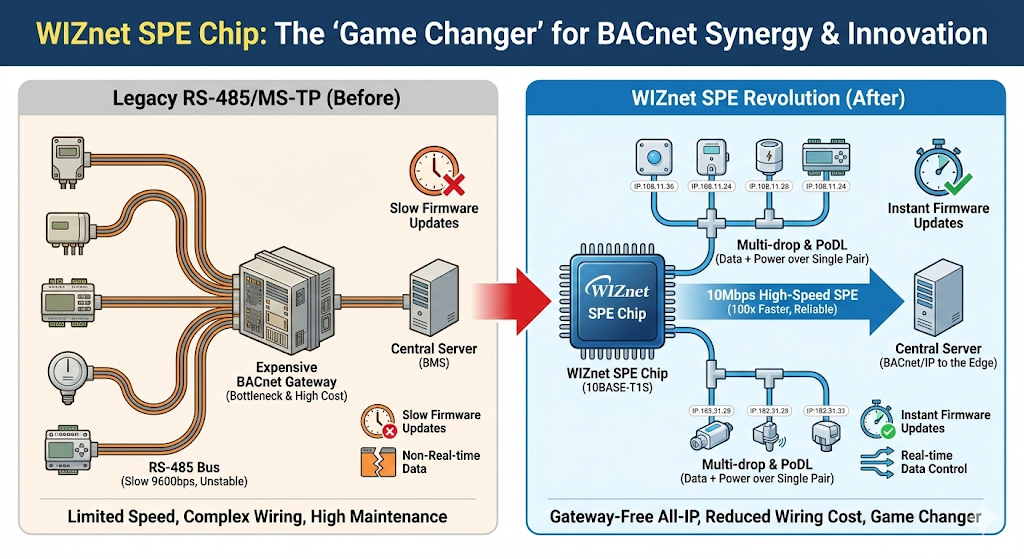
향후 WIZnet이 개발할 SPE(Single Pair Ethernet) 칩은 BACnet 시장의 고질적인 병목 구간을 해결할 '게임 체인저'가 될 전망입니다. 이는 기존 RS-485 기반 통신의 한계를 완벽하게 보완하며 엄청난 시너지를 예고합니다.
주요 혁신 포인트
- 속도와 안정성의 혁명: 기존 9600bps 수준의 느린 RS-485(MS/TP)를 10Mbps 속도의 SPE(10BASE-T1S)로 대체합니다. 이는 100배 이상 빠른 속도를 제공하여 펌웨어 업데이트 시간을 단축하고 실시간 데이터 제어를 가능하게 합니다.
- Gateway 없는 All-IP 구조: 말단 센서까지 IP 주소를 부여하여, 중간에 비싼 변환 장치(Gateway) 없이 중앙 서버와 직접 통신하는 BACnet/IP to the Edge를 실현합니다.
- 비용 절감 (Multi-drop & PoDL): 10BASE-T1S 기술을 통해 RS-485처럼 선 하나에 여러 장비를 연결(Multi-drop)할 수 있으며, 데이터 선으로 전력을 함께 공급(PoDL)하여 배선 비용을 획기적으로 낮춥니다.
6. 마치며
bacnet-energy-monitor 프로젝트는 비록 10년 전의 코드이지만, **"모든 사물이 통신하는 시대"**를 예견한 선구적인 시도였습니다.
이제 막 임베디드 개발이나 스마트 빌딩 분야에 관심을 갖게 되셨다면, BACnet은 반드시 넘어야 할 산이자 가장 강력한 무기입니다. 아두이노와 같은 친숙한 도구로 이 거대한 산업 표준에 도전해 보는 것은 어떨까요? 이 작은 프로젝트가 그 여정의 훌륭한 지도(Map)가 되어줄 것입니다.
7. 자주 묻는 질문 (FAQ)
Q1. 아두이노 보드를 그대로 빌딩 제어에 사용해도 되나요?
아두이노 우노(Uno)와 같은 개발 보드는 학습용으로 설계되어 산업 현장의 전기적 노이즈나 온습도 변화에 취약할 수 있습니다. 따라서 이 프로젝트로 기능 검증(PoC)을 마친 후에는, 동일한 MCU와 WIZnet 칩을 사용하여 산업용 등급(Industrial Grade)으로 PCB를 재설계하여 제품화하는 것이 일반적이고 안전합니다.
Q2. 왜 라즈베리 파이 같은 고성능 보드를 쓰지 않고 굳이 저사양 MCU를 쓰나요?
비용과 전력 소비 때문입니다. 수백 개의 센서 노드를 설치해야 하는 빌딩 제어에서, OS가 돌아가는 고성능 보드는 과스펙(Over-spec)이며 발열 관리와 유지보수가 복잡합니다. WIZnet 칩을 결합한 저사양 MCU는 구조가 단순하여 고장이 적고, 가격 경쟁력이 월등하여 대량 생산(Mass Production)에 훨씬 유리합니다.
Q3. 기존 RS-485 배선을 그대로 두고 SPE 통신을 할 수 있나요?
네, 가능성이 높습니다. SPE(특히 10BASE-T1S)는 RS-485처럼 두 가닥의 선(Twisted Pair)을 사용하며 멀티드롭 방식을 지원하기 때문입니다. 물론 장비 내부의 통신 칩은 교체해야 하지만, 건물 벽체 내부에 이미 깔려 있는 구리 선을 뜯어내지 않고 재활용하여 통신 속도를 100배 이상 올릴 수 있다는 점은 리모델링(Retrofit) 공사에서 엄청난 비용 절감 효과를 가져옵니다.
The world of Building Automation Systems (BAS) has long been dominated by closed, proprietary industrial equipment. However, with the recent advancements in open-source hardware, there have been continuous attempts to implement industrial standard protocols using low-cost microcontrollers like Arduino.
Today, we will analyze one of the pioneering attempts, the bacnet-energy-monitor project, and explore the concept of the BACnet protocol it adopted, along with future market prospects.
1. Project Analysis: bacnet-energy-monitor
This project (GitHub: mig-l-f/bacnet-energy-monitor) started about 12 years ago with the goal of creating an 'Energy Monitoring Device' capable of communicating with actual building management systems using an Arduino.
Core Features and Technical Characteristics
- Goal: To combine an Arduino with a WIZnet W5100 Ethernet Shield to register itself as an 'Energy Meter' device on a BACnet/IP network and transmit sensor data.
- Practical Approach: It converts data from temperature sensors and other sources into the BACnet standard format using a general-purpose MCU, without complex dedicated equipment. This design allows the central management system (BMS) to read data from this small device in a standard way without requiring separate, complex gateways.
Architecture:
- Drivers: It separates hardware dependencies to support both Arduino (ATmega328p) and Linux environments.
- TDD (Test Driven Development): Uniquely for an embedded project, it included Unit Tests to verify code stability.
Current Value
Although this project is old and may not run immediately in the latest development environments, it is a significant case study proving that "BACnet communication is possible even on resource-constrained 8-bit MCUs." It demonstrated the potential to integrate low-cost IoT devices into massive existing building systems without expensive equipment.
2. Technical Challenge & Solution: Can Low-End MCUs Handle BACnet/IP?
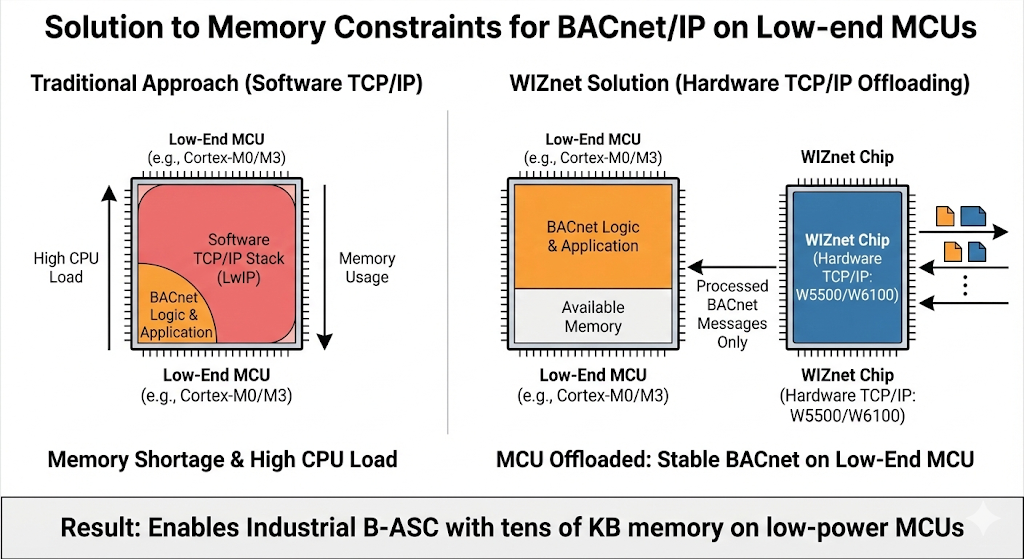
Many developers worry, "Isn't BACnet too heavy a protocol, requiring a Linux-class OS or high-performance memory?" However, by utilizing hardware TCP/IP technology, it is fully achievable even on low-end MCUs.
The Real Culprit of Memory Shortage: 'TCP/IP Stack'
When implementing BACnet/IP on general MCUs (like Cortex-M series), the biggest resource hog is not the BACnet application itself, but the Software TCP/IP Stack (e.g., LwIP) required for network communication. This stack consumes a significant portion of the MCU's RAM and Flash memory, leaving little room for BACnet logic.
The Solution: Offloading with WIZnet Chips (Hardware TCP/IP)
Using Ethernet controllers like WIZnet's W5500 or W6100 solves this problem.
- Principle: The WIZnet chip handles network packet processing (TCP/IP) via hardware, independent of the MCU.
- Effect: The MCU is liberated from network processing loads and can focus its resources solely on BACnet message processing.
- Result: It becomes possible to implement a stable BACnet Smart Sensor (B-ASC profile) with just tens of KB of memory, enabling the development of industrial products using low-power/low-cost MCUs like Cortex-M0 or M3.
3. What is BACnet?
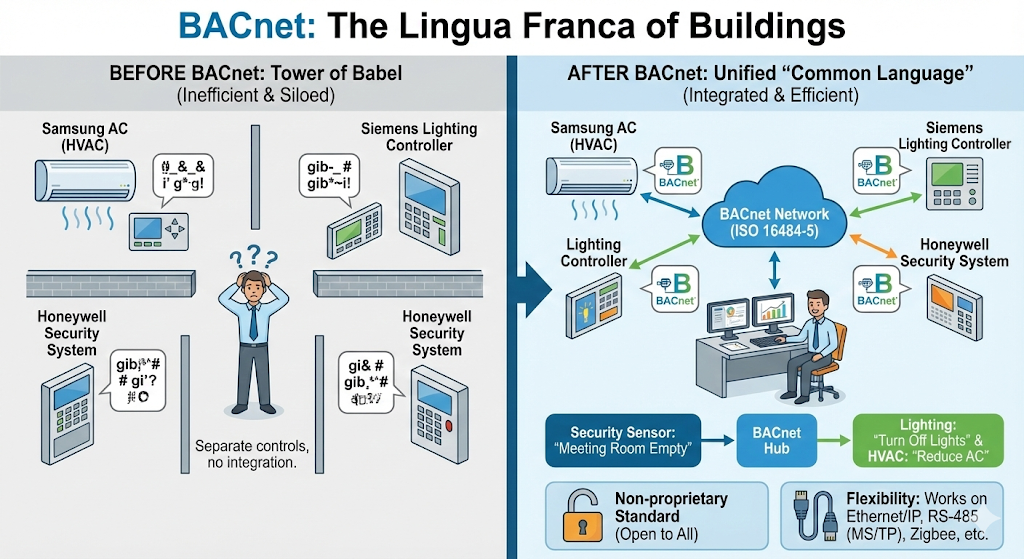
BACnet (Building Automation and Control Network), which this project aimed to implement, is the global standard communication protocol for building automation (ISO 16484-5).
Simply Put: "The Lingua Franca of Buildings"
A building contains numerous facilities: Samsung air conditioners, Siemens lighting controllers, Honeywell security systems, etc. In the past, these systems couldn't "talk" to each other, making integrated management impossible.
- Before BACnet: Separate control for AC, lighting, and power (Inefficient).
- After BACnet: All equipment speaks one language, "BACnet." Integrated control becomes possible, e.g., " The meeting room is empty (Security Sensor) -> Turn off lights (Lighting) -> Reduce AC (HVAC)."
Key Features
- Non-proprietary Standard: Not owned by any specific company; open for anyone to use.
- Flexibility: Works over various media including Ethernet (IP), RS-485 (MS/TP), and Zigbee.
4. Market Outlook: Why Pay Attention Now?
It is a mistake to think of it as just an old protocol. Driven by trends in smart buildings and carbon neutrality, the BACnet market is poised for explosive growth.
Market Growth (2025~2030)
According to a recent market research report (Mordor Intelligence, 2025), the global Building Automation System (BAS) market is projected to grow from approx. $92 billion in 2025 to approx. $191 billion by 2030 (CAGR of 10~13%).
3 Keywords Driving Growth
- Stricter Energy Efficiency Regulations (ESG): Reducing building energy consumption is becoming mandatory worldwide. This requires BEMS (Building Energy Management Systems) that control facilities based on real-time data, not just simple metering. BACnet is the core of this communication.
- Expansion of the Retrofit Market: Demand is surging not just for new buildings but for remodeling decades-old buildings into smart buildings. Instead of replacing all existing equipment, the preferred method is to connect old equipment to modern networks via BACnet gateways.
- Convergence with IoT and AI: While past BACnet was about simple 'control', future BACnet connects with Cloud AI. Intelligent control, such as "Predicted peak power at 2 PM, so pre-adjust cooling load," happens over the BACnet/IP network.
5. Future Tech Outlook: Synergy between WIZnet SPE Chips and BACnet
The upcoming SPE (Single Pair Ethernet) chips from WIZnet are expected to be a 'Game Changer' solving the chronic bottleneck of the BACnet market. This promises tremendous synergy by perfectly complementing the limitations of existing RS-485 based communication.
Key Innovation Points
- Revolution in Speed and Stability: Replacing the slow RS-485 (MS/TP) running at 9600bps with SPE (10BASE-T1S) running at 10Mbps. This offers 100x faster speeds, drastically reducing firmware update times and enabling real-time data control.
- Gateway-Free All-IP Architecture: By assigning IP addresses right down to the edge sensors, it realizes "BACnet/IP to the Edge," enabling direct communication with central servers without expensive intermediate gateways.
- Cost Reduction (Multi-drop & PoDL): 10BASE-T1S technology allows connecting multiple devices on a single line (Multi-drop) just like RS-485, and supplying power over data lines (PoDL), thereby significantly lowering wiring costs.
6. Conclusion
Although the bacnet-energy-monitor project code is over 10 years old, it was a pioneering attempt that foresaw the era where "everything communicates."
If you are just getting started with embedded development or smart buildings, BACnet is a mountain you must climb and your most powerful weapon. Why not challenge this massive industrial standard with familiar tools like Arduino? This small project will serve as an excellent map for your journey.
7. Frequently Asked Questions (FAQ)
Q1. Can I use Arduino boards directly for building control?
Development boards like Arduino Uno are designed for learning and may be vulnerable to electrical noise or temperature changes in industrial environments. Therefore, after finishing the Proof of Concept (PoC) with this project, it is standard and safe to redesign the PCB to Industrial Grade standards using the same MCU and WIZnet chip for commercialization.
Q2. Why use a low-end MCU instead of a high-performance board like Raspberry Pi?
Ideally for cost and power consumption. In building control, where hundreds of sensor nodes must be installed, high-performance boards running an OS are over-spec and difficult to maintain (heat, updates, etc.). Low-end MCUs combined with WIZnet chips have a simple structure, fewer failures, and superior price competitiveness, making them much more advantageous for Mass Production.
Q3. Can SPE communication use existing RS-485 wiring?
Yes, it is highly likely. SPE (specifically 10BASE-T1S) uses a single twisted pair of wires just like RS-485 and supports multi-drop topology. While the internal communication chips of the equipment must be replaced, the ability to reuse existing copper wires inside walls without tearing them out offers massive cost savings in Retrofit projects.