



Alexa Controlled Face Recognizing Arduino Door Bell
Alexa Controlled Face Recognizing Arduino Door Bell
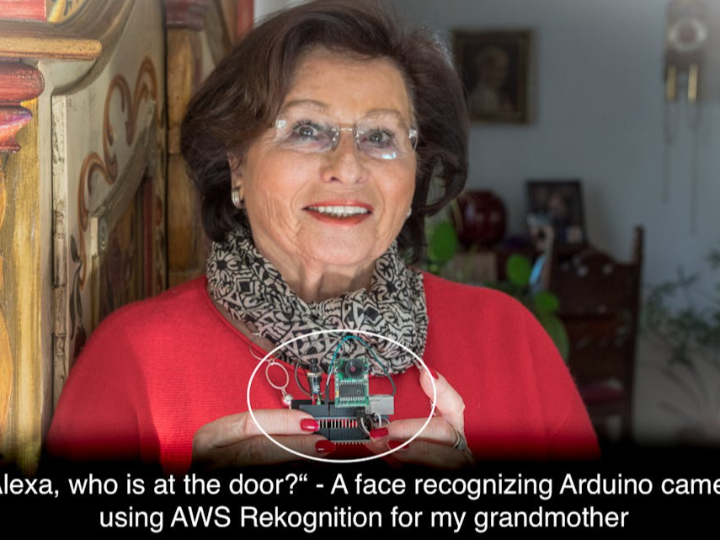
한 줄 요약: 8비트 마이크로컨트롤러(Arduino)의 하드웨어 한계를 클라우드(AWS)로 극복하고, 시각 장애가 있는 사용자를 위해 음성(Alexa) 인터페이스를 접목한 모범적인 IoT 프로젝트 사례
1. 들어가며: 기술이 따뜻해지는 순간
기술은 누군가의 불편함을 해결할 때 가장 빛을 발합니다. Hackster.io의 'Alexa Controlled Face Recognizing Arduino Door Bell' 프로젝트는 시력이 좋지 않아 문 밖의 방문자를 확인하기 힘든 할머니를 위해 고안된 따뜻한 발명품입니다.
이 프로젝트는 단순히 버튼을 누르면 소리가 나는 초인종을 넘어, "알렉사, 문 앞에 누구야?"라고 물으면 인공지능이 방문자의 얼굴을 식별해 이름을 알려주는 스마트 시스템입니다. 흥미로운 점은 이 고성능 AI 시스템이 고작 몇 천 원짜리 아두이노 보드 위에서 시작된다는 것입니다.
2. 시스템 아키텍처: 로우(Low) 테크와 하이(High) 테크의 결합
이 프로젝트의 가장 큰 기술적 특징은 '엣지(Edge)의 경량화'와 '클라우드(Cloud)의 고도화'입니다.
Hardware: 가볍고 저렴하게
하드웨어 구성은 고성능 프로세서 대신 매우 기초적인 부품을 사용하여 비용과 복잡도를 낮췄습니다.
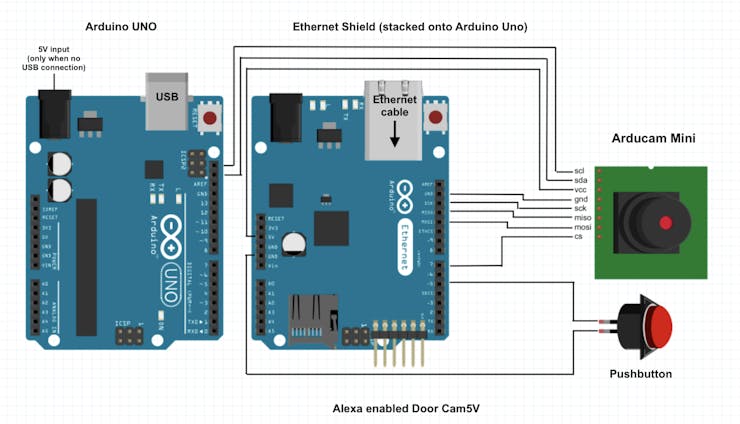
- MCU: Arduino Uno (가장 기본적인 8비트 보드)
- Network: Arduino Ethernet Shield 2 (인터넷 연결)
- Camera: Arducam Mini OV2640 (SPI 방식의 저가형 카메라 모듈)
- Input: Push Button (초인종)
Cloud & Software: 무겁고 똑똑하게
하드웨어의 부족한 연산 능력은 AWS(Amazon Web Services)의 강력한 서버리스 아키텍처가 채웁니다.
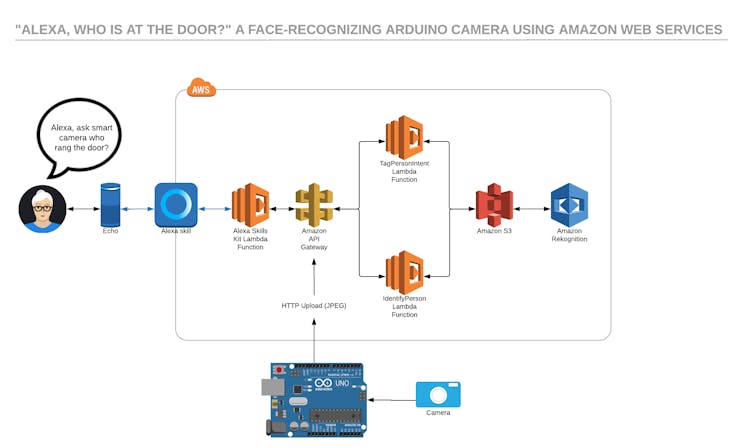
- AWS API Gateway & Lambda: 아두이노의 요청을 받아 처리하는 관문 및 로직 수행
- AWS S3: 촬영된 이미지 저장소
- AWS Rekognition: (핵심) 이미지를 분석하여 얼굴을 식별하는 AI 엔진
- Alexa Skills Kit: 사용자와의 음성 대화를 처리하는 인터페이스
3. 핵심 기술 분석: 메모리 2KB의 한계를 넘다
이 프로젝트에서 가장 주목해야 할 기술적 난관은 바로 **'메모리 제약'**입니다.
아두이노 우노(ATmega328P)의 SRAM 용량은 고작 2KB입니다. 반면, 카메라 모듈이 촬영한 JPEG 이미지 한 장은 수십 KB에 달합니다. 일반적인 방법으로는 아두이노가 이미지를 메모리에 저장했다가 전송하는 것이 불가능합니다.
해결책: 스트리밍 전송 (Chunked Transfer)
개발팀은 이미지를 아두이노에 저장하지 않는 기발한 방식을 택했습니다.
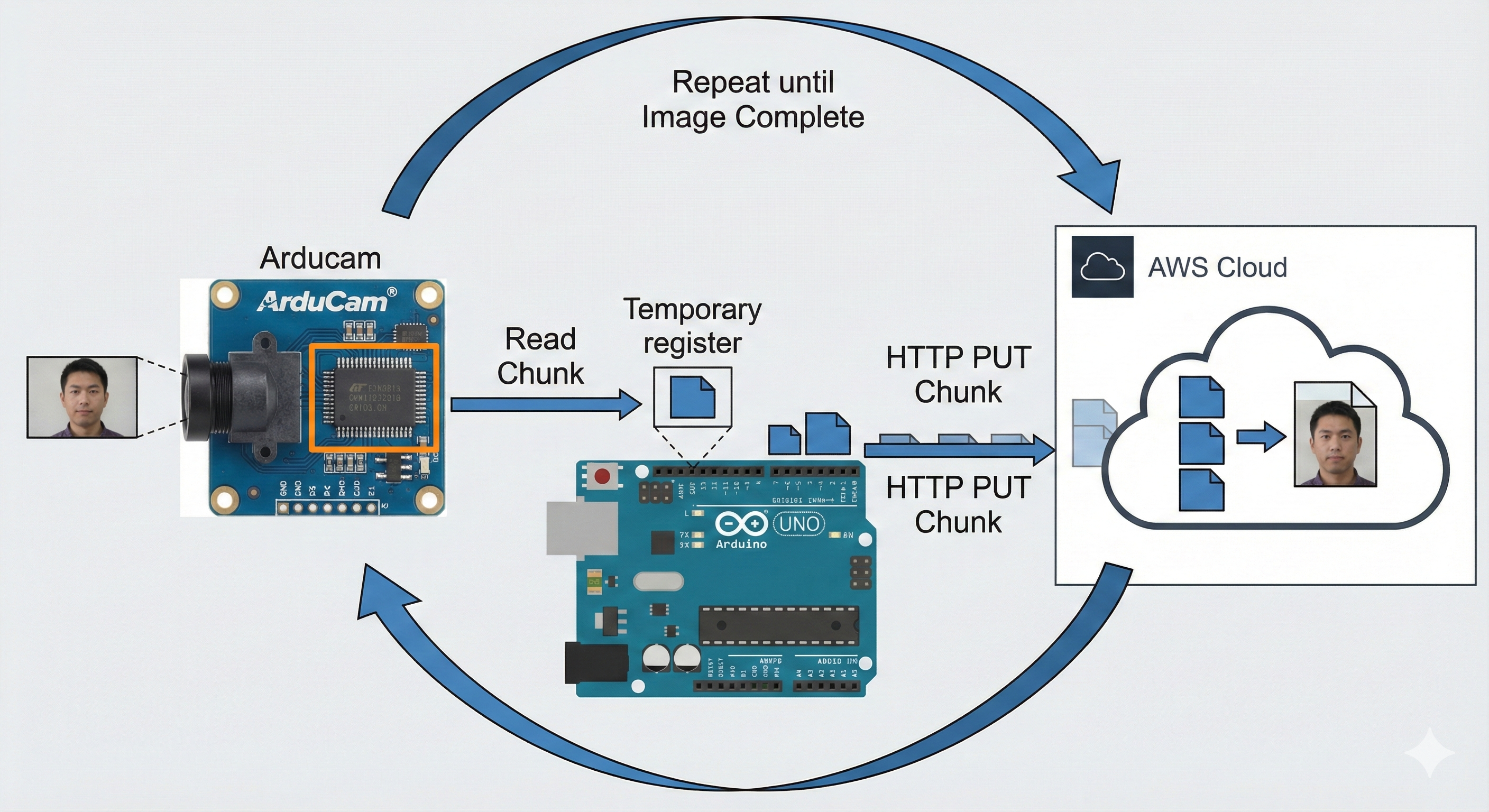
- 카메라 모듈(Arducam) 자체 버퍼에 이미지를 임시 저장합니다.
- 아두이노는 이 버퍼에서 데이터를 아주 작은 조각(Chunk) 단위로 읽어옵니다.
- 읽어온 조각을 저장하지 않고 즉시 HTTP PUT 요청을 통해 AWS로 쏘아 보냅니다.
- 이 과정을 이미지가 전송될 때까지 반복합니다.
이 방식을 통해 저사양 MCU에서도 고해상도 이미지를 클라우드로 전송하여 AI 분석을 맡길 수 있는 길을 열었습니다.
4. 사용자 경험(UX): '학습'하는 초인종
이 도어벨은 단순히 정해진 사람만 알아보는 것이 아니라, 사용자와 상호작용하며 진화합니다.
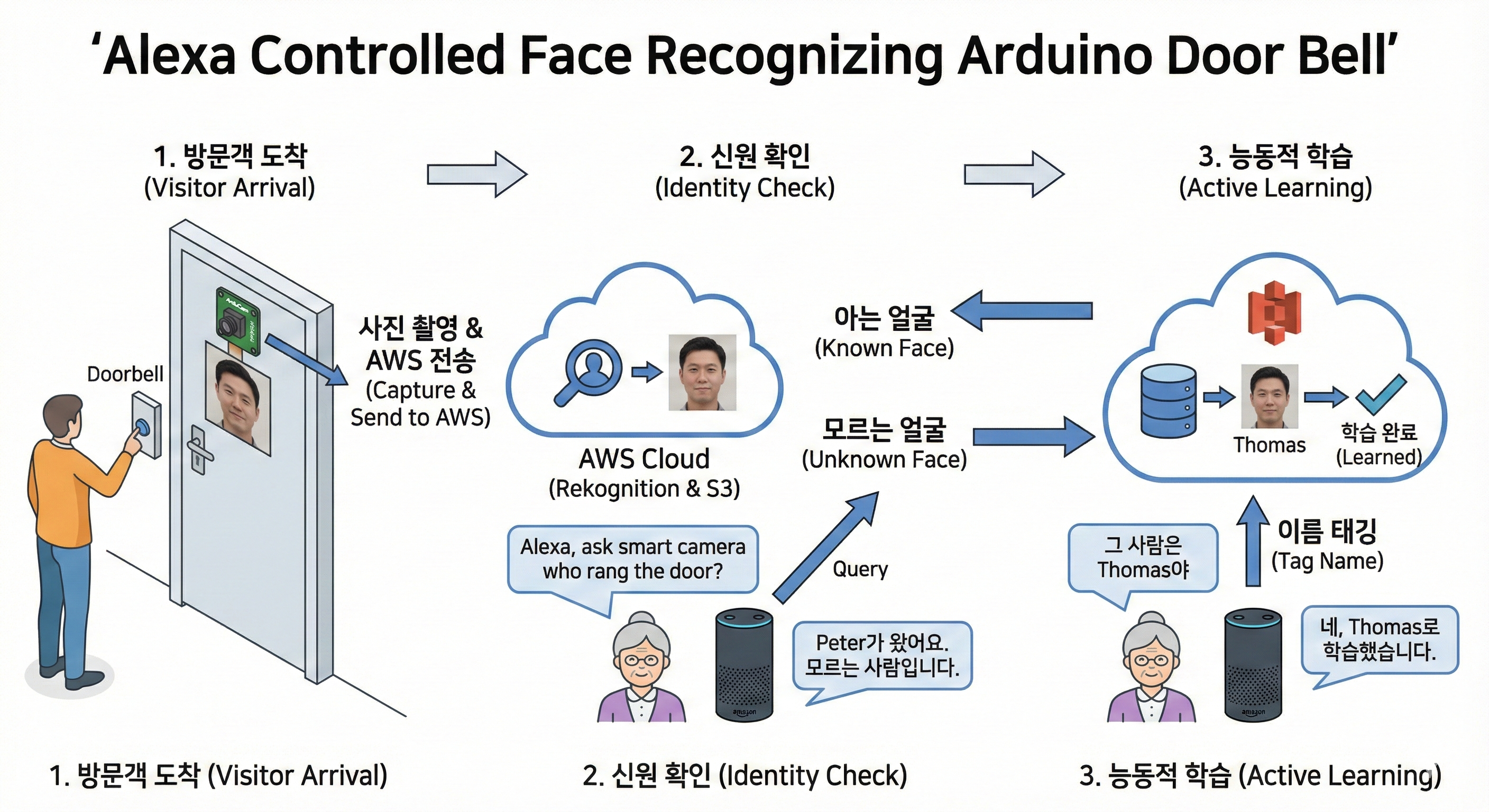
- 방문객 도착: 초인종을 누르면 사진이 AWS로 전송됩니다.
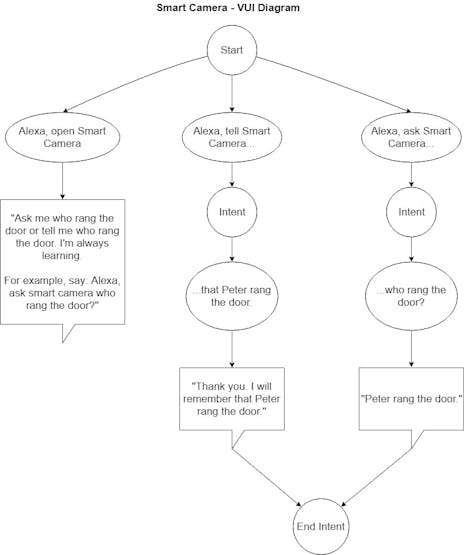
- 신원 확인: 할머니가 "Alexa, ask smart camera who rang the door?"라고 묻습니다.
- 아는 얼굴일 경우: "Peter가 왔어요."
- 모르는 얼굴일 경우: "모르는 사람입니다."
- 능동적 학습: 할머니가 "그 사람은 Thomas야"라고 알렉사에게 말하면, 시스템은 방금 찍힌 'Unknown' 사진에 'Thomas'라는 태그를 붙여 DB에 저장합니다. 다음부터는 Thomas를 알아봅니다.
이는 Human-in-the-loop(인간 참여형) 머신러닝 파이프라인을 가정용 기기에 아주 직관적으로 구현한 사례입니다.
5. 총평 및 인사이트
이 프로젝트는 IoT 프로젝트를 기획하는 개발자들에게 중요한 시사점을 줍니다.
- 적정 기술의 활용: 굳이 비싼 하드웨어를 쓰지 않아도 클라우드 API를 적절히 활용하면 고기능 구현이 가능합니다.
- 접근성(Accessibility) 중심 설계: GUI(화면)보다 VUI(음성)가 더 편리한 사용자층(노인, 시각장애인)을 명확히 타겟팅했습니다.
- 확장성: 뇌 역할을 클라우드가 담당하므로, 추후 하드웨어를 ESP32나 다른 칩셋으로 변경하더라도 소프트웨어 로직은 그대로 재사용할 수 있습니다.
[위즈네트 메이커를 위한 제안] ESP32-CAM으로 다시 만드는 'AI 도어벨'
이 훌륭한 프로젝트를 위즈네트가 최신 트렌드에 맞춰 업그레이드해 본다면 어떨까요?
기존의 '아두이노 우노 + 이더넷 쉴드' 조합 대신, 최근 메이커들 사이에서 가장 핫한 ESP32-CAM 하나로 이 프로젝트를 재구현해 보는 것을 제안합니다. ESP32-CAM을 활용하면 하드웨어 크기와 비용을 획기적으로 줄이면서도 훨씬 빠른 전송 속도를 확보할 수 있습니다.
위즈네트가 이 보드를 활용해 '2026년 버전의 AI 도어벨' 레퍼런스를 만들어 공유한다면, 많은 개발자들에게 실용적이고 흥미로운 튜토리얼이 될 것입니다.
Summary: An exemplary IoT project that overcomes the hardware limitations of an 8-bit microcontroller (Arduino) using the Cloud (AWS), incorporating a voice interface (Alexa) for visually impaired users.
1. Introduction: When Technology Becomes Warm
Technology shines brightest when it solves someone's real-world discomfort. The 'Alexa Controlled Face Recognizing Arduino Door Bell' project on Hackster.io is a heartwarming invention designed for a grandmother with failing eyesight who struggles to see who is at the door.
This project goes beyond a simple doorbell that just rings; it is a smart system where the user can ask, "Alexa, who is at the door?" and the AI identifies the visitor and announces their name. The most surprising aspect is that this high-performance AI system originates from a humble, low-cost Arduino board.
2. System Architecture: The Marriage of Low-Tech and High-Tech
The defining technical characteristic of this project is the combination of "Lightweight Edge" and "Advanced Cloud."
Hardware: Simple and Cost-Effective
Instead of a high-performance processor, the setup uses very basic components to keep complexity and cost down.
- MCU: Arduino Uno (Basic 8-bit board)
- Network: Arduino Ethernet Shield 2 (Internet connectivity)
- Camera: Arducam Mini OV2640 (SPI-based low-cost camera module)
- Input: Push Button (Doorbell)
Cloud & Software: Heavy Lifting and Smart Logic
The lack of computing power on the hardware side is compensated by the powerful serverless architecture of AWS (Amazon Web Services).
- AWS API Gateway & Lambda: Acts as the entry point for Arduino requests and executes logic.
- AWS S3: Storage for captured images.
- AWS Rekognition: (Core) The AI engine that analyzes images to identify faces.
- Alexa Skills Kit: Handles the voice interaction with the user.
3. Core Technology: Crossing the 2KB Memory Barrier
The most significant technical challenge in this project is the "Memory Constraint."
The Arduino Uno (ATmega328P) has only 2KB of SRAM. In contrast, a single JPEG image captured by the camera module is tens of KB in size. It is impossible for the Arduino to store the entire image in its memory before sending it.
The Solution: Chunked Transfer (Streaming)
The development team adopted a clever method to bypass local storage:
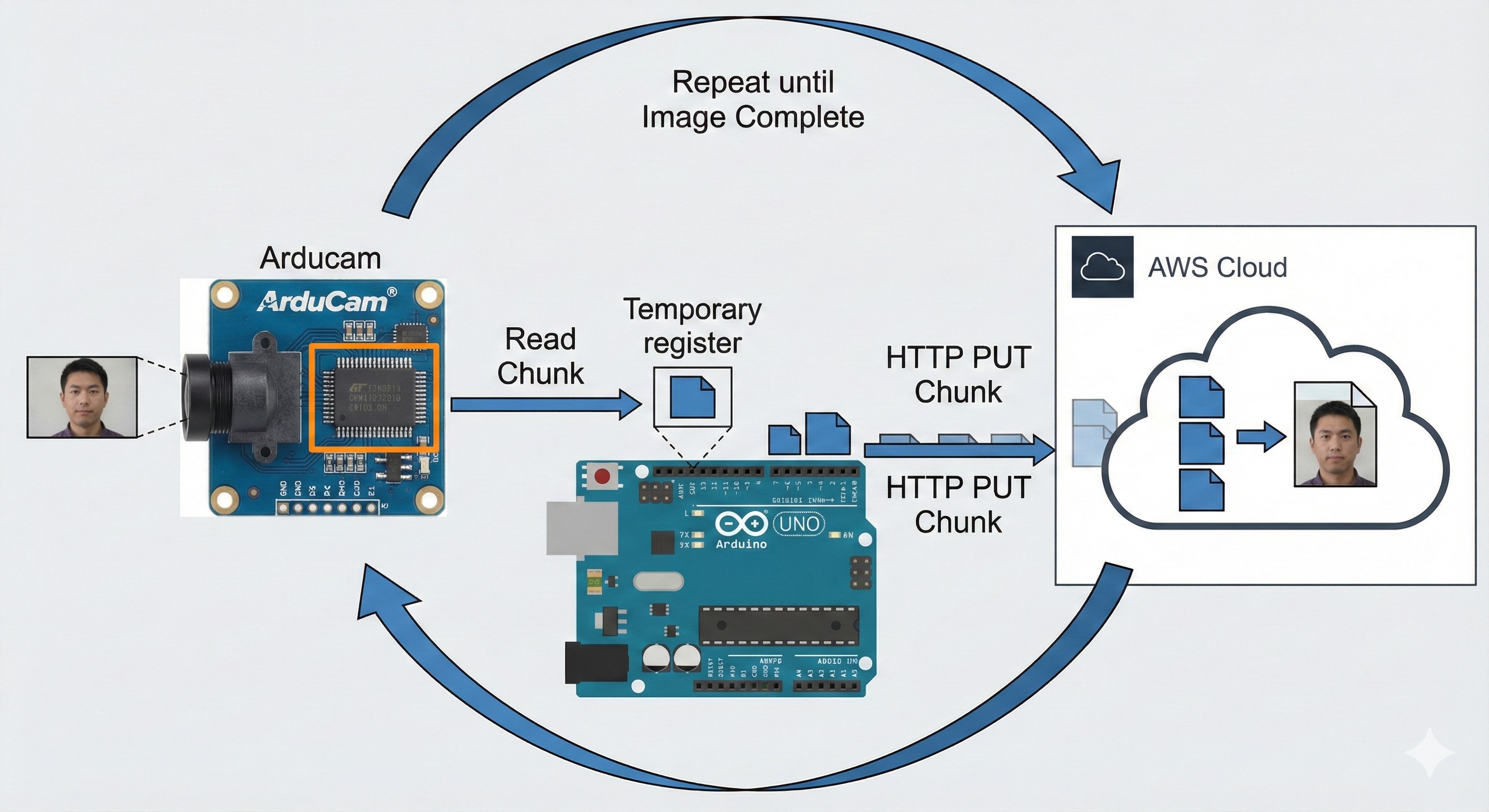
- Buffer: The image is temporarily stored in the Arducam module's own internal buffer.
- Read: The Arduino reads data from this buffer in very small Chunks.
- Transmit: Without storing the chunk, the Arduino immediately sends it to the AWS Cloud via an HTTP PUT request.
- Repeat: This process repeats until the entire image is transmitted.
This approach opens the door for low-spec MCUs to send high-resolution images to the cloud for heavy AI processing.
4. User Experience (UX): A Doorbell That Learns
This system doesn't just recognize pre-defined people; it interacts with the user to evolve.
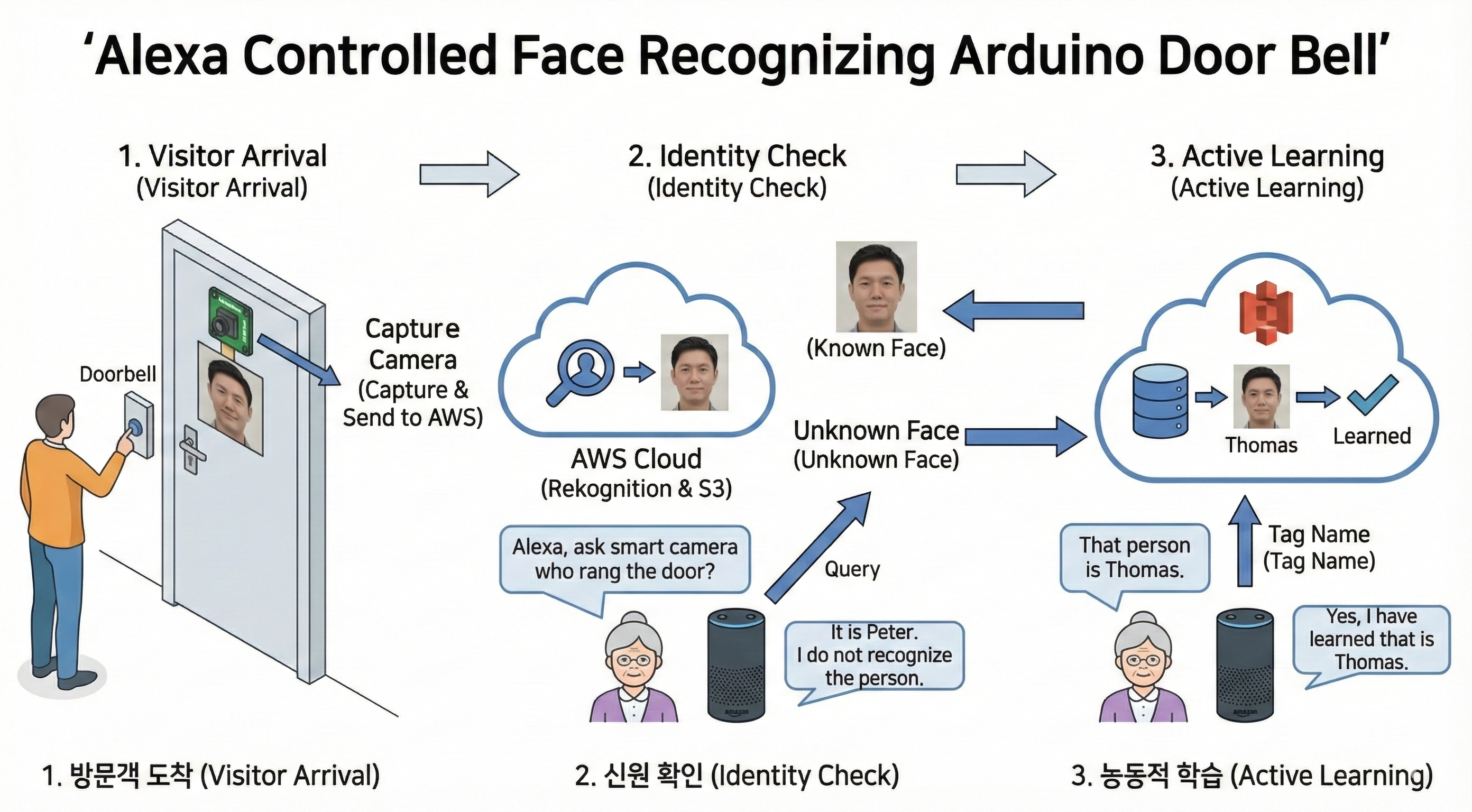
- Visitor Arrives: The button is pressed, and the photo is sent to AWS.
- Verification: Grandma asks, "Alexa, ask smart camera who rang the door?"
- Known Face: "It is Peter."
- Unknown Face: "I do not recognize the person."
- Active Learning: Grandma tells Alexa, "That person is Thomas." The system then tags the previously 'Unknown' photo with the name 'Thomas' in the database.
- Result: The next time Thomas visits, the system will recognize him.
This is a brilliant implementation of a Human-in-the-loop machine learning pipeline, applied intuitively in a home appliance.
5. Conclusion & Insights
This project offers important takeaways for IoT developers:
- Appropriate Tech: You don't always need expensive hardware; proper use of Cloud APIs enables high-level functionality.
- Accessibility-First Design: Targeting a specific user group (elderly, visually impaired) by choosing VUI (Voice) over GUI (Screen) was a key design decision.
- Scalability: Since the "brain" resides in the cloud, the software logic remains reusable even if the hardware is swapped for an ESP32 or another chipset later.
[Proposal for WIZnet Makers] Recreating the 'AI Doorbell' with ESP32-CAM
What if WIZnet upgraded this excellent project to align with modern trends?
Instead of the bulky 'Arduino Uno + Ethernet Shield' combination, I propose recreating this project using the ESP32-CAM, which is currently the most popular board among makers. By utilizing the ESP32-CAM, you can drastically reduce hardware size and cost while securing significantly faster transmission speeds.
If WIZnet creates and shares a '2025 Version AI Doorbell' reference using this board, it would serve as a highly practical and engaging tutorial for many developers in the community.
-
smartcam

-
Setup: AWS
-
Setup: Alexa Skill