



W55MH32 Enables OTA Upgrades: Comparison of Three Solutions and Efficient Remote Updates
W55MH32 Enables OTA Upgrades: Comparison of Three Solutions and Efficient Remote Updates
1. Understanding the core value and technical classification of OTA upgrades
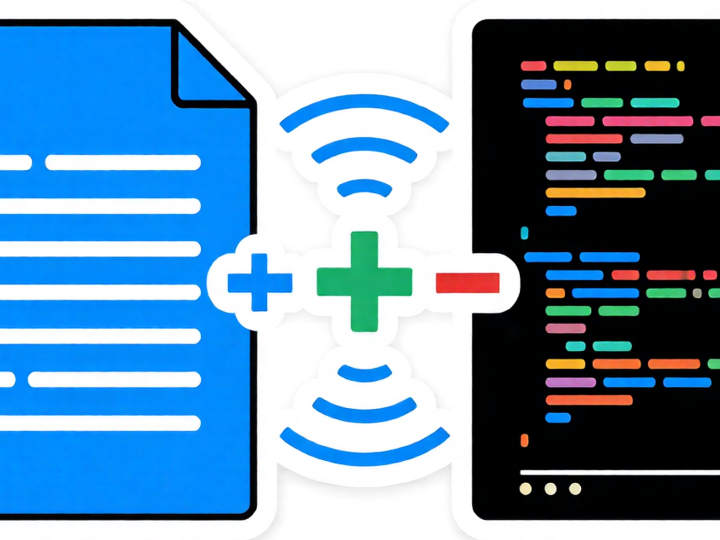
1.1 OTA Upgrades: The "Eternal Life" of Smart Devices
OTA (Over-The-Air Technology) allows devices to update their firmware remotely over a network without physical contact. Its core objectives are to reduce maintenance costs, accelerate feature iteration, and improve device reliability . In fields such as the Internet of Things (IoT), industrial control, and consumer electronics, OTA has become a standard capability for continuous device evolution, freeing products from the limitations of being "factory-defined" and enabling them to adapt to new requirements and fix potential problems through remote updates.
1.2 Three Mainstream OTA Solutions: Principles, Advantages, Disadvantages, and Scenario Adaptation
Based on upgrade logic and reliability design, OTA can be divided into three categories, each with its own applicable boundaries:
| Scheme type | Core Logic | Advantages | defect | Applicable Scenarios |
| Direct overwrite upgrade | Erase old firmware → Write new firmware → Reboot | Simple logic, low resource consumption | Interruptions can easily lead to bricking and there is no rollback mechanism. | Low-cost, low-risk equipment (such as toys) |
| Differential upgrade | Generate new and old firmware difference package → merge and verify → write new firmware | High transmission efficiency (saving bandwidth) | Requires computing power merging and relies on temporary areas | Bandwidth-limited, moderately complex devices |
| AB dual partition upgrade | New firmware written to the backup area → Verification → Boot switch | Zero risk (failure rollback), flexible | Double storage required | High-reliability equipment (industrial, medical, automotive grade) |
2. In-depth analysis of the technical details of the three major OTA solutions
2.1 Direct Coverage Upgrade: The "High-Risk Pitfalls" Behind the Simplicity

Process and Principle
- Erasure phase : After receiving the upgrade command, the Bootloader first verifies the validity of the command. If it is correct, it clears the application partition (original firmware storage area) in Flash.
- Writing phase : New firmware is received in blocks over the network and written to the erased partition block by block;
- Booting phase : After writing is complete, the device is restarted and loaded from the new firmware partition.
Core defects
- High risk of bricking: If the writing process is interrupted by power failure, network failure or other reasons, the original firmware will be erased, the new firmware will be incomplete, and the device will not be able to start.
- No rollback mechanism: If the upgrade fails, the device must be physically returned to the factory to rewrite the firmware, resulting in extremely high maintenance costs;
- Weak verification capabilities: Most only perform basic verification, making it difficult to handle transmission errors or storage anomalies.
Summarize
Direct coverage upgrades are the "lowest cost but highest risk" solution, and are mainly suitable for ultra-low cost equipment or experimental prototypes where reliability is not a requirement.
2.2 Differential Upgrade: A Precision Balance Between Bandwidth and Computing Power
Process and Principle
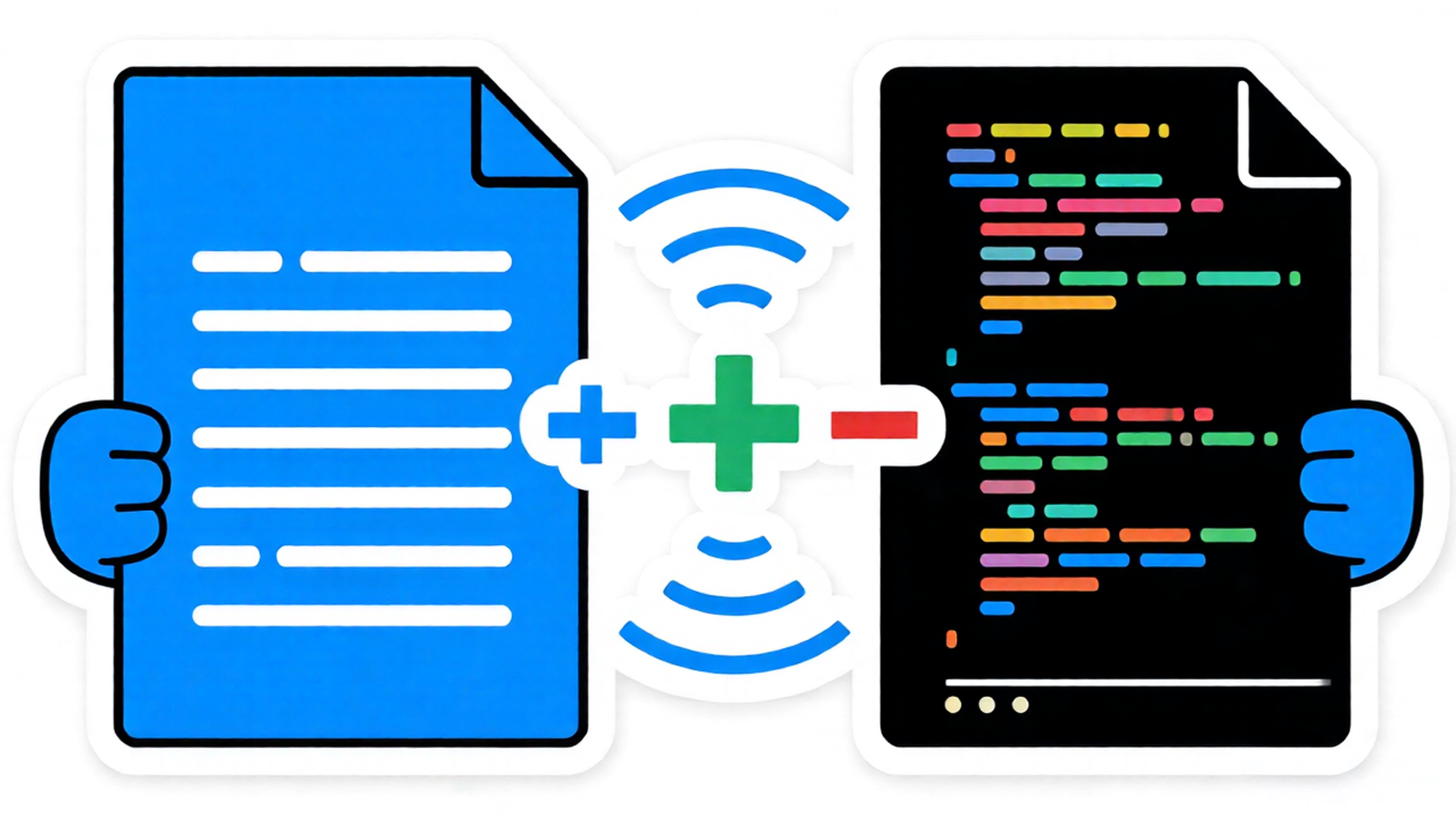
- Differential Packet Generation : By comparing the old and new firmware using an algorithm, the difference data is extracted to generate a small patch;
- Transmission and Merging : The device downloads the differential packet to the temporary area and calls the merging algorithm to dynamically merge it with the original firmware into a new firmware;
- Verification and Replacement : After verifying the integrity of the new firmware, erase the old firmware and write the new firmware, then reboot to take effect.
Key technologies
- The computing power requirements place certain demands on the MCU's clock speed;
- Bandwidth advantage : Differential packets are much smaller than full firmware, which can significantly save transmission bandwidth.
Summarize
Differential upgrades save bandwidth by “using a small amount of power to achieve a large result”, but rely on MCU computing power and temporary area design, making them suitable for medium-complexity devices with limited networks.
2.3 AB Dual-Partition Upgrade: The "Gold Standard" for Enterprise-Level Reliability
Process and Principle
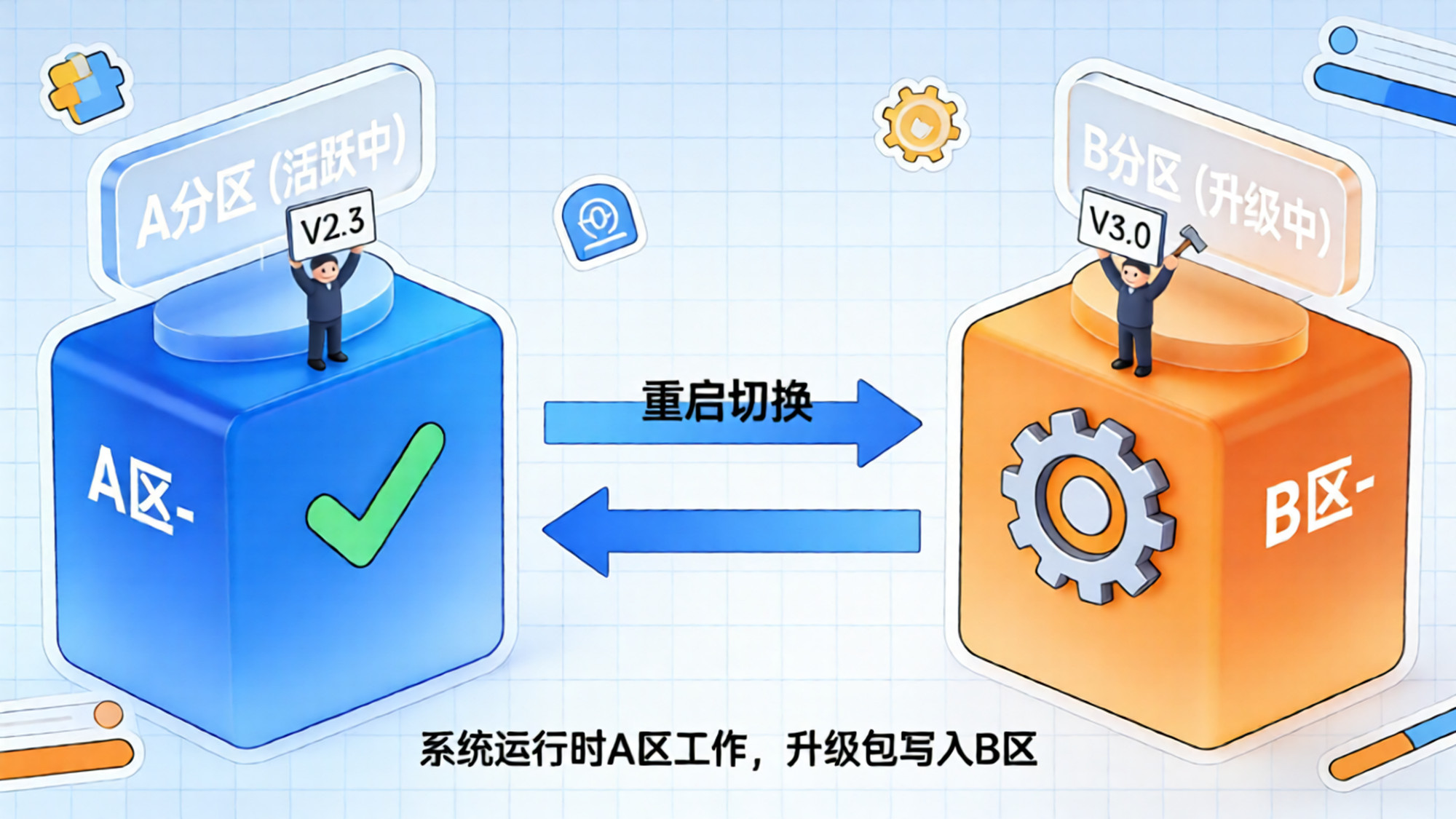
- Partitioning : Flash memory is divided into Bootloader area (boot program), Area A (current running area), Area B (spare area), and configuration area (storage boot flags, etc.);
- Write to spare area : The new firmware is downloaded to area B without interfering with the operation of area A;
- Verification and Switching : Verify the integrity of the firmware in area B. If successful, modify the boot flag.
- Booting and Rollback : After rebooting, boot from area B. If there is a malfunction (such as loss of heartbeat or function error), automatically switch back to area A to restore the original firmware.
Core advantages
- Zero-risk upgrade : The original firmware (A zone) is always retained, and a rollback can be performed instantly in case of failure;
- Seamless transition : Users are unaware of the upgrade, and the transition process is fast;
- Flexible management : Supports version downgrades and independent updates for multiple partitions.
Costs and Challenges
- Storage cost : Requires twice the firmware storage space (e.g., 1MB Flash can support approximately half the capacity of firmware dual partitions).
- Development complexity : Bootloader partition management and rollback logic need to be designed.
Summarize
AB dual partitioning is the optimal solution for "reliability first" scenarios. Although it increases storage costs, it completely eliminates the risk of data loss and is an essential solution for high-value devices.
3. W55MH32 Chip – A High-Efficiency Platform Tailored for OTA Upgrades
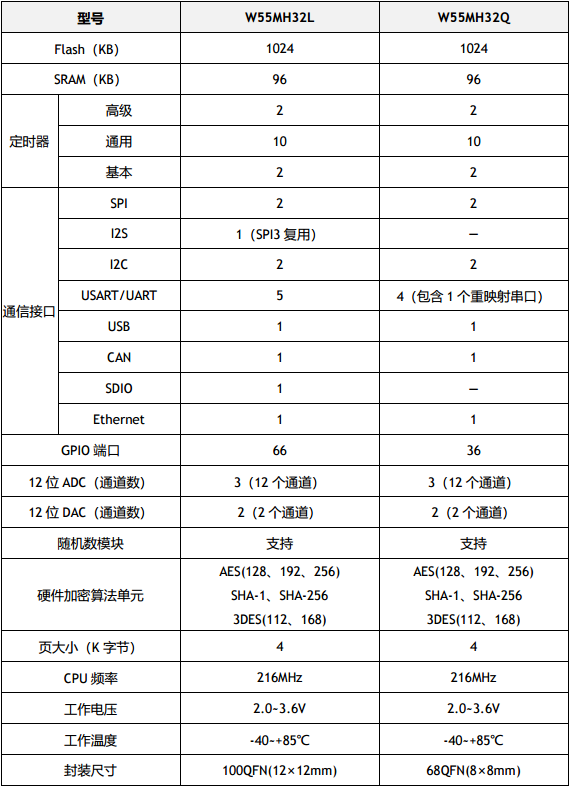
Device Function Configuration Table
3.1 Hardware Capabilities: Fully Covering the Requirements of Three Types of OTA Solutions
The W55MH32 is an MCU designed for IoT and industrial control, and its hardware design is naturally compatible with OTA upgrades.
- Storage : Ample Flash space (can be flexibly partitioned into two partitions);
- Performance : High-performance kernel (supports complex operations such as differential merging), ensuring upgrade efficiency;
- Network : Native Ethernet interface (supports high-speed remote transmission), adaptable to various networking scenarios;
- Security : Integrated hardware encryption engine (accelerates secure operations such as firmware signature verification and hash calculation).
Summarize
The W55MH32's hardware configuration can support the high reliability requirements of AB dual partitioning, and can also efficiently handle the computing power bottleneck of differential upgrades. The Ethernet interface provides a stable channel for remote upgrades.
3.2 Business Value: Triple Benefits of Cost Reduction, Efficiency Improvement, and Market Capture
Cost reduction : Remote upgrades reduce on-site maintenance costs and alleviate after-sales pressure;
Efficiency Enhancement : Based on routine secondary development, the R&D cycle is significantly shortened;
Seize the market : Iterate features rapidly to gain a competitive edge in product launches.
Summarize
The W55MH32 is not just a chip, but also a "one-stop OTA upgrade solution," helping products to be launched to market with lower risk and faster speed.
4. Practical Guide: The W55MH32 Hardware TCP /IP Protocol Stack's Core Empowerment for Mainstream OTA Solutions
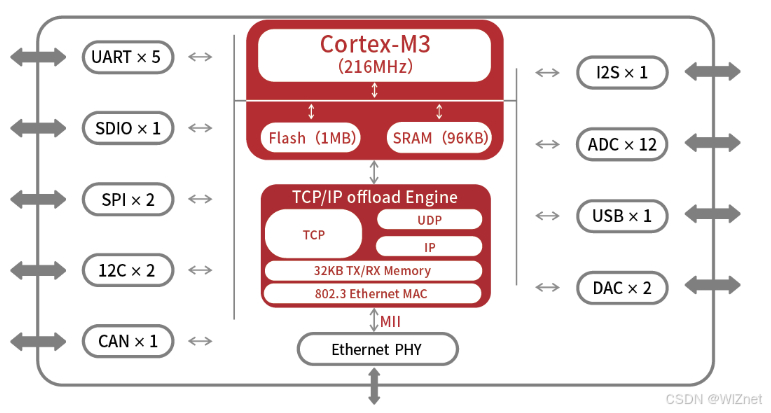
System Architecture
The W55MH32's built-in independent TCP/IP (hardware protocol stack) serves as the "performance anchor" for its OTA upgrades. Data transmission and reception can be handled by the hardware protocol stack, freeing the MCU from network protocol load and allowing it to focus on firmware partition management, verification, and switching, thus ensuring the stability and efficiency of OTA upgrades at the hardware level. This core hardware feature precisely meets the core requirements of two mainstream solutions: differential upgrades and AB dual-partition upgrades, maximizing its technological advantages.
4.1 Differential Upgrade: Dual Optimization of Computing Power and Bandwidth
The core pain point of differential upgrades lies in the fact that "merging differential packets requires MCU computing power ," and the W55MH32's hardware TCP/IP protocol stack precisely resolves this contradiction:
- Computing power release : The protocol stack is separated from the kernel to independently complete the network transmission and protocol parsing of differential packets (TCP/UDP handshake, data fragmentation and reassembly are all handled by hardware). The Cortex-M3 core can focus on the merging operation of differential packets and original firmware without allocating resources between "network processing" and "firmware merging", which greatly improves merging efficiency.
4.2 Upgrading AB Dual Partitions: A Solid Foundation for Reliability and Smoothness
Dual-partition upgrades (AB) place extremely high demands on firmware transmission stability and kernel resource focus , and the W55MH32 hardware TCP/IP protocol stack is the key support for its high reliability.
- Transmission stability assurance : In response to the characteristic of AB dual partitions requiring the transmission of complete large firmware, a 32KB dedicated cache enables efficient temporary storage and orderly transmission of firmware fragments; compared with software protocol stacks, it is more resistant to network fluctuations and electromagnetic interference in industrial scenarios, reduces fragment packet loss rate, and reduces the risk of upgrade interruption from the source;
- Enhanced focus on kernel resources : The protocol stack independently handles the network protocol processing of the entire firmware, allowing the MCU to completely shed network load and devote itself to core tasks such as firmware hash verification in the B area, digital signature verification, boot flag modification, and rollback logic execution . This avoids verification errors and partition switching anomalies caused by kernel resource occupation, ensuring the core value of "zero-risk rollback".
- Large-scale deployment and adaptation : The hardware protocol stack supports parallel processing of multiple TCP connections . A single server can push firmware to multiple W55MH32 devices at the same time, and the upgrade process of each device remains stable, which meets the needs of batch OTA scenarios for industrial-grade equipment.
4.3 Core Adaptation Principles
Whether it's differential upgrade or AB dual-partition upgrade, the core principle of implementing the W55MH32 hardware TCP/IP protocol stack is to "let the hardware handle the network layer work, allowing the MCU to focus on the core OTA logic . "
- Differential upgrade focuses on : the hardware protocol stack can greatly reduce the load on the MCU, and the 216MHz main frequency can meet the computing requirements;
The AB dual-partition upgrade focuses on ensuring highly reliable switching by relying on hardware transmission stability (anti-interference, low packet loss) and the kernel's focus on verification/rollback. - Common goal : To strip network load by using hardware protocol stacks, maximizing the technical advantages of both solutions (differential bandwidth saving, AB zero risk) while avoiding their inherent pain points (differential computing power squeezing, AB transmission instability).
5. Project schedule and delivery guarantee
5.1 Comprehensive technical support
- Provides OTA updates and various high-quality peripheral examples;
- A professional technical team provides full support throughout the process;
- Comprehensive technical documentation and design guidelines;
- Timely technical updates and iteration support.
5.2 Stable supply chain guarantee
- Complete documentation, stable and controllable supply;
- A rigorous quality control system ensures product consistency.
- Link to W55MH32L specifications : https://www.w5500.com/w55mh32.html
Summarize
The W55MH32 chip, empowered by both hardware and ecosystem, serves as a unified adaptation platform for three types of OTA solutions: On the hardware level, ample storage supports dual-partition design, a high-performance core meets the needs of differential merging computing power, and an independent TCP/IP protocol stack ensures stable transmission; on the ecosystem level, pre-built solutions, complete routines, and visualization tools significantly reduce the development threshold, enabling the rapid deployment of OTA functions.
————————————————
Copyright Notice: This article is an original work by CSDN blogger "Playing with Ethernet" and is licensed under CC 4.0 BY-SA. Please include the original source link and this statement when reprinting.
Original Link: https://blog.csdn.net/2301_81684513/article/details/155931960