



How to Port WIZnet ioLibrary for W5500 on MINISTM32?
This project targets the MINISTM32 platform based on the STM32F103RCT6 and provides the files, examples, and guidance needed to integrate a WIZnet W5500 through
How to Port WIZnet ioLibrary for W5500 on MINISTM32?
Summary
This project targets the MINISTM32 platform based on the STM32F103RCT6 and provides the files, examples, and guidance needed to integrate a WIZnet W5500 through SPI. The W5500 serves as the wired Ethernet transport for an Industrial IoT node, while ioLibrary separates platform-specific SPI and GPIO functions from chip-register access, hardware socket control, and higher-level network services.
What the Project Does
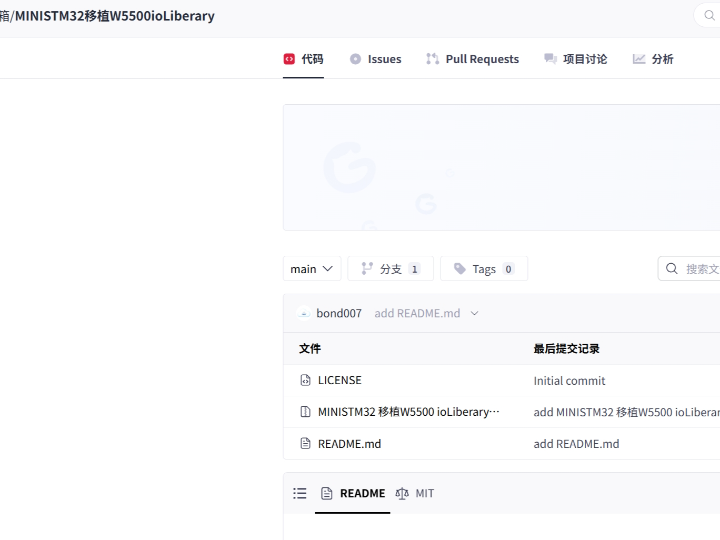
The repository is presented as a W5500 ioLibrary port for the MINISTM32 development platform. Its stated purpose is to help developers configure, debug, and establish network communication with the W5500 on an STM32F103RCT6. The project description says that porting library files and example code are included, although the public repository view available during this review did not expose the individual source files for direct inspection.
At the system level, the expected data path is:
Industrial sensor or controller logic → STM32F103RCT6 → SPI → W5500 → Ethernet network → PLC, gateway, SCADA server, or cloud edge service
The STM32 executes the application and prepares payload data. The W5500 maintains Ethernet and supported TCP/IP socket state, stores packets in its internal memory, and transfers application data between the MCU and the wired network.
For an Industrial IoT deployment, this arrangement can support functions such as:
Periodic sensor telemetry
TCP-based equipment monitoring
UDP status announcements
Modbus TCP application traffic
Local configuration and diagnostics
Communication with an industrial gateway
The repository description supports the MINISTM32, STM32F103RCT6, W5500, and ioLibrary integration scope. It does not provide enough visible evidence to confirm which application protocol or socket example is implemented.
Where WIZnet Fits
The WIZnet product is the W5500, connected to the STM32F103RCT6 through SPI. It provides hardwired TCP/IP processing, eight hardware sockets, and 32 KB of internal transmit and receive memory.
Within the software architecture, WIZnet ioLibrary sits between the STM32 board-support code and the application:
Application protocol
Uses TCP or UDP sockets for telemetry, commands, diagnostics, or industrial protocol messages.
ioLibrary socket layer
Provides operations such as opening, listening, connecting, sending, receiving, disconnecting, and closing W5500 sockets.
W5500 register layer
Implements chip-specific register access, socket-register handling, and internal TX/RX buffer access.
ioLibrary adaptation layer
Accepts platform callback functions for chip select, SPI reads and writes, burst transfers, and optional locking.
MINISTM32 board-support layer
Configures the STM32F103 SPI peripheral, GPIO, reset signal, interrupt input, and timing functions.
This separation is important during porting. The W5500 register and socket logic should remain largely platform-independent. Most MINISTM32-specific work belongs in the low-level SPI, GPIO, reset, interrupt, and timing functions.
For an Industrial IoT controller, the W5500 also moves supported network processing away from the STM32F103. This leaves more MCU execution time and memory available for sensor acquisition, control logic, fieldbus translation, diagnostics, and fault handling.
Implementation Notes
The repository page confirms that it is an STM32F103RCT6 W5500 ioLibrary port, but the accessible interface did not provide verifiable source files, paths, or line-level code. Therefore, no repository code is reproduced here. The following describes the architecture that should be verified against the downloaded project.
SPI Porting Boundary
The critical porting task is to connect ioLibrary’s hardware-independent interfaces to the MINISTM32 SPI implementation.
The board-support code should provide:
Chip-select assertion
Chip-select release
Single-byte SPI read
Single-byte SPI write
Burst SPI read
Burst SPI write
W5500 hardware reset
Optional interrupt handling
Optional critical-section or mutex handling
The SPI controller should operate as the master. W5500 supports SPI modes 0 and 3, but the selected mode must match both the MCU configuration and the driver assumptions.
A conservative SPI clock should be used during initial bring-up. After register access and sustained transfers are stable, the clock can be increased while checking signal integrity, timing margins, and packet-error behavior.
ioLibrary Structure
A typical W5500 ioLibrary integration uses three functional groups.
Chip configuration layer
The configuration module selects the W5500 target, registers platform callbacks, initializes socket memory, and reads or writes common network settings.
W5500 device layer
The chip-specific driver maps W5500 common registers, socket registers, and internal memory operations onto the registered SPI functions.
Socket API layer
The socket module provides TCP and UDP operations to the application without requiring application code to manipulate every W5500 register directly.
Higher-level protocol modules may be added for DHCP, DNS, SNMP, MQTT, or other services, but their presence in this repository could not be confirmed from the accessible project view.
Recommended Porting Sequence
Begin by validating the electrical and SPI interface before testing sockets.
Hold the W5500 in reset during MCU startup.
Initialize the STM32 SPI peripheral and GPIO signals.
Release reset and allow the W5500 to complete startup.
Register chip-select and SPI callback functions with ioLibrary.
Read a stable W5500 register value repeatedly.
Configure the W5500 socket TX and RX memory map.
Write the MAC address, IP address, subnet mask, and gateway.
Confirm that the PHY reports an Ethernet link.
Open a UDP socket for initial packet testing.
Add TCP connection and application-level recovery logic.
A register test should come before DHCP or TCP testing. If basic register reads are unreliable, higher-level network failures will be difficult to diagnose.
Industrial IoT Communication Model
A practical Industrial IoT application can reserve sockets by function rather than allocating them dynamically without policy. For example:
One socket for the primary control or telemetry connection
One socket for diagnostics
One socket for configuration
One socket for DHCP when dynamic addressing is required
One socket for DNS or service discovery
Remaining sockets reserved for maintenance or future functions
The W5500 has a finite socket count and a shared 32 KB memory pool. Both resources should be assigned during architecture design rather than discovered as limitations late in development.
Ethernet Compared with Wi-Fi
Wi-Fi can reduce cabling and simplify installation where mobility is required. However, radio interference, channel contention, roaming, access-point availability, credentials, and security provisioning add variables that do not exist in a direct wired Ethernet link.
The W5500 approach is better suited to fixed Industrial IoT equipment when the design prioritizes:
A physically stable network link
Predictable local-network behavior
Operation without an access point
Simpler field commissioning
Reduced dependence on RF conditions
Separation of network processing from application control
Wi-Fi remains appropriate for mobile equipment, temporary installations, or sites where Ethernet cabling is impractical. The decision should be based on installation constraints and failure modes rather than assuming that either medium is universally superior.
Practical Tips / Pitfalls
Verify W5500 power, reset timing, oscillator operation, and SPI register access before debugging IP configuration or socket code.
Control chip select with a dedicated GPIO unless the selected STM32 SPI configuration has been fully validated with the W5500 transaction format.
Test SPI transfers with repeated register reads and large burst operations; a single successful version-register read is not sufficient validation.
Allocate socket TX and RX memory according to actual traffic. Industrial telemetry and firmware updates have different buffering requirements.
Define recovery behavior for cable removal, switch restart, server loss, socket timeout, and DHCP renewal failure.
Keep Ethernet magnetics, differential pairs, ESD protection, grounding, and connector shielding within the board vendor’s and WIZnet’s layout guidance.
Add a hardware or software watchdog, but attempt socket recovery and W5500 reinitialization before resetting the entire controller.
FAQ
Q: Why use the W5500 for this Industrial IoT project?
The W5500 provides hardwired TCP/IP socket processing and internal packet memory, reducing the amount of network-stack work assigned to the STM32F103RCT6. This is useful when the MCU must continue handling sensor sampling, equipment control, fault monitoring, and application protocols while maintaining Ethernet communication.
Q: How does the W5500 connect to the MINISTM32 platform?
It connects through SPI using SCLK, MOSI, MISO, and chip select. A practical design also connects the W5500 reset pin to an STM32 GPIO and may connect the interrupt pin when event-driven receive and socket handling are required. The exact MINISTM32 pin assignment must be confirmed from the downloaded project because the accessible repository page did not expose its source or schematic.
Q: What role does ioLibrary play in this project?
ioLibrary separates W5500 register and socket handling from the STM32F103-specific hardware functions. The port supplies SPI and GPIO callback functions, while the shared WIZnet layers manage chip registers, socket state, and packet-buffer access.
Q: Can beginners follow this port?
A developer should understand STM32 GPIO, hardware SPI, C callbacks, IPv4 addressing, and basic TCP/UDP socket behavior. The project description says that configuration and debugging guidance are included, but an industrial deployment also requires Ethernet hardware design, fault recovery, EMC awareness, and network commissioning experience.
Q: How does W5500 Ethernet compare with Wi-Fi for this application?
W5500 Ethernet requires cabling but avoids access-point dependence, RF interference, roaming, and wireless credential management. Wi-Fi offers installation flexibility and mobility, while W5500 is generally easier to bound and diagnose in fixed industrial equipment. Neither option removes the need for application-level retries, authentication, health monitoring, and recovery logic.
Source
Original project: Universal-Tool, MINISTM32 Port of W5500 ioLibrary
https://gitcode.com/Universal-Tool/3a3e0
Repository scope: MINISTM32 and STM32F103RCT6 integration of W5500 ioLibrary, including porting resources and example code according to the project description.
License: MIT, as shown on the repository page. Individual WIZnet library files may also contain their own copyright and license notices and should be reviewed before redistribution.
Tags
#W5500 #WIZnet #STM32F103RCT6 #MINISTM32 #ioLibrary #SPI #IndustrialIoT #Ethernet #EmbeddedNetworking #WiFiComparison
MINISTM32에서 WIZnet ioLibrary를 W5500용으로 어떻게 포팅할 수 있을까?
요약
이 프로젝트는 STM32F103RCT6 기반 MINISTM32 플랫폼을 대상으로 하며, WIZnet W5500을 SPI로 연동하기 위한 파일, 예제, 설정 지침을 제공합니다. W5500은 산업용 IoT 노드의 유선 이더넷 전송을 담당하고, ioLibrary는 플랫폼별 SPI 및 GPIO 기능을 칩 레지스터 접근, 하드웨어 소켓 제어, 상위 네트워크 서비스와 분리합니다.
프로젝트가 하는 일
이 저장소는 MINISTM32 개발 플랫폼을 위한 W5500 ioLibrary 포팅 프로젝트로 소개되어 있습니다. STM32F103RCT6에서 W5500을 설정하고 디버깅하며 네트워크 통신을 구성할 수 있도록 포팅 라이브러리 파일과 예제 코드를 제공하는 것이 목적입니다.
다만 검토 당시 공개 저장소 화면에서는 개별 소스 파일을 직접 열어 확인할 수 없었기 때문에, 실제 파일 경로나 구현 코드를 검증할 수는 없었습니다.
시스템 수준의 예상 데이터 흐름은 다음과 같습니다.
산업용 센서 또는 제어 로직 → STM32F103RCT6 → SPI → W5500 → 이더넷 네트워크 → PLC, 게이트웨이, SCADA 서버 또는 엣지 서비스
STM32는 애플리케이션을 실행하고 전송할 데이터를 준비합니다. W5500은 이더넷과 지원되는 TCP/IP 소켓 상태를 관리하고, 내부 메모리에 패킷을 저장하며, MCU와 유선 네트워크 사이에서 애플리케이션 데이터를 전달합니다.
산업용 IoT 환경에서는 다음과 같은 기능에 적용할 수 있습니다.
주기적인 센서 텔레메트리
TCP 기반 설비 상태 모니터링
UDP 상태 브로드캐스트
Modbus TCP 애플리케이션 통신
로컬 설정 및 진단
산업용 게이트웨이 연동
저장소 설명을 통해 MINISTM32, STM32F103RCT6, W5500, ioLibrary 통합 범위는 확인할 수 있습니다. 그러나 어떤 애플리케이션 프로토콜이나 소켓 예제가 실제로 구현되어 있는지는 공개 화면만으로 확인할 수 없습니다.
WIZnet이 적용되는 위치
사용되는 WIZnet 제품은 W5500이며, STM32F103RCT6과 SPI로 연결됩니다. W5500은 하드와이어드 TCP/IP 처리, 8개의 하드웨어 소켓, 32 KB의 내부 송수신 메모리를 제공합니다.
소프트웨어 구조에서 WIZnet ioLibrary는 STM32 보드 지원 코드와 애플리케이션 사이에 위치합니다.
애플리케이션 프로토콜
TCP 또는 UDP 소켓을 이용해 텔레메트리, 제어 명령, 진단 데이터, 산업용 프로토콜 메시지를 처리합니다.
ioLibrary 소켓 계층
소켓 열기, 대기, 연결, 송신, 수신, 연결 종료, 소켓 닫기 등의 기능을 제공합니다.
W5500 레지스터 계층
칩 공통 레지스터, 소켓 레지스터, 내부 TX/RX 버퍼 접근을 처리합니다.
ioLibrary 포팅 계층
칩 선택, SPI 읽기 및 쓰기, 버스트 전송, 선택적 락 기능을 위한 플랫폼 콜백을 등록합니다.
MINISTM32 보드 지원 계층
STM32F103의 SPI 주변장치, GPIO, 리셋 신호, 인터럽트 입력, 타이밍 기능을 설정합니다.
이러한 분리는 포팅 과정에서 중요합니다. W5500 레지스터 및 소켓 로직은 대부분 플랫폼과 무관하게 유지하고, MINISTM32에 종속되는 부분은 저수준 SPI, GPIO, 리셋, 인터럽트, 시간 처리 함수에 한정해야 합니다.
산업용 IoT 컨트롤러에서는 W5500이 지원되는 네트워크 처리를 STM32F103에서 분리해 주므로, MCU는 센서 수집, 제어 로직, 필드버스 변환, 진단, 장애 처리에 더 많은 실행 시간과 메모리를 사용할 수 있습니다.
구현 참고 사항
저장소 페이지에서는 STM32F103RCT6용 W5500 ioLibrary 포팅 프로젝트임을 확인할 수 있지만, 접근 가능한 화면에서는 소스 파일, 경로, 코드 라인을 검증할 수 없었습니다. 따라서 실제 저장소 코드는 인용하지 않았으며, 아래 내용은 다운로드한 프로젝트에서 확인해야 할 구조적 구현 사항입니다.
SPI 포팅 경계
가장 중요한 포팅 작업은 ioLibrary의 하드웨어 독립 인터페이스를 MINISTM32의 SPI 구현과 연결하는 것입니다.
보드 지원 코드는 일반적으로 다음 기능을 제공해야 합니다.
칩 선택 활성화
칩 선택 해제
단일 바이트 SPI 읽기
단일 바이트 SPI 쓰기
버스트 SPI 읽기
버스트 SPI 쓰기
W5500 하드웨어 리셋
선택적 인터럽트 처리
선택적 임계 구역 또는 뮤텍스 처리
SPI 컨트롤러는 마스터로 동작해야 합니다. W5500은 SPI 모드 0과 모드 3을 지원하지만, 선택한 모드는 MCU 설정과 드라이버 구현 양쪽에서 일치해야 합니다.
초기 동작 확인 단계에서는 낮고 보수적인 SPI 클럭을 사용하는 것이 좋습니다. 레지스터 접근과 연속 데이터 전송이 안정적으로 동작하는 것을 확인한 후, 신호 무결성, 타이밍 여유, 패킷 오류를 점검하면서 속도를 높여야 합니다.
ioLibrary 구조
일반적인 W5500 ioLibrary 통합은 세 가지 기능 그룹으로 구성됩니다.
칩 설정 계층
사용할 W5500 장치를 선택하고, 플랫폼 콜백을 등록하며, 소켓 메모리를 초기화하고, 공통 네트워크 설정을 읽거나 씁니다.
W5500 장치 계층
W5500 공통 레지스터, 소켓 레지스터, 내부 메모리 접근을 등록된 SPI 함수에 연결합니다.
소켓 API 계층
애플리케이션이 모든 W5500 레지스터를 직접 조작하지 않아도 TCP 및 UDP 동작을 사용할 수 있도록 합니다.
DHCP, DNS, SNMP, MQTT와 같은 상위 프로토콜 모듈을 추가할 수도 있지만, 이 저장소에 실제로 포함되어 있는지는 공개 프로젝트 화면에서 확인할 수 없습니다.
권장 포팅 순서
소켓을 테스트하기 전에 전원, 리셋, SPI 인터페이스부터 검증해야 합니다.
MCU 시작 과정에서 W5500을 리셋 상태로 유지합니다.
STM32 SPI 주변장치와 GPIO를 초기화합니다.
리셋을 해제하고 W5500의 시작 동작이 완료되도록 기다립니다.
칩 선택 및 SPI 콜백 함수를 ioLibrary에 등록합니다.
W5500 레지스터 값을 반복해서 읽어 결과가 안정적인지 확인합니다.
W5500 소켓의 TX 및 RX 메모리 구성을 설정합니다.
MAC 주소, IP 주소, 서브넷 마스크, 게이트웨이를 기록합니다.
PHY에서 이더넷 링크가 감지되는지 확인합니다.
초기 패킷 시험을 위해 UDP 소켓을 엽니다.
TCP 연결과 애플리케이션 수준의 복구 로직을 추가합니다.
DHCP나 TCP 시험보다 레지스터 시험을 먼저 수행해야 합니다. 기본 레지스터 읽기가 불안정하면, 이후 발생하는 네트워크 문제의 원인을 구분하기 어렵습니다.
산업용 IoT 통신 모델
실제 산업용 IoT 애플리케이션에서는 소켓을 무계획적으로 동적 할당하기보다 기능별로 예약하는 방식이 적절합니다.
예를 들면 다음과 같이 구성할 수 있습니다.
주 제어 또는 텔레메트리 연결용 소켓 1개
진단용 소켓 1개
설정용 소켓 1개
동적 주소 설정 시 DHCP용 소켓 1개
DNS 또는 서비스 검색용 소켓 1개
유지보수 또는 향후 기능용 예비 소켓
W5500은 소켓 수가 8개로 제한되고, 32 KB 메모리를 여러 소켓이 공유합니다. 이 두 자원은 개발 후반에 부족함을 발견하기보다 시스템 아키텍처 설계 단계에서 미리 배정해야 합니다.
이더넷과 Wi-Fi 비교
Wi-Fi는 케이블 설치를 줄일 수 있으며 이동성이 필요한 환경에서는 설치가 편리할 수 있습니다. 그러나 무선 간섭, 채널 경쟁, 로밍, 액세스 포인트 가용성, 자격 증명 관리, 보안 프로비저닝과 같은 추가 변수가 발생합니다.
W5500 기반 유선 이더넷은 다음 조건을 우선하는 고정형 산업용 IoT 장비에 적합합니다.
물리적으로 안정적인 네트워크 링크
예측 가능한 로컬 네트워크 동작
액세스 포인트 없이 동작
단순한 현장 설치 및 점검
RF 환경에 대한 낮은 의존성
애플리케이션 제어와 네트워크 처리의 분리
반대로 이동형 장비, 임시 설치 환경, 이더넷 배선이 어려운 현장에서는 Wi-Fi가 적절할 수 있습니다. 어느 한쪽이 항상 우수하다고 보기보다, 실제 설치 조건과 예상되는 장애 형태를 기준으로 선택해야 합니다.
실무 팁과 주의사항
IP 설정이나 소켓 코드를 디버깅하기 전에 W5500 전원, 리셋 타이밍, 오실레이터, SPI 레지스터 접근부터 확인해야 합니다.
STM32의 하드웨어 NSS 동작이 W5500 트랜잭션 형식과 충분히 검증되지 않았다면, 칩 선택은 전용 GPIO로 직접 제어하는 것이 안전합니다.
단일 버전 레지스터 읽기에 성공한 것만으로 SPI 검증을 끝내지 말고, 반복 레지스터 읽기와 대용량 버스트 전송을 함께 시험해야 합니다.
소켓 TX/RX 메모리는 실제 트래픽에 맞게 배분해야 합니다. 산업용 텔레메트리와 펌웨어 업데이트는 서로 다른 버퍼 요구사항을 가집니다.
케이블 분리, 네트워크 스위치 재시작, 서버 연결 끊김, 소켓 타임아웃, DHCP 갱신 실패에 대한 복구 정책을 정의해야 합니다.
이더넷 마그네틱스, 차동 배선, ESD 보호, 접지, 커넥터 실드는 보드 제조사와 WIZnet의 레이아웃 지침을 따라야 합니다.
하드웨어 또는 소프트웨어 watchdog을 적용하되, 전체 컨트롤러를 재시작하기 전에 소켓 복구와 W5500 재초기화를 먼저 시도해야 합니다.
FAQ
Q: 이 산업용 IoT 프로젝트에서 W5500을 사용하는 이유는 무엇인가요?
W5500은 하드와이어드 TCP/IP 소켓 처리와 내부 패킷 메모리를 제공하여 STM32F103RCT6이 담당해야 하는 네트워크 스택 작업을 줄입니다. MCU가 센서 샘플링, 설비 제어, 장애 감시, 애플리케이션 프로토콜을 계속 처리해야 하는 환경에서 유용합니다.
Q: W5500은 MINISTM32 플랫폼에 어떻게 연결하나요?
SCLK, MOSI, MISO, 칩 선택 신호를 사용하는 SPI 방식으로 연결합니다. 실무 설계에서는 W5500 리셋 핀을 STM32 GPIO에 연결하고, 이벤트 기반 수신과 소켓 상태 처리가 필요하면 인터럽트 핀도 연결합니다. 정확한 MINISTM32 핀 배치는 공개 저장소 화면에서 소스나 회로도를 확인할 수 없었으므로, 다운로드한 프로젝트에서 직접 검증해야 합니다.
Q: 이 프로젝트에서 ioLibrary는 어떤 역할을 하나요?
ioLibrary는 W5500의 레지스터 및 소켓 처리 로직을 STM32F103 전용 하드웨어 함수와 분리합니다. 포팅 계층은 SPI 및 GPIO 콜백을 제공하고, 공통 WIZnet 계층은 칩 레지스터, 소켓 상태, 패킷 버퍼 접근을 처리합니다.
Q: 초보자도 이 포팅 프로젝트를 따라 할 수 있나요?
STM32 GPIO, 하드웨어 SPI, C 콜백, IPv4 주소 설정, 기본 TCP/UDP 소켓 동작에 대한 이해가 필요합니다. 저장소 설명에 따르면 설정 및 디버깅 지침이 포함되어 있지만, 산업용으로 적용하려면 이더넷 하드웨어 설계, 장애 복구, EMC, 네트워크 설치 및 점검 경험도 필요합니다.
Q: 이 애플리케이션에서 W5500 이더넷은 Wi-Fi와 어떻게 다른가요?
W5500 이더넷은 케이블이 필요하지만 액세스 포인트 의존성, RF 간섭, 로밍, 무선 자격 증명 관리가 없습니다. Wi-Fi는 설치 유연성과 이동성에 유리하고, W5500은 고정형 산업 장비에서 통신 경로를 예측하고 문제를 진단하기 쉽습니다. 두 방식 모두 애플리케이션 수준의 재시도, 인증, 상태 감시, 복구 로직은 별도로 필요합니다.
출처
원본 프로젝트: Universal-Tool, MINISTM32용 W5500 ioLibrary 포팅 프로젝트
https://gitcode.com/Universal-Tool/3a3e0
저장소 범위: 프로젝트 설명에 따르면 MINISTM32와 STM32F103RCT6에서 W5500 ioLibrary를 통합하기 위한 포팅 자료와 예제 코드를 제공합니다.
라이선스: 저장소 페이지에는 MIT 라이선스가 표시되어 있습니다. 개별 WIZnet 라이브러리 파일에는 별도의 저작권 및 라이선스 고지가 포함될 수 있으므로 재배포 전에 각 파일의 고지를 확인해야 합니다.
태그
#W5500 #WIZnet #STM32F103RCT6 #MINISTM32 #ioLibrary #SPI #IndustrialIoT #Ethernet #EmbeddedNetworking #WiFiComparison