



How to Build DMA-Optimized Industrial Ethernet with WIZnet W5500 on STM32?
This Industrial IoT firmware architecture uses WIZnet W5500 on STM32 to build a wired Ethernet node with SPI, LL-library driver code, and DMA-assisted transfer.
How to Build DMA-Optimized Industrial Ethernet with WIZnet W5500 on STM32?
Summary
This Industrial IoT firmware architecture uses WIZnet W5500 on STM32 to build a wired Ethernet node with SPI, LL-library driver code, and DMA-assisted transfer. The GitCode project is a W5500 driver resource for STM32 that describes an LL-based driver, DMA optimization, CubeMX configuration files, and direct project import for STM32 development. W5500 provides the Ethernet MAC/PHY, hardwired TCP/IP stack, socket engine, and Tx/Rx buffering, while the STM32 firmware owns industrial protocol logic, data acquisition, timing, diagnostics, and recovery behavior.
What the Project Does
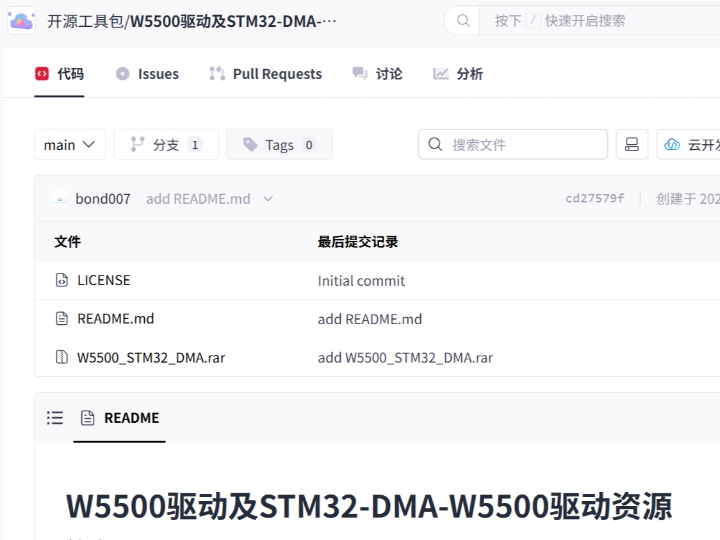
The source project provides a W5500 driver package for STM32 microcontrollers, with a focus on LL-library development and DMA optimization. The repository description says the driver is intended for STM32 projects that need W5500 network communication, DMA-assisted data transfer, and easier porting through included CubeMX configuration files.
In an Industrial IoT device, this maps to a field node such as a sensor gateway, machine monitor, metering endpoint, PLC-side adapter, service tool, or data logger. The STM32 reads local inputs, formats telemetry or command responses, and exposes a wired TCP/UDP endpoint. The data path is:
STM32 application → industrial protocol layer → W5500 driver → SPI with DMA → W5500 → RJ45 Ethernet → switch, gateway, SCADA bridge, local server, or service laptop.
The project’s performance angle is the DMA path. Instead of having the CPU move every byte through blocking SPI transfers, DMA allows peripheral and memory transfers to proceed with lower CPU involvement. For industrial firmware, that matters because measurement loops, watchdog servicing, protocol parsing, and diagnostic logging still need predictable CPU time while Ethernet traffic is active.
Where WIZnet Fits
The exact WIZnet product is W5500. It sits between the STM32 and the Ethernet connector. STM32 controls W5500 through SPI, chip select, reset, and optionally interrupt. In this source project, the host-side emphasis is STM32 LL code plus DMA; the WIZnet-side role remains the W5500 socket-oriented Ethernet engine.
W5500 is a hardwired TCP/IP Internet controller with SPI access up to 80 MHz. It integrates a 10/100 Ethernet MAC and PHY, supports TCP, UDP, ICMP, IPv4, ARP, IGMP, and PPPoE, provides 8 independent sockets, and includes 32 KB internal memory for Tx/Rx buffers.
This division is useful for Industrial IoT because the STM32 can remain focused on deterministic device behavior while W5500 owns the Ethernet transport boundary. The firmware configures MAC/IP information, opens sockets, checks socket states, moves payloads through buffers, and handles retry or recovery policy. W5500 handles TCP/UDP behavior, ARP/IP processing, PHY link behavior, socket state transitions, and packet buffering.
Implementation Notes
The GitCode repository confirms the W5500 STM32-DMA driver resource, but the downloadable W5500_STM32_DMA.rar archive was not exposed as readable source files during verification. Therefore, the snippets below are not claimed to come from that archive. They are verified reference snippets from WIZnet’s official ioLibrary_Driver, which WIZnet lists as an official W5500 software resource.
File: Ethernet/wizchip_conf.h
What it configures: WIZnet chip selection and W5500 SPI interface mode.
Why it matters: this is the firmware boundary where an STM32 project selects W5500 and tells the driver that the host interface is SPI.
#define W5100 5100 #define W5100S 5100+5 #define W5200 5200 #define W5300 5300 #define W5500 5500 #define W6100 6100

#elif (_WIZCHIP_ == W5500) #define _WIZCHIP_ID_ "W5500\0"

#ifndef _WIZCHIP_IO_MODE_ #define _WIZCHIP_IO_MODE_ _WIZCHIP_IO_MODE_SPI_ #endif
This configuration matters in an STM32-DMA design because DMA optimizes the STM32-side SPI transfer path, but the W5500 driver still needs a correct chip/interface definition before socket and register access can work. The official configuration header defines W5500 as a supported chip and sets the W5500 interface to SPI when no other mode is selected.
File: Ethernet/W5500/w5500.h
What it configures: register access for local IP, PHY status, chip version, socket mode, socket command, and socket status.
Why it matters: industrial firmware needs register-level visibility to separate SPI/DMA problems, link problems, IP configuration errors, socket-state errors, and peer-side failures.
#define setSIPR(sipr) \
    WIZCHIP_WRITE_BUF(SIPR, sipr, 4)

#define getSIPR(sipr) \
    WIZCHIP_READ_BUF(SIPR, sipr, 4)

#define setSn_MR(sn, mr) \
    WIZCHIP_WRITE(Sn_MR(sn),mr)

#define getSn_MR(sn) \
    WIZCHIP_READ(Sn_MR(sn))
The same header defines VERSIONR, PHYCFGR, Sn_MR, Sn_CR, Sn_SR, Sn_TX_FSR, and related socket registers. VERSIONR reports the W5500 version value, PHYCFGR exposes PHY configuration/status access, Sn_MR configures socket protocol mode, Sn_CR issues socket commands, and Sn_TX_FSR reports available transmit buffer space.
Practical Tips / Pitfalls
- Validate normal SPI read/write before enabling DMA. DMA should optimize a working bus path, not hide a broken one.
- Route W5500 reset to an STM32 GPIO so firmware can recover the Ethernet controller without rebooting the whole industrial node.
- Use W5500 interrupt output when receive, disconnect, timeout, or send-complete events should not depend on heavy polling.
- Log
VERSIONR,PHYCFGR, local IP, socket state, TX free size, RX received size, reconnect count, and last socket error. - Treat W5500’s 8 sockets as fixed design resources. Reserve sockets for telemetry, configuration, diagnostics, discovery, service access, and future expansion.
- Keep DMA buffers aligned and lifetime-safe. Do not let application code overwrite a transmit buffer before the DMA/SPI transaction has completed.
- Test cable removal, switch reboot, duplicate IP, DHCP failure, peer restart, socket close, and long-running traffic as normal field conditions.
FAQ
Q: Why use WIZnet W5500 for an Industrial IoT STM32 Ethernet node?
A: W5500 gives the STM32 a wired Ethernet controller with hardwired TCP/IP, 8 sockets, and 32 KB internal Tx/Rx memory. That reduces the MCU-side network stack burden while still allowing firmware to control sockets, buffers, timeout policy, diagnostics, and industrial protocol framing.
Q: How does W5500 connect to the STM32 platform?
A: W5500 connects through SPI using SCLK, MOSI, MISO, chip select, reset, power, and ground. For this source project, the STM32 side is described as LL-library based and DMA-optimized, with CubeMX configuration files included for porting and project generation.
Q: What role does W5500 play in this project?
A: W5500 is the wired Ethernet transport engine. STM32 firmware owns sensor I/O, industrial data models, protocol framing, watchdog behavior, and diagnostics. W5500 owns the Ethernet MAC/PHY, hardwired TCP/IP processing, socket state machine, and internal packet buffers.
Q: Can beginners follow this project?
A: Yes, but the bring-up should be staged. Start with CubeMX project import, GPIO and SPI validation, W5500 reset, VERSIONR read, PHY link check, static IP or DHCP setup, UDP echo, TCP connection, and only then DMA performance tuning.
Q: How does this compare with using LwIP directly on the MCU?
A: W5500 keeps TCP/IP behavior inside the Ethernet controller and exposes socket-oriented behavior to the STM32. LwIP gives deeper software-stack control, but the MCU firmware must manage packet buffers, timers, network-interface callbacks, retransmission behavior, and memory pressure. For an Industrial IoT node that mainly needs bounded TCP/UDP communication, W5500 with SPI DMA is usually simpler to validate than a full software TCP/IP stack.
Source
Original source: GitCode repository for W5500 STM32-DMA driver resources. The repository describes a complete W5500 driver for STM32, LL-library development, DMA optimization, CubeMX configuration files, MIT license, and direct use after download. The compressed archive was visible but not inspectable as source during verification.
Related CSDN source: “W5500驱动及STM32-DMA-W5500驱动资源,” which mirrors the project description, lists LL library use, DMA optimization, CubeMX files, usage steps, and CC 4.0 BY-SA licensing for the article.
Related technical analysis: CSDN article describing the same project as a W5500 STM32 driver using LL library and DMA to reduce CPU load and improve transfer efficiency.
WIZnet product reference: W5500 documentation and feature list.
WIZnet driver reference: official ioLibrary_Driver, including W5500 chip selection, SPI interface configuration, register access, socket commands, and buffer-state access.
Tags
#W5500 #WIZnet #STM32 #IndustrialIoT #Ethernet #SPI #DMA #LLLibrary #CubeMX #Registers #Firmware #Performance #Socket #EmbeddedNetworking
STM32에서 WIZnet W5500으로 DMA 최적화 Industrial Ethernet을 구축하는 방법은?
요약
이 Industrial IoT 펌웨어 아키텍처는 STM32에서 WIZnet W5500을 사용해 SPI, LL-library driver code, DMA-assisted transfer 기반의 유선 Ethernet 노드를 구축합니다. GitCode 프로젝트는 STM32용 W5500 driver resource이며, LL 기반 driver, DMA optimization, CubeMX configuration file, STM32 개발 환경에서의 직접 project import를 설명합니다. W5500은 Ethernet MAC/PHY, hardwired TCP/IP stack, socket engine, Tx/Rx buffering을 제공하고, STM32 firmware는 industrial protocol logic, data acquisition, timing, diagnostics, recovery behavior를 담당합니다.
프로젝트가 하는 일
소스 프로젝트는 STM32 microcontroller용 W5500 driver package를 제공합니다. 주요 초점은 LL-library development와 DMA optimization입니다. Repository 설명에 따르면 이 driver는 W5500 network communication, DMA-assisted data transfer, CubeMX configuration file을 통한 쉬운 porting이 필요한 STM32 project를 대상으로 합니다.
Industrial IoT 장치에서는 이 구조가 sensor gateway, machine monitor, metering endpoint, PLC-side adapter, service tool, data logger 같은 field node에 적용됩니다. STM32는 local input을 읽고, telemetry 또는 command response를 formatting하며, 유선 TCP/UDP endpoint를 제공합니다.
데이터 경로는 다음과 같습니다.
STM32 application → industrial protocol layer → W5500 driver → SPI with DMA → W5500 → RJ45 Ethernet → switch, gateway, SCADA bridge, local server 또는 service laptop
이 프로젝트의 performance 핵심은 DMA path입니다. CPU가 blocking SPI transfer로 모든 byte를 직접 이동하는 대신, DMA를 사용하면 peripheral과 memory 간 transfer가 더 낮은 CPU 개입으로 진행됩니다. Industrial firmware에서는 Ethernet traffic이 활성화되어 있어도 measurement loop, watchdog servicing, protocol parsing, diagnostic logging이 예측 가능한 CPU 시간을 가져야 하므로 중요합니다.
WIZnet이 들어가는 위치
이 프로젝트에서 사용되는 정확한 WIZnet 제품은 W5500입니다. W5500은 STM32와 Ethernet connector 사이에 위치합니다. STM32는 SPI, chip select, reset, 선택적으로 interrupt를 통해 W5500을 제어합니다. 이 소스 프로젝트에서 host-side 초점은 STM32 LL code와 DMA이지만, WIZnet 측 역할은 W5500 socket-oriented Ethernet engine입니다.
W5500은 최대 80 MHz SPI access를 지원하는 hardwired TCP/IP Internet controller입니다. 10/100 Ethernet MAC and PHY를 통합하고, TCP, UDP, ICMP, IPv4, ARP, IGMP, PPPoE를 지원하며, 8개 independent socket과 32 KB internal memory for Tx/Rx buffer를 포함합니다.
이 분업은 Industrial IoT에서 유용합니다. STM32는 deterministic device behavior에 집중하고, W5500은 Ethernet transport boundary를 담당할 수 있기 때문입니다. Firmware는 MAC/IP information을 설정하고, socket을 열고, socket state를 확인하며, buffer를 통해 payload를 이동하고, retry 또는 recovery policy를 처리합니다. W5500은 TCP/UDP behavior, ARP/IP processing, PHY link behavior, socket state transition, packet buffering을 처리합니다.
구현 참고 사항
GitCode repository는 W5500 STM32-DMA driver resource임을 확인할 수 있지만, 다운로드 가능한 W5500_STM32_DMA.rar archive는 검증 중 읽을 수 있는 source file로 노출되지 않았습니다. 따라서 아래 snippet은 해당 archive에서 나온 코드라고 주장하지 않습니다. 아래 코드는 WIZnet이 공식 W5500 software resource로 제공하는 ioLibrary_Driver에서 가져온 검증된 reference snippet입니다.
파일: Ethernet/wizchip_conf.h
설정 내용: WIZnet chip selection 및 W5500 SPI interface mode
중요한 이유: STM32 project가 W5500을 선택하고 host interface가 SPI임을 driver에 알려주는 firmware boundary입니다.
#define W5100 5100 #define W5100S 5100+5 #define W5200 5200 #define W5300 5300 #define W5500 5500 #define W6100 6100

#elif (_WIZCHIP_ == W5500) #define _WIZCHIP_ID_ "W5500\0"

#ifndef _WIZCHIP_IO_MODE_ #define _WIZCHIP_IO_MODE_ _WIZCHIP_IO_MODE_SPI_ #endif
이 configuration은 STM32-DMA 설계에서 중요합니다. DMA는 STM32 측 SPI transfer path를 최적화하지만, socket 및 register access가 동작하려면 W5500 driver가 올바른 chip/interface 정의를 먼저 가져야 합니다. 공식 configuration header는 W5500을 지원 chip으로 정의하고, 다른 mode가 선택되지 않았을 때 W5500 interface를 SPI로 설정합니다.
파일: Ethernet/W5500/w5500.h
설정 내용: local IP, PHY status, chip version, socket mode, socket command, socket status를 위한 register access
중요한 이유: Industrial firmware는 SPI/DMA 문제, link 문제, IP configuration error, socket-state error, peer-side failure를 구분하기 위해 register-level visibility가 필요합니다.
#define setSIPR(sipr) \
    WIZCHIP_WRITE_BUF(SIPR, sipr, 4)

#define getSIPR(sipr) \
    WIZCHIP_READ_BUF(SIPR, sipr, 4)

#define setSn_MR(sn, mr) \
    WIZCHIP_WRITE(Sn_MR(sn),mr)

#define getSn_MR(sn) \
    WIZCHIP_READ(Sn_MR(sn))
같은 header는 VERSIONR, PHYCFGR, Sn_MR, Sn_CR, Sn_SR, Sn_TX_FSR 및 관련 socket register를 정의합니다. VERSIONR은 W5500 version value를 보고하고, PHYCFGR은 PHY configuration/status access를 제공하며, Sn_MR은 socket protocol mode를 설정하고, Sn_CR은 socket command를 발행하며, Sn_TX_FSR은 사용 가능한 transmit buffer space를 보고합니다.
실무 팁 / 주의점
- DMA를 활성화하기 전에 일반 SPI read/write를 먼저 검증해야 합니다. DMA는 정상 동작하는 bus path를 최적화하는 것이지, 고장 난 경로를 숨기기 위한 것이 아닙니다.
- W5500 reset은 STM32 GPIO에 연결해야 합니다. Firmware가 전체 industrial node를 reboot하지 않고 Ethernet controller를 복구할 수 있어야 합니다.
- Receive, disconnect, timeout, send-complete event가 heavy polling에 의존하지 않아야 한다면 W5500 interrupt output을 사용하는 것이 좋습니다.
VERSIONR,PHYCFGR, local IP, socket state, TX free size, RX received size, reconnect count, last socket error를 기록해야 합니다.- W5500의 8개 socket은 고정된 설계 자원으로 다뤄야 합니다. Telemetry, configuration, diagnostics, discovery, service access, future expansion용 socket을 예약해야 합니다.
- DMA buffer는 alignment와 lifetime을 안전하게 관리해야 합니다. DMA/SPI transaction이 완료되기 전에 application code가 transmit buffer를 덮어쓰면 안 됩니다.
- Cable removal, switch reboot, duplicate IP, DHCP failure, peer restart, socket close, long-running traffic을 정상적인 field condition으로 테스트해야 합니다.
FAQ
Q: Industrial IoT STM32 Ethernet node에 왜 WIZnet W5500을 사용하나요?
A: W5500은 STM32에 hardwired TCP/IP, 8개 socket, 32 KB internal Tx/Rx memory를 갖춘 유선 Ethernet controller를 제공합니다. 이로 인해 MCU-side network stack 부담을 줄이면서도 firmware가 socket, buffer, timeout policy, diagnostics, industrial protocol framing을 제어할 수 있습니다.
Q: W5500은 STM32 platform에 어떻게 연결되나요?
A: W5500은 SCLK, MOSI, MISO, chip select, reset, power, ground를 사용하는 SPI로 연결됩니다. 이 소스 프로젝트의 STM32 측 구현은 LL-library 기반이며 DMA-optimized 구조로 설명되고, porting 및 project generation을 위한 CubeMX configuration file을 포함합니다.
Q: 이 프로젝트에서 W5500은 어떤 역할을 하나요?
A: W5500은 유선 Ethernet transport engine입니다. STM32 firmware는 sensor I/O, industrial data model, protocol framing, watchdog behavior, diagnostics를 담당합니다. W5500은 Ethernet MAC/PHY, hardwired TCP/IP processing, socket state machine, internal packet buffer를 담당합니다.
Q: 초보자도 이 프로젝트를 따라갈 수 있나요?
A: 가능합니다. 다만 bring-up을 단계적으로 진행해야 합니다. CubeMX project import, GPIO 및 SPI validation, W5500 reset, VERSIONR read, PHY link check, static IP 또는 DHCP setup, UDP echo, TCP connection을 먼저 완료한 뒤 DMA performance tuning을 진행하는 것이 좋습니다.
Q: MCU에서 LwIP를 직접 사용하는 방식과 비교하면 어떤 차이가 있나요?
A: W5500은 TCP/IP behavior를 Ethernet controller 내부에 유지하고 STM32에는 socket-oriented behavior를 노출합니다. LwIP는 더 깊은 software-stack control을 제공하지만, MCU firmware가 packet buffer, timer, network-interface callback, retransmission behavior, memory pressure를 관리해야 합니다. 주로 bounded TCP/UDP communication이 필요한 Industrial IoT node에서는 SPI DMA를 사용하는 W5500 방식이 full software TCP/IP stack보다 검증하기 쉬운 경우가 많습니다.
출처
Original source: W5500 STM32-DMA driver resources용 GitCode repository. Repository는 STM32용 complete W5500 driver, LL-library development, DMA optimization, CubeMX configuration file, MIT license, download 후 direct use를 설명합니다. 압축 archive는 확인되었지만, 검증 중 source 형태로 내부를 inspect할 수는 없었습니다.
https://gitcode.com/open-source-toolkit/e82fd
Related CSDN source: “W5500驱动及STM32-DMA-W5500驱动资源,” project description, LL library use, DMA optimization, CubeMX file, usage step, article의 CC 4.0 BY-SA licensing을 설명합니다.
https://blog.csdn.net/gitblog_09772/article/details/142889699
Related technical analysis: 같은 프로젝트를 LL library와 DMA를 사용해 CPU load를 줄이고 transfer efficiency를 개선하는 W5500 STM32 driver로 설명하는 CSDN article.
https://blog.csdn.net/gitblog_09730/article/details/142952041
WIZnet product reference: W5500 documentation and feature list.
https://docs.wiznet.io/Product/Chip/Ethernet/W5500
WIZnet driver reference: official ioLibrary_Driver, including W5500 chip selection, SPI interface configuration, register access, socket commands, and buffer-state access.
https://github.com/Wiznet/ioLibrary_Driver
태그
#W5500 #WIZnet #STM32 #IndustrialIoT #Ethernet #SPI #DMA #LLLibrary #CubeMX #Registers #Firmware #Performance #Socket #EmbeddedNetworking