



How to Build an Ethernet-Based Embedded Communication System Using W5500?
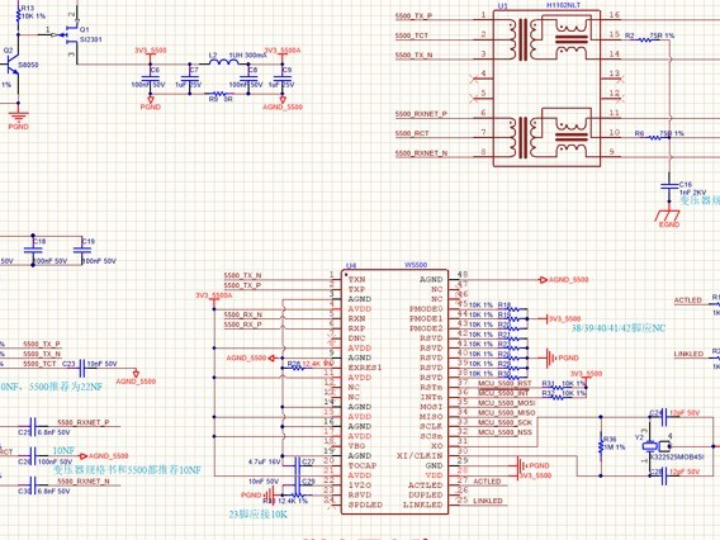
This project discusses the design of an embedded Ethernet communication system using the WIZnet W5500 controller.
How to Build an Ethernet-Based Embedded Communication System Using W5500?
Summary
EN
This project discusses the design of an embedded Ethernet communication system using the WIZnet W5500 controller. The W5500 provides a hardware TCP/IP stack and Ethernet interface, allowing microcontrollers to implement reliable network communication without running a full software networking stack. This design approach is commonly used in Industrial IoT and network-enabled embedded devices.
KR
이 프로젝트는 WIZnet W5500 이더넷 컨트롤러를 활용하여 임베디드 Ethernet 통신 시스템을 구축하는 방법을 설명합니다. W5500은 하드웨어 TCP/IP 스택과 Ethernet 인터페이스를 제공하여 MCU에서 별도의 소프트웨어 네트워크 스택 없이 안정적인 네트워크 통신을 구현할 수 있도록 합니다. 이러한 구조는 산업용 IoT 및 네트워크 기반 임베디드 장치에서 널리 사용됩니다.
What the Project Does
EN
The forum post describes how to implement a network-enabled embedded system using the W5500 Ethernet controller.
The architecture typically consists of three layers.
Device Layer
Microcontroller-based embedded device
WIZnet W5500 Ethernet controller
Sensors or external peripherals
Network Layer
Wired Ethernet connection
TCP/IP networking handled by the W5500 hardware stack
Router or LAN infrastructure
Application Layer
TCP or UDP communication services
Remote monitoring or control systems
Data exchange with servers or clients
Typical operation process:
The MCU initializes the W5500 Ethernet controller.
Network parameters such as MAC address, IP address, gateway, and subnet mask are configured.
The system opens TCP or UDP sockets.
Data packets are transmitted between the embedded device and network services.
Commands or responses from the server are processed by the device.
This architecture is widely used in Industrial IoT devices, remote monitoring systems, and embedded network applications.
KR
포럼 글에서는 W5500 이더넷 컨트롤러를 이용한 네트워크 기반 임베디드 시스템 구현 방법을 설명합니다.
시스템 구조는 일반적으로 세 계층으로 구성됩니다.
Device Layer
MCU 기반 임베디드 장치
WIZnet W5500 이더넷 컨트롤러
센서 또는 외부 장치
Network Layer
유선 Ethernet 연결
W5500 하드웨어 TCP/IP 스택
로컬 네트워크 또는 라우터
Application Layer
TCP 또는 UDP 통신 서비스
원격 모니터링 및 제어 시스템
서버 또는 클라이언트와의 데이터 교환
동작 과정:
MCU가 W5500을 초기화합니다.
MAC 주소, IP 주소, Gateway, Subnet 등의 네트워크 설정을 수행합니다.
TCP 또는 UDP 소켓을 생성합니다.
네트워크 서비스와 데이터 패킷을 송수신합니다.
서버에서 전달된 명령을 처리합니다.
이러한 구조는 산업용 IoT 장치, 원격 모니터링 시스템, 네트워크 기반 임베디드 애플리케이션에서 널리 사용됩니다.
Where WIZnet Fits
EN
The WIZnet W5500 Ethernet controller serves as the networking engine of the embedded system.
Its main functions include:
Hardware TCP/IP protocol processing
Integrated Ethernet MAC and PHY interface
Support for up to 8 simultaneous sockets
SPI interface communication with the MCU
Because the W5500 performs TCP/IP processing in hardware, the microcontroller does not need to implement networking protocols in software.
Benefits include:
Reduced MCU CPU load
Lower memory usage
Simplified firmware development
Reliable network connectivity
These features make the W5500 suitable for Industrial IoT devices requiring stable Ethernet communication.
KR
WIZnet W5500 이더넷 컨트롤러는 임베디드 시스템의 네트워크 엔진 역할을 합니다.
주요 기능:
TCP/IP 프로토콜 하드웨어 처리
Ethernet MAC 및 PHY 통합
최대 8개의 소켓 동시 지원
MCU와의 SPI 인터페이스
W5500이 TCP/IP 처리를 하드웨어에서 수행하기 때문에 MCU에서 네트워크 프로토콜을 소프트웨어로 구현할 필요가 없습니다.
장점:
MCU CPU 부하 감소
메모리 사용량 감소
펌웨어 개발 단순화
안정적인 네트워크 연결
이러한 특성 덕분에 W5500은 안정적인 Ethernet 통신이 필요한 산업용 IoT 장치에 적합합니다.
Implementation Notes
The forum post describes the typical initialization process required to configure the W5500 network interface.
Conceptual integration example based on WIZnet ioLibrary
// Register SPI callbacks
reg_wizchip_spi_cbfunc(spi_read, spi_write);
// Configure socket buffer memory
uint8_t txsize[8] = {2,2,2,2,2,2,2,2};
uint8_t rxsize[8] = {2,2,2,2,2,2,2,2};
wizchip_init(txsize, rxsize);
// Configure network information
wiz_NetInfo netinfo = {
.mac = {0x00,0x08,0xDC,0x11,0x22,0x33},
.dhcp = NETINFO_DHCP
};
wizchip_setnetinfo(&netinfo);
EN Explanation
After the W5500 initialization, the embedded system can create TCP or UDP sockets and exchange data with network services.
KR 설명
W5500 초기화가 완료되면 장치는 TCP 또는 UDP 소켓을 생성하여 네트워크 서비스와 데이터를 송수신할 수 있습니다.
Practical Tips / Pitfalls
EN
Verify SPI wiring between the MCU and W5500.
Check Ethernet PHY link status before establishing socket connections.
Static IP configuration is recommended for industrial deployments.
Monitor socket allocation when multiple network services run simultaneously.
Implement reconnection mechanisms for robust network operation.
KR
MCU와 W5500 사이 SPI 연결을 확인합니다.
소켓 연결 전에 Ethernet PHY 링크 상태를 확인합니다.
산업 환경에서는 고정 IP 사용을 권장합니다.
여러 네트워크 서비스를 사용할 경우 소켓 사용량을 관리합니다.
안정적인 네트워크 동작을 위해 재연결 로직을 구현합니다.
FAQ
Q1: Why use W5500 instead of implementing a software TCP/IP stack?
EN:
W5500 integrates a hardware TCP/IP stack that reduces MCU workload and simplifies firmware development.
KR:
W5500은 하드웨어 TCP/IP 스택을 제공하여 MCU 부하를 줄이고 펌웨어 개발을 단순화합니다.
Q2: How does W5500 connect to the microcontroller?
EN:
The W5500 communicates with the MCU through an SPI interface using MOSI, MISO, SCK, and CS pins.
KR:
W5500은 MOSI, MISO, SCK, CS 핀을 사용하는 SPI 인터페이스로 MCU와 연결됩니다.
Q3: What role does W5500 play in the system?
EN:
It acts as the Ethernet network interface that enables the embedded device to communicate with network services.
KR:
W5500은 임베디드 장치가 네트워크 서비스와 통신할 수 있도록 하는 Ethernet 네트워크 인터페이스 역할을 합니다.
Q4: Is W5500 suitable for Industrial IoT?
EN:
Yes. Its hardware TCP/IP stack and reliable wired Ethernet connection make it suitable for Industrial IoT deployments.
KR:
네. 하드웨어 TCP/IP 스택과 안정적인 Ethernet 연결을 제공하여 산업용 IoT 환경에 적합합니다.
Q5: What advantage does W5500 have compared to ENC28J60?
EN:
W5500 includes a hardware TCP/IP stack, while ENC28J60 requires a software stack on the MCU.
KR:
W5500은 하드웨어 TCP/IP 스택을 포함하지만 ENC28J60은 MCU에서 소프트웨어 스택이 필요합니다.
Source
Original Forum Post
https://bbs.eeworld.com.cn/thread-1336059-1-1.html
Tags
#W5500
#EthernetIoT
#EmbeddedNetworking
#IndustrialIoT
#TCPIP
#EmbeddedSystems
#SPI
#MakerProject