



How Does MQTT over W5500 Connect to OneNET IoT Cloud with ESP8266?
This article analyzes MQTT connectivity to the OneNET IoT Cloud using an ESP8266 paired with the WIZnet W5500 Ethernet controller.
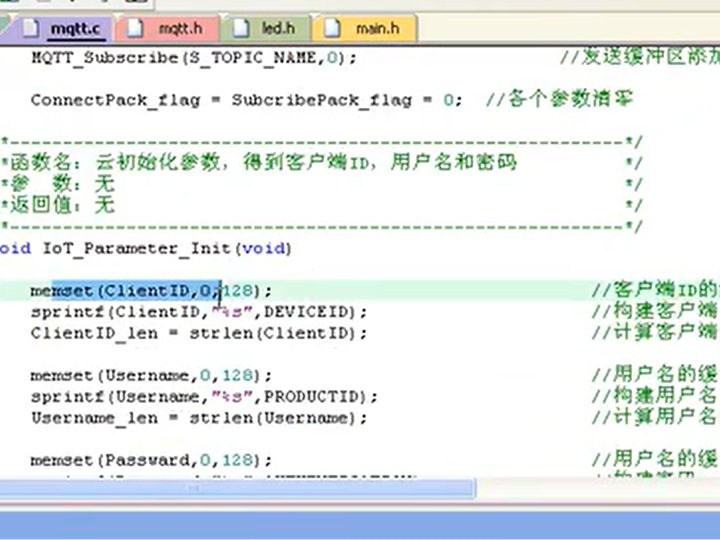
How Does MQTT over W5500 Connect to OneNET IoT Cloud with ESP8266?
An End-to-End Engineering Validation of Cloud Connectivity over Hardware TCP/IP
(ESP8266과 W5500으로 OneNET IoT Cloud에 MQTT는 어떻게 연결되는가?)
Summary (40–60 words)
This article analyzes MQTT connectivity to the OneNET IoT Cloud using an ESP8266 paired with the WIZnet W5500 Ethernet controller. By walking through the complete MQTT workflow—from TCP connection establishment to publish and keep-alive behavior—it explains how hardware TCP/IP offloading enables stable, deterministic cloud connectivity suitable for engineering validation and industrial IoT systems.
1. Why OneNET MQTT Is a Meaningful Validation Target
OneNET is a widely used IoT cloud platform in industrial and commercial deployments, offering:
Standard MQTT broker interfaces
Device-based authentication
Long-lived cloud connections
Strict keep-alive and session management
From an engineering perspective, this makes OneNET an excellent real-world validation target:
If MQTT works reliably with OneNET, the implementation is very likely production-ready.
Using WIZnet W5500 Ethernet removes network-layer uncertainty, allowing engineers to focus on protocol correctness and system behavior.
2. System Architecture: ESP8266 + W5500 + OneNET
End-to-End Architecture
Key architectural principle:
ESP8266 handles MQTT logic only
W5500 handles TCP/IP, retransmission, and timing
OneNET handles device authentication and message routing
3. OneNET MQTT Connection Characteristics
From a protocol standpoint, OneNET uses standard MQTT over TCP, typically with:
Broker domain or IP provided by OneNET
Port 1883 (non-TLS) or 8883 (TLS)
Authentication based on:
Product ID
Device ID
Access key / token
Importantly:
OneNET enforces correct MQTT session behavior and keep-alive timing.
This makes transport stability critical.
4. TCP Connection Establishment via W5500
Before MQTT packets are exchanged, the following must succeed:
Network configuration (static IP or DHCP)
TCP socket open on W5500
TCP three-way handshake with OneNET broker
Because W5500 implements TCP/IP in hardware:
Sequence numbers are managed internally
Retransmissions are automatic
Socket states are deterministic
ESP8266 only observes socket status registers.
5. End-to-End MQTT Workflow with OneNET
Complete Protocol Flow
This workflow is exactly what the video demonstrates in practice.
6. Observed Test Behavior (What the Video Proves)
When tested against OneNET, the following behaviors are observed:
TCP connection establishes reliably
MQTT CONNECT is accepted by OneNET
CONNACK is received without delay
PUBLISH messages arrive at the cloud correctly
Keep-alive packets maintain the session
No unexpected disconnects under normal operation
These results indicate:
The MQTT client is standards-compliant and transport-stable.
7. Why Hardware TCP/IP Matters for OneNET MQTT
Cloud platforms like OneNET are sensitive to:
Missed keep-alive intervals
TCP retransmission timing
Session instability
With software TCP/IP stacks, engineers often encounter:
Timing jitter under load
Memory pressure
Hard-to-reproduce disconnects
With W5500:
TCP timing is hardware-driven
Retransmissions are deterministic
ESP8266 CPU load remains predictable
This significantly improves cloud session stability.
8. Engineering Integration Walkthrough (System View)
Step 1: Ethernet Bring-Up
Initialize SPI bus
Configure W5500 MAC and IP parameters
Verify PHY link status
Step 2: TCP Socket Setup
Allocate one W5500 hardware socket
Set socket mode to TCP
Connect to OneNET broker address and port
Step 3: MQTT Session Establishment
Build MQTT CONNECT packet with OneNET credentials
Send via W5500 TX buffer
Wait for CONNACK
Step 4: Data Exchange
Periodically send PUBLISH packets
Maintain keep-alive with PINGREQ
Each step is cleanly separated, simplifying debugging.
9. Why This Is an Engineer-Level Validation, Not a Hobby Demo
This setup differs from hobby MQTT examples in several ways:
| Aspect | Hobby MQTT | W5500 + OneNET MQTT |
|---|---|---|
| Transport | Wi-Fi (variable) | Ethernet (deterministic) |
| TCP handling | Software | Hardware |
| Cloud strictness | Low | High |
| Debug repeatability | Poor | Excellent |
| Industrial relevance | Limited | High |
This makes the setup suitable for engineering validation and pre-production testing.
10. Key Takeaway
Using W5500 allows MQTT connectivity to OneNET to be evaluated as a protocol and system problem—not a network reliability problem.
ESP8266 focuses on application logic.
W5500 guarantees TCP stability.
OneNET validates real cloud behavior.
Together, they form a solid foundation for cloud-connected embedded systems.
FAQ (Engineer-Focused)
Q1. Does OneNET require a special MQTT implementation?
No. It uses standard MQTT with specific authentication fields.
Q2. Does W5500 understand MQTT?
No. W5500 handles TCP/IP only; MQTT runs on the MCU.
Q3. Why not use ESP8266 Wi-Fi for OneNET?
Ethernet offers deterministic timing and easier debugging.
Q4. Is this suitable for industrial deployment?
Yes, especially for gateways and long-running devices.
Q5. What does this validation mainly prove?
That MQTT behavior is stable, portable, and cloud-ready.
Source
Bilibili video: BV13e411v7hB
WIZnet W5500 Datasheet
OneNET IoT Cloud MQTT documentation
Tags
W5500, WIZnet, OneNET, MQTT, ESP8266 Ethernet, Hardware TCP/IP, Cloud IoT, Industrial IoT
🇰🇷 한국어 번역 (1:1 Full Translation)
ESP8266과 W5500으로 OneNET IoT Cloud에 MQTT는 어떻게 연결되는가?
하드웨어 TCP/IP 기반 클라우드 연결의 엔지니어링 검증
요약
본 문서는 ESP8266과 WIZnet W5500을 사용하여 OneNET IoT Cloud에 MQTT로 연결하는 과정을 분석한다. TCP 연결부터 MQTT PUBLISH, Keep-alive까지의 전체 워크플로우를 통해, 하드웨어 TCP/IP 오프로딩이 안정적이고 예측 가능한 클라우드 연결을 제공함을 설명한다.
1. 왜 OneNET MQTT 검증이 중요한가
OneNET은 실제 산업 환경에서 사용되는 엄격한 IoT 클라우드 플랫폼이다.
여기서 정상 동작하면 실사용 가능성이 높다.
2. 시스템 아키텍처
3. MQTT 워크플로우
4. 테스트 결과 해석
연결 안정
메시지 정상 전달
Keep-alive 유지
이는 표준 MQTT 동작을 의미한다.
5. 엔지니어링 의미
클라우드 독립성 확보
산업용 안정성 검증
장기 운용 가능성
6. 핵심 메시지
W5500을 사용하면 OneNET MQTT 연결은 예측 가능한 하드웨어 기반 통신이 된다.
태그
W5500, WIZnet, OneNET, MQTT, ESP8266, 산업용 IoT, 하드웨어 TCP/IP