



How to Implement IPv6 UDP Communication with W6100 on STM32F4?
This project presents a STM32F4 + WIZnet W6100 framework for IPv6 communication using UDP.
How to Implement IPv6 UDP Communication with W6100 on STM32F4?
Summary
This project presents a STM32F4 + WIZnet W6100 framework for IPv6 communication using UDP. STM32F4 communicates with W6100 through SPI, while the example configures an IPv6 address, MAC address, UDP ports, transmit data, and receive handling. W6100 is the key networking component because it provides hardwired IPv4/IPv6 protocol processing and Ethernet connectivity outside the MCU. The source should be treated as an architectural example rather than complete firmware because several W6100 register-access and data-transfer functions are explicitly left as application-specific placeholders.
What the Project Does
The source article describes how an STM32F4 could integrate W6100 for IPv6 communication, using UDP as the example transport protocol. The author explicitly describes the code as an example framework that requires further completion and adjustment for a real application.
The intended data path is:
STM32F4 application → SPI → W6100 → IPv6/UDP → Ethernet
The example performs several major tasks:
- initializes STM32F4 SPI1;
- prepares W6100 for IPv6 operation;
- assigns a MAC address;
- assigns an IPv6 address;
- configures UDP port information;
- sends a
"Hello, IPv6!"payload; - checks for received UDP data.
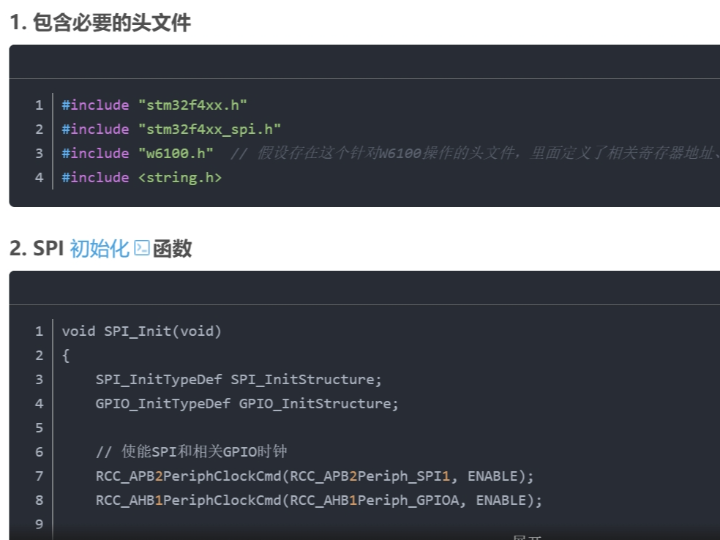
The SPI example uses PA5, PA6, and PA7 for SPI1 and configures the peripheral as a full-duplex master with 8-bit data, software NSS, MSB-first transmission, CPOL low, and first-edge sampling.
The article does not provide measured bandwidth, latency, packet-loss, or CPU-load results. It therefore demonstrates the intended firmware structure rather than validated network performance.
Where WIZnet Fits
The W6100 provides the Ethernet and IPv6 networking engine for this design.
W6100 is a hardwired TCP/IP controller supporting both IPv4 and IPv6. It integrates a 10/100 Ethernet MAC and PHY, supports protocols including TCP, UDP, IPv4, IPv6, ICMPv4/v6, ARP, IGMP, and MLDv1, and provides eight independent hardware sockets with 32 KB of internal memory. It supports both SPI and parallel host interfaces.
This allows the system architecture to remain relatively simple:
STM32F4 application
→ SPI control/data transfer
→ W6100 hardwired network engine
→ Ethernet network
The STM32 is responsible for application behavior and W6100 configuration. W6100 provides the hardware network functions required to place the device on an IPv6-capable Ethernet network.
The IPv6 capability is the central reason W6100 matters in this project. Unlike an IPv4-only design, the controller supports IPv4/IPv6 dual-stack operation and also provides socket-less IPv6-related commands for functions including DAD and router solicitation.
Implementation Notes
The source is a CSDN article rather than a downloadable repository. No real source-file path is provided, and the article explicitly says that several helper functions are only illustrative. The snippets below are therefore identified by their section in the source article rather than by an invented filename.
STM32F4 SPI Configuration
Source location: CSDN article, “SPI initialization function”
SPI_InitStructure.SPI_Direction = SPI_Direction_2Lines_FullDuplex;
SPI_InitStructure.SPI_Mode = SPI_Mode_Master;
SPI_InitStructure.SPI_DataSize = SPI_DataSize_8b;
SPI_InitStructure.SPI_CPOL = SPI_CPOL_Low;
SPI_InitStructure.SPI_CPHA = SPI_CPHA_1Edge;
SPI_InitStructure.SPI_NSS = SPI_NSS_Soft;
SPI_InitStructure.SPI_FirstBit = SPI_FirstBit_MSB;
This initializes SPI1 as the STM32-to-W6100 host interface. The example also selects PA5, PA6, and PA7 for SPI1 operation and uses a baud-rate prescaler of 8.
The purpose of this code is not network configuration itself. It establishes the serial transport that later register and data accesses depend on.
W6100 IPv6 Configuration
Source location: CSDN article, “W6100 initialization function”
Write_W6100_Reg(MODE_REG, MODE_IPV6);

uint8_t mac_address[6] =
    {0x00, 0x08, 0xdc, 0x12, 0x34, 0x56};

Write_W6100_Reg(SHAR_REG, mac_address, 6);
The same example then defines a 16-byte IPv6 address and attempts to write the address and UDP port information to W6100.
However, Write_W6100_Reg() is not actually implemented in the article. The author explicitly says it is an assumed helper function whose register-access behavior must be completed using the W6100 documentation.
The same limitation applies to:
Write_W6100_Data()Read_W6100_Data()Trigger_W6100_Send()Check_W6100_UDP_Data_Arrived()
For that reason, this article should be read as a firmware-layer outline rather than copy-paste-ready W6100 code.
Practical Tips / Pitfalls
- Implement the SPI register-access layer before the IPv6 application layer. Every higher-level operation in the example depends on the placeholder W6100 read/write functions being implemented correctly.
- Verify the SPI mode and chip-select timing against the W6100 datasheet. A working STM32 SPI configuration alone does not guarantee correct W6100 transactions.
- Use a valid MAC and IPv6 configuration for the target network. The source explicitly labels its MAC and IPv6 values as examples rather than deployment values.
- Add timeout and error handling. The original author specifically notes that the illustrative functions need error and timeout handling for reliable operation.
- Separate network configuration from application payload handling. SPI access, W6100 configuration, UDP socket operation, and application data are easier to debug as separate firmware layers.
- Verify IPv6 configuration on the actual network. IPv6 addressing involves more than storing a 16-byte address; the required configuration method depends on how the target Ethernet network assigns and validates addresses.
- Measure performance only after the driver is complete. The source contains no validated throughput data, so no performance conclusion should be derived from the example code alone.
FAQ
Q: Why use W6100 with STM32F4 for this project?
W6100 provides hardwired IPv4/IPv6 networking, an integrated 10/100 Ethernet MAC/PHY, eight hardware sockets, and 32 KB of internal memory. This allows STM32F4 to control network communication through the W6100 interface while the controller handles supported TCP/IP protocols in hardware.
Q: How does W6100 connect to STM32F4 in the example?
The article uses SPI1. PA5, PA6, and PA7 are assigned to SPI1 functions, and the peripheral is configured as an 8-bit full-duplex master with MSB-first transfer, CPOL low, and first-edge sampling. The complete chip-select and W6100 low-level transaction implementation is not supplied by the source.
Q: What role does W6100 play in this specific project?
It provides the Ethernet interface and hardware IPv6 networking required for the STM32F4 application to exchange UDP data. The article configures the controller for IPv6 operation, assigns network identity information, and sketches UDP transmit and receive functions.
Q: Can beginners follow this example?
The architecture is understandable for developers familiar with STM32 SPI and basic IPv6/UDP concepts, but the source is not a complete beginner-ready driver. Several essential W6100 functions are placeholders and must be implemented from the device documentation before the example can become working firmware.
Q: How does W6100 compare with a software IPv6 stack on STM32F4?
W6100 implements supported IPv4/IPv6 TCP/IP functions in dedicated hardware and exposes hardware sockets to the host MCU. A software stack such as lwIP executes TCP/IP processing on the MCU and provides raw, sequential, and socket-style APIs. W6100 therefore moves protocol processing into the Ethernet controller, while a software implementation keeps the networking stack under MCU software control.
Source
Original Project: STM32功能模块/STM32F4 中集成 W6100 实现 IPv6 通信
CSDN. The article presents an STM32F4/W6100 IPv6 UDP example framework and explicitly states that several access functions are simplified placeholders requiring further implementation.
License: CC BY-SA 4.0.
WIZnet Reference: W6100 official documentation covering its IPv4/IPv6 hardwired TCP/IP stack, eight hardware sockets, 32 KB memory, Ethernet MAC/PHY, SPI interface, and IPv6-related network functions.
Tags
#W6100 #STM32F4 #IPv6 #UDP #Ethernet #SPI #DualStack #EmbeddedNetworking #TCPIP #WIZnet
STM32F4에서 W6100으로 IPv6 UDP 통신을 구현하는 방법은?
요약
이 프로젝트는 STM32F4 + WIZnet W6100 기반으로 IPv6 UDP 통신을 구현하기 위한 Firmware Framework를 제시합니다. STM32F4는 SPI를 통해 W6100과 통신하고, 예제에서는 IPv6 Address, MAC Address, UDP Port, 송신 데이터 및 수신 처리를 구성합니다. W6100은 Hardware IPv4/IPv6 Protocol Processing과 Ethernet 연결을 MCU 외부에서 담당하는 핵심 Network Controller입니다. 다만 원본 코드에는 일부 Register Access 및 Data Transfer 함수가 실제 구현 없이 Placeholder 형태로 제공되므로 완성된 Firmware라기보다 Architecture Example로 보는 것이 적절합니다.
프로젝트가 하는 일
원본 글은 STM32F4와 W6100을 이용해 IPv6 Communication을 구현하는 방법을 설명하며, Transport Protocol 예제로 UDP를 사용합니다.
작성자 역시 해당 코드를 실제 완성된 Driver가 아니라 추가 구현과 수정이 필요한 Example Framework라고 설명합니다.
기본적인 Data Path는 다음과 같습니다.
STM32F4 Application → SPI → W6100 → IPv6/UDP → Ethernet
예제에서는 다음 작업을 수행합니다.
STM32F4 SPI1 초기화
W6100 IPv6 Mode 설정
MAC Address 설정
IPv6 Address 설정
UDP Port 설정
"Hello, IPv6!" Payload 송신
UDP 수신 데이터 확인
SPI Example에서는 PA5, PA6, PA7을 SPI1에 사용합니다.
Peripheral은 다음 조건으로 구성됩니다.
Full-Duplex Master
8-bit Data
Software NSS
MSB First
CPOL Low
First Edge Sampling
원본에는 실제 Throughput, Latency, Packet Loss, CPU Load Benchmark가 제공되지 않습니다.
따라서 이 프로젝트는 검증된 Network Performance보다 Firmware Architecture를 이해하는 용도로 보는 것이 적절합니다.
WIZnet이 들어가는 위치
이 설계에서 W6100은 Ethernet 및 IPv6 Network Engine 역할을 합니다.
W6100은 IPv4와 IPv6를 모두 지원하는 Hardwired TCP/IP Controller입니다.
주요 기능은 다음과 같습니다.
IPv4
IPv6
TCP
UDP
ICMPv4
ICMPv6
ARP
IGMP
MLDv1
10/100 Ethernet MAC
10/100 Ethernet PHY
8개의 Hardware Socket
총 32 KB Internal Memory
SPI 및 Parallel Host Interface
따라서 전체 Architecture를 다음과 같이 단순하게 구성할 수 있습니다.
STM32F4 Application
→ SPI Control / Data Transfer
→ W6100 Hardwired Network Engine
→ Ethernet Network
STM32는 Application Logic과 W6100 Configuration을 담당하고, W6100은 IPv6 Ethernet Network에 연결하기 위한 Hardware Network 기능을 담당합니다.
이 프로젝트에서 W6100의 가장 중요한 특징은 IPv6 지원입니다.
W6100은 IPv4/IPv6 Dual Stack Operation을 지원하며, IPv6 환경에서 필요한 DAD 및 Router Solicitation과 관련된 Socket-less Command도 제공합니다.
구현 참고 사항
원본 자료는 Downloadable Repository가 아니라 CSDN Article입니다.
따라서 실제 Source File Path가 제공되지 않으며, 일부 Helper Function은 예시 목적으로만 작성된 코드입니다.
아래 Snippet은 임의의 File Name을 붙이지 않고 원문의 Section 기준으로 설명합니다.
STM32F4 SPI Configuration
Source location: CSDN Article의 “SPI initialization function”
SPI_InitStructure.SPI_Direction = SPI_Direction_2Lines_FullDuplex;
SPI_InitStructure.SPI_Mode = SPI_Mode_Master;
SPI_InitStructure.SPI_DataSize = SPI_DataSize_8b;
SPI_InitStructure.SPI_CPOL = SPI_CPOL_Low;
SPI_InitStructure.SPI_CPHA = SPI_CPHA_1Edge;
SPI_InitStructure.SPI_NSS = SPI_NSS_Soft;
SPI_InitStructure.SPI_FirstBit = SPI_FirstBit_MSB;
이 코드는 STM32와 W6100 사이의 Host Interface로 사용할 SPI1을 초기화합니다.
원본에서는 PA5, PA6, PA7을 SPI1에 사용하며 Baud-rate Prescaler는 8로 설정합니다.
이 코드는 Network Configuration 자체를 수행하는 것이 아니라 이후 모든 W6100 Register 및 Data Access가 사용할 Serial Transport를 만드는 역할을 합니다.
W6100 IPv6 Configuration
Source location: CSDN Article의 “W6100 initialization function”
Write_W6100_Reg(MODE_REG, MODE_IPV6);

uint8_t mac_address[6] =
    {0x00, 0x08, 0xdc, 0x12, 0x34, 0x56};

Write_W6100_Reg(SHAR_REG, mac_address, 6);
이후 예제에서는 16-byte IPv6 Address를 정의하고 IPv6 Address와 UDP Port 정보를 W6100에 설정하는 흐름을 보여줍니다.
하지만 중요한 점은 Write_W6100_Reg()가 실제로 구현되어 있지 않다는 것입니다.
원문에서도 해당 함수는 W6100 Documentation을 참고해 사용자가 구현해야 하는 가정된 Helper Function이라고 설명합니다.
같은 제한은 다음 함수에도 적용됩니다.
Write_W6100_Data()
Read_W6100_Data()
Trigger_W6100_Send()
Check_W6100_UDP_Data_Arrived()
따라서 이 프로젝트의 코드는 Copy-Paste 후 바로 실행하는 W6100 Driver가 아니라 Firmware Layer를 설명하기 위한 Outline으로 이해해야 합니다.
실무 팁 / 주의점
IPv6 Application보다 먼저 SPI Register Access Layer를 완성해야 합니다. 원본 Example의 모든 상위 기능은 W6100 Read/Write 함수가 정상적으로 구현되어 있다는 것을 전제로 합니다.
SPI Mode와 Chip Select Timing을 W6100 Datasheet 기준으로 확인해야 합니다. STM32 SPI Peripheral 자체가 정상적으로 동작한다고 해서 W6100 Transaction이 자동으로 올바르게 동작하는 것은 아닙니다.
실제 Network에 맞는 MAC과 IPv6 Configuration을 사용해야 합니다. 원문에서 사용하는 MAC Address와 IPv6 Address는 Example 값입니다.
Timeout과 Error Handling을 추가해야 합니다. 원문 작성자도 실제 동작을 위해 Error 처리와 Timeout 처리가 필요하다고 설명합니다.
Network Configuration과 Application Payload 처리를 분리하는 것이 좋습니다. SPI Access, W6100 Configuration, UDP Operation, Application Data를 각각 독립적인 Firmware Layer로 나누면 Debug와 유지보수가 쉬워집니다.
실제 IPv6 Network에서 Address Configuration을 검증해야 합니다. IPv6는 단순히 16-byte Address를 Register에 쓰는 것만으로 전체 Network Configuration이 끝나는 것은 아닙니다.
Driver 구현이 완료된 뒤 Performance를 측정해야 합니다. 원본에는 검증된 Throughput Data가 없기 때문에 Example Code만으로 Network Performance를 판단해서는 안 됩니다.
FAQ
Q: 이 프로젝트에서 왜 STM32F4와 W6100을 함께 사용하나요?
W6100은 Hardware IPv4/IPv6 Networking, Integrated 10/100 Ethernet MAC/PHY, 8개의 Hardware Socket, 총 32 KB Internal Memory를 제공합니다. 따라서 STM32F4는 W6100 Interface를 통해 Network Communication을 제어하고, TCP/IP Protocol Processing은 W6100 Hardware에서 수행할 수 있습니다.
Q: W6100은 STM32F4와 어떻게 연결되나요?
원본 예제에서는 SPI1을 사용합니다. PA5, PA6, PA7을 SPI1에 할당하고 8-bit Full-Duplex Master, MSB First, CPOL Low, First Edge Sampling 방식으로 설정합니다. 다만 Chip Select 및 W6100 Low-level Transaction의 완전한 구현은 원본에 포함되어 있지 않습니다.
Q: 이 프로젝트에서 W6100은 구체적으로 어떤 역할을 하나요?
W6100은 STM32F4 Application이 UDP Data를 IPv6 Ethernet Network로 송수신할 수 있도록 Ethernet Interface와 Hardware IPv6 Networking을 제공합니다. 원본에서는 W6100을 IPv6 Mode로 설정하고 Network Identity를 지정한 뒤 UDP 송수신 구조를 예제로 보여줍니다.
Q: 초보자도 이 예제를 따라할 수 있나요?
STM32 SPI와 기본적인 IPv6/UDP 개념을 알고 있다면 전체 Architecture는 이해할 수 있습니다. 하지만 원본은 완성된 Beginner Driver가 아닙니다. 여러 핵심 W6100 Access Function이 Placeholder 형태이기 때문에 실제 동작을 위해서는 Datasheet를 기반으로 Low-level Driver를 추가로 구현해야 합니다.
Q: W6100과 STM32F4에서 Software IPv6 Stack을 사용하는 방식은 어떻게 다른가요?
W6100은 지원하는 IPv4/IPv6 TCP/IP 기능을 Dedicated Hardware에서 처리하고 MCU에 Hardware Socket Interface를 제공합니다. 반면 lwIP와 같은 Software Stack은 MCU에서 TCP/IP Processing을 수행하며 Raw, Sequential, Socket API 등을 제공합니다. W6100은 Protocol Processing을 Ethernet Controller로 이동시키고, Software Stack은 Network Stack을 MCU Software에서 직접 제어하도록 합니다.
출처
Original Project: STM32功能模块 / STM32F4 中集成 W6100 实现 IPv6 通信
STM32F4 + W6100 기반 IPv6 UDP Communication Framework를 설명하는 CSDN Article입니다.
원문 자체에서도 일부 Register/Data Access Function이 단순화된 Placeholder이며 실제 구현이 추가로 필요하다고 설명합니다.
License: CC BY-SA 4.0
WIZnet Reference: W6100 공식 Documentation
W6100의 IPv4/IPv6 Hardwired TCP/IP Stack, 8개의 Hardware Socket, 32 KB Memory, Ethernet MAC/PHY, SPI Interface 및 IPv6 관련 Network 기능을 설명합니다.
태그
#W6100 #STM32F4 #IPv6 #UDP #Ethernet #SPI #DualStack #EmbeddedNetworking #TCPIP #WIZnet