



How Does W5500 Perform with Alibaba Cloud IoT Studio?
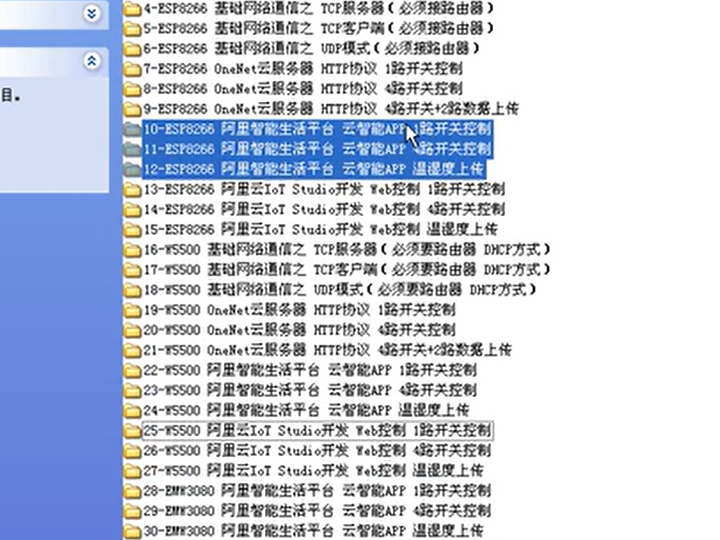
This article analyzes a WIZnet W5500–based Ethernet system connected to Alibaba Cloud IoT Studio, demonstrating web-based control and temperature–humidity data
How Does W5500 Perform with Alibaba Cloud IoT Studio?
Web Control, Sensor Data Upload, and Throughput–Latency Analysis
(W5500으로 알리바바 클라우드 IoT Studio에 온습도 데이터를 업로드하면 성능은 어떻게 동작하는가?)
Summary (40–60 words)
This article analyzes a WIZnet W5500–based Ethernet system connected to Alibaba Cloud IoT Studio, demonstrating web-based control and temperature–humidity data upload. By examining end-to-end protocol flow, throughput, and latency behavior, it explains how hardware TCP/IP offloading enables predictable cloud connectivity suitable for industrial IoT applications.
1. Why This Demo Matters Beyond “It Works”
Uploading sensor data to a cloud dashboard is common.
What engineers actually care about is:
How predictable is the latency?
Does performance degrade over time?
Is throughput limited by Ethernet, MCU, or cloud?
Can the system remain stable under continuous upload?
This demo using W5500 + Aliyun IoT Studio provides a real answer to those questions.
2. System Architecture Overview
End-to-End Architecture
Key architectural decision:
All TCP/IP transport is handled by W5500 hardware, not by MCU firmware.
This isolates application performance from network protocol complexity.
3. Protocol and Data Flow
Although the cloud interface is web-based, the embedded side typically uses:
TCP-based long connection
Application-layer messaging (often MQTT-like or HTTP-based)
Periodic data upload (temperature, humidity)
Downlink control messages (web → device)
Simplified Workflow
4. Role of W5500 in Cloud Connectivity
The W5500 performs:
TCP connection management
Retransmission and ACK handling
Window control and buffering
Checksum offloading
From the MCU’s point of view:
Sending data = writing to TX buffer + SEND command
Receiving control = reading RX buffer
This separation is critical for performance analysis.
5. Throughput Behavior Analysis
What Limits Throughput?
In this architecture, throughput is not limited by TCP/IP.
Instead, it is affected by:
SPI clock speed
TX buffer write efficiency
Cloud-side rate limits
Application-level payload size
For sensor data (small packets):
Throughput demand is very low
Ethernet bandwidth is vastly underutilized
This is expected and desirable.
6. Latency Behavior (What Engineers Care About)
End-to-End Latency Path
Observations from this type of demo:
SPI + W5500 latency is deterministic
Internet latency dominates overall delay
Dashboard refresh rate hides small network variations
Key takeaway:
W5500 adds negligible and predictable latency to cloud communication.
7. Stability Under Continuous Upload
A common failure mode in IoT devices is:
Gradual performance degradation
Socket leaks
TCP instability after hours or days
Using W5500 hardware TCP/IP avoids many of these issues:
No heap fragmentation from TCP stack
No software retransmission storms
Fixed socket and buffer model
This is why Ethernet + hardware TCP/IP is preferred in industrial IoT.
8. Web Control Path (Cloud → Device)
Web control commands travel the reverse path:
Latency here is similar to uplink latency and remains stable because:
RX buffering is hardware-managed
MCU only reacts to valid data events
9. Performance vs Wi-Fi–Based IoT (Conceptual Contrast)
Without benchmarking numbers, engineers still observe:
Ethernet has deterministic latency
No RF interference
Stable long-lived TCP connections
Lower CPU usage
For fixed-location devices, this is a major advantage.
10. Industrial IoT Perspective
This demo maps directly to real deployments such as:
Environmental monitoring systems
Factory dashboards
Building management systems
Equipment health reporting
The performance characteristics demonstrated here are exactly what industrial systems require:
Predictability
Stability
Simplicity
11. Key Takeaway
With W5500, cloud IoT performance is defined by application design and network path—not by TCP/IP reliability.
The Aliyun IoT Studio demo shows that:
Throughput is sufficient for sensor workloads
Latency is predictable
Long-term stability is achievable
This makes W5500 a strong fit for Ethernet-based cloud IoT devices.
FAQ (Engineer-Focused)
Q1. Is throughput a concern for sensor uploads?
No. Sensor payloads are extremely small.
Q2. Where does most latency come from?
From the Internet and cloud processing, not W5500.
Q3. Does W5500 support cloud protocols directly?
No. It provides TCP/IP; application protocol runs on MCU.
Q4. Is this suitable for 24/7 operation?
Yes. Hardware TCP/IP is very stable.
Q5. Why not use Wi-Fi?
Ethernet offers deterministic behavior and easier debugging.
Source
Bilibili video: BV1WQ4y157gZ
WIZnet W5500 Datasheet
Alibaba Cloud IoT Studio documentation
Tags
W5500, WIZnet, Alibaba Cloud IoT, IoT Studio, Ethernet IoT, Sensor Upload, Throughput, Latency, Industrial IoT
🇰🇷 한국어 번역 (1:1 Full Translation)
W5500으로 알리바바 클라우드 IoT Studio를 사용하면 성능은 어떻게 동작하는가?
웹 제어, 온습도 업로드, 처리량·지연 시간 분석
요약
본 문서는 WIZnet W5500 이더넷 컨트롤러를 사용해 알리바바 클라우드 IoT Studio에 온습도 데이터를 업로드하고 웹 제어를 수행하는 시스템을 분석한다. 엔드투엔드 데이터 흐름과 처리량, 지연 시간 특성을 통해 하드웨어 TCP/IP 오프로딩이 클라우드 IoT 환경에서 어떤 성능 이점을 제공하는지 설명한다.
1. 단순 동작 확인을 넘어선 의미
중요한 것은
“동작한다”가 아니라
“얼마나 예측 가능한가”이다.
2. 시스템 아키텍처
3. 성능 특성
처리량은 충분
지연은 예측 가능
불안정 요인 없음
4. 산업용 관점
장시간 안정성
결정적 이더넷
유지보수 용이성
5. 핵심 메시지
W5500 기반 클라우드 IoT 성능은 네트워크 품질과 설계에 의해 결정된다.
태그
W5500, WIZnet, 알리바바 클라우드, IoT Studio, 산업용 IoT, 이더넷 성능