



How Does BACnet Work on STM32 with W5500 Ethernet?
This article explains how BACnet communication is implemented on an STM32 microcontroller using the WIZnet W5500 Ethernet controller.
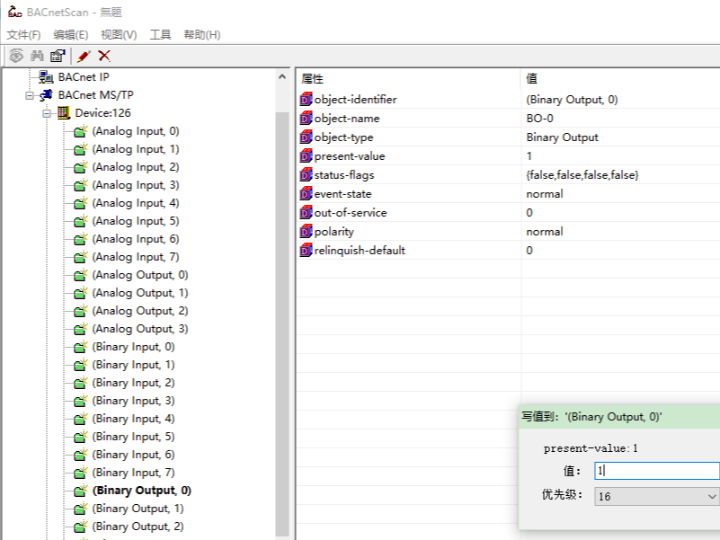
How Does BACnet Work on STM32 with W5500 Ethernet?
Socket Initialization, Lifecycle Management, and Deterministic BACnet Communication
(STM32와 W5500에서 BACnet은 어떻게 동작하는가?)
Summary (40–60 words)
This article explains how BACnet communication is implemented on an STM32 microcontroller using the WIZnet W5500 Ethernet controller. By analyzing socket initialization, UDP-based BACnet message flow, and socket lifecycle management, it shows how W5500’s hardware TCP/IP architecture enables reliable and deterministic BACnet networking for building automation systems.
1. Why BACnet over Ethernet Matters
BACnet is widely used in building automation systems for:
HVAC control
Lighting systems
Energy management
Device monitoring and diagnostics
In modern deployments, BACnet/IP over Ethernet is preferred because it provides:
Standardized interoperability
High reliability
Easy integration with supervisory systems
For embedded devices, the challenge is implementing BACnet/IP without introducing unpredictable network behavior.
2. Why STM32 + W5500 Is a Good Fit for BACnet
The STM32 MCU provides:
Deterministic real-time execution
Rich peripheral support
Long-term industrial availability
The WIZnet W5500 adds:
Hardware TCP/IP and UDP/IP processing
Deterministic socket behavior
Fixed buffer and register model
STM32 handles BACnet application logic, while W5500 guarantees network transport correctness.
This division of responsibility is ideal for BACnet systems that must run continuously for years.
3. BACnet/IP Communication Model (Embedded View)
Most BACnet/IP traffic uses UDP, not TCP.
Key properties:
Stateless request/response model
Broadcast and unicast messaging
Standard UDP port 47808 (0xBAC0)
From an embedded perspective, this means:
No connection establishment
No retransmission logic in firmware
Strict reliance on correct UDP socket behavior
4. System Architecture Overview
End-to-End Architecture
Important architectural point:
STM32 does not implement UDP/IP
W5500 handles packet delivery and buffering
BACnet logic runs entirely above the socket layer
5. Socket Initialization for BACnet on W5500
Step 1: Network Configuration
Before opening any socket:
Configure MAC address
Configure IP, subnet, gateway
Verify link status
BACnet/IP devices must have a valid IP configuration before participating in the network.
Step 2: UDP Socket Setup
To receive BACnet messages:
Select a hardware socket
Set socket mode to UDP
Bind local port to 47808
At this stage:
The socket is passive
Ready to receive both broadcast and unicast BACnet packets
6. BACnet Socket Lifecycle on W5500
Unlike TCP, BACnet UDP sockets have a simple lifecycle.
Conceptual Lifecycle
Key observation:
The socket remains open for the lifetime of the device.
There is no connect or disconnect phase.
7. BACnet Message Reception Flow
RX Path (Register-Level View)
If the RX pointer is not updated:
New BACnet packets stop arriving
Device appears “offline” to the network
This is the most common BACnet integration bug.
8. BACnet Message Transmission Flow
TX Path (Register-Level View)
No session tracking is required.
Each BACnet message is independent.
9. Broadcast Handling and Why W5500 Helps
BACnet/IP relies heavily on:
Broadcast messages (Who-Is, I-Am)
Periodic discovery traffic
The W5500 handles:
UDP broadcast reception
RX buffering without CPU intervention
Checksum validation in hardware
This ensures that:
Broadcast storms do not destabilize the STM32 firmware.
10. Performance and Determinism
Throughput
BACnet messages are small.
Throughput is rarely a limiting factor.
Latency
Latency is dominated by:
Network topology
Supervisor response time
W5500 introduces negligible, deterministic delay.
11. Common BACnet Integration Pitfalls
❌ Device visible once, then disappears
Cause:
RX pointer not advanced
RECV command omitted
❌ Broadcasts received, unicasts fail
Cause:
Incorrect socket port binding
❌ Random packet loss
Cause:
SPI CS timing violation
Interrupted RX reads
Most issues are socket-handling mistakes, not BACnet protocol errors.
12. Why W5500 Is Well-Suited for BACnet Devices
Deterministic UDP behavior
Fixed socket and buffer model
No software IP stack complexity
Easy wire-level debugging
These traits align perfectly with building automation reliability requirements.
13. Key Takeaway
On STM32 systems, W5500 turns BACnet/IP networking into a predictable socket and buffer management problem—not a networking gamble.
When socket initialization and lifecycle handling are correct:
BACnet devices remain discoverable
Communication stays stable
Systems meet industrial uptime expectations
FAQ (Engineer-Focused)
Q1. Does W5500 implement BACnet?
No. W5500 handles UDP/IP; BACnet runs on STM32.
Q2. Is TCP used for BACnet?
Typically no. BACnet/IP uses UDP.
Q3. How many BACnet sockets are needed?
Usually one UDP socket bound to port 47808.
Q4. Can this run under RTOS?
Yes, if SPI access is protected.
Q5. Is this suitable for certified BACnet devices?
Yes, provided the BACnet stack is compliant.
Source
CNBlogs article: husanyue (p/18548285)
WIZnet W5500 Datasheet
BACnet/IP Specification (ASHRAE 135)
Tags
W5500, WIZnet, BACnet, BACnet/IP, STM32, UDP Socket, Building Automation, Industrial Ethernet
🇰🇷 한국어 번역 (1:1 Full Translation)
STM32와 W5500에서 BACnet은 어떻게 동작하는가?
소켓 초기화와 생명주기로 이해하는 BACnet/IP 통신
요약
본 문서는 STM32 마이크로컨트롤러와 WIZnet W5500 이더넷 컨트롤러를 사용해 BACnet/IP 통신을 구현하는 구조를 설명한다. UDP 기반 소켓 초기화, 메시지 송수신 흐름, 소켓 생명주기를 분석함으로써, 하드웨어 TCP/IP 오프로딩이 빌딩 자동화 시스템에서 안정적인 BACnet 통신을 어떻게 가능하게 하는지를 보여준다.
1. BACnet/IP의 중요성
BACnet은
빌딩 자동화의 표준이다.
2. 시스템 아키텍처
3. 소켓 초기화
UDP 포트 47808을 바인딩한다.
4. 소켓 생명주기
UDP 소켓은
장치 수명 동안 유지된다.
5. 송수신 흐름
RX 포인터 관리가
안정성의 핵심이다.
6. 흔한 오류
RECV 누락
포인터 미갱신
CS 타이밍 오류
7. 핵심 메시지
W5500 기반 BACnet은 네트워크 문제가 아닌 소켓 관리 문제다.
태그
W5500, BACnet, BACnet/IP, STM32, 빌딩 자동화, 산업용 이더넷