



Hands-on Review of W55MH32L-EVB: Ethernet Microcontroller Powered by Hardware TCP/IP, Zero-Threshold
This hands-on review covers WIZnet’s W55MH32L-EVB, an all-in-one Ethernet MCU dev board with hardware TCP/IP offload engine. We test its full peripherals includ
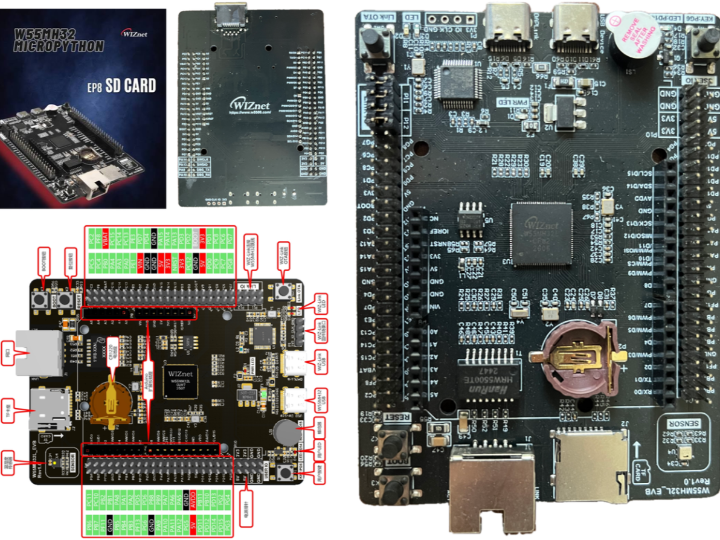
wiznet - W55MH32L-EVB
x 1
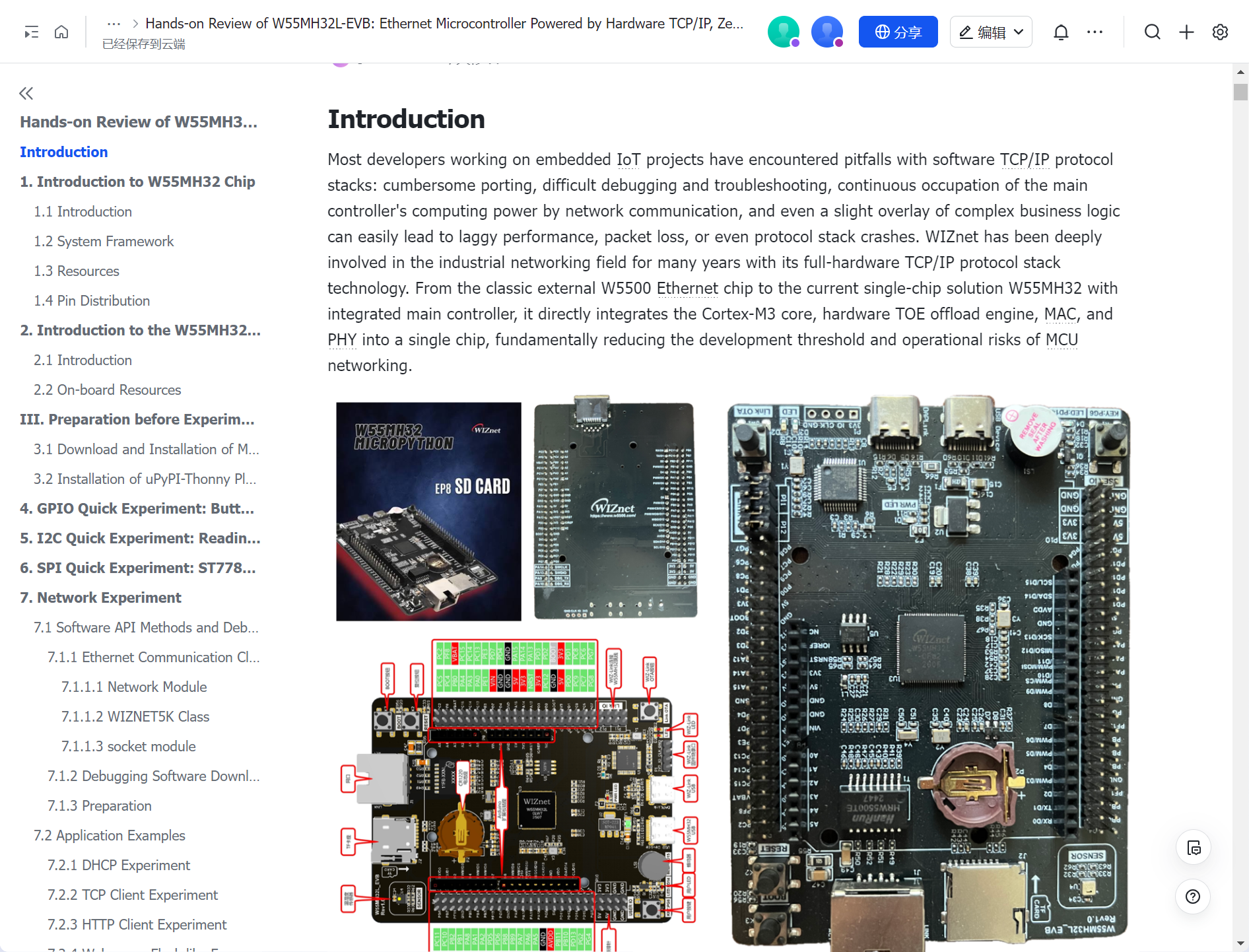
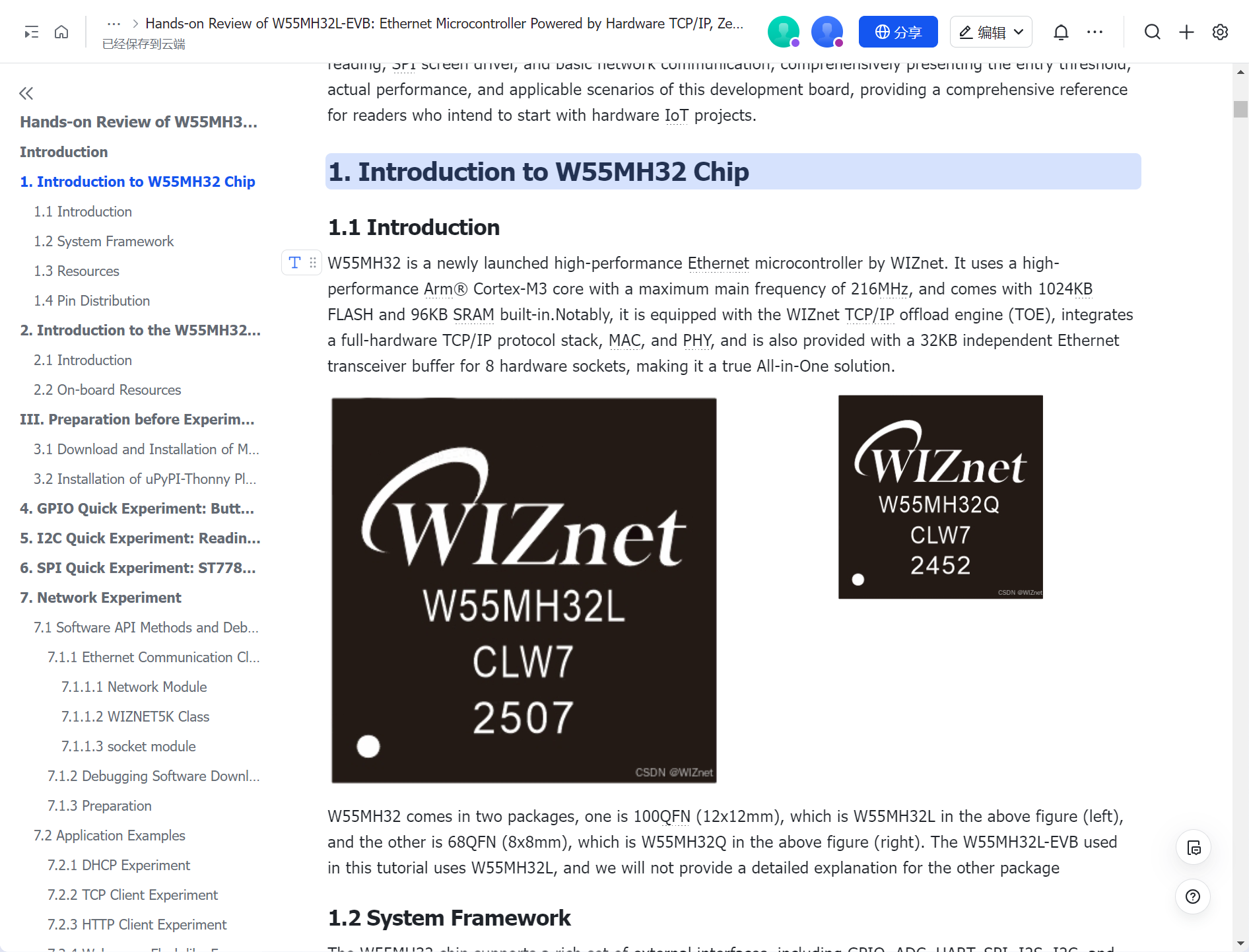
For embedded IoT developers, software TCP/IP protocol stacks have long been a persistent pain point: cumbersome porting work, unpredictable runtime stability, and constant CPU resource occupation that often leads to laggy performance or even packet loss when running complex business logic. For years, WIZnet has addressed this challenge with its proven full-hardware TCP/IP offload technology. Following the widely adopted W5500 standalone Ethernet chip, the company now takes the solution a step further with the W55MH32 — a single-chip Ethernet microcontroller that integrates a Cortex-M3 core, hardware TOE engine, MAC, and PHY all in one package, fundamentally lowering the barrier for reliable MCU networking.
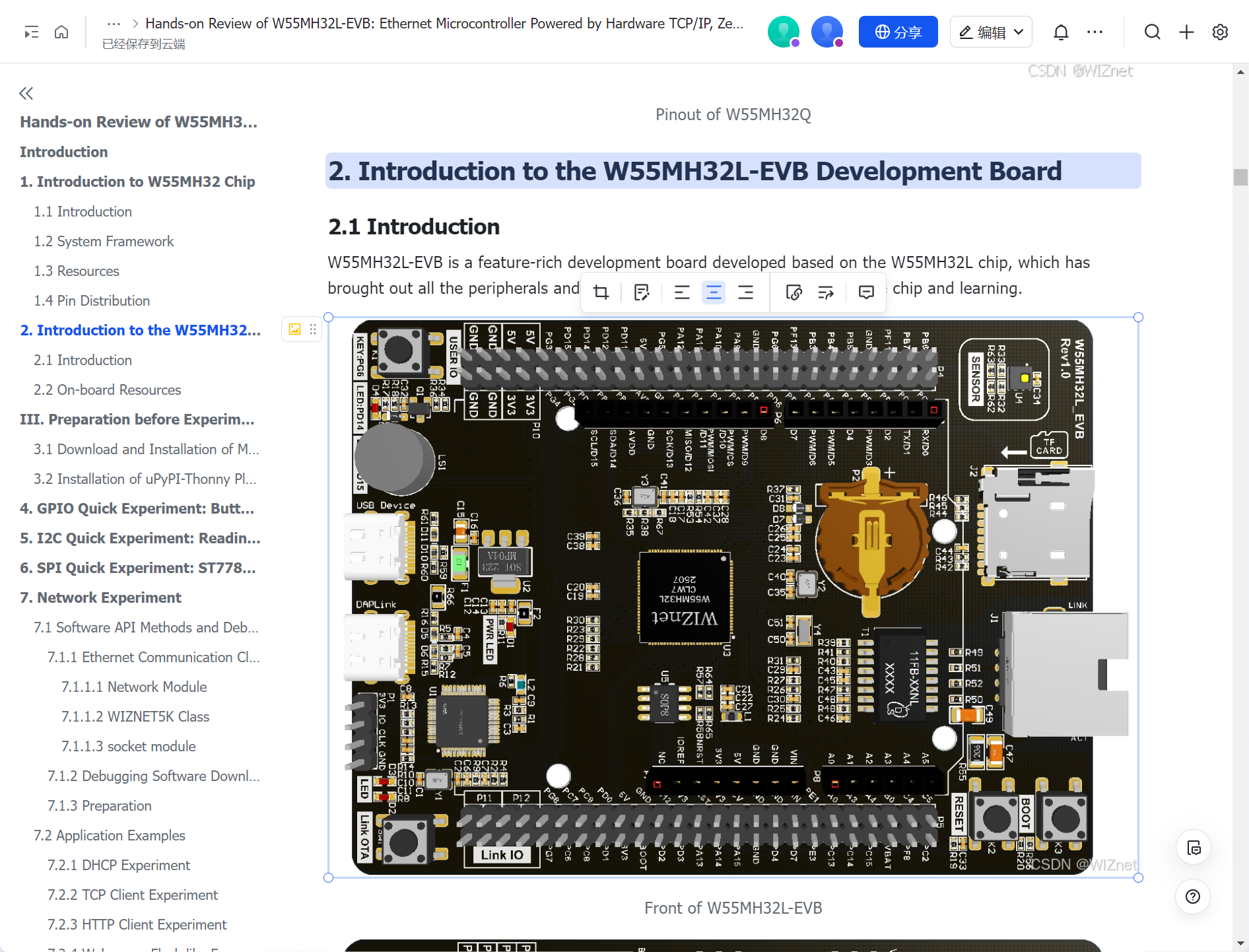
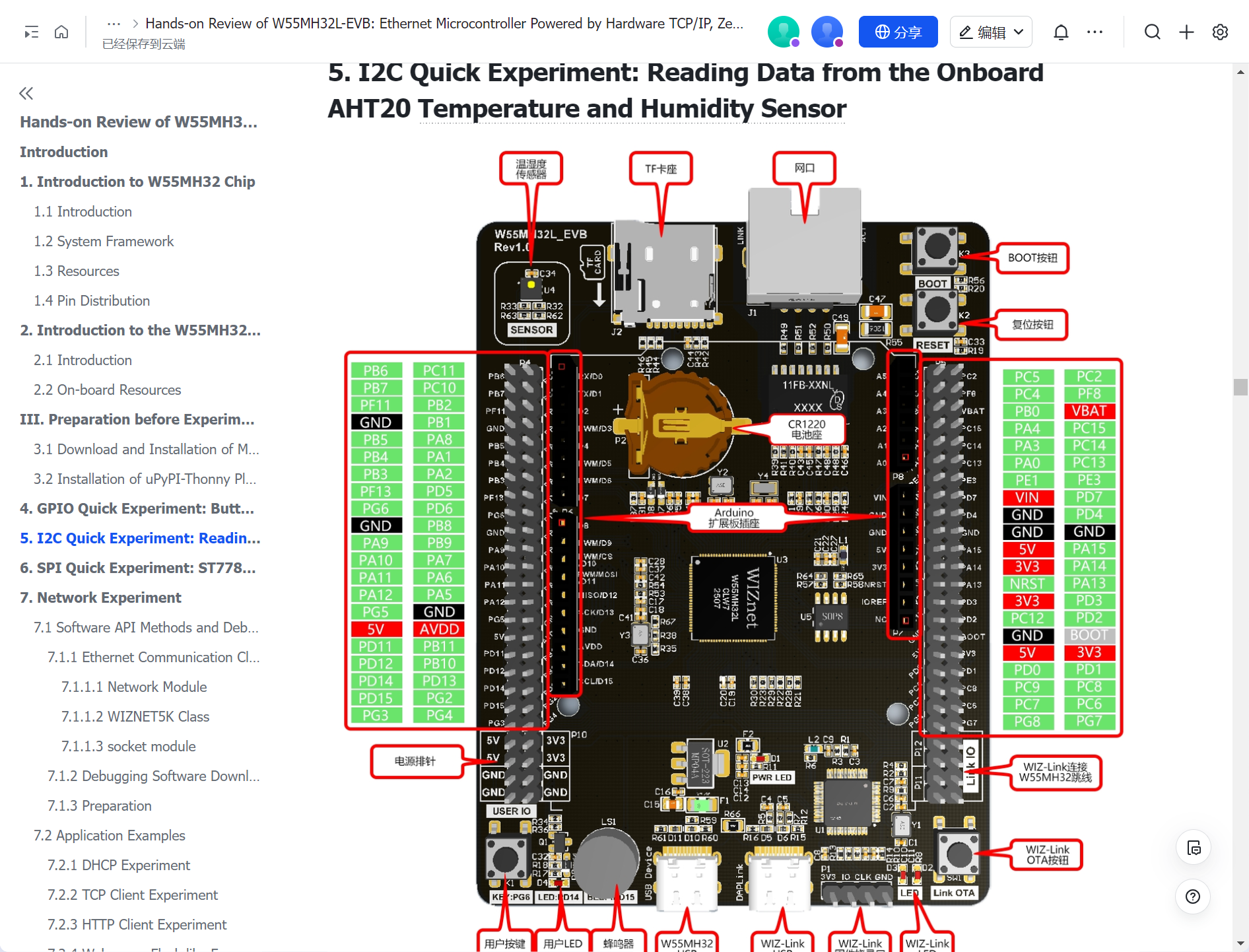
The W55MH32L-EVB evaluation board brings this all-in-one chip to developers with a rich set of ready-to-use peripherals. Beyond fully exposing all chip I/Os via Arduino-compatible headers, it integrates an AHT20 temperature and humidity sensor, EEPROM storage, an SD card slot, an active buzzer, user buttons and indicator LEDs. Most conveniently, it features a built-in WIZ-Link debugger, so a single USB-C cable handles firmware flashing, serial debugging, and power supply right out of the box. Official fully-adapted MicroPython firmware is also available, removing the need for low-level register programming and enabling rapid prototyping with straightforward Python syntax.
In this hands-on review, we evaluate the board from hardware architecture to real-world functional performance. We start with a full breakdown of the W55MH32 chip’s specifications, pin distribution and system framework, then provide step-by-step guidance for building the MicroPython development environment, including Thonny IDE setup and uPyPI driver package management. We then verify core functions through practical experiments, covering GPIO input and output, I2C sensor data acquisition, SPI LCD screen driving, and a complete set of Ethernet communication tests from basic DHCP configuration to TCP client and HTTP server implementations.
Every section is paired with circuit diagrams, runnable sample code and actual test results to serve as a complete reference for your development work. For the full version of this review with all source code, detailed parameter tables and supplementary technical materials, visit the complete document here:
https://f1829ryac0m.feishu.cn/wiki/QfcFwq6jZiDxnfkXKXwcSwMynxh?from=from_copylink


