



RF-to-IP Gateway for Genius Plus X Detectors with MQTT and WIZnet W5500 Ethernet
ESP32+CC1101 decodes Genius Plus X RF traffic and publishes alarm/status events via MQTT, REST, and WebSocket over Wi-Fi or WIZnet W5500 Ethernet.
Overview
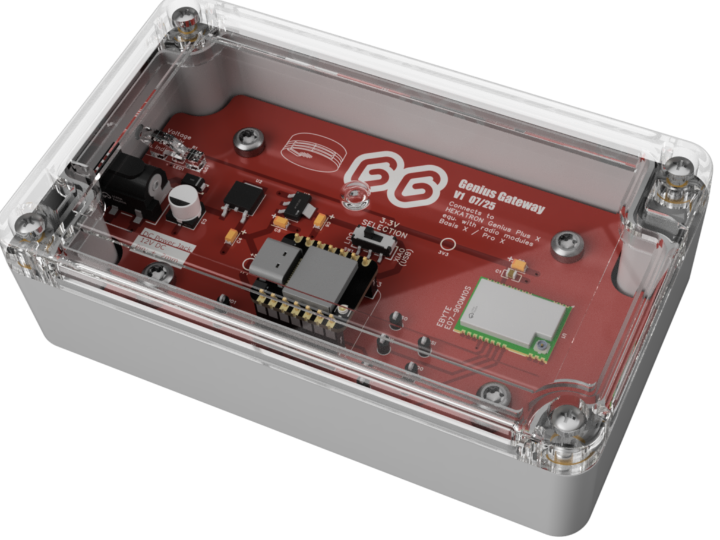
Genius Gateway connects a proprietary radio-based smoke detector network (Hekatron Genius Plus X) to IP-based systems. It focuses on observing radio traffic, interpreting it into device and alarm events, and publishing those events through integration-friendly interfaces.
Main Content
Radio intake and event mapping
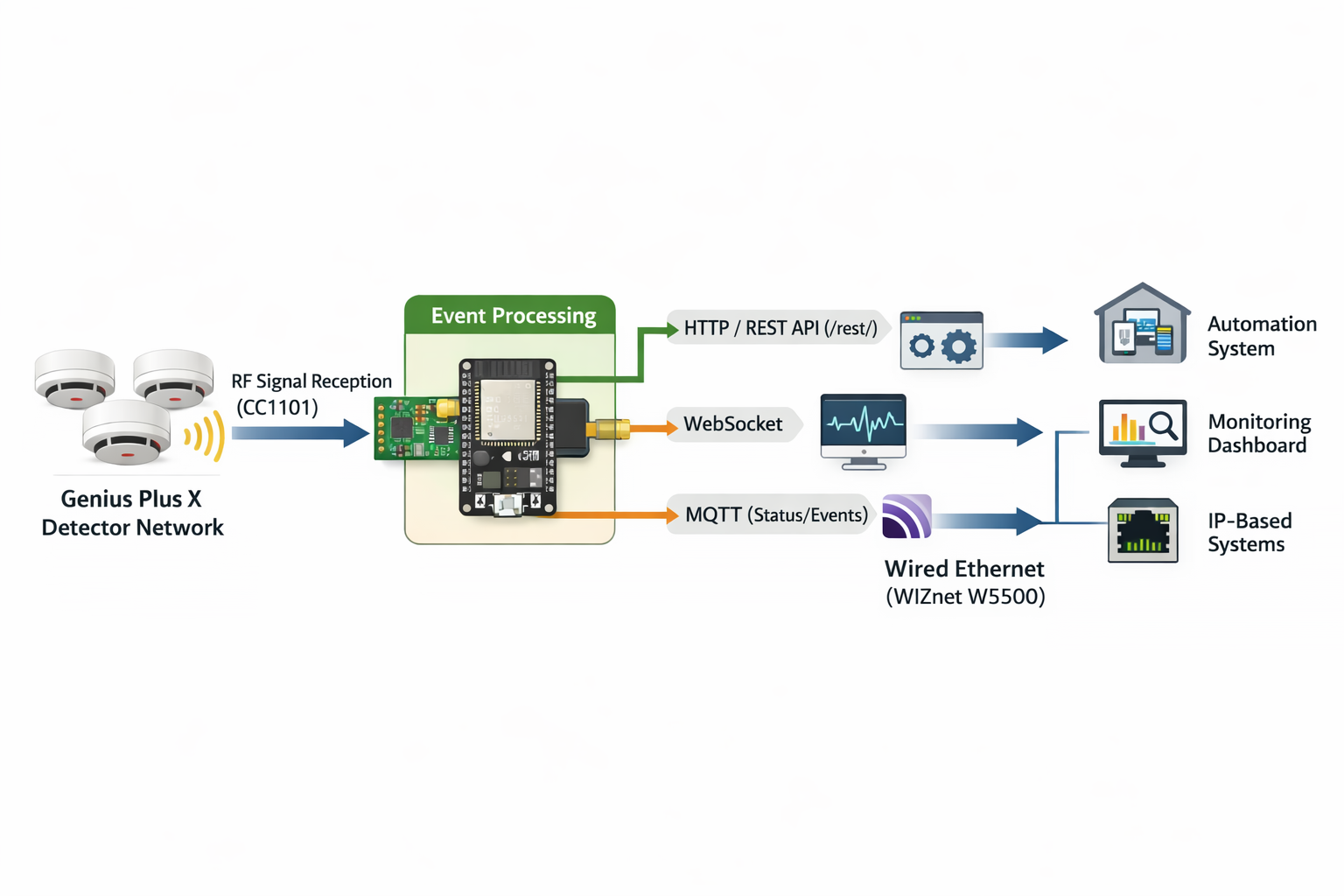
The gateway listens to the detector network via a CC1101 radio transceiver and turns received packets into higher-level events suitable for automation and monitoring. The project documentation treats CC1101 as the dedicated radio component for communicating with the detectors.
Integration interfaces
The system offers multiple ways to consume the same underlying event stream:
- REST endpoints under
/rest/for configuration and device management - A WebSocket endpoint at
/ws/for real-time events and packet streaming - MQTT topics for home automation integration, including patterns like
genius-gateway/+/+
Networking: Wi-Fi by default, wired Ethernet as an option
Wi-Fi is the natural transport on ESP32-class boards. Wired Ethernet is also supported for specific hardware builds using SPI Ethernet. In the W5500-enabled environment, build flags explicitly set ETH_PHY_TYPE=ETH_PHY_W5500, and the Ethernet initialization path uses ETH.begin(..., SPI) for SPI-based Ethernet modules.
System Context
This gateway sits between:
- A radio-only detector network that is not IP-native, and
- IP consumers such as automation servers, dashboards, and monitoring tools that prefer MQTT/HTTP/WebSocket.
Its role is a translation and observability layer. It does not replace the detector network; it makes the network’s state and events accessible to IP systems in a structured way.
Architecture / Design Considerations
Why this structure differs from common approaches
Many integrations rely on vendor gateways to bridge proprietary networks to IP. This project instead observes the radio protocol directly and exposes the results through standard interfaces, which tends to make downstream integration more flexible but also moves correctness responsibility into the gateway.
Why WIZnet W5500 appears in the design
WIZnet W5500 provides a wired Ethernet transport over SPI. In this system it is used as an alternative IP uplink path so the same MQTT/REST/WebSocket interfaces can be served without relying on Wi-Fi. The configuration explicitly targets W5500 via ETH_PHY_W5500, indicating a concrete part choice rather than a generic Ethernet module.
Highest failure-cost decision point
The highest-cost failure is incorrect interpretation of detector radio packets into alarms and status. If the gateway misclassifies events, downstream automation and monitoring can react incorrectly or fail to react when needed.
How removing components changes system behavior
- Removing the CC1101 radio path eliminates visibility into the detector network, turning the system into a network service without meaningful inputs.
- Removing MQTT/REST/WebSocket reduces integration value and makes external consumption harder.
- Removing W5500 support limits deployments to Wi-Fi-only boards and environments.
Possible Implications
- Integration becomes easier because consumers can use common protocols instead of proprietary tooling.
- Operational reliability depends on radio reception quality and event-mapping correctness; network transport choice (Wi-Fi vs wired) affects deployment stability.
Conclusion
Genius Gateway is an RF-to-IP bridge for Genius Plus X detector networks. It converts radio traffic into alarms and device status and publishes them via MQTT/REST/WebSocket. Wi-Fi is the default transport, while wired Ethernet is available through a WIZnet W5500 SPI Ethernet configuration for selected builds.
전체 개요
Genius Gateway는 Genius Plus X 감지기 네트워크의 무선 통신을 수신하고, 그 내용을 알람과 상태 이벤트로 해석한 뒤 MQTT, HTTP, WebSocket 형태로 외부 시스템에 제공하는 게이트웨이입니다. 핵심은 감지기 자체를 바꾸는 것이 아니라, 무선망에서 발생하는 사건을 IP 기반 시스템이 다루기 쉬운 형태로 노출하는 데 있습니다.
배경과 목적
무선 기반 장치 네트워크는 동작 자체는 단순할 수 있지만, 외부 시스템이 그 상태와 이벤트를 표준 방식으로 소비하기가 어렵기 쉽습니다. 일반적으로는 전용 게이트웨이에 의존해 연결하지만, 그 경우 연동 방식과 관측 범위가 특정 구성에 묶일 수 있습니다. 이 프로젝트의 목적은 무선 트래픽을 직접 받아 이벤트로 정리하고, 외부가 선호하는 방식(MQTT, HTTP, WebSocket)으로 제공해 통합과 운영 관측을 쉽게 만드는 것입니다.
기술 흐름 설명
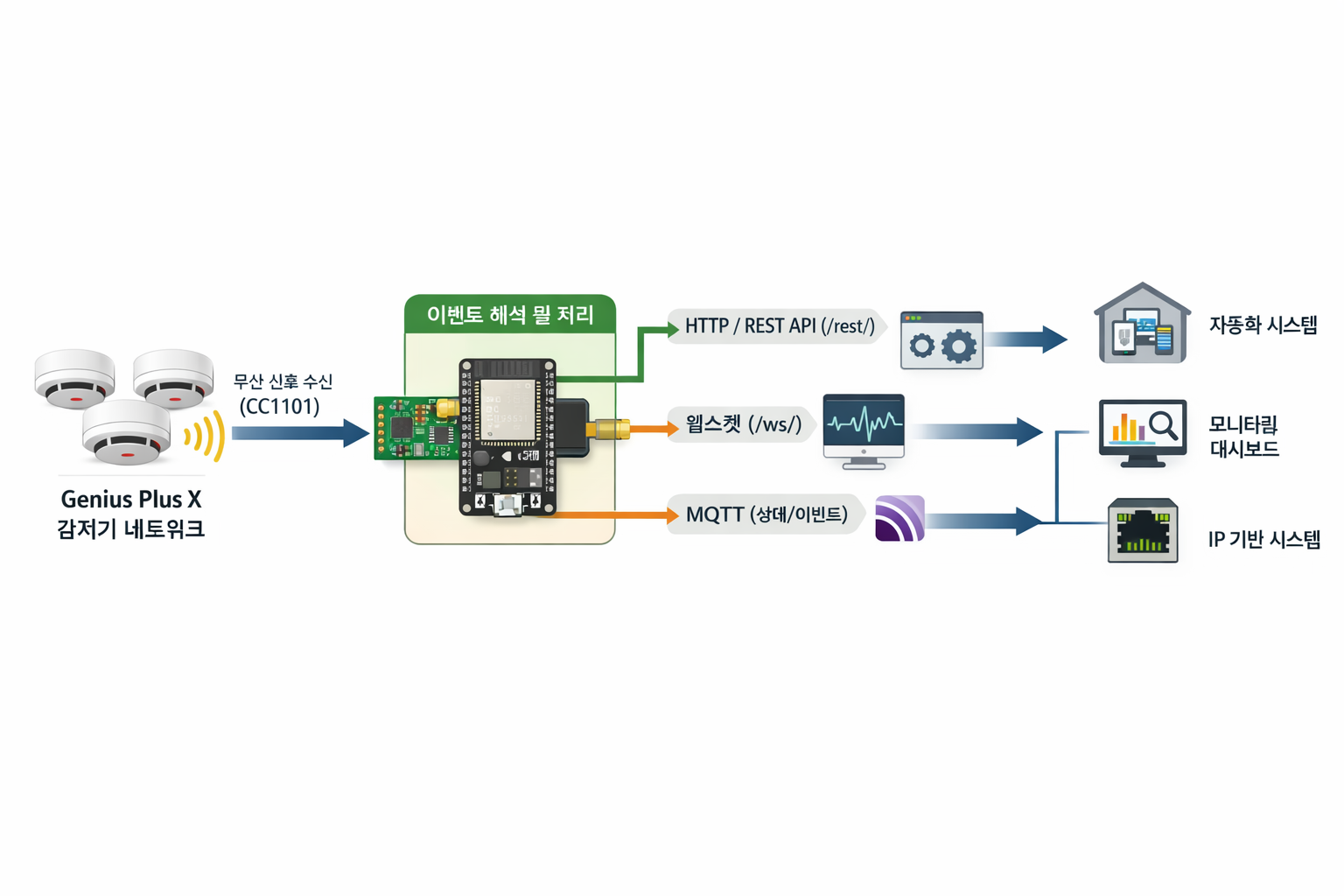
- 무선 수신: CC1101 기반 무선 트랜시버가 감지기 네트워크 트래픽을 수신합니다.
- 해석 및 이벤트화: 수신 패킷을 알람, 상태 등 상위 이벤트로 변환합니다.
- 외부 노출:
- HTTP는
/rest/경로로 설정과 관리 기능을 제공합니다. - WebSocket은
/ws/로 실시간 이벤트 및 패킷 스트림을 제공합니다. - MQTT는 상태 및 이벤트를 토픽으로 발행해 자동화 시스템과 연동합니다.
- HTTP는
- 네트워크 전송:
- 기본은 Wi-Fi 기반 운용을 전제로 하며,
- 특정 환경에서는 WIZnet W5500 기반 SPI Ethernet 경로를 통해 유선 연결이 가능합니다.
왜 이런 구조가 나왔는지에 대한 해설
이 구조의 핵심 선택은 “무선망을 IP로 옮기는 방식”입니다. 전용 게이트웨이를 경유하는 대신, 무선 트래픽을 직접 수신해 이벤트로 정리하고 표준 인터페이스로 제공하면, 외부 시스템(Home Assistant 같은 자동화 플랫폼 포함)이 붙는 방식이 단순해지기 쉽습니다. 반대로, 프로토콜 해석의 정확도를 이 게이트웨이가 책임져야 하므로, 구현 품질과 운영 가시성이 설계의 핵심이 됩니다.
유선 Ethernet을 지원하는 이유는 배포 환경 차이로 설명되기 쉽습니다. Wi-Fi가 불안정하거나 피하고 싶은 환경에서는, W5500을 통해 동일한 서비스(MQTT, REST, WebSocket)를 유선으로 제공할 수 있습니다. 이 프로젝트는 빌드 플래그에서 ETH_PHY_W5500을 명시하고, SPI 기반 이더넷 초기화 경로를 분기해 이를 구현합니다.
생소한 개념에 대한 풀어쓴 설명
- MQTT는 이벤트를 “발행하고 구독”하는 방식이라, 상태 변화나 알람 같은 것을 여러 시스템이 동시에 받아보기 쉬운 편입니다.
- WebSocket은 연결을 유지한 채로 실시간 스트림을 주고받기 때문에, 실시간 모니터링이나 패킷 로깅에 맞는 경우가 있습니다.
- WIZnet W5500은 SPI로 붙는 10/100 Ethernet 컨트롤러로 알려져 있으며, ESP32 계열에서 유선 네트워크 경로를 제공하는 구성에 자주 쓰입니다.
시스템 구성 및 선택지 해석
- 무선 입력 경계: CC1101이 없으면 감지기 네트워크 관측 자체가 성립하지 않습니다.
- 처리 및 서비스: ESP32 계열에서 이벤트 해석과 HTTP/WebSocket/MQTT 서비스를 제공합니다.
- 네트워크 전송 경로:
- Wi-Fi 중심 구성은 배선 없이 설치가 쉬운 대신 무선 환경의 영향을 받기 쉽습니다.
- W5500 기반 유선 구성은 배포 환경이 제한될 수 있지만 네트워크 경로가 예측 가능해질 수 있습니다.
내부 관점에서의 시사점
가장 큰 실패 비용은 이벤트 해석 오류로 인한 미탐 또는 오탐에 가까운 동작입니다. 외부 자동화는 이 이벤트를 사실로 전제하기 쉬우므로, 해석 로직과 운영 관측(WebSocket 기반 로그 등)이 함께 갖춰져야 안정적으로 굴리기 쉽습니다.
또 하나의 운영 리스크는 문서에 충분히 드러나지 않은 기능이 코드나 설정에서 먼저 등장하는 상황입니다. 이런 경우, 배포자가 기능을 모르고 지나치기 쉬워 초기 설정과 장애 대응이 어려워질 수 있습니다.
FAQ
- 기존 방식 대비 이 구조의 핵심 차이는 무엇이십니까?
전용 게이트웨이 대신 무선 트래픽을 직접 수신해 이벤트로 정리하고, MQTT, HTTP, WebSocket 같은 표준 인터페이스로 노출한다는 점이 차이입니다. 외부 연동 방식이 표준화되기 쉬운 반면, 해석 정확도에 대한 책임이 게이트웨이에 집중되기 쉽습니다. - 데이터 흐름에서 가장 중요한 구간은 어디이십니까?
무선 패킷을 알람과 상태 이벤트로 결정하는 해석 구간입니다. 여기서의 오해석은 외부 자동화 동작의 오류로 직결되기 쉬워 실패 비용이 큽니다. - 이 시스템은 왜 보조 수단으로 위치한다고 보십니까?
감지기 네트워크 자체의 동작을 대체하기보다, 그 네트워크의 상태와 이벤트를 외부로 전달해 연동과 관측을 보완하는 성격이 강합니다. 즉, 핵심 안전 기능을 “대체”하기보다는 “외부 활용 경로를 추가”하는 쪽에 가깝습니다. - WIZnet W5500은 어디에 쓰이며 왜 선택되었을 수 있습니까?
유선 Ethernet이 필요한 배포 환경에서 IP 전송 경로를 제공하는 역할로 쓰입니다. 이 프로젝트는 빌드 플래그에서 W5500을 명시하고 SPI 기반 Ethernet 초기화 경로를 사용하므로, 특정 보드 환경에서 유선 네트워크 옵션을 제공하려는 의도가 반영된 것으로 보입니다. - 구성요소를 제거하면 시스템 성격이 어떻게 바뀌십니까?
CC1101을 제거하면 무선 입력이 사라져 게이트웨이 목적이 약화됩니다. MQTT/HTTP/WebSocket을 제거하면 외부 연동 가치가 크게 줄어듭니다. W5500 경로를 제거하면 유선 배포 선택지가 사라져 Wi-Fi 중심 운용으로 제한되기 쉽습니다.
저자 정보
- hmbacher
공개된 정보가 제한적입니다.